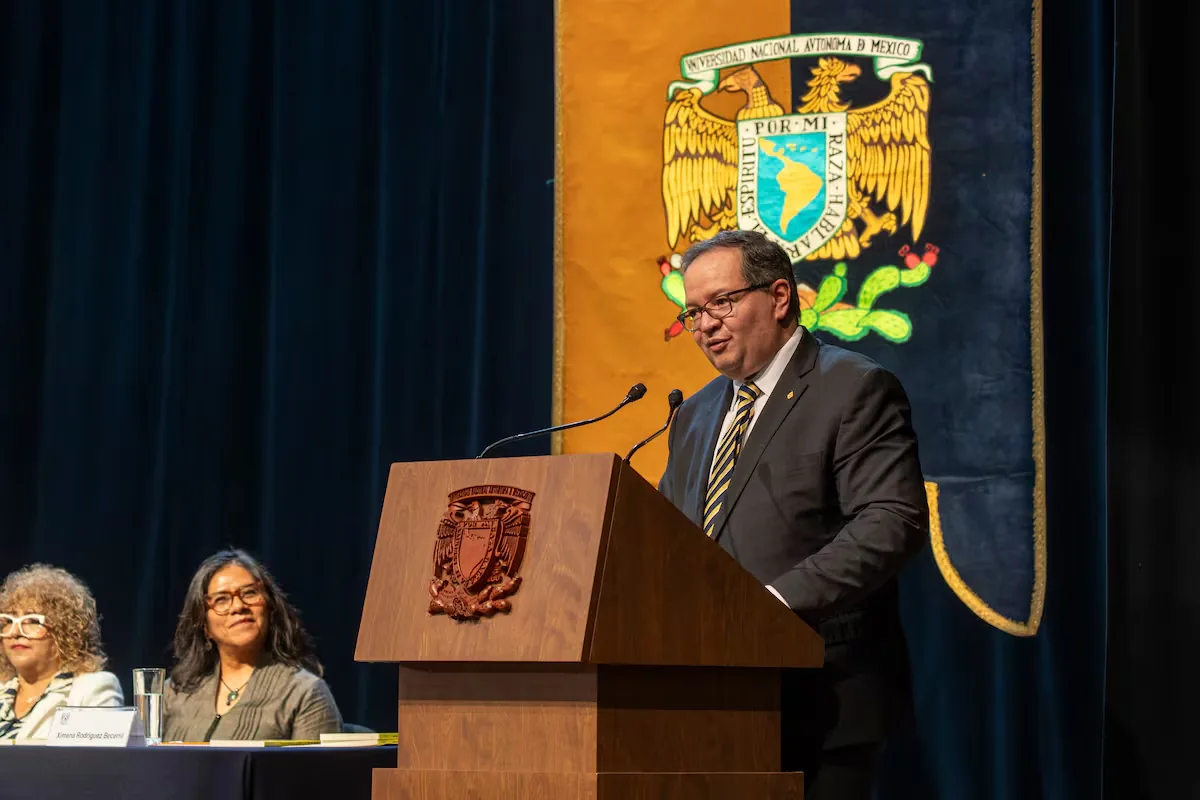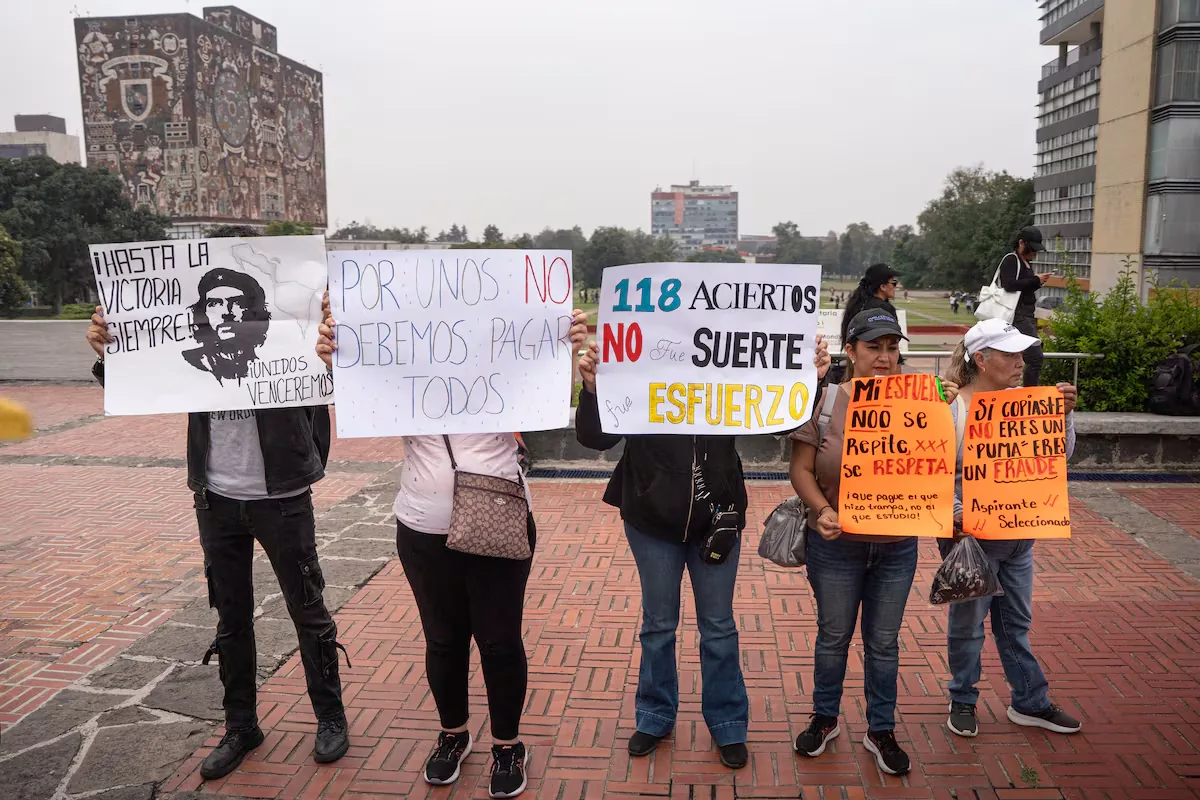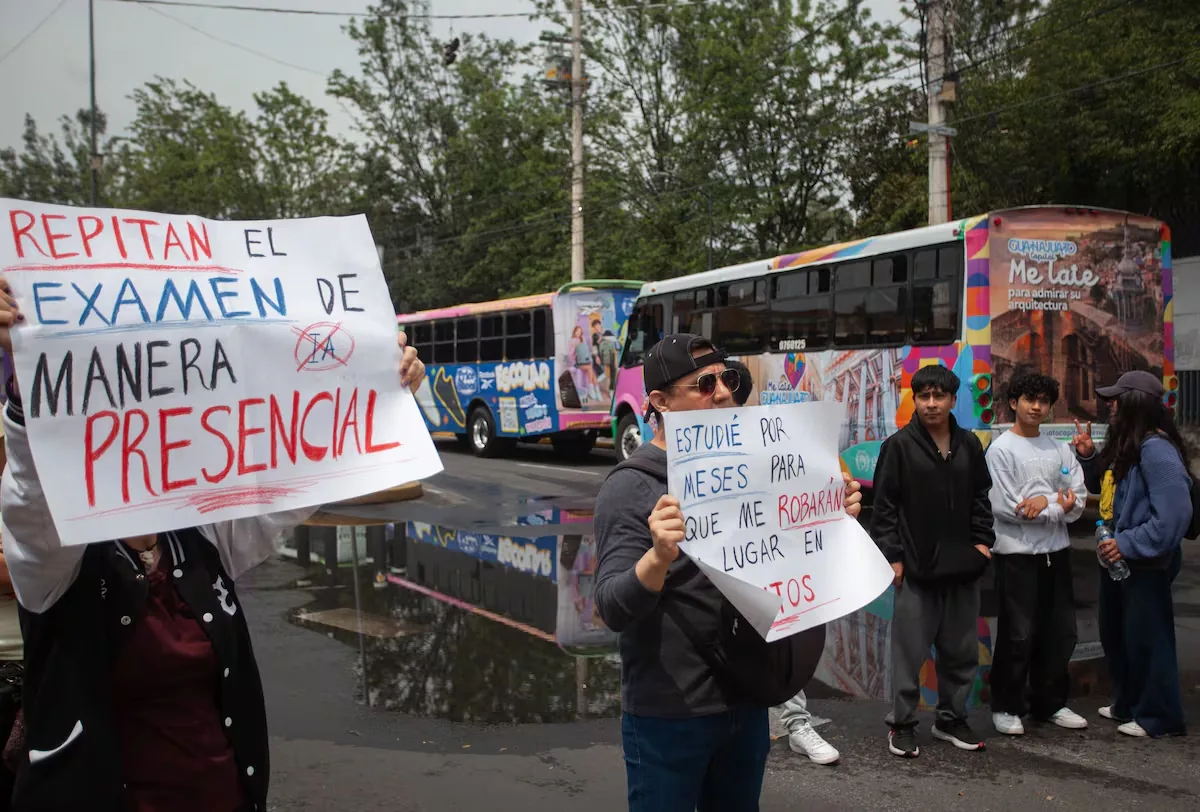








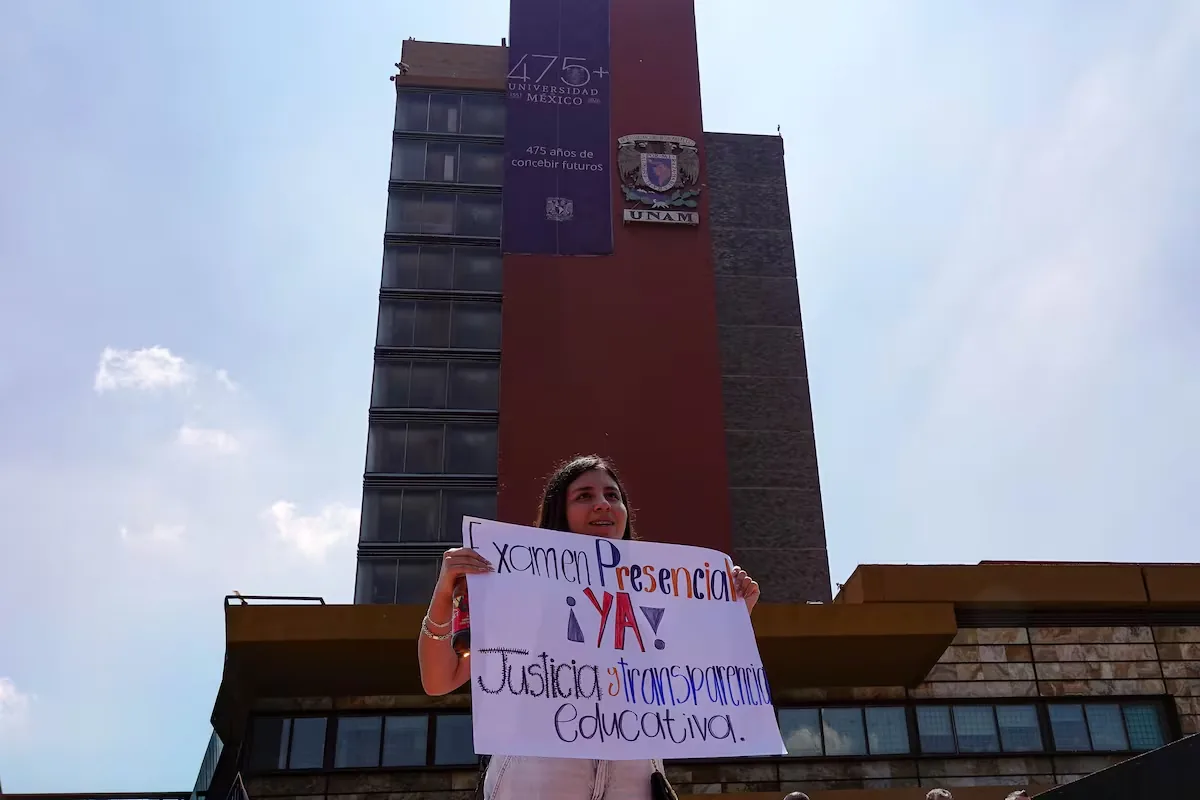
The agony of waiting has ended for those aspiring to secure a place at the coveted UNAM, the largest public university in Mexico and Latin America. After the scandal over the suspicion that some of the highest scores in the online entrance exams were obtained through cheating, the commission of experts appointed by the rector has determined that the least harmful solution is to retake them as soon as possible in person, although not for everyone: only those who won a place with the first exam and those who would have achieved it by taking as a reference the cutoff scores from previous years. With this decision, the country’s top educational institution has put an end to uncertainty that threatened to undermine its credibility and left the start of the school year in suspense. However, it does not resolve the underlying issues: what went wrong and what measures will be taken to prevent it from happening again in the future. For now, it has already cost the institution’s secretary general, Patricia Dávila, her position.
Read more Dilson Díaz says goodbye to the stage: “La Pestilencia has already said it all”
The Solomon-like solution reached ― only 58,000 of the 158,000 who took the exam will retake it ― guarantees that those who enter the classrooms have proven to have sufficient merits, experts point out, but it generates two new derived problems: the possible flood of claims from those who obtained their place in the original exam and are not willing to prove their worth again; and the comparative grievance between those who cheated and will be able to retake the exam and those who did not reach the threshold and will be left out, despite having been honest. “The recommendations are attending more to the accuracy than to the legitimacy of the evaluation. In technical terms, it is a feasible decision, but you are giving a tacit message that cheaters will have a second chance, and someone with a low score who did not cheat will not,” says Mariana Zúñiga, an evaluation expert at Ceneval (the National Center for Higher Education Evaluation).
“The decision solves a problem,” adds Juan Manuel Flores Ayala, evaluation expert and independent consultant, “but leaves all the socially possible questions about such a large and important institution in Mexico up in the air.” For now, the commission has limited itself to attesting that there was a problem of collective cheating verifiable with “robust evidence,” in the words of the committee president, Eduardo Bárzana García, among the more than 158,000 students who took the test. There are just under 22,000 places and fierce competition.
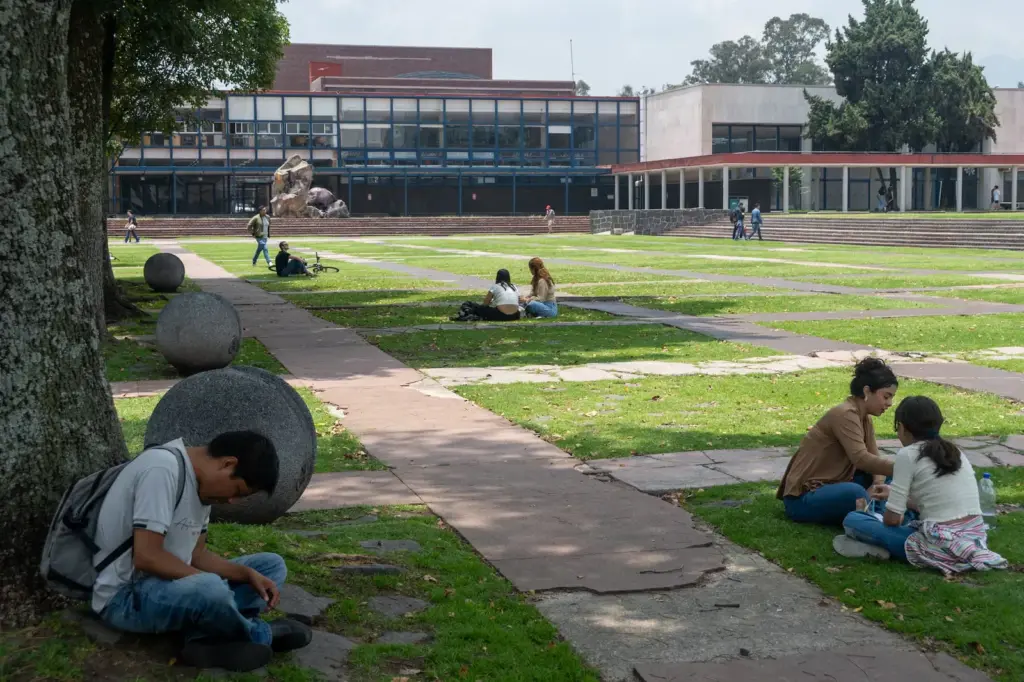
According to the collected statistical data, out of a total of 120 questions, the percentage of examinees with more than 100 correct answers rose from 3.5% in the last five years to 16.3% in 2026. At the same time, those who achieved more than 110 correct answers increased from 0.9% to 5.5%, almost six times. The distribution is so atypical that experts consider it sufficient proof that there was some improper external help. They have not yet resolved whether the failure was in monitoring and if it is the responsibility of the contracted company —Territorium Life—, chosen “for its experience in administering online exams,” or the educational center itself.
The digital modality still poses enormous challenges, and UNAM has made a giant leap by applying it to tests as impactful as university entrance exams, where applicants risk everything in just a few hours. The importance of the tests is such that it is very likely that at least part of the individual entanglements will end up being resolved in the courts. “I believe, almost with total certainty, that there will be those who dare to file an indirect amparo lawsuit. I am very sure it will happen because, moreover, I have already seen that some people are offering it and there are channels that are beginning to promote it,” says Daniel Torres Checa, constitutional lawyer.
If such claims arise, the ramifications will be increasingly greater, as the district courts that receive the cases may apply different criteria, as well as the collegiate courts to which they could go later if those decisions are challenged. All this while the school year progresses. “I think there will be judges who will admit these amparos. I see it very difficult, although it can also happen, that they grant suspensions,” Torres Checa assesses. Suspensions are the precautionary measure that gives meaning to the amparo, as it suspends the act causing harm to the person seeking protection. In this case, it would consist of forcing the university to enroll those who already passed the first test, without needing to take the second, while the underlying issue is resolved.
Read more The 205 million dollars in Zhenli Ye Gon’s bills come before Justice 19 years later
This option, the lawyer considers, is less feasible because “one of the reasons for denying a suspension is that it contravenes public order provisions or there is an impact on social interest.” “I think that card is on UNAM’s side,” he weighs.
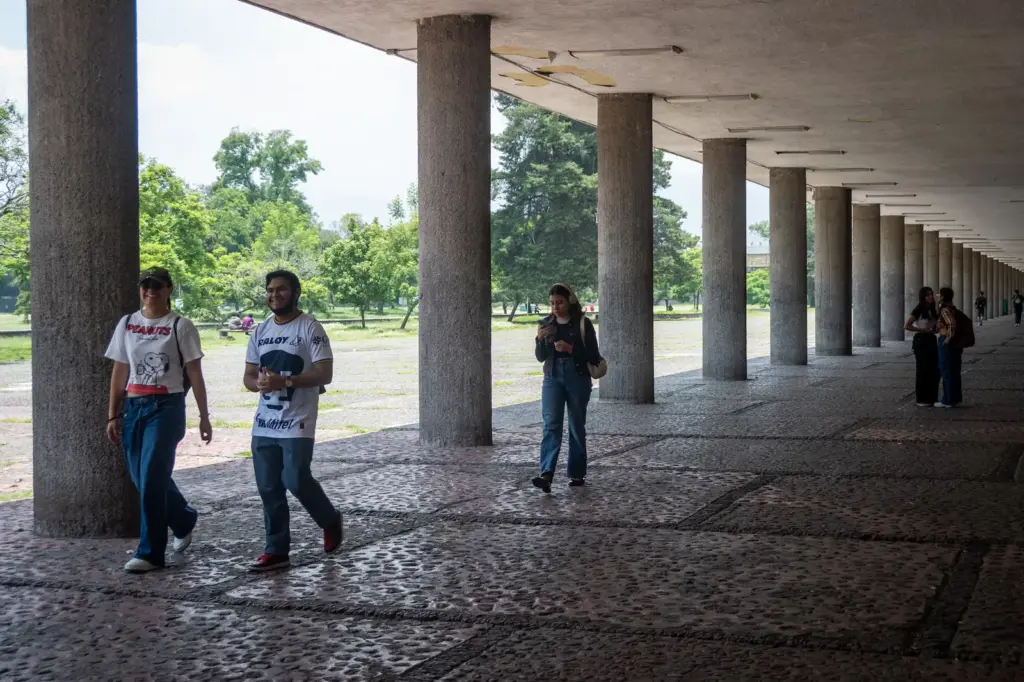
In any case, this week’s episode is only the first chapter of a conflict that has opened Pandora’s box and will be much harder to close than a retake of the exam. The scandal is unprecedented, and investigations must continue until the crack that allowed such massive cheating is found.
Some have pointed to the use of artificial intelligence, but other hypotheses point to more rudimentary methods. When Mariana Zúñiga worked in UNAM’s educational evaluation system, between 2009 and 2014, exams were printed in Canada to prevent leaks, she explains. Even so, she recalls, “there were schools in Mexico that said they had the test items [the answers]. At some point, an analysis was done of what was happening, and what was happening was that they sent fake applicants to memorize them.” “They had thousands of kids; it was like petty theft that allowed reconstructing the exam as much as possible,” she recounts.
Having overcome the most pressing crisis, what to do with the contaminated results becomes a complex and profound task: to dig until knowing the details of what was done and what was not so that a system more than seasoned in evaluating thousands of students each year suddenly became so vulnerable.
Read more We discovered the all-in-one anti-aging serum: it contains pure retinol and vitamin B3