









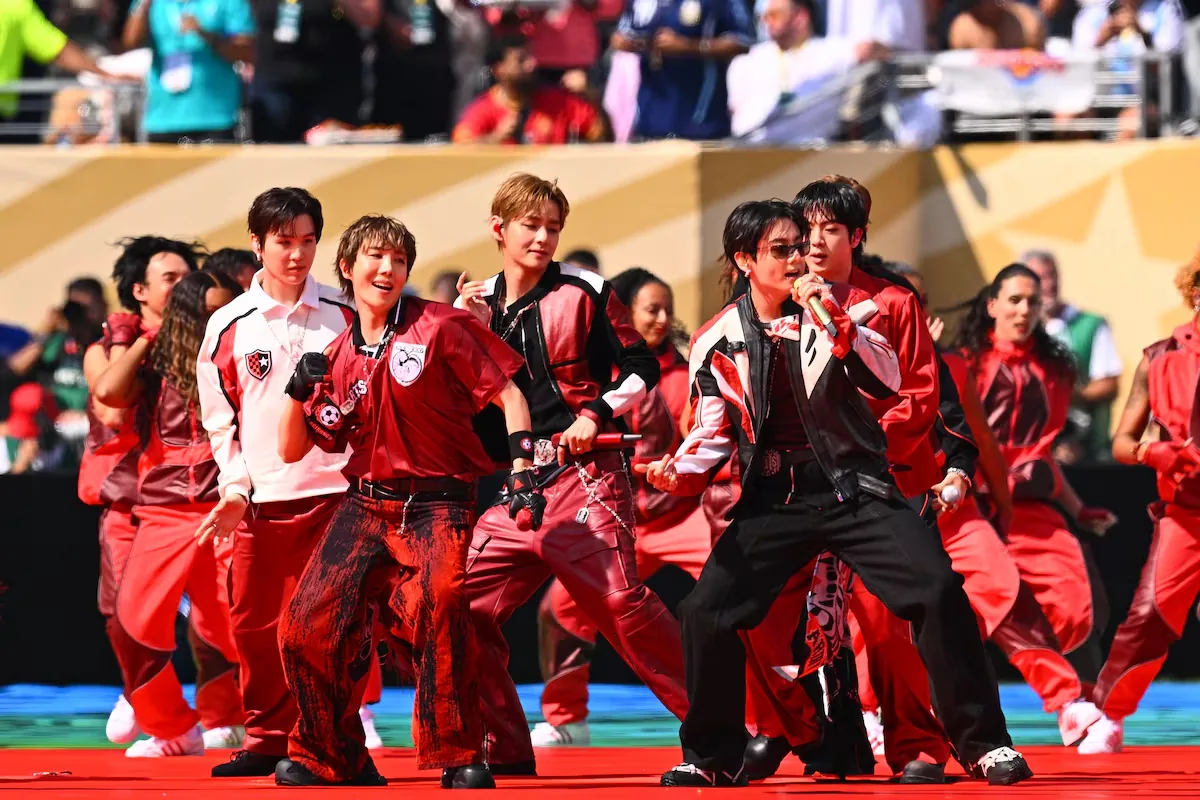
The Grammys are rarely free from controversy. The competition organized by the Recording Academy is undoubtedly the most prestigious worldwide, but by no means the most representative, despite the Academy’s efforts to expand the jury that annually selects the awarded works, mostly by Anglo-Saxon artists. In light of the most recent initiative to “provide greater representation” to Asian music through the Best Asian Pop Performance category and to Latin music through the Best Latin Song, this week the K-pop band BTS starred in a key moment that once again puts the dynamics present in the competition up for debate.
“We have decided not to submit our music for Grammy consideration this year (…) We hope our music is heard and appreciated for what it is, rather than being divided by region or language,” communicated RM, Jin, Suga, J-Hope, Jimin, V, and Jungkook, referring to the addition of secondary categories that determine artists by their origin or language would distance them even more from the main categories of the competition, which are usually dominated by North American or British artists. BTS is the first K-pop group to be nominated for the Grammys but has never won one.
The organization’s response was swift. Grammy CEO Harvey Mason Jr. firmly replied to the band’s decision. “I am saddened to learn that BTS has decided not to participate this year in the Grammy Awards process, but as a music creator, I understand and respect their decision (…) The Asian Pop category was created to celebrate the depth, diversity, and extraordinary growth of pop created in Asia. The spirit of this new category is to give specific recognition to these important artists. More categories mean that the work of more artists can be recognized,” he stated.
However, several artists, also major Anglo-Saxon stars, have expressed disagreements with the Grammys over the years. Many have shown their displeasure over the alleged disconnect between commercial success and the cultural significance of works that were later not recognized in the nominations, as well as the lack of sociocultural representation, the alleged lack of transparency in the voting process, and biases among musical genres.
The global superstars against the Grammys
The Weeknd, the most streamed male artist worldwide in recent years, and the most played in 2025 behind Bad Bunny, finally ruled out submitting his music to the Grammys in 2020 after receiving no nominations following the massive success of After Hours and Blinding Lights. “The Grammys are still corrupt,” the artist declared on X. In a statement to The New York Times, he expressed that he would not return to the competition because of “secret committees.”
Soon after, in November 2020, Drake called for replacing the Grammy Awards with “something new” after considering that the Academy again ignored numerous Black artists. However, the rapper continued submitting his music in the following years. The Canadian has 56 nominations for the awards but only five wins.
Along these lines, Frank Ocean, despite having nearly a dozen Grammy nominations and two golden gramophones, decided not to submit his historic album Blonde in 2017 to the awards, despite it being one of the albums of the year. The artist explained that his decision was because the Academy “did not adequately recognize Black artists,” pointing out that in the last 30 years only six had won the Grammy for Album of the Year.
In October 2022, Silk Sonic (Bruno Mars and Anderson .Paak) announced they would not submit their album An Evening With Silk Sonic to the 2023 Grammys. Mars explained that the decision was voluntary, as they felt they had already won the most important thing with the overwhelming public response. Still, the artist’s relationship with the Academy remains satisfactory, as he continued attending the Grammys and performed at the most recent 2026 edition with Rosé to sing APT.
Sinéad O’Connor is another of the most notable cases, being the only singer in history to reject a Grammy and refuse to attend the ceremony in 1991. The Irish performer was then nominated in four categories for I Do Not Want What I Haven’t Got and won the Grammy for Best Alternative Music Album. In a letter, O’Connor rejected the functionality of the awards: “They mostly recognize the commercial side of art. They mostly respect material benefit, as it is the main reason for their existence (…) They have created great respect among artists for material benefit, honoring and exalting us when we achieve it, mostly ignoring those who do not.”
Morgan Wallen and Zach Bryan, two of the most recent cases, also did not submit their music for consideration in the latest editions. Wallen’s case was especially surprising, as his album I’m the Problem spent 11 weeks at number 1 on the Billboard 200 in 2025. In Bryan’s case, he would not feel comfortable with the competitiveness present in the music awards.
The rejection of the Latin Grammys by Latin artists
The Latin Grammys were born in 2000 to respond to a growing demand and increasing relevance of Latin and Hispanic music in the U.S. market that the Grammys did not seem willing to absorb. And they have not been free from controversy either.
J Balvin’s case is perhaps the most notable protest against the Latin Grammys, but in reality, it is part of something bigger. After the nominations were announced in 2019, many artists criticized the scarce representation of urban music, especially reggaeton. Balvin, as well as the king of the genre, Daddy Yankee, and other major figures like Karol G, Natti Natasha, Anuel AA, and Lunay, promoted the campaign #SinReggaetonNoHayLatinGrammy.
“Although I am nominated, I do not agree with how the genre was treated, like many of my colleagues. Remember something: their platform did not build this movement,” Balvin stated, referring to the Academy.
“For years, [Latin urban music] has been underestimated and minimized. Within the term ‘urban’ they leave a wide margin in which they qualify anyone (…) Someone who knows a lot about salsa… maybe does not have the capacity to say what a good reggaeton album is,” the Colombian artist expressed in a video on social media. “There should be an exclusive category for rap, another for reggaeton, another for dancehall, another for trap, and not simply group everything and label it as ‘urban,’” he added.
Balvin also protested against the Academy again in 2021: “The Grammys do not value us, but they need us,” he declared. “Those who have power in the genre NONE SHOULD GO!! that is, all of us because we are a movement,” he even posted. Words that fueled his beef with Residente, who did not hesitate to tell him that if he wanted to be nominated, “he should stop making hot dogs.”
Another notable case in this regard is the lack of nominations for Puerto Rican producer Tainy, one of the most important in the urban genre and without whom it is impossible to understand the global scalability of the different styles within it. Although DATA, one of the artist’s major works, was not recognized for the Latin Grammys, he was nominated for Best Urban Music Album at the Grammys.
In response to the discontent of urban Latin artists, the Academy invited professionals in this sector to engage with the institution. “We understand the frustration and discontent. We invite leaders of the urban community to get involved with the Academy, to participate in the process and engage in discussions that improve it,” they stated in 2019.
Since then, it is true that changes regarding the recognition of urban artists have become increasingly noticeable, with Bad Bunny and Karol G being two of the big winners of recent editions and Daddy Yankee being chosen as Person of the Year at the 2026 edition.
Read more Dilson Díaz says goodbye to the stage: “La Pestilencia has already said it all”