




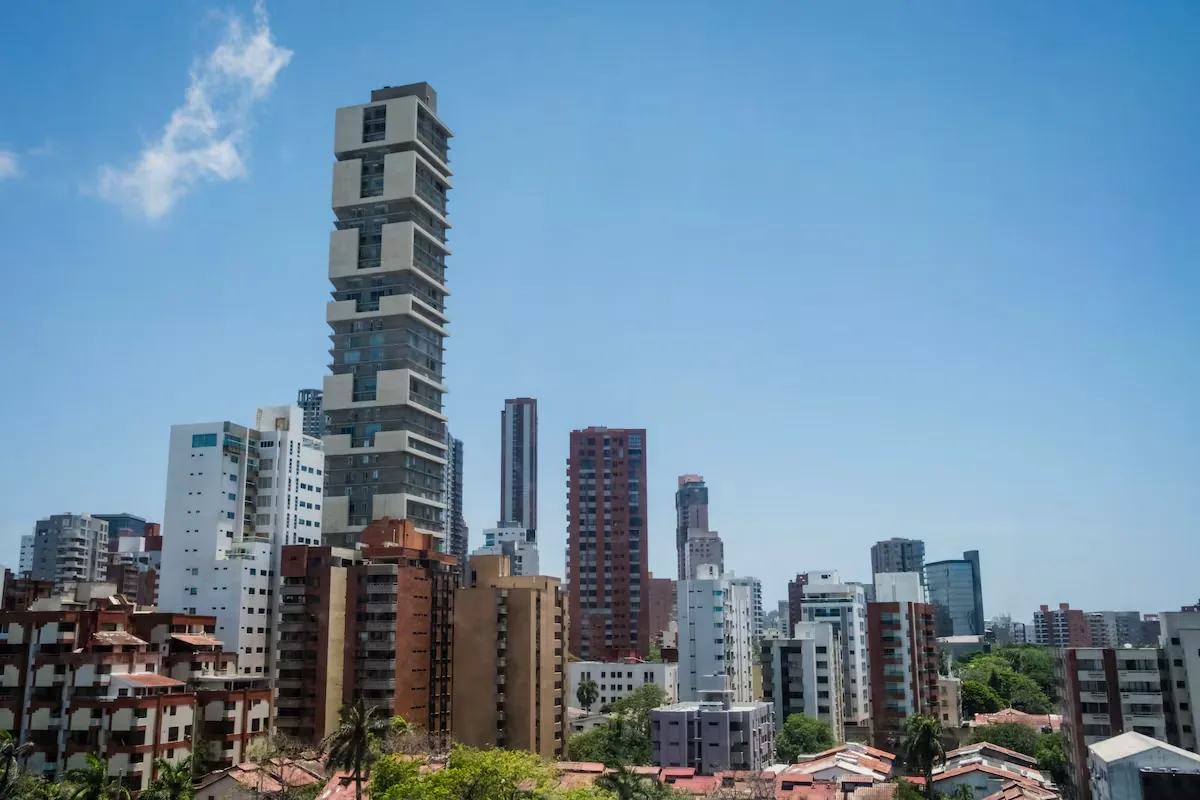
It must be acknowledged. President-elect Abelardo de la Espriella has managed to get the country to look towards the Caribbean, with his proposal to make Barranquilla the ‘alternate’ capital of Colombia and to affirm that he will operate from there. This has a positive effect: it opens the debate about the prevailing Bogo-centrism of the last 140 years, a distortion that goes beyond the legal framework and is embedded in the cultural sphere and in the way the elites have understood the territory.
Read more Podcast | Why do faces matter so much to us?
I believe I am not exaggerating when I say that those elites, especially those from Bogotá, have felt disdain for the ‘hot land’, which includes the two coastlines: the Caribbean and the Pacific, where there are worldviews different from that of the Cundinamarca high plateau. This is even revealed in language. It is difficult to trace the origin of the word ‘corroncho’ in its derogatory sense to refer to that festive, noisy, and multicolored world, but it shows how that world is viewed from Bogotá.
That cultural clash has existed since the times of Bolívar and Santander; since the times of Rafael Núñez and his vice president Miguel Antonio Caro; and since Gabriel García Márquez arrived in Bogotá and saw that land was very different from his own. Accustomed to the stifling and bright heat of the Caribbean, Bogotá seemed to him a remote, cold, and gray city, inhabited by austere, taciturn, silent, and always hurried men.
That cultural disconnect has shaped a distorted and myopic vision, which has led to the belief that the country begins and ends in the Bogotá savanna. It has made Colombia a country of internal borders, which limits itself, with an abandoned periphery where there has been almost no state or market; thus, political power is legal but lacks legitimacy. This is described in Rafael Escalona’s vallenato, “El Almirante Padilla,” which narrates a historical event that occurred in 1954, when the ARC Almirante Padilla ship of the National Navy arrived at Alta Guajira (Puerto López) to seize smuggled goods. A government action that bankrupted the “Tite Socarrás.” This is the meaning of the verse: “There in the upper Guajira, where smuggling is born, the Almirante Padilla swept Puerto López, and left it ruined.”
That abandonment of the periphery, and especially of the maritory, a concept of Chilean origin, created to define the maritime space as a living, inhabited, and cultural territory, and not just as an extension of water, made the coasts two of the most backward areas of Colombia. In fact, in schools and colleges we were taught that Colombia’s territorial extension was 1,141,748 square kilometers and not 2,070,408, by including the 900,000 kilometers of maritory, as if it were worthless and useless.
Why we lost Panama
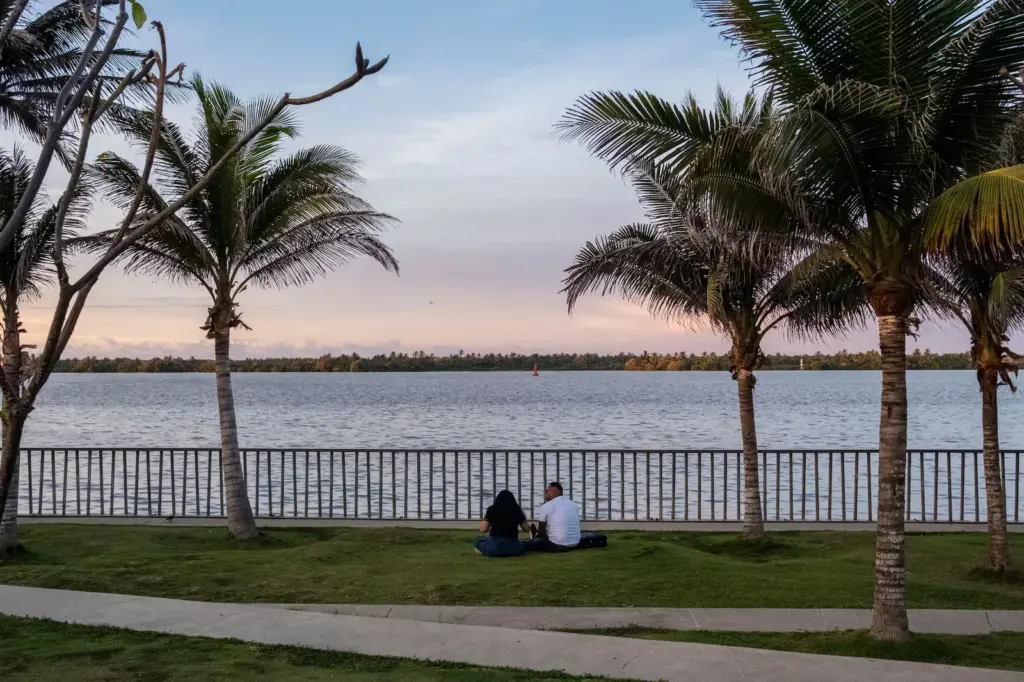
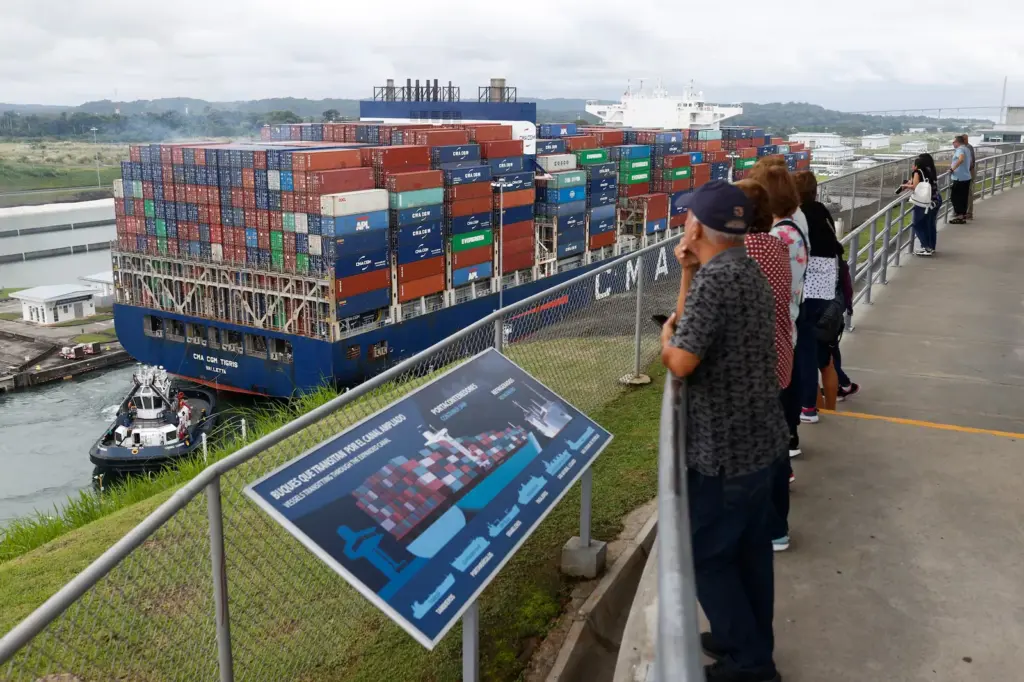
Ignoring the value of the Caribbean, mainly the maritory, was the reason we lost Panama. We did not understand that it connected two worlds: the Atlantic and the Pacific. And we lost it because inside the country we were busy doing something we have done all our lives: hating and killing each other. The idea of building the Canal came from the 16th century, with proposals from the conqueror Gaspar de Espinosa and King Charles V. The first excavation attempt by the French was in 1880. Until the U.S. arrived and goodbye to the Canal and goodbye to Panama. We barely noticed, as we were finishing the Thousand Days War. So, we had to settle for 25 million dollars in compensation. Crumbs of bread.
For the same reason, we lost 75,000 square kilometers of sea to Nicaragua. A drama to which writer Cristina Bendek alludes with feeling in her recent article for El País, “The cost of the break with Managua, or the loneliness of my great country.” In it, she speaks of several painful truths, including the ignorance of insular geography and its border importance. “For at least a century, Bogotá facilitated constant fragmentation, lost Panama in 1903, and handed over the Mosquitia to Nicaragua in 1928. More recently, it forgot to mention the raizales of the archipelago in its counter-memories in The Hague in 2008, as if the islands were a deserted wasteland, without claimants or their own history.” She finds it absurd to close the embassy in Nicaragua, and I think she is right; it will bring no benefit to Colombians, just as the break in relations with Chávez and Maduro’s Venezuela did not.
What others did understand
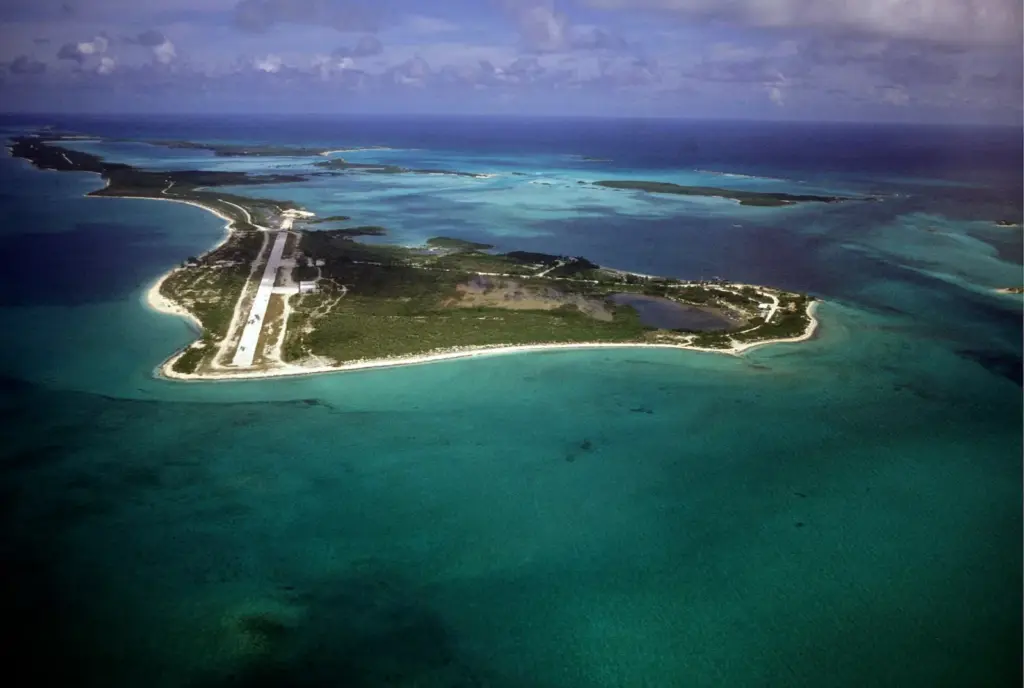
And look at the irony. And also the shame. It was the Medellín cartel, and particularly Carlos Lehder, who did understand the importance of the Caribbean. This Colombian-German capo knew that more profitable than planting coca and having labs to produce cocaine was having routes that connected production and consumption zones. So he bought Norman Cay, set up a fleet of small planes, and began operating from there. He moved between Miami, Barranquilla, San Andrés, and Norman Cay (The Bahamas), 340 kilometers from Florida. Between 1978 and 1982 he used this cay as a base of operations until Washington put him in the crosshairs. He was arrested, extradited, and sentenced to life imprisonment plus 135 years.
Another person who understood the value of the Caribbean is former governor and senator Fuad Char, head of the Char business and political group. He grasped it almost 50 years ago. Perhaps his Syrian-Lebanese origin gave him a broader vision, and this allowed him to create his business empire, for which politics has been functional. He has always had excellent relations with the government, whoever it has been. More than a political project, the Chars are a business project, helped by politics.
The best biography I know of this Clan was done by journalist Laura Ardila, in the book La Costa Nostra (2023, Rey Naranjo Editores). A key text to understand how politics works in Colombia, its degree of decomposition, and how regional elites articulate with those from Bogotá. It shows how Char and his children have interacted with different political parties, governments, and economic groups. Char built a model that successfully combines business and politics, seeing the State as the indispensable lever to achieve them. Apparently, this is the model to follow for the president-elect. But beware, not all that glitters is gold.
Read more The women’s culotte pants available in 14 colors that go with everything and are a hit this summer
The American Mediterranean
It is no secret that Trump has decided to entrench himself in the American hemisphere to contain the commercial and technological advance of China, which is disputing global leadership. The Monroe Doctrine was reformulated into what has been called the Donroe Doctrine: America as a territory they are not willing to share with anyone.
I have alluded to this in other articles and feel the need to return to it because it is a geopolitical metaphor that describes the Caribbean as the continental equivalent of the classical Mediterranean: an inland sea crossed by trade routes, historically turned into a stage of imperial disputes, cultural mestizaje, and domination projects.
The concept has roots in the geopolitics of the late 19th and early 20th centuries. Alfred Thayer Mahan, a famous U.S. naval strategist, pointed out the value of the Caribbean as a mandatory passage between the two oceans, anticipating the logic that would justify the construction of the Panama Canal and the influence of the United States in the region. In 1942, Nicholas Spykman, a geopolitical scholar and Yale professor, explicitly used the expression “American Mediterranean.” For Spykman, the Caribbean was not only a cultural space of mestizaje but a strategic security zone: the functional equivalent of the Mediterranean, a closed sea that had to remain under U.S. control.
In Latin America, the Bogotan Germán Arciniegas addressed the topic in Biography of the Caribbean (1945), the most read book of his entire career, and the most known and translated before One Hundred Years of Solitude. Arciniegas argues that just as that sea was the stage where the West was born, the Caribbean was the space where Europeans, Africans, and indigenous peoples clashed and merged, giving rise to a unique mestizo civilization, which forms a world apart. Former vice president Gustavo Bell Lemus states in a foreword to a reissue of the book that “… the history of Colombia cannot be fully understood without having the Caribbean Sea as a backdrop. After all, it was on the crest of its waves that the peoples, religions, and cultures arrived that, merging with the aboriginal peoples who inhabited its vast territories, in a dramatic and fruitful clash, shaped the society we are today.” Despite this colossal work, Colombian leadership never understood this.
This theory remains relevant to rethink Colombia’s position — with its Caribbean coast — within the dynamics of drug trafficking, migration, maritime territorial disputes (such as the dispute with Nicaragua), and the U.S. military presence in the region. It takes on special relevance in light of the political process being shaped with the arrival of Abelardo de la Espriella to the Presidency. What remains to be known now is the depth of the proposal, whether it will have the depth of the Caribbean or that of a swimming pool.
The challenge of doing it right
The Caribbean could run the risk of being perceived only as a business area that, besides Barranquilla, would have a vital power center: Miami, where transnational economic and political interest groups converge. Politically influential figures emerge at its center such as Secretary of State Marco Rubio, Colombian-American Bernie Moreno, senator for Ohio but a figure close to Trump, and with influence in Florida. Among others, like Mario Díaz-Balart, Representative María Elvira Salazar, a donor to El Tigre’s campaign, who has strong ties as a U.S. citizen and is affiliated with the Republican Party. For all of them, the Caribbean can be a kind of promised land to multiply their great fortunes.
For this new El Dorado to be perfect, it would only be necessary for Trump to reach an agreement with the heirs of the Castros in Cuba; thus, Miami, Havana, and Barranquilla would form a golden triangle. The question is whether this political vision solves the backwardness, misery, and exclusion of the Caribbean, the loneliness and abandonment of San Andrés, or if the development it generates is just a mirage that deepens inequalities and fosters a culture of quick enrichment that starts with the co-optation of the State for particular benefit.
Barranquilla could be not an alternate but the capital of Colombia. To induce us to look at the sea, and as long as this means a new vision of the State that generates inclusive development and strengthens democracy, and not the dreamed paradise of a handful of pirates and corsairs driven by greed. De la Espriella faces a crossroads he cannot avoid: either his proposal expresses that vision of society and State or he turns it only into the exploitation of a business opportunity, with the veneer of regional vindication. That is his challenge.