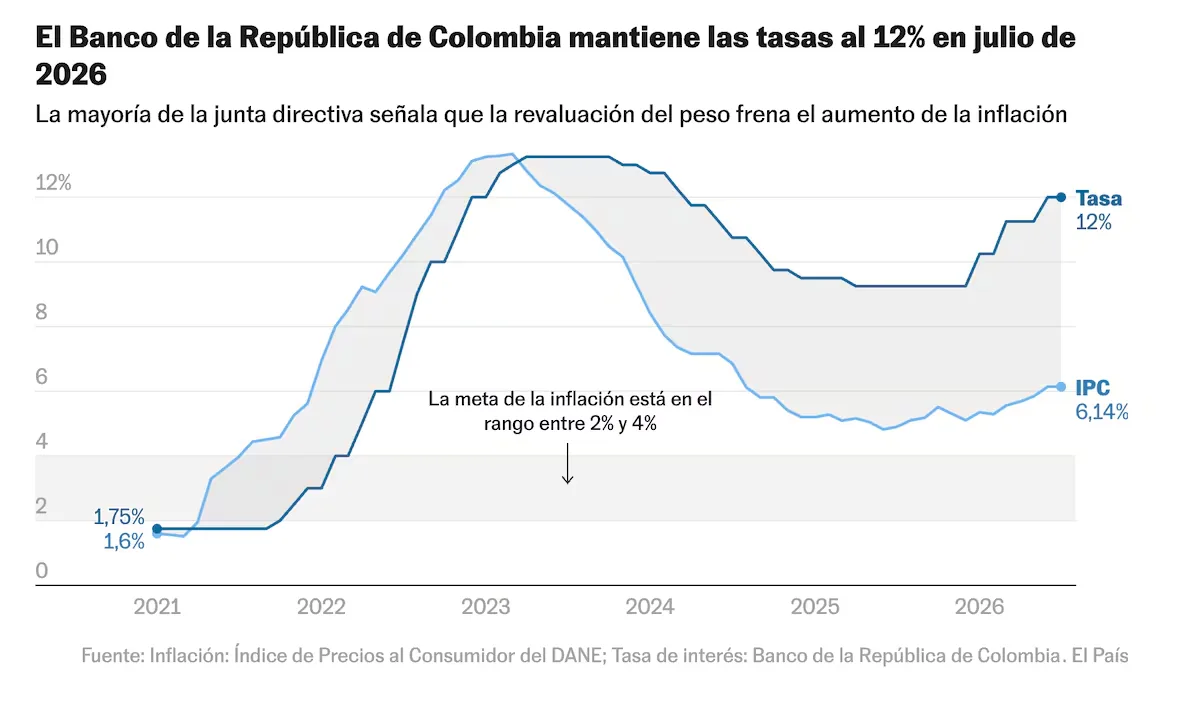








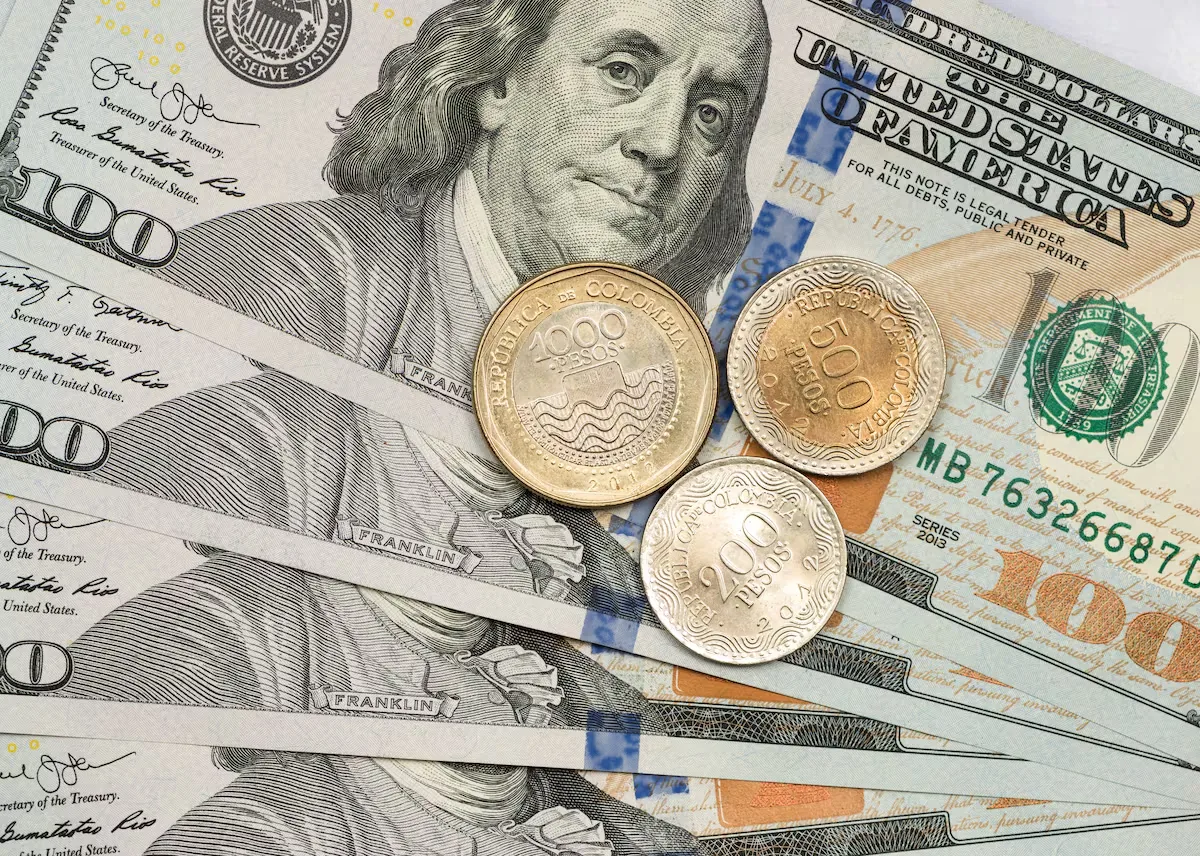
In Colombia, the price of the dollar has dominated street conversations for weeks, and since last Friday it has been circulating in the technical corridors of the Banco de la República. Most of the Board of Directors not only surprised by keeping the interest rate steady at 12%, when the consensus expected an increase of at least 50 basis points, but also by announcing a program to buy up to 4 billion dollars with the aim of increasing the country’s international reserves, which are around 67 billion dollars. Alejandro Rojas, analyst at Banco de Bogotá, considers that this operation goes beyond monetary shielding, as he maintains that the reserves are already within the optimal range recommended by the International Monetary Fund, and that the goal is to “slow down or contain the speed of the dollar’s loss of value.” In other words, to fight against the appreciation of the peso. After Monday’s auction, the peso fell more than 2%, in a volatile session that reached depreciation peaks of over 4% during the day.
The brokerage firm Acciones & Valores comes to a similar reading: the new program introduces a structural demand for dollars, with which the Issuer “sets a technical floor for the currency.” The peso has accumulated a 15% appreciation so far this year and more than 23% in the last 12 months, which has hit exporters’ revenues. Among the multiple reasons analysts point to for this, the tightening of monetary policy stands out. The interest rate differential between Colombia and the United States has widened to 8.4%, which encourages the speculative strategy called carry trade: borrowing in cheap dollars to invest them in the Andean country. Hernando Zuleta, dean of the Faculty of Economics at Universidad de los Andes, considers that part of the Issuer’s bet “is to fight against appreciation.”
First, it is necessary to understand what the operation launched by the Bank this Monday consists of. The instrument is a put option that works, essentially, like an insurance policy: it gives commercial banks the right, but not the obligation, to sell dollars to the Banco de la República, but only on days when the exchange rate is below its 20-day moving average of business days. That is, if the dollar is cheap compared to the previous month, banks can sell; if it does not drop enough, they lose the money they pay to participate, like any unused insurance. Monday’s auction was for a quota of 400 million dollars, exercisable during the remaining days of the month. Demand almost doubled what was offered: 37 entities — 31 commercial banks, 5 financial corporations, and one brokerage firm — submitted offers for 877.5 million dollars; the Bank approved the full quota. The cut premium — what banks paid for the right to sell — was 13,000 pesos per 1,000 dollars. With this same scheme, the Bank accumulated about 1.5 billion dollars in 2024.
Who wins and who loses with this? The Bank gains reserves — its declared objective — and keeps the premiums. Commercial banks gain certainty by having a guaranteed buyer at the official TRM on days when the peso appreciates strongly, instead of having to auction their dollars in a spot market where many others also want to sell, thus ending up underselling. The risk for the Issuer is opportunity risk: if it buys dollars today and they become even cheaper later, it ends up overpaying. If the commercial bank never exercises the option — because it prefers the open market, or because the dollar does not drop enough — it loses the premium.
Felipe Campos, manager of Strategy and Economic Research at Alianza Valores and Fiduciaria, wrote on X that the Bank is intervening in the dollar “on both sides.” The logic is that keeping the rate steady, instead of raising it, reduces the attractiveness of the carry trade, while the purchase of dollars increases the demand for green bills. Zuleta says that the Issuer’s decision to call it “reserve accumulation” and not “exchange intervention” is no coincidence. If the Bank openly admitted that it defends an exchange rate level, it would call into question its commitment to the flexible exchange rate regime that has been in place since 1999, the same year the inflation targeting scheme was implemented.
Read more Tense calm in Ceuta five days after the massive entry of immigrants
Although accumulating reserves gives confidence to international creditors, nothing is without risks. Andrés Giraldo, professor in the Department of Economics at Pontificia Universidad Javeriana, points out two risks. The first is that the exchange rate does not react. The 400 million dollars per month announced by the Bank is a modest figure in a foreign exchange market that moves billions of dollars daily, so nothing guarantees that the purchase will stop the appreciation in the long term. The second risk, inflationary, is more technical: every time the Issuer buys dollars, it pays with pesos, which increases the amount of money circulating in the financial system. If more pesos are available and credit demand remains, its price — the interest rate — tends to fall, following supply and demand logic. To avoid this, the Bank must withdraw an equivalent amount of pesos from circulation by another means, almost always by selling bonds, called TES, in a process known as sterilization. If done halfway, the excess pesos, warns Giraldo, can push prices upward.
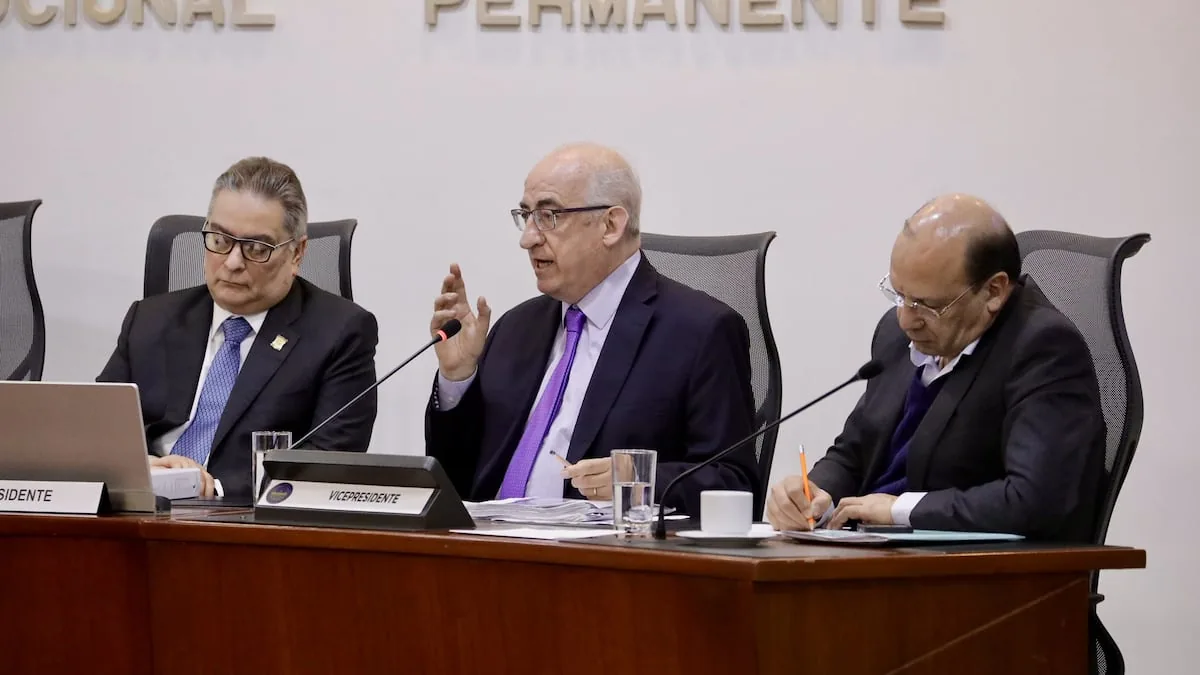
The argument of appreciation weighed, especially in the vote of the one who — it is speculated — was the swing vote, even though the Bank’s technical team had revised upward its inflation projections (from 6.4% to 6.9%) and growth (from 2.4% to 2.5%) for 2026, which technically supported raising the rate. In this year’s hikes, the vote had also been four to three, with outgoing Finance Minister Germán Ávila, Laura Moisá, and César Giraldo on the Government side, seeking not to raise or even cut. On Friday, one of the four who had been voting with the “hawk” bloc joined them. Both Campos, from Alianza Valores, and Rojas, from Banco de Bogotá, see Olga Lucía Acosta as the most likely responsible for that shift, although they leave it as a suspicion.
The decision has also fueled the argument of sectors of the outgoing Government that the Bank acts for political calculation and not technical reasons, a reputational risk that adds to those pointed out by Giraldo. Beyond who made the shift, the Bank’s unpredictability has increased. In 20 years and 216 meetings, the Issuer has surprised the market 22% of the time; in the last 14 meetings, that proportion rose to 57%; and so far in 2026, there have been four surprises in five meetings (80%). In the current situation, Rojas insists that “future decisions will be somewhat more difficult to predict.”