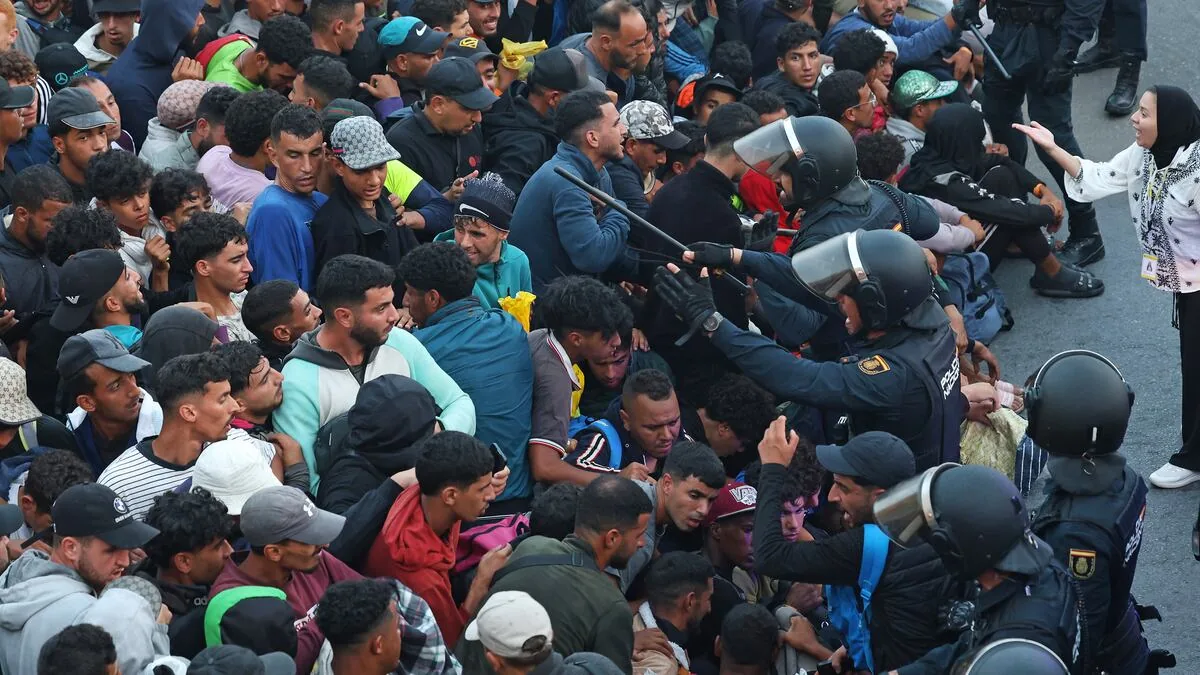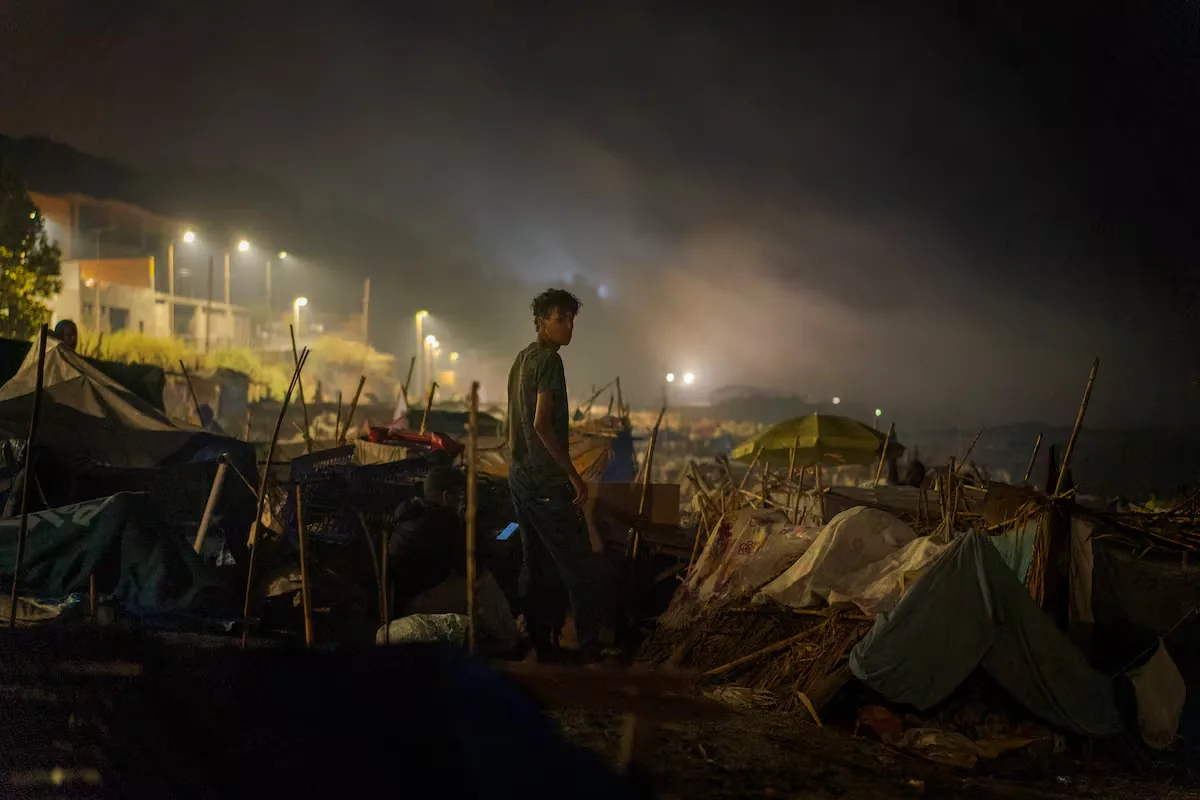








It may be an exaggeration to describe migration as a weapon of mass destruction; probably the people of Ceuta did not see it that way last weekend. But it is no rhetorical excess to argue that migration policy is today the most thorny issue in the EU, with the far right exaggerating and the right, and even the Scandinavian center-left, joining that wave which has little to do with the values Europe claims to defend. One of the great exceptions is Spain, which is implementing a regularization for hundreds of thousands of migrants and opening policies that partly explain a GDP growth well above European metrics. But more than 60,000 people have irregularly crossed the Spanish borders — which are Europe’s — just a few hours ago, causing a first-rate crisis, and reaffirming Spain’s solitude on this highly controversial agenda. Up to 22 countries led by an Italian populist, Giorgia Meloni, and the Danish social democrat, Mette Frederiksen, strongly criticized Pedro Sánchez’s Spain after the Ceuta influx with a strange mix of alternative facts and amnesia of European values. The cold reaction of the President of the European Commission, Ursula von der Leyen, gave fuel to those attacks, although this Monday – with the crisis on the way to being resolved — the German changed course and adopted a more conciliatory tone. The Spanish government, despite the mistakes, solved the bulk of the problem in 48 hours. And this Tuesday it is their turn: Spain, according to consulted sources, will demand solidarity from partners at the Interior Ministers summit and will reproach the hardest ones for what Pedro Sánchez has called a “selfish, polarizing and illegal reaction,” guided by “prejudices, fake news, ignorance or political interest.”
Read more The Bank of the Republic begins the strategy of buying dollars and the peso falls by 2%
“That will be the Spanish position,” summarize the sources consulted in the Executive, who applaud Von der Leyen’s change of stance and predict that some partners will distance themselves from Meloni and Frederiksen’s position after the initial sharp reaction. “There is disappointment over the initial reaction of the partners, but at the same time the level of criticism has softened compared to the first hours. Sánchez’s letter was forceful, due to the synchronization between the US, the far right and part of the European center-right, and that is the line of the Spanish position, but taking into account that the general tone has improved,” explain sources from La Moncloa.
Solidarity, at least verbally, would have begun to arrive at the ambassadors’ meeting held this Monday to prepare the virtual meeting of ministers, according to diplomatic sources familiar with what happened at this meeting. The same sources emphasize the constructive tone of that meeting, although they point out that Spain has shown its frustration with the partners’ reaction and has underlined, as a reproach, the differences between the Ceuta case and other similar ones in the past, such as those in 2021 at the borders of Poland and Lithuania with Belarus. Those were labeled as “hybrid attacks” and all of Europe, including Spain, condemned them and offered solidarity; what happened in Ceuta has been, on the other hand, an “unacceptable migration crisis” for which Spain is responsible, according to the letter signed by 22 countries.
Although the tone was positive in that first tasting, it has also become clear that the underlying political differences persist: the example cited publicly and privately is always the massive regularization. Government sources expect a “tense and long” meeting this Tuesday, and admit that several partners insist on the role of regularization in the Ceuta crisis, “despite all indications that it was nil.”
Spain has been the toughest European country in criticizing Israel and Trump in recent times; after all, the fight against the far right is probably the central argument of President Pedro Sánchez in the upcoming electoral call. On some agendas, such as Gaza, consensus tends toward Spanish positions. But along the way Sánchez has earned a dangerous enemy, Donald Trump, and increasingly less veiled criticism from European partners more concerned about the war in Ukraine, due to Spain’s refusal to spend 5% of GDP on defense. That enmity with Trumpism was felt again this Wednesday: the US ambassador to the EU, Andrew Puzder, supported in a message on the social network X the letter promoted by Italy and Denmark.
.@POTUS President Trump’s commitment to ending illegal immigration and securing America’s borders is absolute. The scenes coming out of Ceuta are a sobering reminder of what happens when that resolve is absent. We support the 22 European member states’ open letter calling for…
— Ambassador Andrew Puzder (@USAmbEU) August 3, 2026
The Ceuta crisis – fundamentally more a geopolitical crisis than a migration one — highlights Sánchez’s current lack of support in Brussels. Only France, Portugal, Ireland and Luxembourg refused to sign Meloni and Frederiksen’s letter. And even so, after the excesses of the first hours, things are returning to normal. The President of the European Commission, Ursula von der Leyen, who initially joined that chorus of critical voices, toned down her message, in what Spanish sources call a “brutal change of stance.”
Von der Leyen completed this Monday a turn from her initial position in a letter addressed to Sánchez. She demanded “solidarity,” something only the President of the European Council, the Portuguese António Costa, had done so far. She congratulated Spain and Morocco, “an important partner to control human trafficking and illegal immigration”; it is curious how almost no one in the EU has raised an outcry with Rabat. And she left behind the public reproaches of Friday (“we cannot allow anyone to come to our Union without respecting our rules”) to limit herself to asking Spain to strengthen critical infrastructures, something the Spanish government has already done, so far without requesting help from Europe.
Foreign Minister José Manuel Albares offered early Monday a first approach to the Spanish position. Spain will “demand” solidarity from partners, according to Albares. “Ceuta and Melilla are two Spanish cities, but also European and EU borders,” he declared on TVE. “Spain is today the Mediterranean route with the lowest number of irregular entries by any of the routes,” the minister defended in that appearance. Frontex data confirm that thesis. In the first half of the year, 16,643 irregulars entered via the eastern Mediterranean (Greece), and almost 15,000 via the central Mediterranean (Italy), compared to 7,860 via the western Mediterranean (Spain) and just over 3,000 via the Canary route. Figures fell by 42% in 2025 as a whole, according to Frontex. And they show an additional 25% decrease so far this year (with data up to July 16), according to the Interior Ministry.
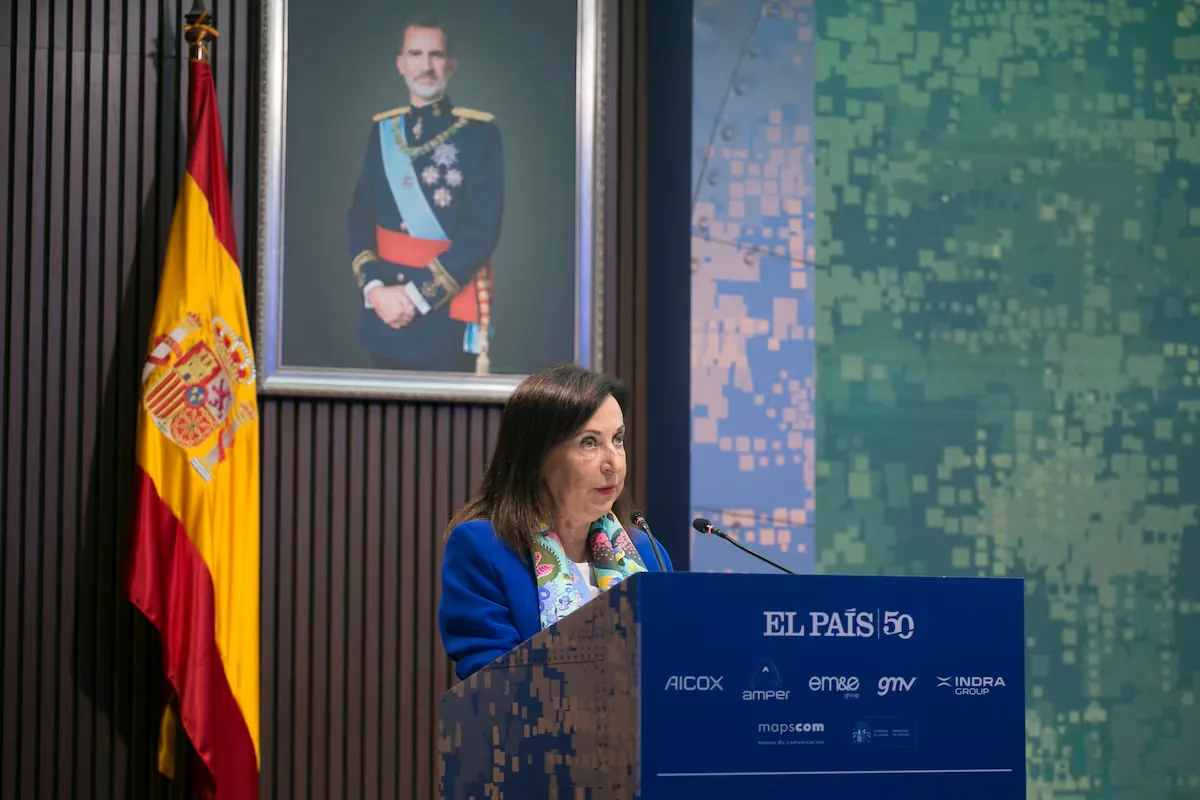
Minister Fernando Grande-Marlaska will brandish those numbers before his counterparts, according to consulted sources, emphasizing the commitment to border control and Spain’s passing grade in implementing the Migration and Asylum Pact (compared to Italy’s shortcomings, for example). “There can be no doubt about Spain’s commitment to its European obligations or question Spanish diligence in migration policy,” according to Interior sources, but that is exactly what 22 countries have done in writing and what a group of partners will argue at the meeting. There, Spain will defend that it has managed to control flows from Mauritania, Senegal, Gambia and also Morocco. Despite Sánchez’s, Albares’s and Grande-Marlaska’s exquisite diplomatic care, Rabat’s cooperation or at least connivance in the avalanche of entries last weekend is increasingly evident, as Defense Minister Margarita Robles suggested, and many analysts have denounced.
At heart, the migration focus is only the scarecrow of a bigger rift within the Union. In the 2021 jump, much smaller in number, the unanimous reaction was solidarity; now it is not. “The difference is that now Sánchez is alone, he is the only heavyweight socialist leader in Europe; the Danish Frederiksen is not on that side in migration matters,” emphasizes Margaritis Schinas, former Vice President of the Commission and now Minister of Agriculture in Greece. Both Scandinavians and Baltics are hurt by Spain for what they understand as a lack of commitment to military spending. And the rest of Europe, left and right, for the regularization: the perception is that the country that approved that measure is at the same time incapable of controlling the borders. “The facts say otherwise. But in politics perceptions matter more than reality. There is a deep political division, with each partner doing their own thing, and a general unease with Spain, and that is reflected in the Ceuta episode and the European reaction,” according to sources from the Executive of one of the eurozone countries.
Josep Borrell, former head of European diplomacy, criticizes that Italy and other Member States have “abused the EU legal framework in flagrant violation of the principle of loyal cooperation that binds them to Spain.” Luis Simón, lead researcher at the Elcano Institute, adds that the Spanish reaction “was late and reflects intelligence gaps.” He also highlights that the half-measures with Rabat, both in Spain and in Brussels and other foreign ministries, “lead one to think that we have a potentially serious security problem on the southern border.” Far from defending itself, Spain plans to go on the offensive in Brussels today, with few supports, the European Commission low-profile and 22 countries (or fewer, according to the Spanish version) hostile.
“It is time to raise the issue to the level of heads of State and Government to strengthen alert mechanisms and European responses to a crisis of this magnitude, and to tighten cooperation on borders,” say diplomatic sources, aware that this is one of the key points of the next European Council in October. Both Von der Leyen and António Costa and Pedro Sánchez have given the first signs that this may be the next stop on the road.
Read more Tense calm in Ceuta five days after the massive entry of immigrants