









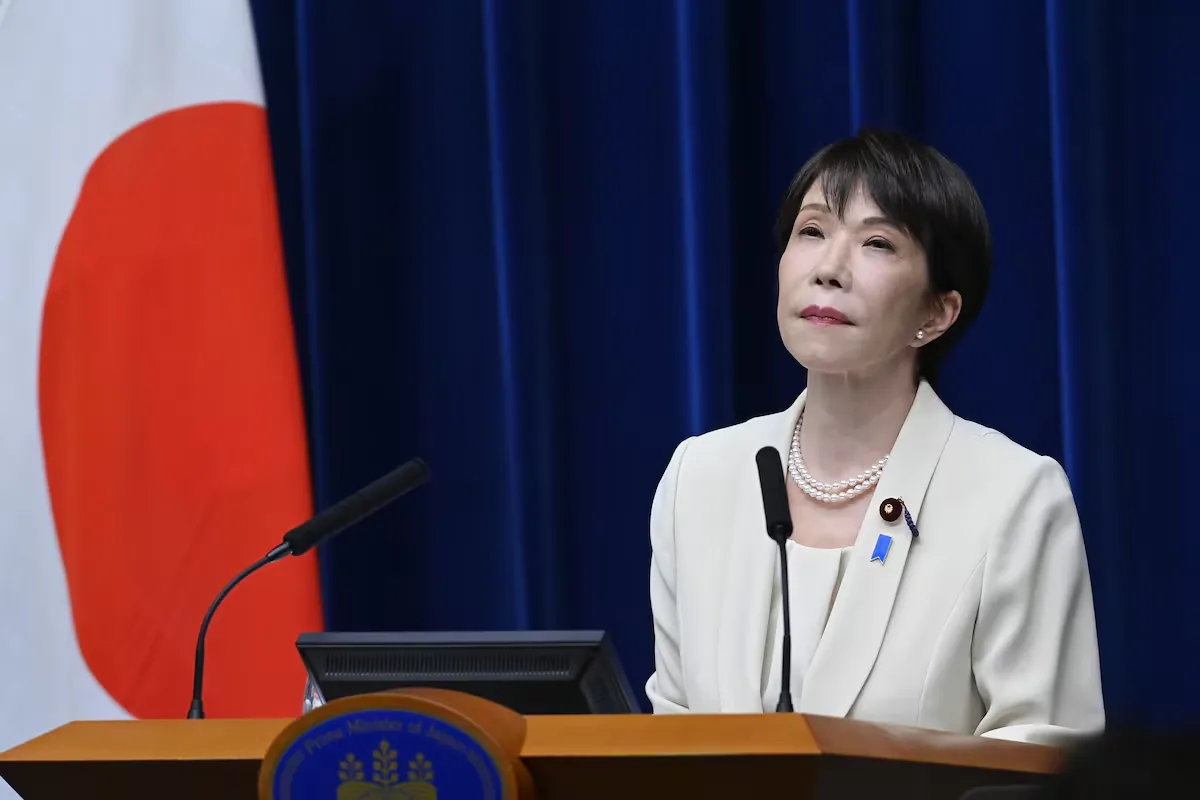
Japan’s rearmament, justified by the geopolitical tension in Asia, has ceased to be merely a defense issue and has also become a pillar of its economic growth, according to the Defense White Paper released this Tuesday. The 598-page document is the first assessment of Japanese defense under the administration of Prime Minister Sanae Takaichi, an ultra-conservative hardliner who promotes military spending as a way to boost the national economy.
In the foreword, Japanese Defense Minister Shinjiro Koizumi refers to “the difficulty of distinguishing between civilian and security technologies” and to the expansion of the dual-use area between defense and the civilian sector. Koizumi cites “the crucial importance of sustaining defensive power” through investment in research and development, and the positive economic effect of strengthening the defense industrial and technological base.
The Defense Minister also reaffirms, “as the central axis of Japan’s security policy,” the alliance between Japan and the United States, and mentions his meeting with U.S. Secretary of Defense Pete Hegseth in January of this year.
Although Japan’s military activity has been limited since the end of World War II by the pacifist Constitution drafted by the U.S. occupation forces, in recent years Tokyo has taken significant steps toward rearmament, justified by the regional geopolitical environment and encouraged from Washington.
In her first policy speech to Parliament on October 24 — four days before officially receiving U.S. President Donald Trump on a state visit — Takaichi reaffirmed the commitment to maintain annual defense spending at 2% of GDP, equivalent to about 49 billion euros.
The new document promotes the entry of startups into the defense industry and, after the elimination of the so-called five categories that until now limited the export of Japanese armaments to non-lethal products (rescue, transport, alert, surveillance, and mine tracking), allows the export of complete lethal weapons.
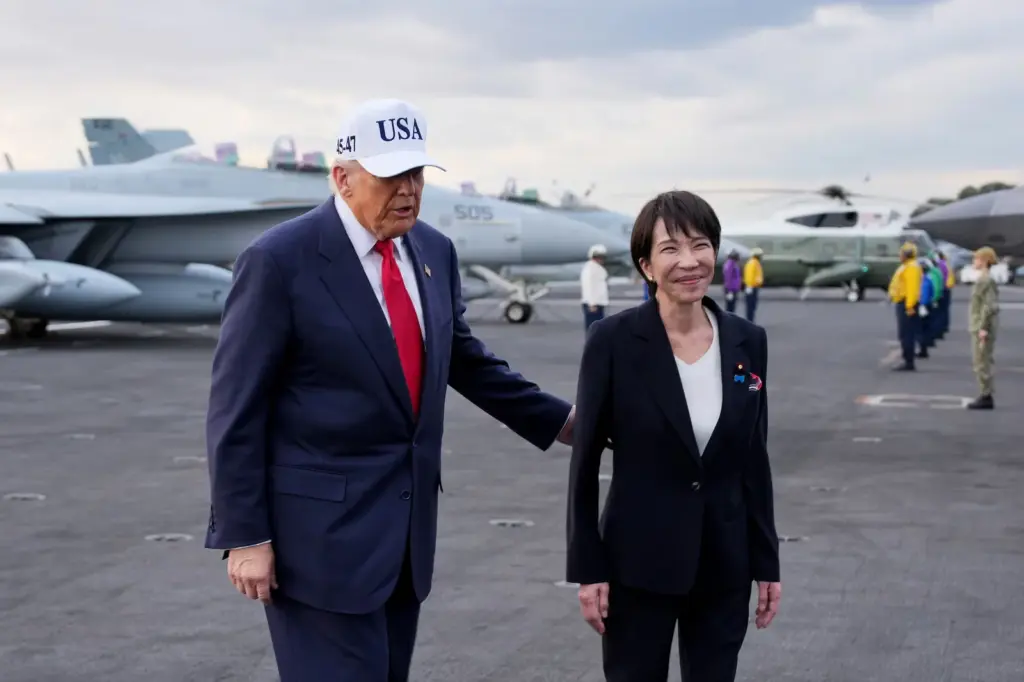
As in recent editions, the White Paper repeatedly mentions China and describes its growing military activities as the main security challenge for Japan. It describes the People’s Republic as a force that is “broadly and rapidly strengthening both the quality and quantity of its military power,” and calls it “the greatest unprecedented strategic challenge so far.”
In addition to a dedicated chapter with 414 mentions, China appears in sections about the United States, Russia, and North Korea, as well as in a specific section on the military balance between China and Taiwan.
Read more A ground services strike causes cancellations of flights from Barcelona airport
With repeated military exercises around Taiwan, China seeks to “make the constant activity of its armed forces around the island a fait accompli,” while improving its real combat capability, according to the document. “Stability around Taiwan is important for the stability of the international community, and our country needs to monitor it closely with increasing caution,” the text also states. Prime Minister Takaichi caused Beijing’s displeasure shortly after taking office by saying in Parliament that a possible Chinese attack on Taiwan could constitute an existential threat to Japan and lead to the intervention of its military.
Still, despite Beijing’s efforts to present Tokyo’s rearmament as a slide toward “new militarism,” the White Paper emphasizes that Japan “has adhered to a policy exclusively oriented toward defense, and has not become a military power that threatens other countries,” according to the newspaper The Japan Times.
Drones
Following the massive use of low-cost drones by Russia during the invasion of Ukraine, the document includes a new section on “new forms of combat” employing artificial intelligence and unmanned means.
Regarding cyberspace, the document explicitly names three cyberespionage groups linked to the Chinese government operating against Japan and its allies — Salt Typhoon, Volt Typhoon, and Flax Typhoon — as well as Russian cyber units linked to the General Staff, the Federal Security Service (FSB), and the Foreign Intelligence Service (SVR).
The text reports that starting in October of this year, the Active Cyber Defense Law will come into effect, allowing the Japanese military to apply “communication protection measures” over the country’s critical infrastructure when there is a special need for direct intervention.
Regarding artificial intelligence (AI), the Defense White Paper cites foreign systems already tested in real combat (Maven, Lavender, Gospel), but describes Japan’s own potential as incipient. Japan is building its own military AI ecosystem with participation from startups and civilian research centers. The most advanced and already operational case is a mixed disaster prevention system involving the military, given its historical role in rescue operations during natural disasters.
Regarding personnel, the Japanese defense strategy classifies the urgent task of attracting and retaining qualified personnel in the Self-Defense Forces, the euphemism used in Japanese to circumvent the constitutional prohibition on maintaining an army. A salary reform is planned, along with recruitment campaigns focused on presenting the military profession “with pride, dignity, and positive social impact.”
Read more The Civil Guard confirms the murder last July in Benahavís as a case of gender-based violence