The United States tightens its grip on Cuba in search of a regime change. It is applying a strategy of progressive strangulation to force the fall of Castroism. But it is concerned about the role that Cuban intelligence services may have at this time. To counter it, the Central Intelligence Agency (CIA) has increased its operational resources on the island in recent months to intensify the operation that facilitates the change of leadership, according to The New York Times. Cuba has been declared “priority 1,” along with China, Iran, and Russia, in a recent document on the main objectives of the secret services.
“Regarding espionage and influence operations, Cuba is a true superpower in these areas,” said U.S. Secretary of State Marco Rubio a few days ago during an interview on the conservative news channel Fox News to explain the importance of Cuban intelligence services. “If we analyze the history of espionage in the United States, Cuba is the only country that has systematically infiltrated and hidden spies in our system, without even paying them,” he added.
The White House launched a campaign against the Cuban regime just over six months ago. It has imposed a strict oil embargo that has plunged the island into darkness and has approved several sanction packages to block the assets and properties of dozens of public bodies and high-ranking Cuban officials. The escalation is such that foreign hotels, the island’s main source of wealth, have had to close and cease operations while the strangulation situation over Cuba continues.
“Cuba’s military and intelligence institutions are the main agents of internal repression and nodes of kleptocracy, especially through the military conglomerate GAESA,” Marco Rubio said Thursday in a statement announcing new sanctions imposed by Washington on Cuban authorities and public bodies “involved in foreign military cooperation and the acquisition of military equipment intended for the Cuban regime.” The sanctions affect five Cuban companies and eight officials, including Roberto Legrasotolongo, chief of the General Staff of the Revolutionary Armed Forces and first deputy minister of the Cuban Revolutionary Armed Forces Ministry (MINFAR).
In recent weeks, Rubio has expressed concern about the reliability of the information Washington has about Cuba due to the infiltration of Cuban spies in the U.S. Administration. “We had a U.S. ambassador who turned out to be a Cuban spy and was recently convicted. We have had infiltrations at the highest levels of the Defense Intelligence Agency. [The analyst from that department] Ana Belén Montes was one of the biggest intelligence failures by the United States and one of the greatest infiltrations we have ever suffered in our system,” the Secretary of State said on Fox.
“I would probably place them [the Cuban Intelligence Directorate, DI] as the most complicated intelligence service I have worked against. Not only because they are so cunning and ruthless, but because they are extraordinarily good,” according to James Olson, former CIA counterintelligence chief, in a report titled Cuba, the Capital of 21st Century Communism, published by the State Department three weeks ago. Olson notes in the report: “Cubans remain infiltrated in our Government… I guarantee you we only know the tip of the iceberg. They are much better than the KGB.” The 100-page document accuses the Cuban regime of “supporting an unprecedented wave of leftist terrorism in the United States.” Since its publication on July 20, the State Department has retweeted it several times each week along with messages about the situation in Cuba.
Rubio, of Cuban origin, is leading actions within the U.S. Administration to promote political change on the Caribbean island, located just 135 kilometers from Florida. The Secretary of State considers the country a “failed state” and “a threat to the national security of the United States.”
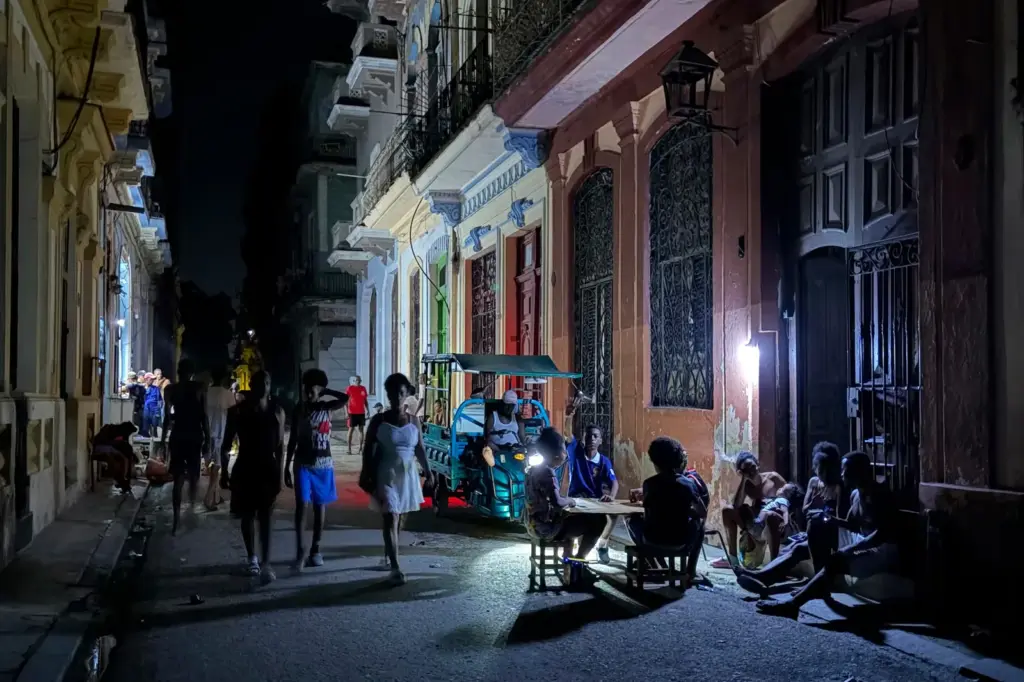
Washington increases pressure on the Castro regime while the island is on the brink of collapse due to the strict oil blockade. It barely has electricity supply; power outages are daily, there is a shortage of basic products, and the island is one step away from a humanitarian crisis.
Read more The Bank of Mexico maintains the interest rate at 6.5%
The CIA has had a secret operational group on the island for almost two years but has increased its resources by adding intelligence analysts, counter-surveillance agents, and other agency members to infiltrate the most influential levels of Cuban society and convince them of the need to replace hardline leaders with others more open to change, according to U.S. media.
They are also recruiting new informants to increase the flow of data in case the White House finally considers a possible military operation similar to the one carried out in Venezuela earlier this year to capture former President Nicolás Maduro and place Delcy Rodríguez in power under a tutelage system from Washington.
The spy agency has sent new personnel to Cuba to intensify its operations, as Politico also confirmed. Washington is positioning itself on the ground to increase information about the real situation on the island. The Donald Trump administration reviewed the National Intelligence Priorities Framework (NIPF) a few weeks ago and included Cuba as “priority 1.”
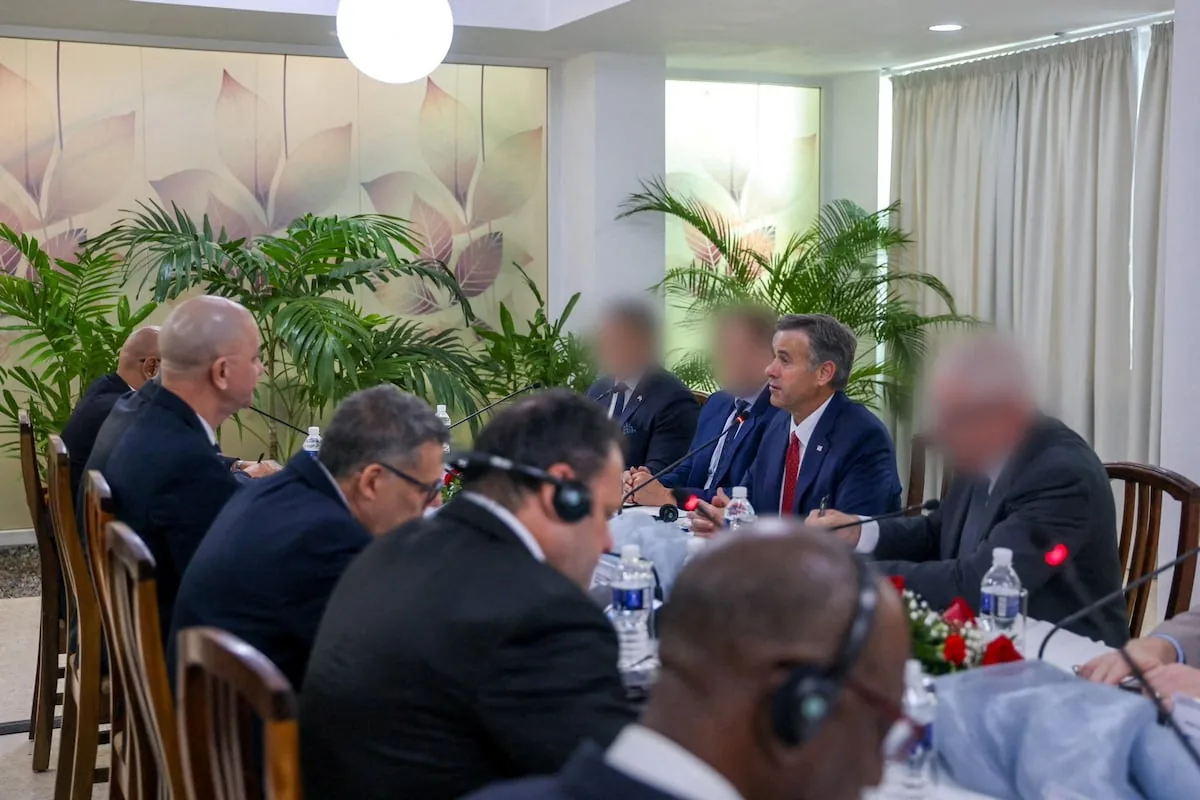
The escalation against the island accelerated with Donald Trump’s return to the White House. The Republican leader has put Marco Rubio in charge of the operation to promote political change. As proof of renewed interest in Cuba, Washington sent CIA Director John Ratcliffe to Havana last May to meet with Cuban regime authorities, including Raúl G. Rodríguez, known as El Cangrejo, grandson and bodyguard of Raúl Castro.
Ratcliffe, the highest-ranking U.S. government member to set foot on the island since Trump’s campaign began, conveyed several messages. On the one hand, he warned Havana to stop collaborating on intelligence matters with China and Russia. He also expressed admiration for Cuban intelligence services, offering cooperation if a regime change occurred; finally, he delivered an ultimatum for Cuba to undertake the political and economic reforms demanded by Washington.
The CIA’s presence in the Caribbean country is not new. Since the 1960s, it has had a more or less constant presence. In recent years, the agency declassified some secret documents about the role of its spies on the island, during the Bay of Pigs episode (1961), among others.
During Donald Trump’s first term, several U.S. intelligence agents suffered strange health problems in what they called the Havana syndrome. So the Republican minimized the presence of spies until six months ago, when he launched the tough pressure campaign to control power in his neighbor.