









EL PAÍS offers the América Futura section openly for its daily and global informative contribution on sustainable development. If you want to support our journalism, subscribe here.
When Rocío Malen Jara, 28, was told she would be able to complete her sentence for drug possession at her home on the outskirts of the city of La Plata, Argentina, she felt relief. It was 2020 and she had been granted the benefit to take care of her son, Cipriano, who was four years old at the time.
But once at her mother’s house, who had passed away recently, the reality could not have been further from her expectation. Without exit permits not even to take her son to school, without work or government support, and in the middle of the pandemic, what had been presented as a benefit had few advantages. “I was left with nothing at all,” she recalls today.
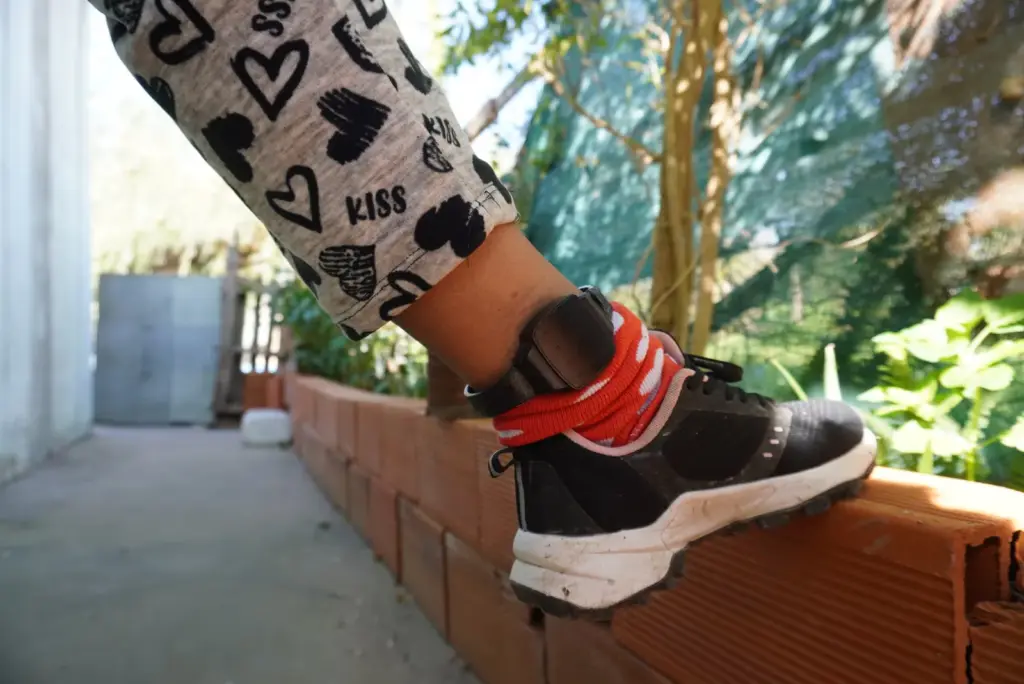
She tried to start an online clothing sales project, but with expenses increasing almost uncontrollably, she could not sustain it. Day to day, alone with her son and with an electronic ankle bracelet that beeped at any hour, it became like a trap.
“It was maddening,” she says. “The problem is that judges put you at home with an ankle bracelet, but then, nothing else.”
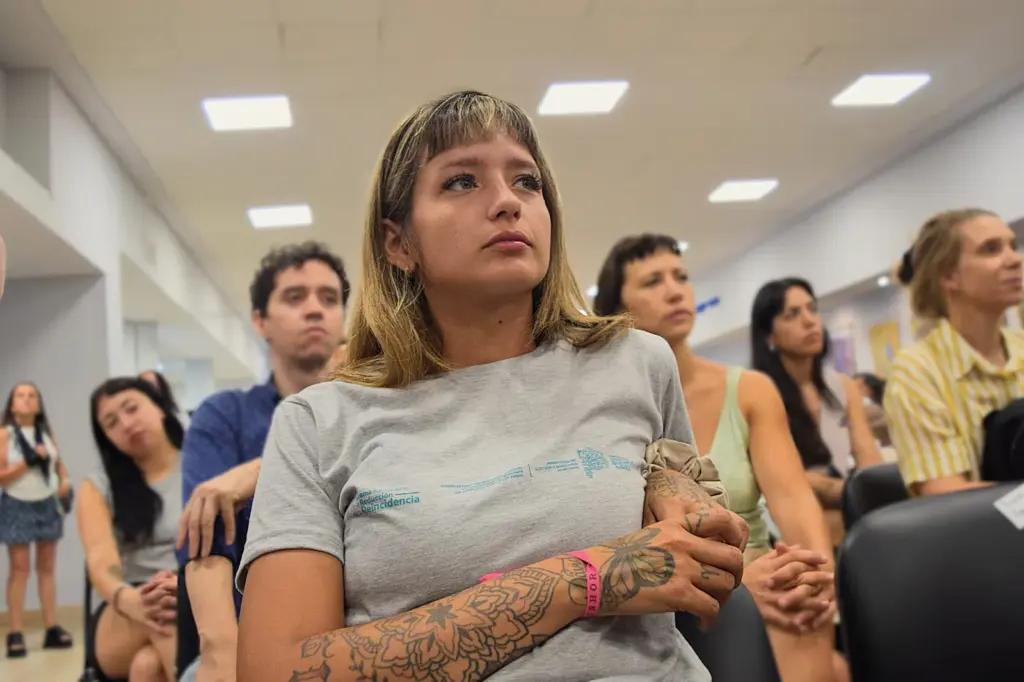
Seeking solutions, she got in touch with Atrapamuros, an organization that promotes popular education in prisons, whom she had met doing workshops when she was in jail. They brought her a bag of food and invited her to virtual meetings with women who, like her, served their sentences from their homes. She began studying accounting and working in a cooperative of the Liberadxs Branch of the Excluded Workers Movement (MTE), printing t-shirts.
“Having schedules and a routine saved me. I got up for classes, then prepared the boy for school, found a friend to take him, and then did things for the cooperative, until they started authorizing me to go in person. I had never had access to formal work in my life,” she explains.
Rocío regained her freedom in 2022. Today she is part of a group of women who support others under house arrest and works in the university accompaniment direction in prisons at the University of La Plata.
Her experience is increasingly common in Argentina, where the incarceration of women accused of possession and drug trafficking, as well as the use of house arrest, has increased in recent years. According to the most recent data, there are 3,689 women under house arrest in the country. Although women represent 4% of the total prison population, 29% of people under house arrest are women.
In times of social cuts
But this alternative to prison, which on paper seeks to relieve overcrowding in prisons, now faces new challenges in a context of cuts to social policies and widespread economic deterioration under the government of Javier Milei.
Since he took office at the end of 2023, Milei has led a state dismantling program based on cuts to social programs and public services that particularly affected the most marginalized population of Argentina. While some sectors of the economy, such as the , the massive closure of factories and businesses, labor precariousness, and loss of purchasing power have created a vicious circle that particularly impacts popular neighborhoods.
For women under house arrest, experts explain, this can mean living trapped in a house depending on a violent partner or becoming vulnerable to the same activities that led them to prison in the first place.
Macarena Fernández Hoffmann, coordinator of the criminal policy and violence in confinement team at the Center for Legal and Social Studies, says that alternatives to prison are generally good policy but warns that “it cannot be at any cost.”
“If house arrest is going to be applied, it has to be accompanied by policies that do not put women in a situation of greater vulnerability. How is that done? Starting with economic support policies for those families,” she explains and says that social organizations fill the void left by the state.
Support networks
Mariana*, 34, has been under house arrest for just over a year in a small house on the outskirts of La Plata while awaiting the resolution of the charge she faces for drug sales. Sitting in her living room, she says her main problem is not being able to generate income to support her family. She lives with her six-year-old daughter and her father, who has health problems.
For her, life became particularly difficult when she was told she had to close her cleaning products sales business because of the nature of the charges against her. “The state neither helps me nor lets me work,” she says. “I know the mistake I made, but I’m trying to do things better. If it weren’t for my dad and them, I don’t know what would become of us.”
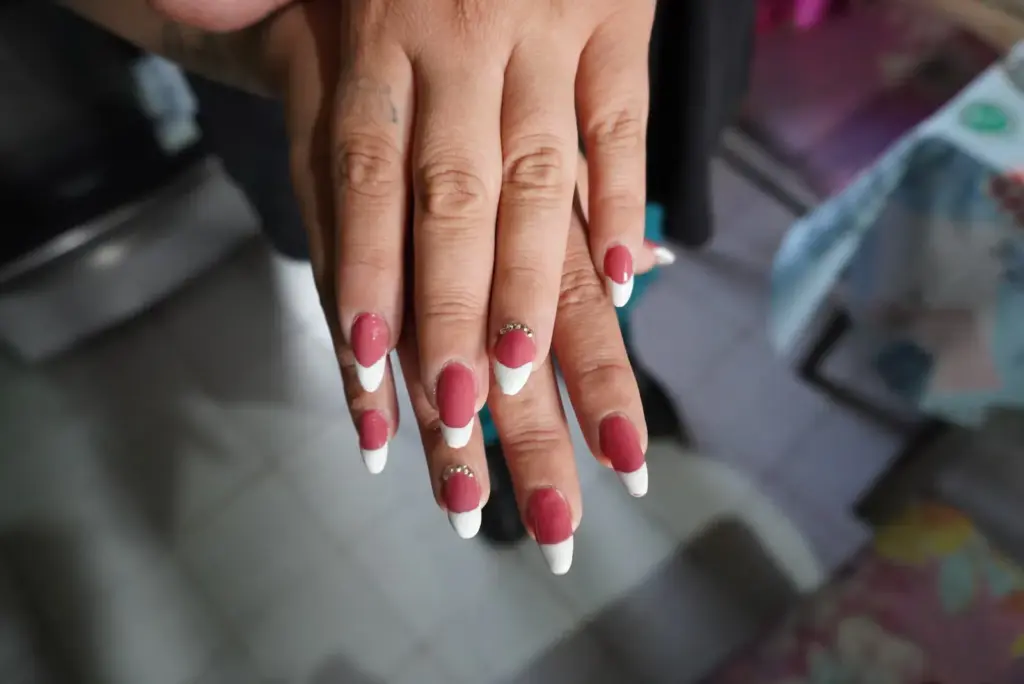
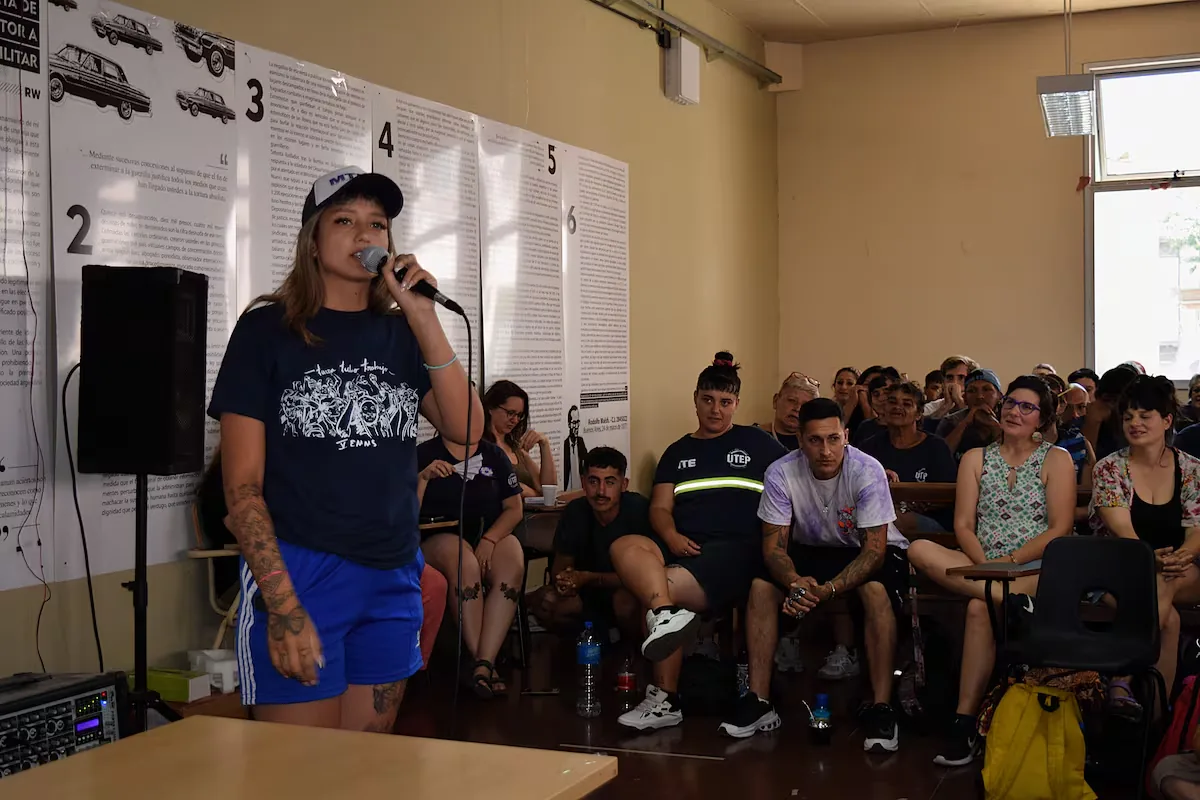
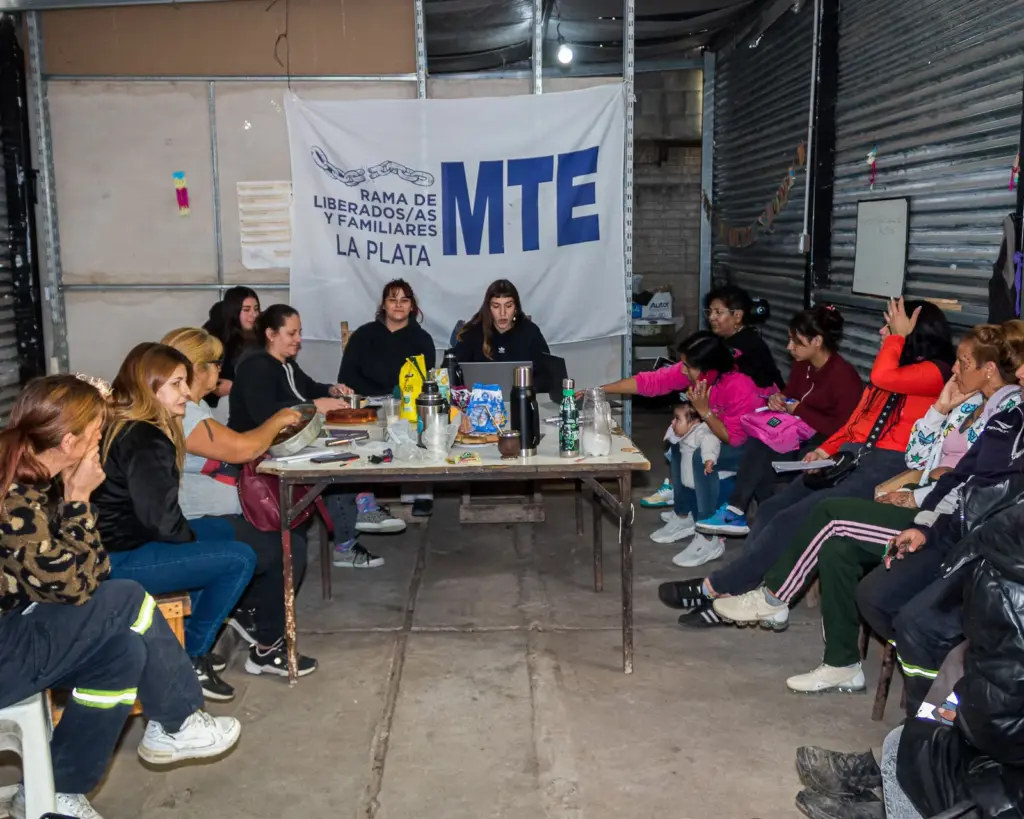
“They” are women from the Liberadxs Branch of the Excluded Workers Movement, a social organization present throughout the country of which Rocío is also a part. Since before the pandemic, they have been making rounds visiting women detained in their homes, mostly in popular neighborhoods. They bring bags of food, identify problems, and try to deliver rights in health, education, and justice that are denied to them by the state, and they stay for a chat.
“House arrest works if you have a support network. If not, many problems arise. That’s why there are cases of people who say they are better inside prison and ask to return. They say ‘at least in prison I have food,’” explains Amarilis Alayo, who since regaining her freedom in 2022 is one of the women leading the visits.
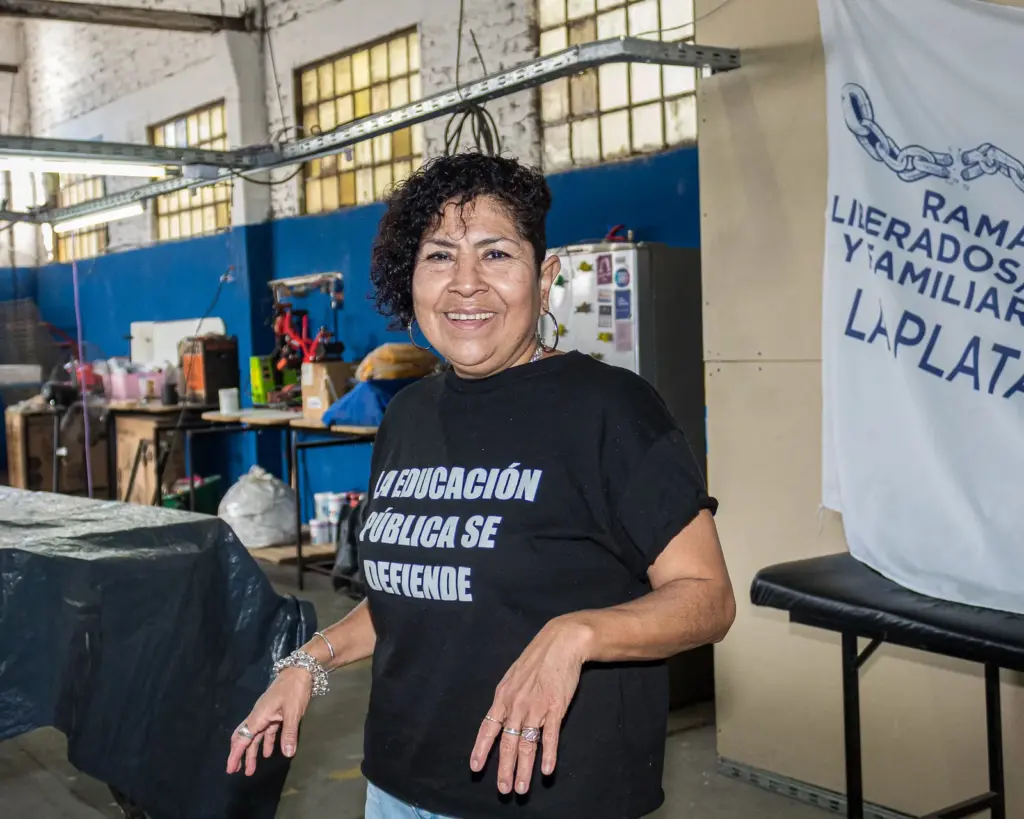
Her phone keeps lighting up with notifications. Most are messages from women, some relatives of people deprived of liberty, others are people under house arrest. They ask how to manage a request for exit, how to apply for aid or a visit. She has an answer for each one.
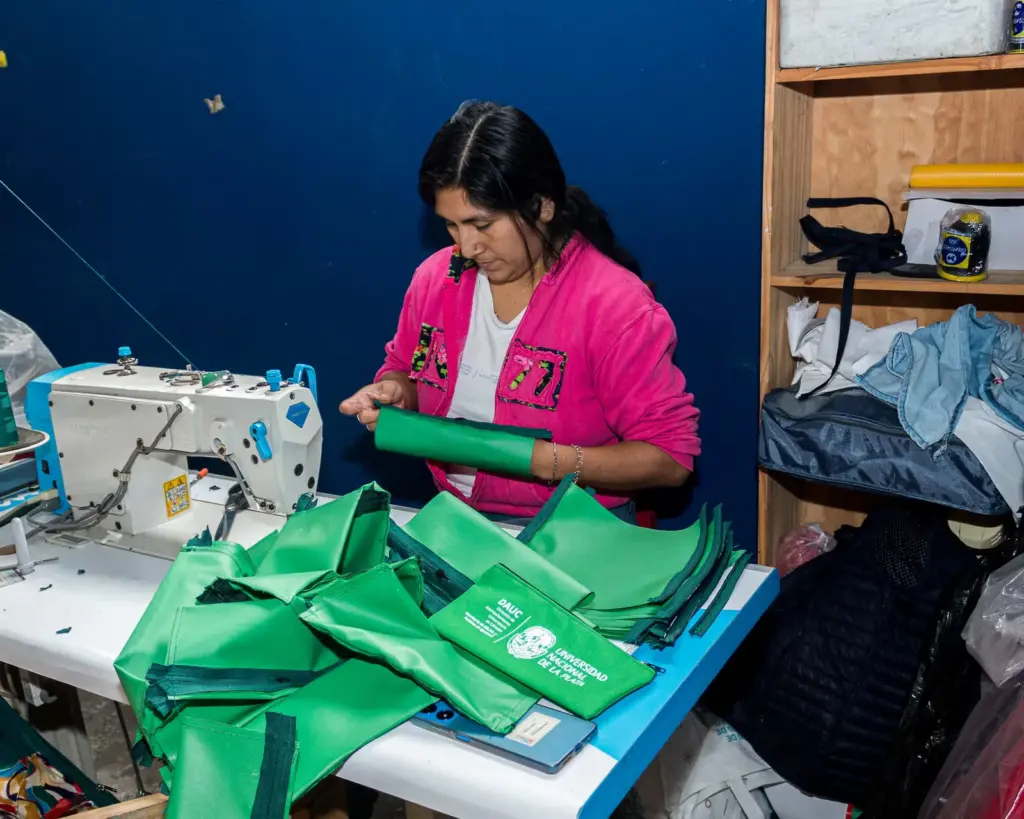
Every week, the coordinators of the MTE team organize workshops and training for women who have recently regained their freedom and others who get exit permits for a few hours. The activities take place in the warehouse that the organization has in La Plata, a huge space divided into several areas. On one side operates a large cooperative of recyclers, with piles of cardboard and bottles organized for transport. On the other side are large tables with sewing machines, a play area for children, and a space where training workshops are held.
From organizations like MTE and Esquina Libertad, a graphic and audiovisual production cooperative that also works with people who are or have been deprived of liberty, they say that both the removal of state programs and the economic retraction resulting from the government program are wreaking havoc within their productive projects.
“Milei says people have to rebuild themselves productively, but there is a huge drop in sales because no one has money, how does he want us to do it in this context? We are always reinventing ourselves, but for some time now everything is very difficult, there is no one to sell anything to,” says Ayelen Stoker, one of the founders of Esquina Libertad from her workshop in Buenos Aires.
Social organizations working in popular neighborhoods of Greater Buenos Aires for some time warn that the state’s retraction has opened the door for criminal organizations to take their place, offering work and covering basic needs of the population. This is what Rocío calls a vicious circle.
“When the drug dealer finds out you are back in the neighborhood, even if you are under house arrest, he goes and offers you a bag (of drugs) to start selling and thus support your kids, feed them. And many, in desperation, get into that and return to the same system. That is why the girls need to be able to have outings to go to a workshop, to go to a cooperative and work,” she says.
In La Plata, Mariana, who has just obtained permission to attend a workshop on gender and human rights, listens attentively to the talk and takes notes, sharing her experiences. “I want to be able to get a stable job to give the best to my daughter. I don’t want to go back to what I used to do to survive. I want her to see other things about me,” she says as we walk to the bus stop that will take her back home until she is authorized the next outing.