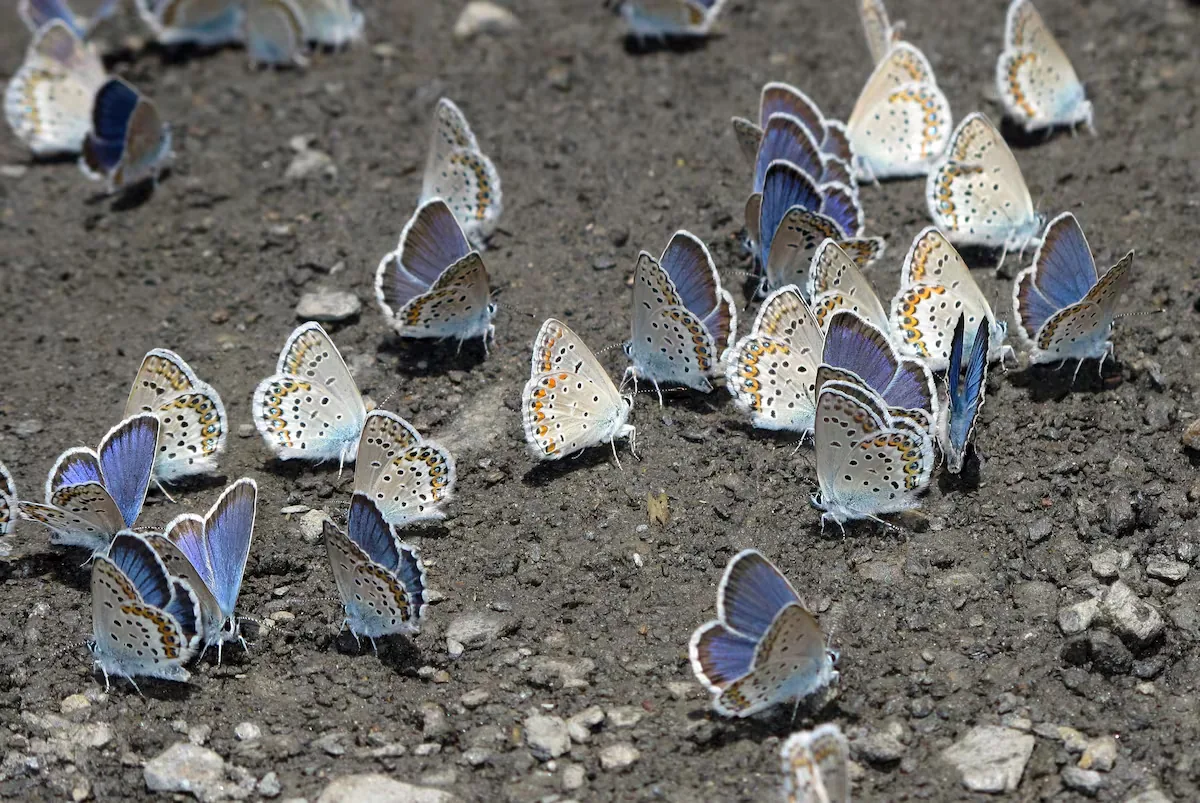
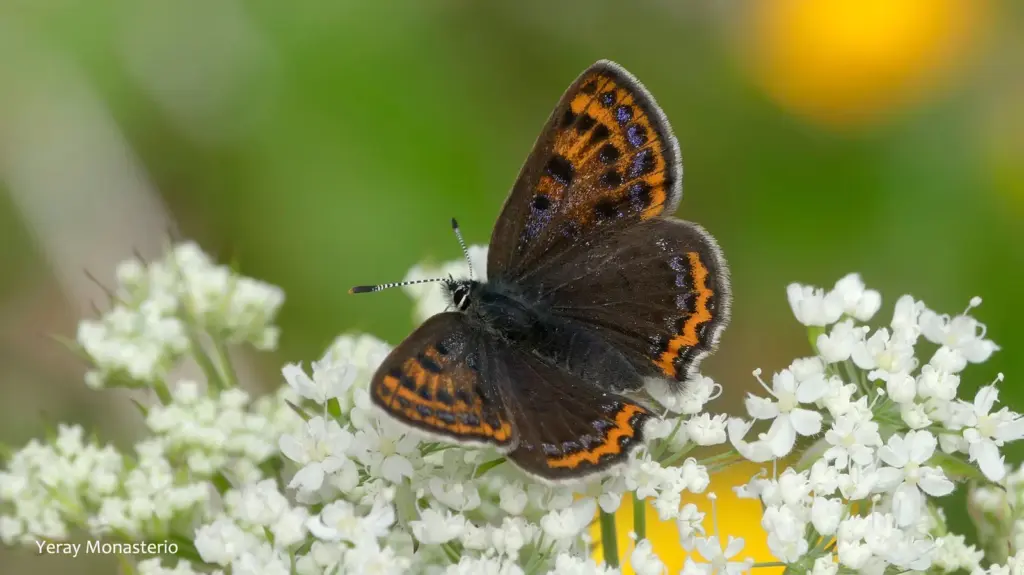
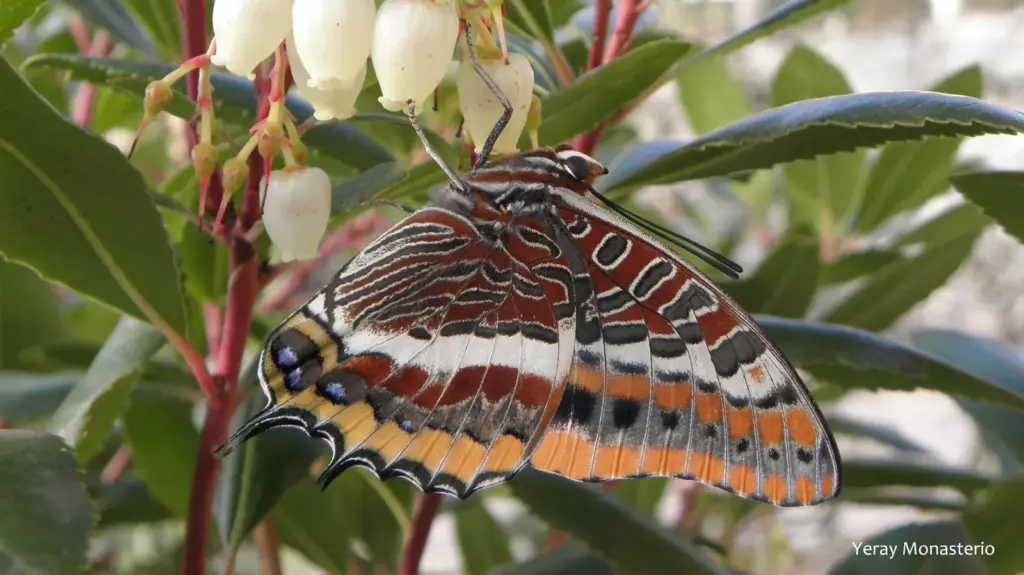
The violet copper (Lycaena helle), a butterfly with violet tones, has disappeared from Spain this year. It has not yet been made official, but they have been searching for it for four years without success in the last meadow in northern León where it survived. Meanwhile, the two-tailed pasha (Charaxes jasius), one of the most exuberant butterflies of the Mediterranean region, is already being seen in the Basque Country. In the southeast, the four-spotted grayling of Sierra Nevada (Pseudochazara williamsi), a butterfly with earth tones, has been climbing higher and higher up the mountain for decades in search of the climate it no longer has lower down. Even further south, the Canary white (Pieris cheiranthi), endemic to the islands, has La Palma as its last refuge. Extinction, conquest of the north and west, flight to the mountains, or reduction of its territory: four stories that illustrate the global drama of butterflies.
Read more Iris Tió, synchronized artistic swimmer: “It makes me happy to see that I reach people’s souls”
“The last Lycaena helle occupied a meadow of about 200 square meters in northern León,” says Yerai Monasterio, president of the Spanish Association for the Protection of Butterflies and their Environment (Zerynthia). “Previously, it was reported in Aneto and around Reinosa [Cantabria], but those populations seem to have gone extinct many years ago,” adds Monasterio. Several lepidopterists have searched for it in recent campaigns and have not found it. If this local extinction is confirmed (it still flies in other European countries), Spain would have 259 species of diurnal butterflies left, making this land the one that hosts the most in Europe, only surpassed by Italy.
Monasterio and 95 other experts have produced one of the most comprehensive reports on the distribution of butterflies worldwide. Published in Nature Ecology & Evolution, it shows that, wherever you look, something is happening with these insects. They have obtained enough information on 1,758 species from 105 countries, and the rare thing is that any are the same as years ago. The vast majority have expanded the skies in which they fly. This is what the two-tailed pasha butterflies are doing. These, like a growing number of plant and animal species, are, in geographies like Spain, conquering the west and north in a process that has popularized the neologism mediterraneization.
Sweden is a good place to see what is happening with butterflies: with its nearly 2,000 kilometers from north to south, it has several latitudinal gradients. Up north, the cold marks the limit to which lepidopterans can migrate. There, 85% of its species have moved location. “We have observed that many have expanded northward in the last 30-40 years,” says Lars B. Pettersson, a biologist at Lund University and co-author of that study, in an email. Each year, a new species of butterfly or moth (the nocturnal ones) arrives from the south.
Pettersson gives the example of two butterflies, Apatura iris and Araschnia levana: “Two spectacular species that arrived in Sweden in the 1980s, which until about 15 years ago were restricted to the southernmost province of Scania. Nowadays, both are found in large numbers north of Stockholm, about 600-700 km further north.” But the biologist insists on a mixed pattern: “In the south, we are undoubtedly losing more species than we gain. However, I believe there are places in the northern half of the country where butterfly diversity is increasing faster than it is decreasing.”
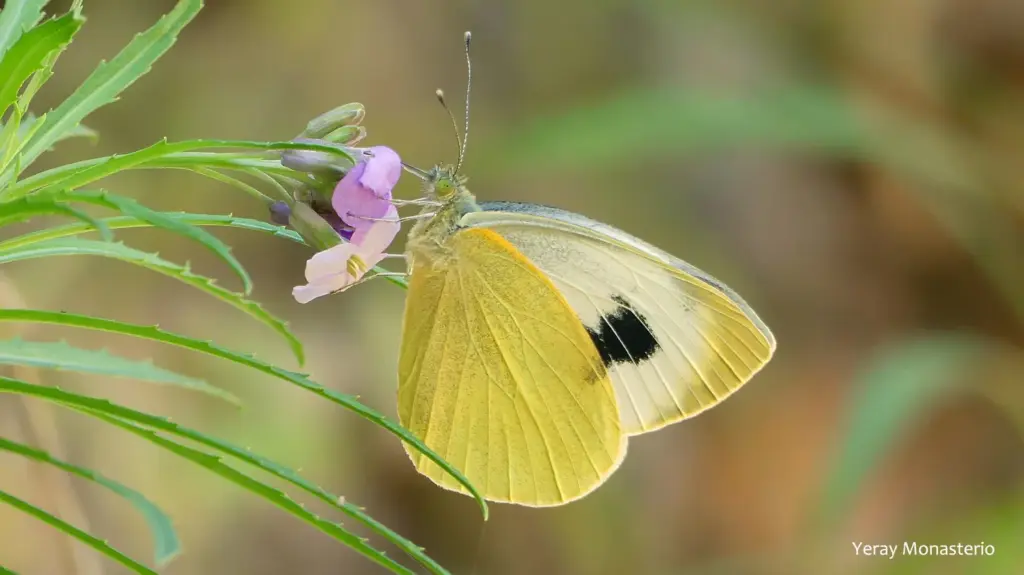
While some expand, others contract their geographic range. The study has enough evidence for 480 species to affirm this. But there are cases so extreme they seem doomed to disappear. In Spain, one of the most dramatic cases is that of the Canary white. Decades ago, its presence was common on the westernmost islands of the Canary archipelago. First, its relatives, the Madeira white (Pieris wollastoni), went extinct at the end of the last century. The last sightings of this animal on La Gomera are also from that time. It now seems to have disappeared from Tenerife.
“The case of the Canary white is a movie drama,” says Monasterio, from the Zerynthia organization. Everyone is killing it. To deforestation, particularly the loss of laurel forest, is added the entry of another invasive plant, “which seems to release the same volatiles,” confusing the butterflies. Their larvae can feed on this plant, but it takes them out of their environment. “The drought of recent years has been the final blow,” Monasterio fears. If its extirpation from Tenerife is confirmed, “it would only remain on La Palma before disappearing from this planet,” he concludes.
As if they were guerrillas of the maquis, more than a quarter of the species studied are seeking refuge in the mountains. And those that were already mountain species are climbing higher and higher. The upward migration is repeated on all five continents. In Mexico, for example, 39% of species with sufficient data have raised the altitude of their geographic ranges. In Europe, the Eros blue (Polyommatus eros) is native to the Alps. A study with butterflies from Salzburg found that, between 1960 and 2019, this species has raised its habitat by about 12.5 meters per year. In Spain, it is in the southeast where more butterflies are heading to the mountains.
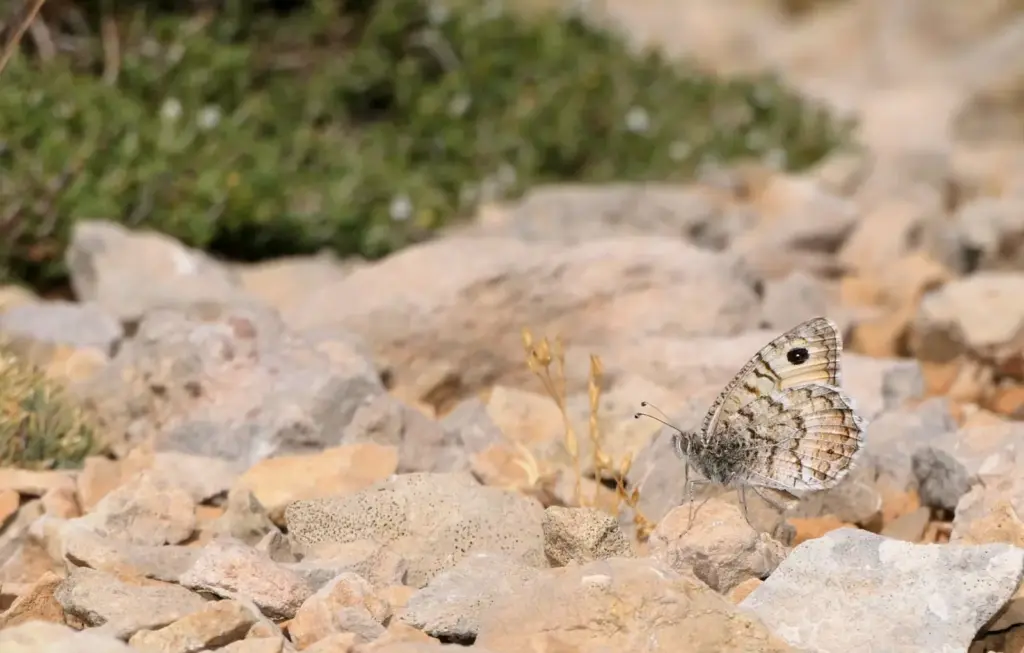
“Mountains are home to some of the specialist species whose distributions and numbers are eroding the most,” recalls José Miguel Barea, coordinator of the Butterfly Monitoring Scheme (BMS) in Spain, in which both scientists and citizen science volunteers participate. One of the last of the resistance is the four-spotted grayling of Sierra Nevada. Still in the last century, it was not limited to the mountains of Granada; it also flew in the Almerian sierras of María and Los Filabres, in Murcia’s Espuña, and in the southern Jaén sierras. Having disappeared from these, it has not been seen for several years in the Sierra de Gádor, also in Almería. And in its last refuge, Sierra Nevada, it is seen higher and higher, climbing an average of 18 meters per decade. In the latest edition of the European Red List of threatened butterflies, only six appeared in critical condition, and one was the four-spotted grayling. “We may be talking about the most threatened species in Spain,” Barea fears.
“Butterflies are being redistributed,” maintains Shawan Chowdhury, researcher at Monash University (Australia), lead author of the study by Monasterio, Pettersson, and others. “Some species appear in new places, others disappear from parts of their original distribution area, and others move to higher or lower mountainous areas,” he adds. Their work points to several causes, all anthropogenic: habitat destruction, agricultural expansion (but also abandonment of the countryside), invasive species… but their work shows that up to two-thirds of butterfly species have experienced changes in their distribution due to climate change and the extreme events associated with it. And the real problem may be much greater: there is insufficient data for 90% of the 19,000 identified species and the thousands yet to be discovered.
Read more The farewell to Laura Cruz: “He killed her because she was happy”