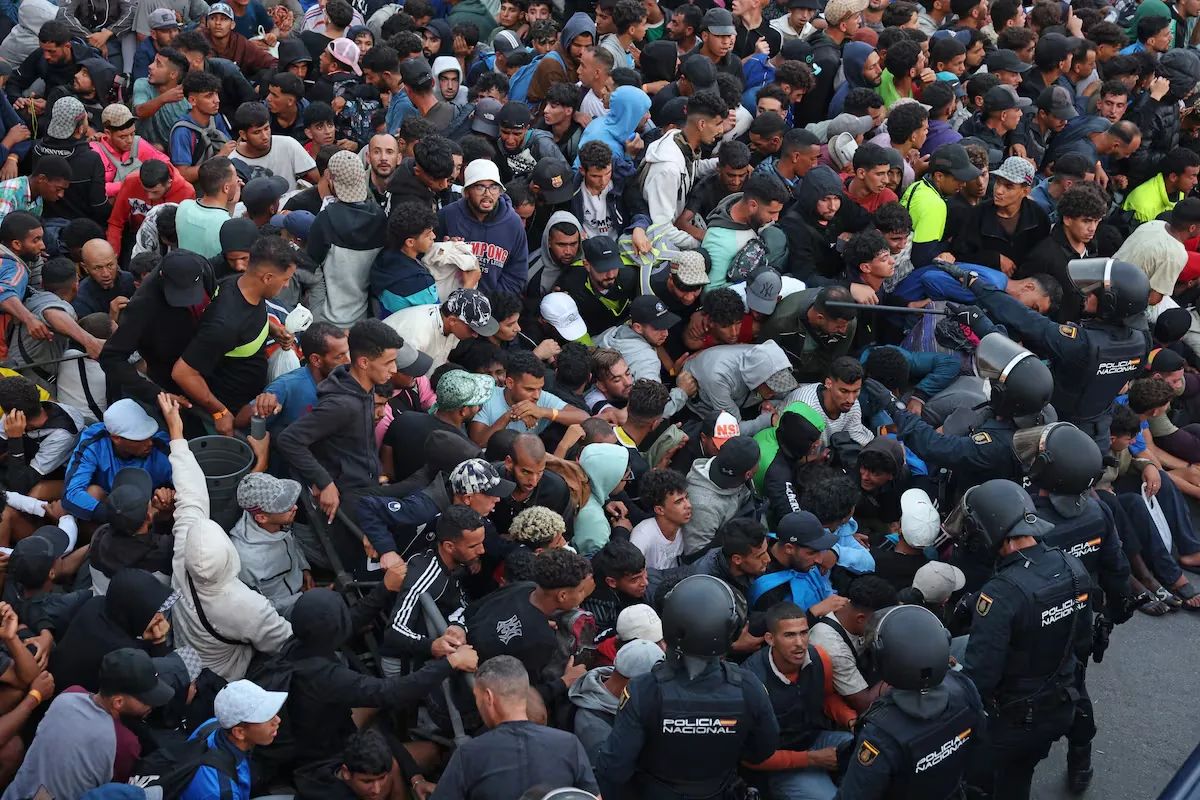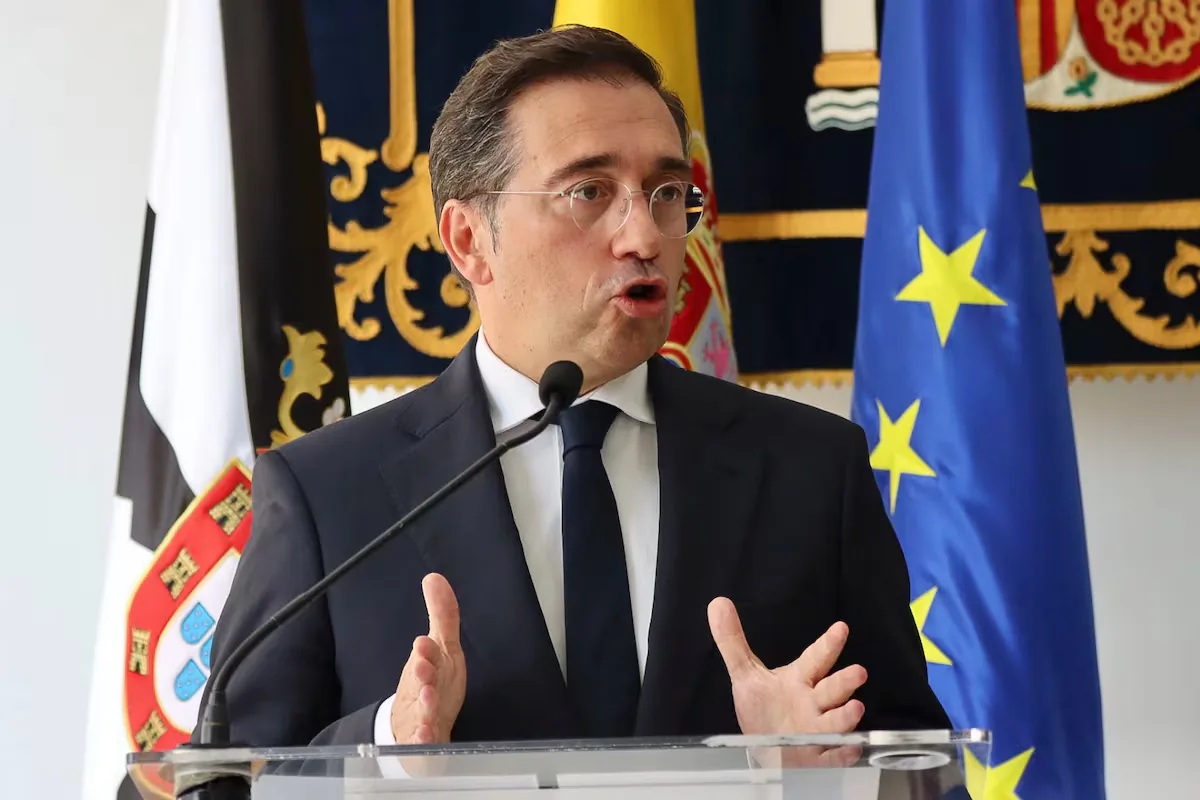
Foreign Minister José Manuel Albares assured this Tuesday after his meeting with the president of Ceuta, Juan Jesús Vivas, that “even the last person who has entered Spain irregularly will return to Morocco.” Albares also sent a message to migrants waiting in Morocco to enter Spain. “Do not risk your lives, your money, and your future in an adventure doomed to failure, those who enter irregularly in Ceuta or Melilla will be returned,” Albares stated. In the same vein, the Minister of the Presidency, Justice and Relations with the Cortes, Félix Bolaños, stated that “the absolute priority is that all minors who crossed [to Ceuta] can return to their families in Morocco.” On the other hand, the PP announced that it has reached an agreement with the Minister of Defense, Margarita Robles, for her to appear in the Senate next Tuesday the 18th.
Read more The exact moment of the Colombia earthquake inside Pereira airport
EL PAÍS offers the latest on the migration crisis for free. If you want to support our journalism, subscribe.

Vivas assures that 10,000 people who participated in the “invasion” of Ceuta still remain in the city
The president of Ceuta, Juan Jesús Vivas, was emphatic after finishing his meeting with the Foreign Minister, José Manuel Albares: “Ceuta has suffered and continues to suffer an invasion.” Vivas maintained that about 10,000 people who participated in that “invasion” still remain in Ceuta, a situation that, in his opinion, “makes the situation unsustainable” and causes among the people of Ceuta a feeling of “indignation, concern, and abandonment.”
The president of Ceuta assured that he leaves the meeting with two “good news.” The first is that the idea will be conveyed that “the only way out for the people who have arrived is expulsion, both adults and minors,” with the aim that “everyone loses the expectation that by coming to Ceuta they will get what they want.”
The second, he highlighted, is that “Morocco is willing to facilitate the return of these people, both adults and minors.”
However, Vivas clarified that the Foreign Minister did not offer him “guarantees of deadlines.” In this regard, he called on the Government to articulate “the mechanisms so that this can be put into practice” and defended the need to “adopt the necessary legislative initiatives” to make returns effective “with due guarantees and in the shortest possible time.”

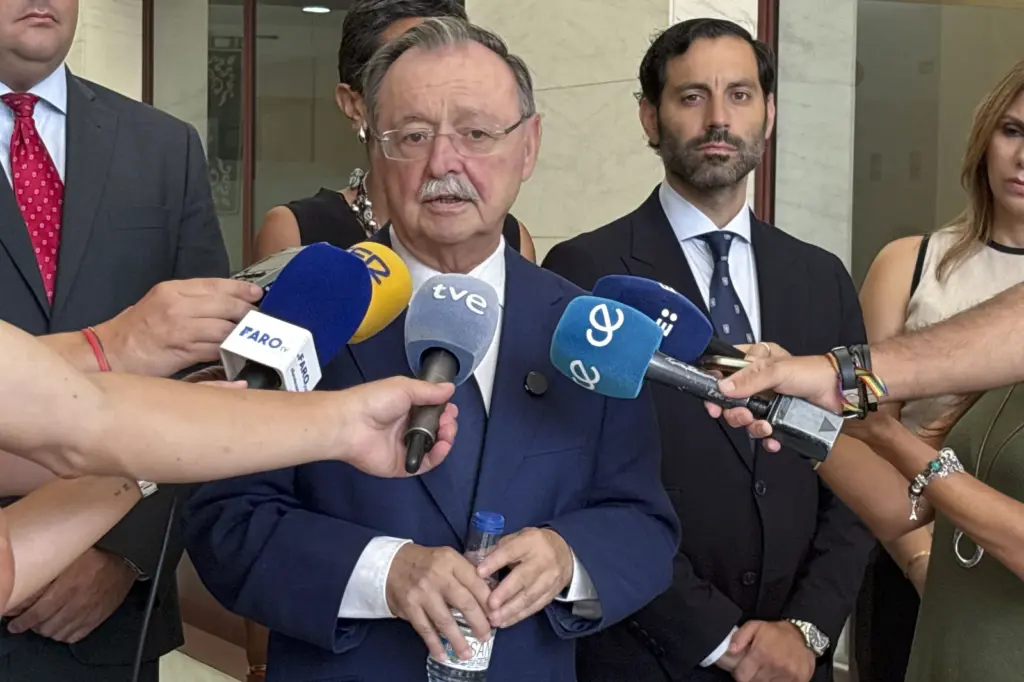
The president of Ceuta, Juan Jesús Vivas, after meeting with Albares this Tuesday. / Reduan / EFE
Vivas demands infrastructure works and deterrent means from the State to reinforce the border
The president of Ceuta, Juan Jesús Vivas, has demanded from the Government “infrastructure works” to reinforce the border with Morocco, so that a massive entry —Vivas calls it an “invasion”— like the one that occurred on July 30 does not happen again “neither on August 15 nor ever.” After receiving the Foreign Minister, José Manuel Albares, in the city, he confirmed that he spoke with him about reinforcing the border, which he considers “absolutely unavoidable,” and demanded both personnel and infrastructure works. “The State must categorically guarantee that what happened on July 31 will not happen again here, neither on the 15th nor ever,” he demanded. And that, he emphasizes, “must be done with means, personnel, and deterrent means, all that are necessary.” “And already thinking in the medium term, infrastructure works will have to be done so that the border is more guarded, safer, so that it is not vulnerable as was clamorously, painfully, and lamentably proven on July 30 and 31.”

PP assures that Robles will appear in the Senate on Tuesday after reaching an agreement with the Minister of Defense
Parliamentary sources from the PP report that the office of the Minister of Defense, Margarita Robles, contacted the Senate institution this Monday showing willingness to appear in the upper chamber, after the PP requested it.
She will do so next Tuesday, August 18, after reaching an agreement due to scheduling issues. Robles would thus distance herself from Fernando Grande-Marlaska and José Manuel Albares, the Interior and Foreign Ministers who will not attend and will give explanations in the Congress at the end of the month.
Bolaños: “The absolute priority is that all minors can return to their families in Morocco”
The Minister of the Presidency, Justice and Relations with the Cortes, Félix Bolaños, has stated that “the absolute priority is that all minors who crossed [to Ceuta] can return to their families in Morocco.” “We are working with the Moroccan Government so that all minors can reunite with their families in Morocco,” Bolaños assured.
In a press conference in Almería, the minister stated that authorities continue to register the minors in the autonomous city and that 1,527 have already been identified through the police stations.
PP accuses the Government of “violating” the “right of citizens to know the truth in parliamentary sessions” for not appearing in the Senate
The senator and president of the Interior Commission in the Senate, Fernando Martínez-Maíllo, will lead this Wednesday the session in which the Popular Party has summoned the minister in charge, Fernando Grande-Marlaska.
The Interior Minister will not attend the appearance because he will do so at the end of the month in Congress, the Executive argued. In response to his absence, Martínez-Maíllo accused the Government of “violating” the “right of citizens to know, in parliamentary sessions, the truth about what is happening” in Ceuta.
This is not the first time such a situation has occurred; in similar cases, the PP appealed to the Constitutional Court. The popular senator also asked the Executive “if it will decide to return minors to their countries of origin.” “It requires making the files and returning them to their countries of origin, but it demands priority and not being on vacation; the Minister of Childhood is neither seen nor expected,” Fernández-Maíllo asserted.
Sira Rego was there Thursday and Friday, and from there assured EL PAÍS that the priority of La Moncloa is family repatriation, the same as Génova proposes. The minister has also convened the first meeting tomorrow to address the crisis.
Albares assures that “even the last person” who entered irregularly in Ceuta will return to Morocco
Foreign Minister José Manuel Albares assured in a press conference after his meeting with the president of Ceuta, Juan Jesús Vivas, that “even the last person who has entered Spain irregularly will return to Morocco.”
Despite this statement, Albares did not specify the deadlines in which the returns will take place. “Obviously, there are court rulings and Spanish legislation, but the will is for Ceuta to recover its normality as soon as possible. That all minors return as soon as possible,” he pointed out.
The minister confirmed that he maintains daily conversations with his Moroccan counterpart and highlighted the “total willingness of Morocco” to facilitate the return of its citizens to their country.
Albares described the Ceuta border as “the most complex in Spain and Europe” and assured that “the integrity of the Schengen area is fully guaranteed in Ceuta and Melilla.” Likewise, he stated that none of the people who entered irregularly in Ceuta “have left the city towards the peninsula, nor can they do so.”
During his appearance, the minister also criticized Italy’s position regarding the situation in Ceuta. In his opinion, the attitude of the Italian Government has not been to “convey solidarity and support,” as, according to him, “the vast majority of European Union countries” have done, but could probably respond to “partisan interest” and “internal electoral needs.”
Albares found this stance particularly striking because Italy is, according to him, “the country with the highest number of irregular entries in Europe, double that of Spain.”
Albares to migrants: “Do not risk your life, those who enter irregularly in Ceuta or Melilla will be returned”
Foreign Minister José Manuel Albares sent a message to migrants waiting in Morocco to enter irregularly in Ceuta, Melilla, or reach the Peninsula. “From Ceuta, I address those in Morocco or anywhere in Africa who read or receive false information about what they can obtain by entering irregularly in Ceuta: Do not risk your lives, your money, and your future in an adventure doomed to failure, those who enter irregularly in Ceuta or Melilla will be returned, they will not reach the Peninsula, Europe, nor will they be able to stay indefinitely in Ceuta or Melilla.” “That is the will of Spain and Morocco and no court ruling distorted on social networks has changed it.”
Albares made these statements after meeting in Ceuta with the president of the autonomous city, Juan Jesús Vivas. He said he talks daily with his Moroccan counterpart and that they work jointly “to accelerate the return of those who entered irregularly in Ceuta who remain in the city.” According to the minister, Moroccan authorities have conveyed their “total willingness” to “guarantee the return” of these people.
The minister said that dialogue with Morocco is “fundamental” to solve crises like the current one, for which he understands that only a diplomatic solution can be made. Likewise, he assured that both shores work on the rapid return of migrants in the city, many of them minors, and the “strengthening of the border and preventing the situation from repeating” in what he called the border, along with Melilla’s, “the most complex in Spain and Europe.”
PP attacks the Government in Ceuta: “It’s not about ministers coming, it’s about bringing solutions”
The Popular Party has again attacked the Government from Ceuta, where the deputy secretary of Health and Social Policy of the PP, Carmen Funez, has traveled. “It’s not about ministers coming, it’s about bringing solutions,” said the popular leader about the trip of the Territorial Policy Minister, Ángel Víctor Torres, this Monday, and the Foreign Minister, José Manuel Albares, this Tuesday.
The situation being experienced is absolutely exceptional. We ask that Ceuta be returned to normality and that will only be achieved when the 12,000 people in the city are returned to their country of origin,” Funez added, providing many more data on foreigners remaining in Ceuta compared to those offered by the Government.
“Thousands of Ceutans are afraid to go out on the street,” she maintained. Funez also pointed out that those registered in the autonomous city are seeing their health services diminished.
Save the Children estimates that more than 1,000 minors sleep on the street in Ceuta outside the protection system
Save the Children estimates that more than 1,000 minors sleep on the street in Ceuta outside the protection system after the massive entry of thousands of migrants to the autonomous city at the end of July. “It is still unknown how many children and adolescents remain outside the protection system, although information gathered by entities working on the ground suggests it could exceed a thousand,” the NGO stated.
In this regard, the entity has warned that the situation has led to a humanitarian crisis requiring an “immediate response” and has requested the “urgent” transfer of unaccompanied foreign minors to the autonomous communities. “We are seeing girls and boys as young as 7 years old sleeping on the street, without any supervision, who are afraid and abandoned to their fate, with only one or two meals a day,” explained Save the Children’s migration specialist, Jennifer Zuppiroli.
A team from this NGO is currently in Ceuta to carry out direct monitoring of the situation, to learn firsthand the conditions in which children and adolescents are, identify the main protection needs, and detect possible situations of special vulnerability. In this line, it has warned that “the solidarity of citizens is valuable, but it cannot replace institutional responsibility.” (EP)
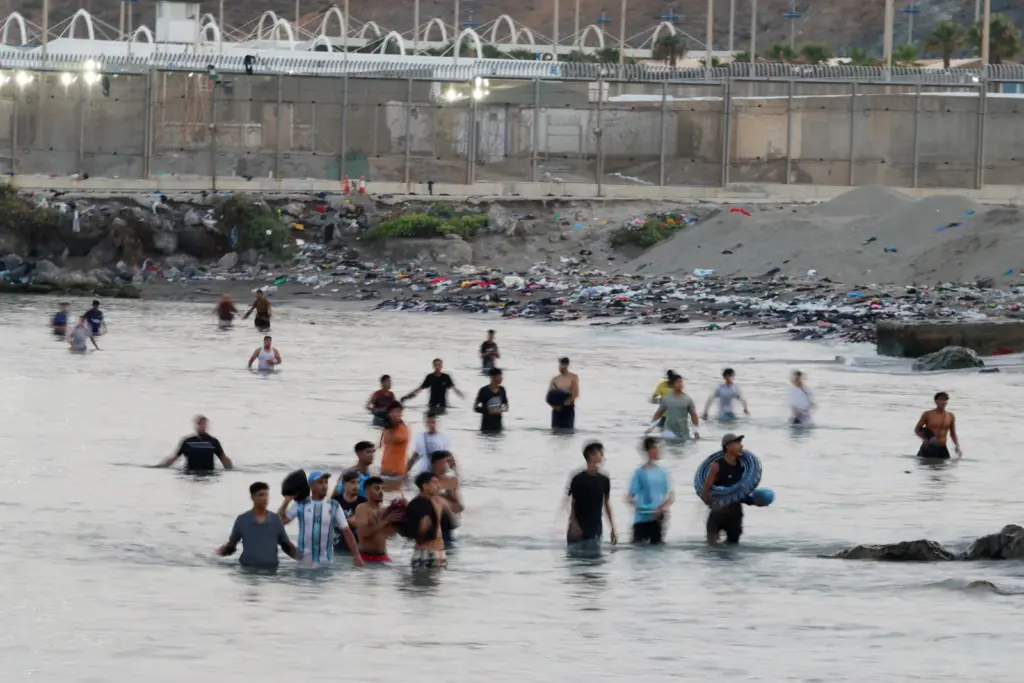
MIGRATION CRISIS
The hoaxes that triggered the migratory avalanche towards Ceuta: “The door is open”
“In the morning I saw on Instagram and TikTok videos of people crossing the border (of Ceuta) saying: ‘The door is open.’” It is one of the hundreds of messages, posts, or recordings analyzed by Moroccan computer engineer Maruán L. Alaui, who has followed the migration crisis of the Spanish autonomous city in North Africa since the beginning. In a study shared on Instagram, he found that hoaxes on social networks that distorted a ruling by the Spanish Supreme Court, about hot expulsions of irregular migrants by sea, triggered the human avalanche.
You can read the full information
MIGRATION CRISIS
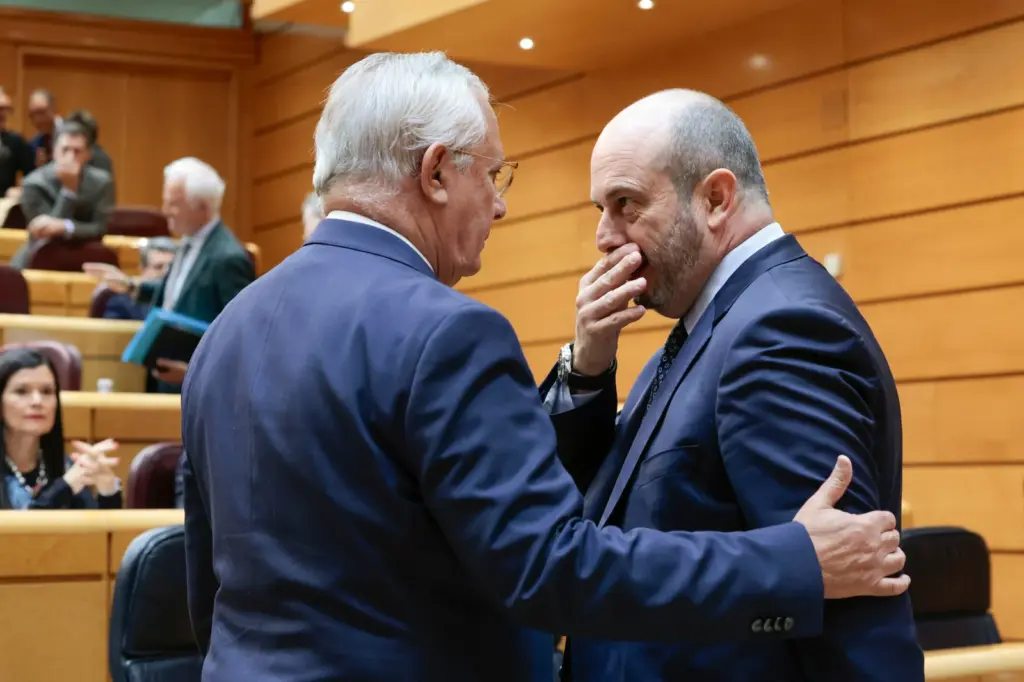
The Government and the Senate head towards an institutional clash over appearances on the Ceuta crisis
The idea of August as a month without parliamentary activity seems a thing of the past. The turbulent Spanish —and global— political life, as well as the succession of emergencies that Pedro Sánchez’s Government has been chaining since the pandemic, have transformed the very scarce summer program of the Cortes into a more crowded one. This summer, the agenda does not stop due to the outbreak of the unprecedented Ceuta crisis, for which the PP holds La Moncloa responsible, and it leads the Senate and the Executive towards an institutional clash between them. On one side, the PP, with an absolute majority in the upper chamber, where it has registered the requests for appearances of the Interior, Defense, and Foreign Ministers. On the other side, Fernando Grande-Marlaska, Margarita Robles, and José Manuel Albares, who will not respond to the summons to avoid “duplication,” arguing that they will give explanations on their own initiative at the end of the month in Congress.
You can read the full information here
Good morning. The Minister of Foreign Affairs, European Union and Cooperation, José Manuel Albares, meets today with the president of Ceuta, Juan Jesús Vivas, who has requested the expulsion of the people who entered on July 30 and 31 and still remain in the city, while work continues to register minors with the priority of returning them to their families. The number of people who entered irregularly in Ceuta during July 30 and 31 has not increased and remains at 72,000, according to the Government, after the Minister of Territorial Policy and Democratic Memory, Ángel Víctor Torres, spoke this Monday of 80,000 arrivals.