









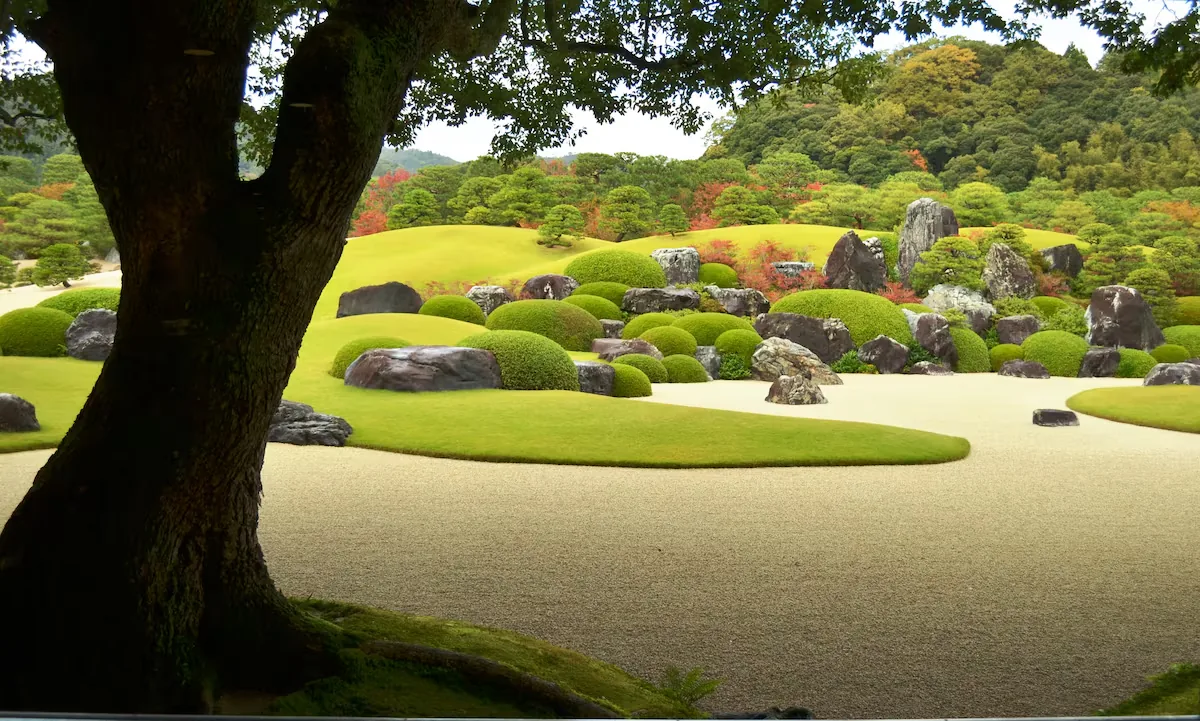
In Japan, there is no distinction between art and the arts. Since the 13th century, gardening has been as important as painting. And as architecture. The integration between drawing, landscaping, and geography is legendary because the gardens there speak simultaneously of a moment and the world. That is: of the oceans, the islands, the mountains, the waterfalls, the lakes, the rivers, the turtles, the cranes, the camellia, the azalea, or the water. Above all, water. And they do all this from calmness and humility.
In Japan, some rocks can be a garden, the mountain in a dry garden. They also have a way of framing without enclosing nature — the technique of shakkei, which means borrowed landscape —. The shakkei invites designing a garden thinking of adding to one’s own the echoes of the neighboring tree canopies or the views over hills, rivers, or oceans.
Japanese culture has its way of explaining time in eras: Asuka, Nara, Heian, Kamakura, Muromachi, Monoyama, Meiji, Taisho, Showa, Heisei, or Reiwa, which do not coincide with the Western chronological order. Therefore, after traveling for decades through Japan, architect Javier Vives (Barcelona, 1948) has learned to take that distance into account. And, in his book History and Art of the Japanese Garden (Satori), he tries to explain, in a didactic way, what, since his first trip to Japan in 1979, has been his passion: the relationships between the garden, architecture, theater, and Japanese culture. Let’s see how he does it.
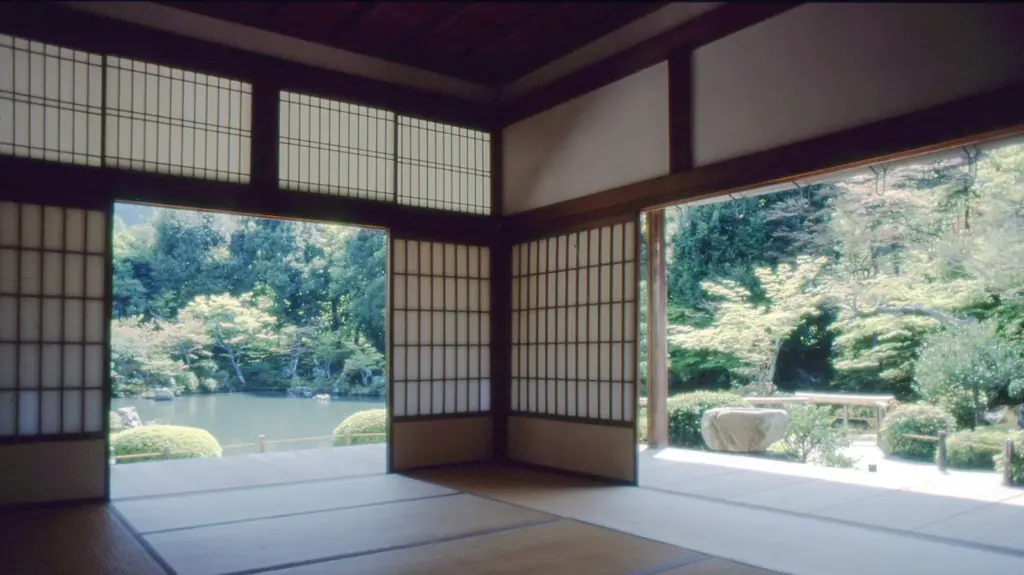
To begin with, speaking of nature. That is: imperfection and asymmetry. Beauty as a coincidence and also as perfected work. Also the charm of the ephemeral. Reverence towards the environment and the Shinto deities Kami, who could inhabit trees, rocks, mountains, or rivers. “With Shintoism, the boulders acquire symbolic value.” And with Buddhism, it is the great mountain, which rises from the sea, that becomes the center of the universe. And it is the one that reaches Japanese gardens, in the form of a boulder, from the 14th century onwards.
The pebbles of the enclosures not only prevent the grounds from becoming muddy, but also mark the boundary between the divine and human space. In pre-Buddhist enclosures, ponds with carp also appear, as well as ropes made from rice fiber that replace fences to isolate the sacred from the world. With them emerges an idea of originality different from ours. There, the idea is what matters. With deterioration, an architecture is repaired, changed. The original stone, the wood used, is not important. The image that is perpetuated with the change is.
Vives considers that Japanese civilization blossomed in the 11th century, when the naturalistic garden was born. Thanks to the Zen monk Muso Soseki, gardening took a giant step in Japan. The architect explains that it was Soseki, during the Kamakura period (1185-1333), who suggested that landscapes, besides surprising, beautifying, and being useful, could be an aid for meditation and contemplation.
In the subsequent Muromachi period (1333-1573), the military government moved from Kamakura to Kyoto amid succession disputes that devastated the country. However, those years saw the flourishing of the great Japanese arts. From those days dates the austere shoin architecture, Noh theater, and the tea ceremony. Also, the dry gardens — without vegetal or aquatic elements. Zen, with its aesthetic universe centered on subtraction, prevailed over other Buddhist schools. Thus, the stone waterfalls invited introspection over sensory gratification.
Read more The exact moment of the Colombia earthquake inside Pereira airport
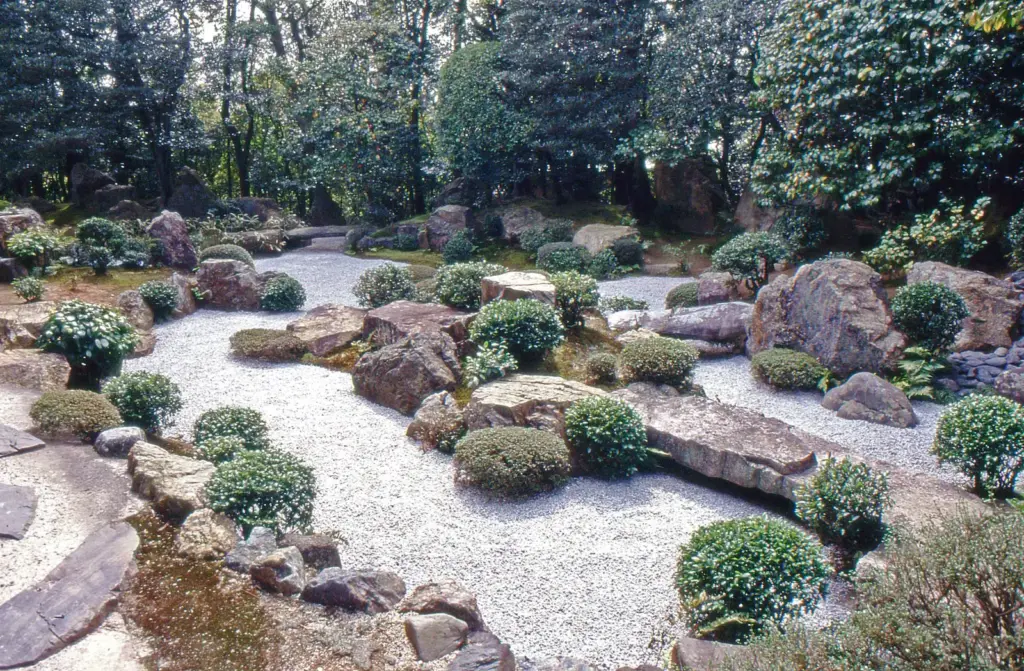
The best-known dry gardens are Daisen-in and Ryoan-ji, both in Kyoto, which were planted or constructed in the 16th and 15th centuries respectively. Vives analyzes them in depth. However, his book goes further and pays attention to many of their epigones, such as Taizō-in in Kyoto, attributed to the painter Kano Motonobu, who with his father created the Kano school of painting. As if it were a landscape painted from a bird’s eye view, here the stones and slabs build bridges between the bushes, and the gravel symbolizes a river.
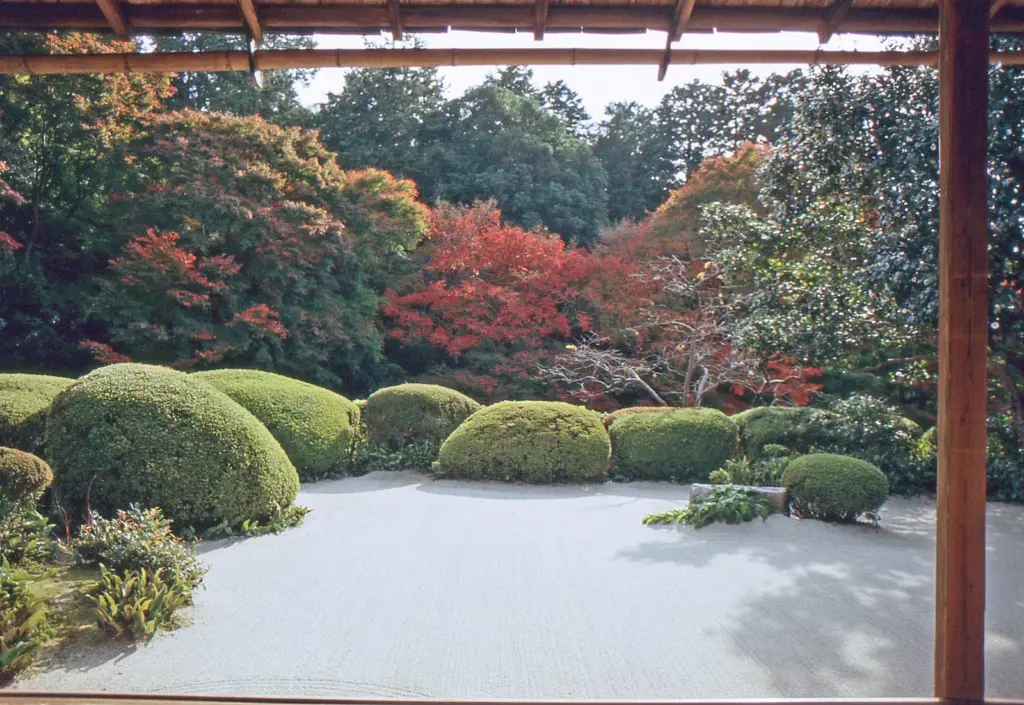
Some of the larger gardens, which combine landscape, dry garden, and lakes, correspond to the Momoyama period (1573-1603) when the unification of the country began. Therefore, in the subsequent Edo period (until 1868), which coincides with the capital’s move to Tokyo to distance it from the intrigues of the Kyoto court, some feudal lords built gardens designed for their retirement. They are known as samurai gardens, and are small, private, but their construction seems greater than their actual size. In the Shisen-dō of Kyoto (17th century), the boundary between inside and outside has disappeared. The reflection of the gravel illuminates the small garden built in the Edo period as a refuge for an enlightened samurai.
At that time, the Imperial Villa of Katsura in Kyoto was built. It is an apparently simple garden where each element is beautiful at any time of the year. The stones on the moss form subtle paths. The tree canopies do not steal space and blur their colors.
The constants
The gardens of different eras have left as a legacy a series of constants in what is today known as the Japanese garden. To begin with, the close relationship between landscape and architecture, or the blurred boundary between outside and inside. Architectural elements frame the best views.
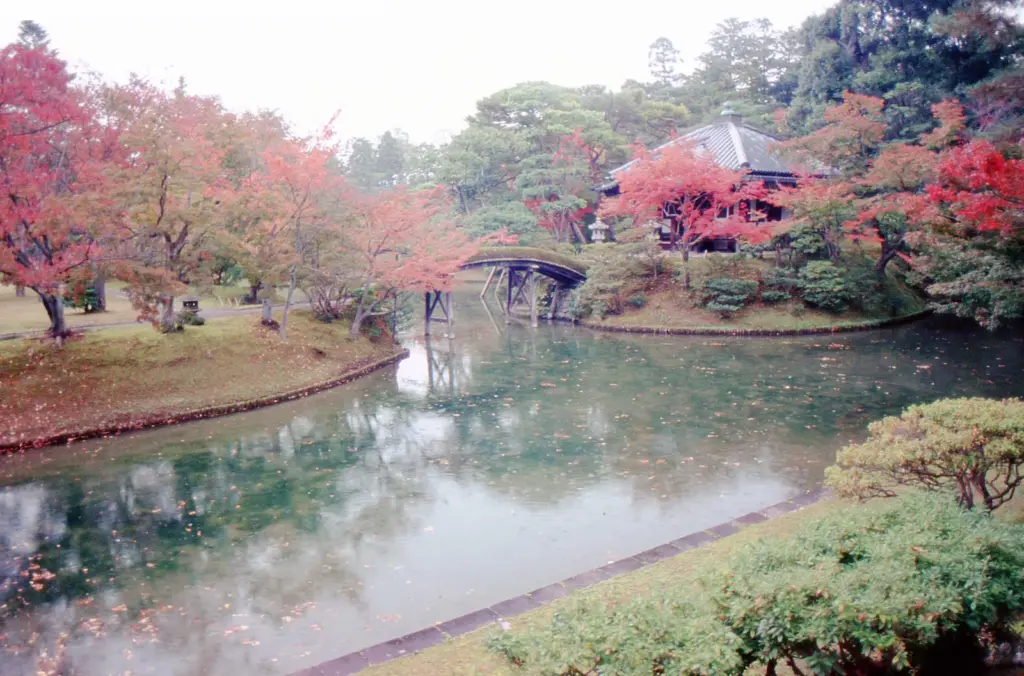
Whether Zen dry or not, emptiness is also a key for these gardens. As well as, in contrast to classical Western gardens, asymmetry, closer to the disordered order of nature. The rest is subtlety: fences so integrated that they do not divide; paths, almost absorbed by vegetation, that whisper trails; rocks, which build bridges and symbols — the mountain — and water, which never has a geometric perimeter, but imparts dynamism and brings freshness and sound — and which, in dry gardens, is represented by gravel. There are lanterns made of stones to illuminate with candles at night. Also islands and bridges made of stone and vegetation.
Among the more recent traditional gardens, the one at the Adachi Museum of Japanese Modern Art, in Yasugi, was designed in 1970 by Nakane Kinsaku with four zones. One contains a waterfall, inspired by the painting of Yokoyama Taikan that can be seen in the museum itself. That garden, like any Japanese garden, is complex and simple at the same time. It is, in reality, a microcosm and, as such, summarizes the world.