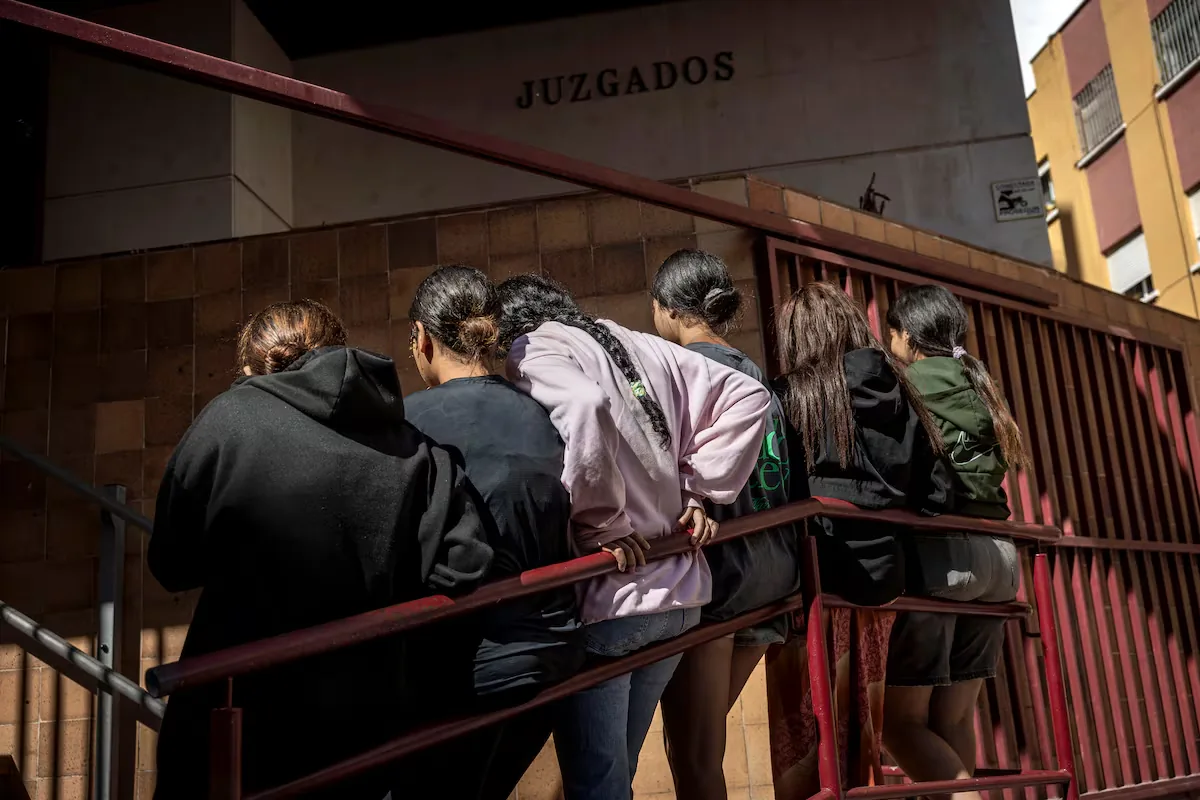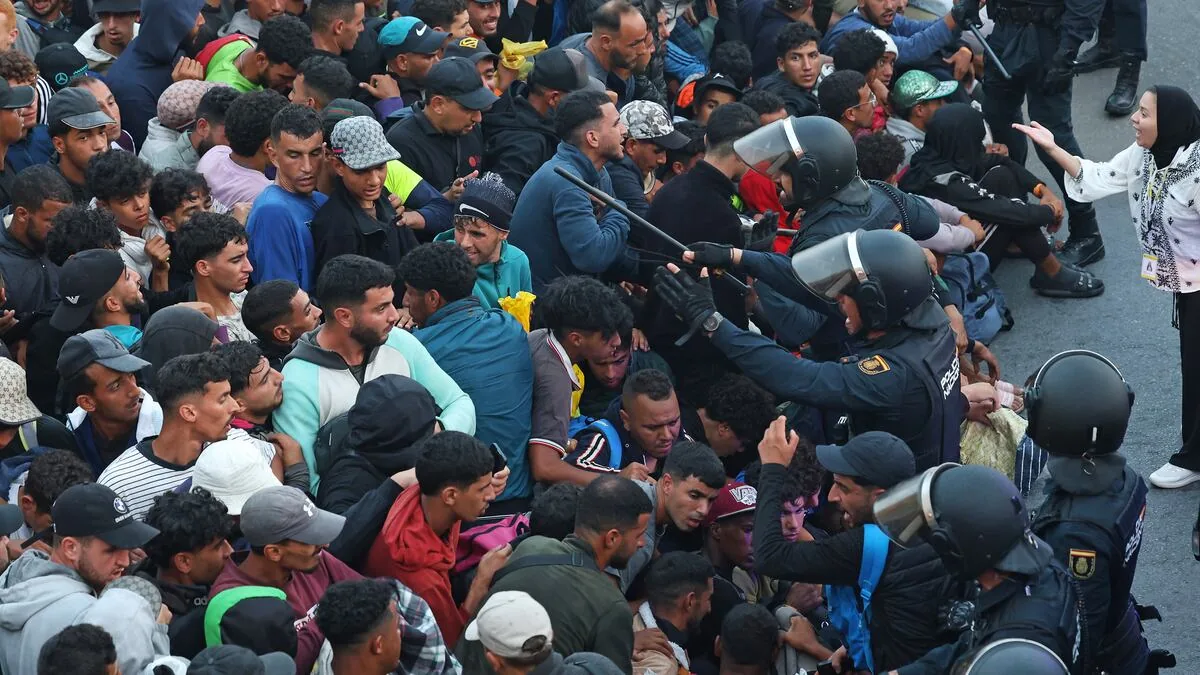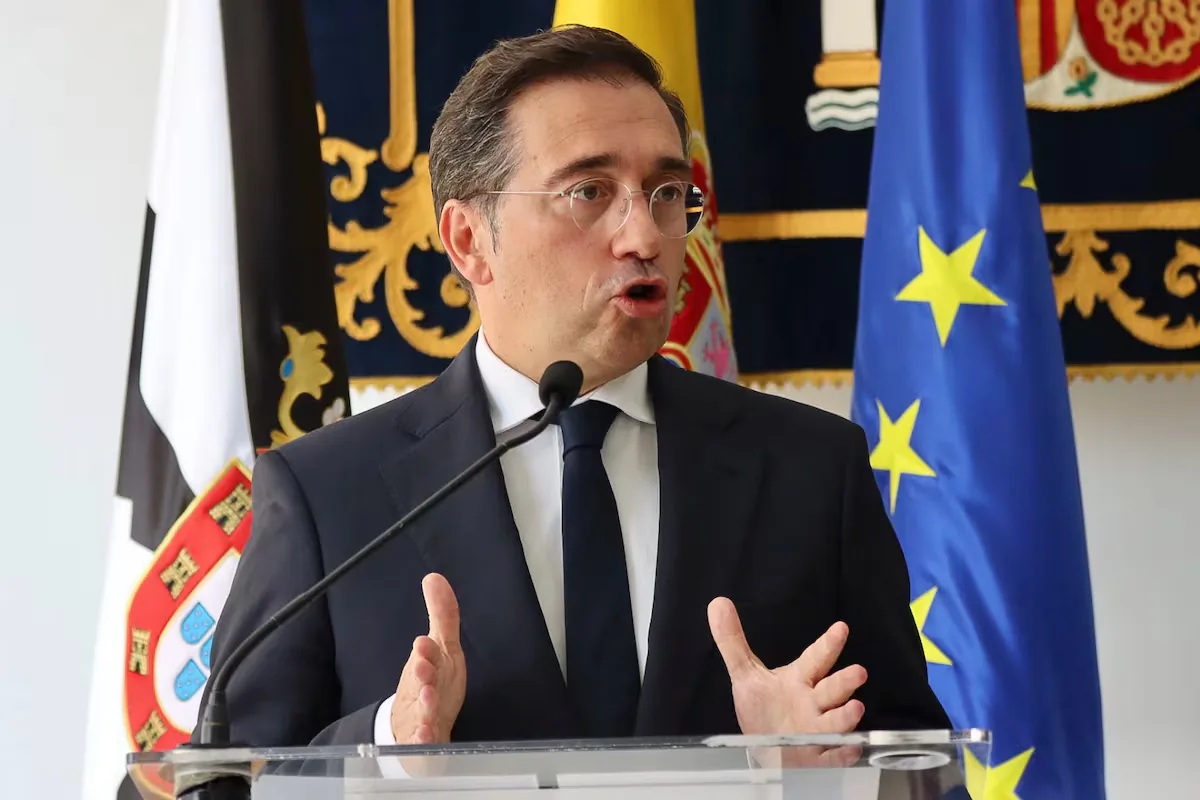
“Even the last person who has entered Spain irregularly will return to Morocco,” José Manuel Albares declared from Ceuta, after meeting with the president of the Autonomous City, Juan Jesús Vivas. The Minister of Foreign Affairs echoed this Tuesday what he called the “express will” of Rabat, which on Monday demanded the return to the country of its minors in Spain, ignoring the established channels for the return of children and adolescents. This is the first time a Foreign Affairs minister has visited this Spanish enclave, and he did so to respond to the doubts raised by the massive entry from Morocco of more than 70,000 people on July 30 and 31. Albares described the Ceuta border this Tuesday as “the most complex in Spain and Europe” and assured that “the integrity of the Schengen area is fully guaranteed in Ceuta and Melilla.” His statements come a week after the meeting of EU Interior Ministers, in which Spain called for the solidarity of its European partners in the face of the Ceuta crisis. The minister also wanted to send a message of reassurance directed both to the peninsula and the rest of the European countries: “No one has left the city for the peninsula, nor can they.”
Read more Women lead the restoration and protection of mangroves in El Salvador
Despite the firmness with which Albares guaranteed the return of migrants who entered by swimming, the minister did not specify the timelines in which the returns will take place. “Obviously, there are court rulings and Spanish legislation, but the will is for Ceuta to recover its normality as soon as possible, for all minors to return as soon as possible,” he said. To this end, Albares confirmed that he maintains daily conversations with his Moroccan counterpart, Naser Burita, and highlighted the “total willingness of Morocco” to facilitate the return of its citizens to their country.
The Ministry is working on several lines of action, including the rapid return of people who have entered Ceuta irregularly and who still remain in the city, strengthening border controls, enhancing cooperation with Morocco, and greater involvement of the European Union in the future of Ceuta. Regarding relations with the neighboring country, Albares said that “Morocco has not asked for any compensation in exchange” for the immediate return of its citizens. “We have legislation and court rulings, but the express will of Morocco is that,” he said.
The head of Spanish diplomacy has once again avoided any criticism of Rabat and explained that one of the “great difficulties” in managing this type of crisis is “the impossibility of carrying out returns because the country of origin does not cooperate.” “We are not in that situation,” he emphasized. “That was what allowed thousands of people to return in just a few hours,” he added. The Government maintains that 72,000 people entered Spain irregularly through Ceuta and that 70,000 left the city in the following days to return to Morocco.
Albares defended that, from the very beginning, “diplomatic communication with Morocco worked” and assured that both countries will carry out a “joint reflection” to analyze how to prevent similar situations in the future. In this regard, he pointed out the emergence of “a new element,” such as the use of social networks to mobilize people towards the border. The minister stressed that “Morocco, in that sense, is a fundamental partner.”
The minister’s words quickly reached the migrants who arrived in Ceuta risking their lives. The news is already circulating in WhatsApp groups, accompanied by Albares’ image, while fear grows that his words will come true. At first, some minors had doubts about whether their country of origin would accept them back without obstacles. Now, the minister’s firmness and the confirmation of cooperation with Morocco have set off all alarms among those who fear being returned.
The Spanish minister also took advantage of the press conference to send a message to migrants waiting in Morocco to try to enter Ceuta or Melilla irregularly or reach the Peninsula. “From Ceuta, I address those who, in Morocco or anywhere else in Africa, receive false information about what they can obtain by entering Ceuta irregularly: do not risk your lives, your money, and your future in an adventure doomed to failure. Those who enter Ceuta or Melilla irregularly will be returned; they will not reach the Peninsula or Europe, nor will they be able to stay indefinitely in Ceuta or Melilla,” he warned. “That is the will of Spain and Morocco, and no court ruling distorted on social networks has changed it,” he concluded.
Regarding the diplomatic crisis between Spain and Italy, the head of Spanish diplomacy again highlighted that Spain is the Mediterranean EU state with the fewest irregular immigrant arrivals, while Italy receives the highest number. The minister again criticized Italy’s position on the situation in Ceuta. In his view, the Italian government’s attitude has not been to “convey solidarity and support,” as, he said, “the vast majority of European Union countries” have done, but could probably respond “to a partisan interest” and “internal electoral needs.”
Read more The Japanese garden: a microcosm that summarizes the world