









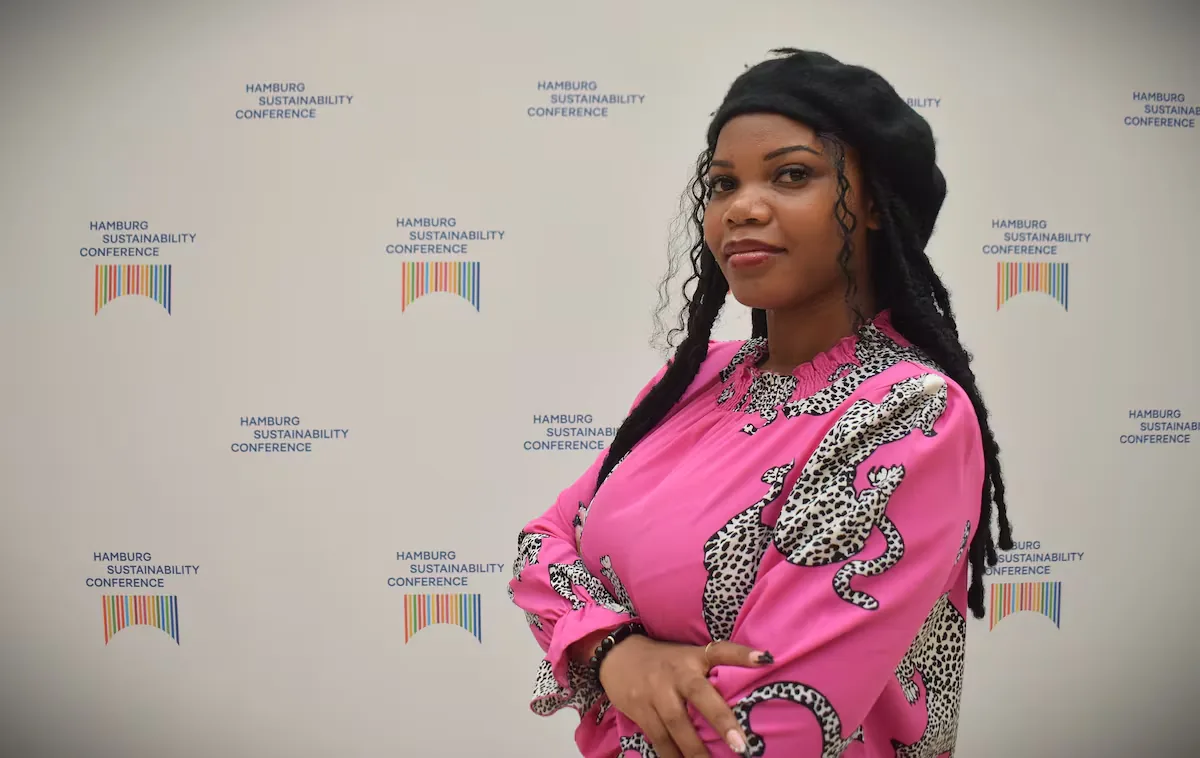
Jacquiline Msambila (27 years old, Dar es Salaam) opens the Hamburg Sustainability Conference app on her phone and shows all the contacts she has made during this event held in the German city at the end of June. The founder of the African Digital Transformation Network and the Tanzanian Association of Women and Technology has not only come to Hamburg to participate as a speaker in three forums on artificial intelligence (AI). She is also seeking partnerships and funding for her projects in Tanzania, with which she fights gender inequalities in the digital field, in access to funding for start-ups (emerging companies), and in AI development. She knows how to knock on doors because since she was 19 years old she has been involved in the world of empirical learning, educational scholarships, and technology conferences.
Read more Chicago Fire
“I have always wanted to change things in my community. Sometimes, you see that young women have a very boxed-in perspective of their future: finishing high school, getting married, and becoming mothers. I wanted more for myself and for other girls,” the young woman says in an interview with EL PAÍS in Hamburg. “We have to stay united because we have a common challenge: in the world, we are still considered second-class citizens,” adds Msambila, who now works as a digital transformation advisor for the Youth Advisory Council of the European Union Delegation in Tanzania.
Once again, the gender gap is present, there are very few women working in AI, language models, or machine learning
For her, closing the gap is urgent. More so now, as the continent prepares to enter the AI development race. “For the first time in years, as the Director General of Smart Africa [Lacina Koné] said, we have the opportunity to lay the foundations and take control of our data. Most African countries are now developing their national AI strategies,” she celebrates. But then, she warns: “Unfortunately, once again, gender inequality is present; there are very few women working in AI, language models, or machine learning.”
In sub-Saharan Africa, men aged 15 to 24 are 60% more likely than women of the same age group to be able to perform at least one task related to information and communication technologies, according to a UNICEF study. This, according to , is because they face barriers in education, access to the internet or a mobile phone, as well as gender roles imposed by society. This, in the end, reduces their chances of leveraging these tools to generate income and innovate.
Since 2024, Msambila has been working to reduce that gap from the root, in rural areas of Tanzania. She founded the African Digital Transformation Network and organized her first course for women in Morogoro, located 200 kilometers from Dar es Salaam. She requested resources from the Malala Fund, of which she is a part, and managed to get companies to sponsor computers and internet access. “The goal is to train them and awaken their curiosity. Because they usually think technology ‘is a boys’ thing.’ That’s why we tell them: ‘Do you see your WhatsApp? You can use it to do business, not just to take selfies and photos. You can create an online store and improve your life,” she explains.
See this post on InstagramA post shared by Digital Diplomat (@jacquiline.msambila)
Then, she took the leap to promote start-ups. In sub-Saharan Africa, around 30% of businesses are female-owned, according to the World Bank. But, as the international organization warns, “although female entrepreneurship reaches record levels in other sectors, its participation in the tech industry remains significantly lower.” Only 15% of African tech start-ups are exclusively led by women and receive less than 1% of the total funding allocated to the sector, according to data from Growth Gateway, a British consortium that promotes sustainable economic growth.
Read more Barcelona airport marks a record July and exceeds 5.8 million passengers
“It’s a complicated ecosystem,” confirms Msambila, “because most companies do not trust start-ups led by women. They believe men can manage finances better and decide to fund their projects and not theirs.” That’s why she brought together innovators in the SheTech project, an incubator that hosts about ten women per annual cohort they open: so far, they have held three courses. “Some even have prototypes and want to turn them into a business, but they don’t know where to start. We teach them how the market works, the rules for registering a company, and help them develop their product. When they are ready, we organize events for them to present their proposals to potential clients, such as banks or companies.”
Most companies do not trust start-ups led by women. They believe men can manage finances better and decide to fund their projects and not theirs
Most ventures they promote are related to e-commerce, but increasingly they find healthtech projects designed by and for women. At one of the forums of the Hamburg Sustainability Conference, Msambila highlighted the case of Saritani AI, a tool that facilitates early detection of cervical cancer.
Although she acknowledges that not all her students get funding, it is worth continuing to help them get opportunities. “You never know. For example, one of the girls got backing from Vodacom [the African telecommunications group majority-controlled by Vodafone]. Or, on other occasions, some stakeholders have asked us for the contact of one of our innovators because they are interested in working with them,” she states.
Msambila, a Philosophy graduate with a master’s in Governance and Public Service, continues studying. After taking courses in computer science, programming, and AI, she has signed up on the DataCamp platform to learn about energy applied to data centers. “I sign up for everything to learn. Once I know how to do it, I start teaching it to other girls. I love it, it makes me feel part of the change.”