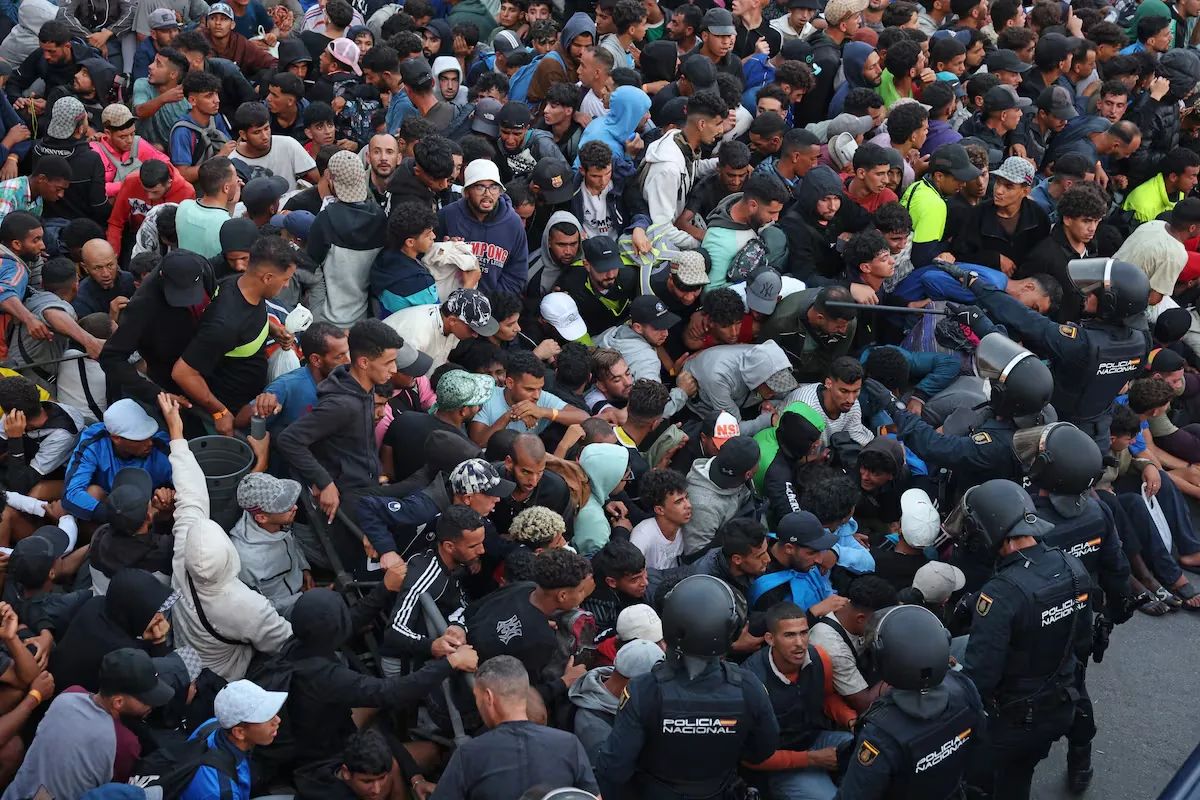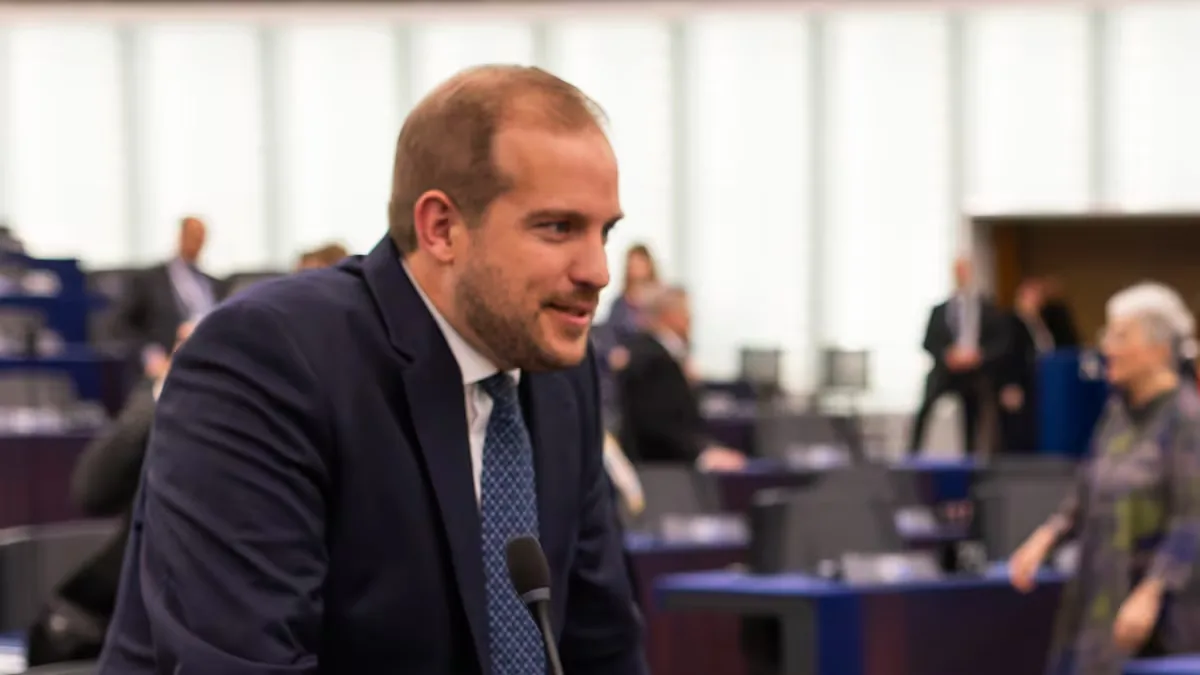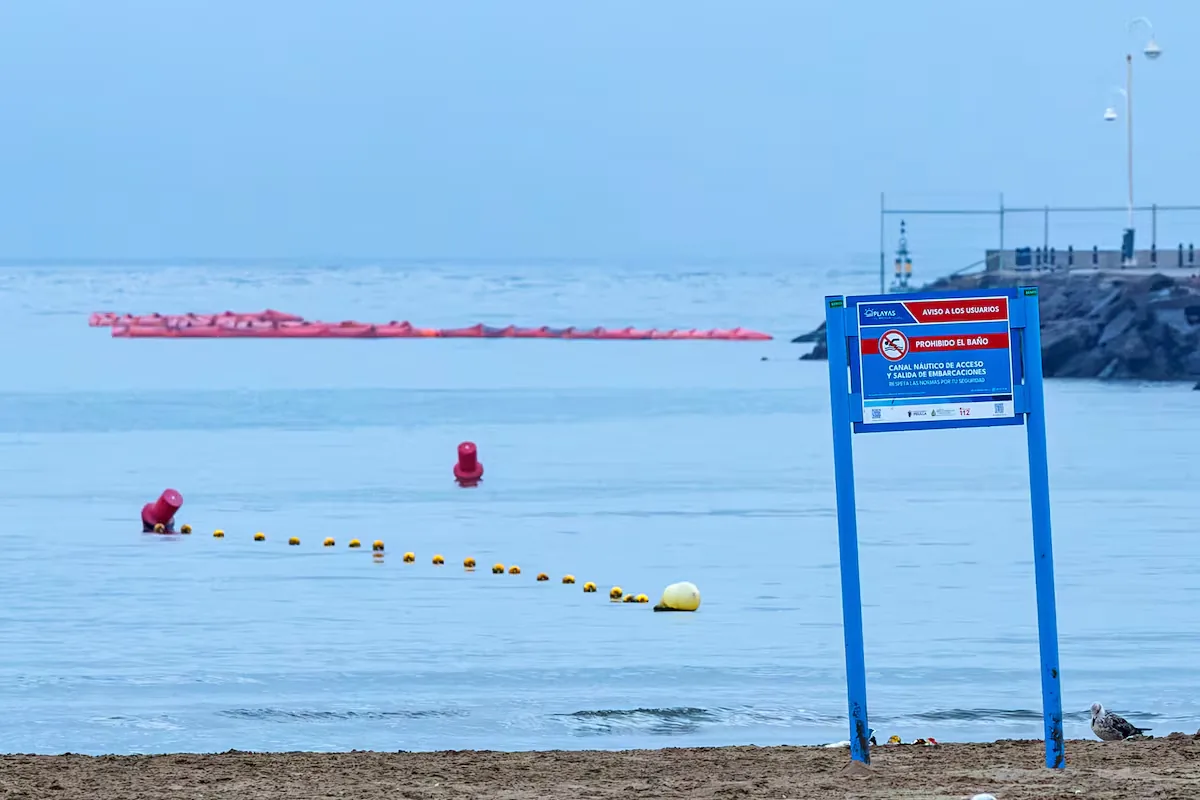
The Civil Guard proceeded this Thursday to place a new maritime barrier on the south breakwater of Melilla, similar to the one placed on the El Tarajal pier in Ceuta after the massive entry of migrants swimming from Morocco, to “strengthen control” at the sea border. On the other hand, the Ombudsman, Ángel Gabilondo, has decided to act ex officio to analyze the measures adopted and pending adoption by various administrations “to respond to the humanitarian crisis that Ceuta is experiencing after the irregular crossing of more than 70,000 people on July 30 and 31.” The institution has addressed a letter to the State Secretariat for Migration to request information about the situation of the people who remain in the autonomous city, “many of them minors,” who “spend the night outdoors due to the saturation of the Temporary Stay Center for Immigrants and the absence of other reception spaces.” Meanwhile, the Minister of the Interior, Fernando Grande-Marlaska, meets this Thursday in Ceuta with the Government delegate, Miguel Ángel Pérez, and commanders of the National Police and the Civil Guard to analyze the evolution of the situation in the autonomous city. In the afternoon, he will speak with the president of Ceuta, Juan Jesús Vivas.
EL PAÍS offers the latest on the migration crisis free of charge. If you want to support our journalism, subscribe.

Robles announces she will not appear next week in the Senate and points to the return after summer
The Minister of Defense, Margarita Robles, will ultimately not appear in the Senate regarding the Ceuta migration crisis on August 18, as requested by the Upper House at the request of the PP, and has postponed it to the return after summer, during the ordinary session period. Robles, who will appear at the end of this month in the Congress for the same matter, has sent a letter to the president of the Senate, Pedro Rollán, asking for more time to be “precise and exhaustive” in her appearance. (EFE)
The president of Melilla calls to change the border protocol and correct the “harmful effects” of the Aliens Law
The president of Melilla, Juan José Imbroda, considers the placement of a new barrier on the south breakwater of the autonomous city a reinforcement that can contribute to the tightening of the border with Morocco. However, he has demanded a legal change so that the protocols of action in the border perimeter are perfectly defined in situations of migratory pressure like that of July 30 in Ceuta.
In an interview on Antena 3, he insisted on the need to reform the law with the aim of correcting the “harmful effects” that, in his opinion, have been caused by the Supreme Court ruling that prohibits “hot returns.”
Imbroda has also questioned the current Civil Guard action protocol. “There was no action protocol; in those eight hours when thousands of people began to enter, images were seen of agents unable to do anything,” said the president of the autonomous city.
He also stated that the maritime barriers and inflatable buoys already deployed on the south breakwater can help improve control in the Melilla border area, but he maintained that it is a measure created to “alleviate” the “effect” produced by the Supreme Court ruling.
The Melilla president assured that the massive entry of migrants into the autonomous city of Ceuta must represent a “turning point” in border policy and migration management because it was a “catastrophe” that cannot happen again. (EP)
Canary Islands refuse to participate in the triage of migrant minors as it is a state competence
The Minister of Social Welfare of the Canary Islands Government, Candelaria Delgado, reiterated this Thursday the autonomous community’s refusal to participate in the triage procedures of unaccompanied migrant minors, considering that this function corresponds to the State, in application of the European Pact on Migration and Asylum.
Delgado responded this way to journalists’ questions after the Government Delegation requested the autonomous community to designate representatives in the identification and age determination processes carried out in the Temporary Migrant Care Centers (CATE).
According to the Government delegate in the Canary Islands, Anselmo Pestana, on July 24, European regulations require that during the triage of irregular immigrants, “someone who defends the best interest of the minor” must be present, who “therefore cannot be the police force managing that CATE” but the autonomous community because it has those competences. (Efe)
The president of the Senate will travel tomorrow to Ceuta and meet with Vivas
The president of the Senate, Pedro Rollán, from the PP, will travel this Friday to Ceuta after the massive entry of migrants at the end of July and will meet with the president of the autonomous city, Juan Vivas, and with various political representatives of the territory. According to the Senate Presidency, Rollán will be received at 11:45 this Friday by Vivas at the Ceuta Assembly Palace, and then the president of the upper house will sign the city’s honor book and exchange institutional gifts.
Also attending the working meeting will be the vice president and Environment Minister of Ceuta, Alejandro Ramírez; the vice president and Finance Minister, Kissy Chandiramaní; the Presidency Minister, Alberto Gaitán; the first vice president of the Assembly, Melchó León; the second vice president of the Assembly, Fátima Hamed; and senators Cristina Díaz and Abdelhakim Abdeselam Al Lal.
At the end of the meeting, Rollán and Vivas will address the media in the Throne Room of the Assembly Palace, and later, the president of the Senate will visit different points of the city along with the Minister of Commerce, Tourism, Employment, and Sports, Niccola Cecchi Bissoni. (EP)
Equality offers Ceuta funds from the State Pact and asks to fully use the center for victims of sexual violence
The Ministry of Equality has offered Ceuta funds from the State Pact against Gender Violence and has asked to make full use of the 24-hour center for victims of sexual violence, aiming to protect women and girls. According to sources from the department led by Ana Redondo, the Ministry has sent an official letter to the president of the autonomous city of Ceuta, Juan Jesús Vivas, and to the Minister of Health and Social Services, Nabila Benzina, to reiterate its “full collaboration” after the massive irregular entry of migrants into the autonomous city on July 30 and 31.
In that communication, Redondo has offered to make available to Ceuta the economic resources corresponding to the State Pact against Gender Violence, as well as the technical and human means necessary to activate these resources “as quickly as possible.” Likewise, the minister has requested that the 24-hour crisis center for victims of sexual violence, currently “partially” occupied, be fully used. “It is considered necessary to take advantage of its full capacity to accommodate women and girls in situations of special vulnerability,” sources from the Ministry pointed out. (EP)

The Ombudsman demands information from the Government and the Prosecutor’s Office about the Ceuta crisis
The Ombudsman, Ángel Gabilondo, has decided to act ex officio to analyze the measures adopted and pending adoption by various administrations “to respond to the humanitarian crisis that Ceuta is experiencing after the irregular crossing of more than 70,000 people on July 30 and 31.” The institution has addressed a letter to the State Secretariat for Migration to request information about the situation of the people who remain in the autonomous city, “many of them minors,” who “spend the night outdoors due to the saturation of the Temporary Stay Center for Immigrants (CETI) and the absence of other reception spaces.”
In the letter, Gabilondo reproduces “some of the complaints received about the conditions of great precariousness,” such as “lack of drinking water, showers, hygiene and cleaning items, clean clothes, health care, and food.” The Ombudsman recalls that many minors have not yet been identified and remain hidden. “The condition of the girls who have not yet been taken into the child protection system is especially worrying, as some may have been sexually assaulted, according to several media reports,” the institution warns, which has requested information from the State Prosecutor’s Office and the autonomous city about the measures adopted to protect minors.
The Ombudsman has also requested the Government Delegation to inform him about the number of people with international protection needs who accessed Ceuta; how many have applied for asylum and how many have undergone the triage provided by European legislation after the Foreign Minister, José Manuel Albares, assured that “all” people who entered irregularly in Ceuta would be returned to their country of origin.
Gabilondo has also spoken with the main authorities of the autonomous city and points out “the need to proceed with the reception of minors with the collaboration of the autonomous communities.”
Migration crisis
Expansion | Up to 4,000 migrant minors remain on the streets of Ceuta after the massive arrival in July, according to Save the Children
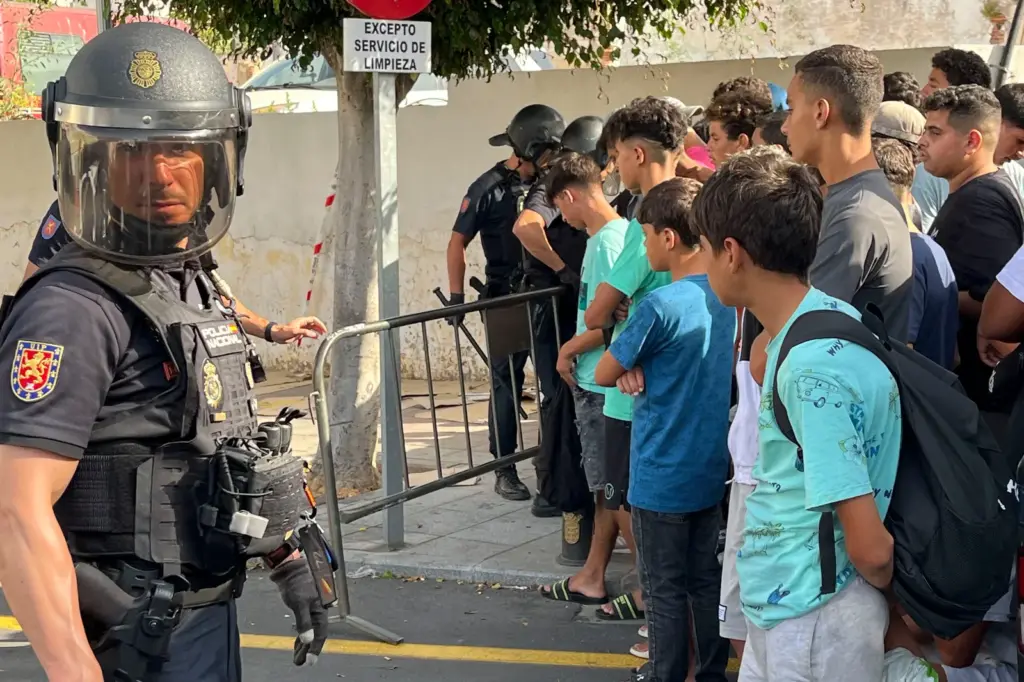
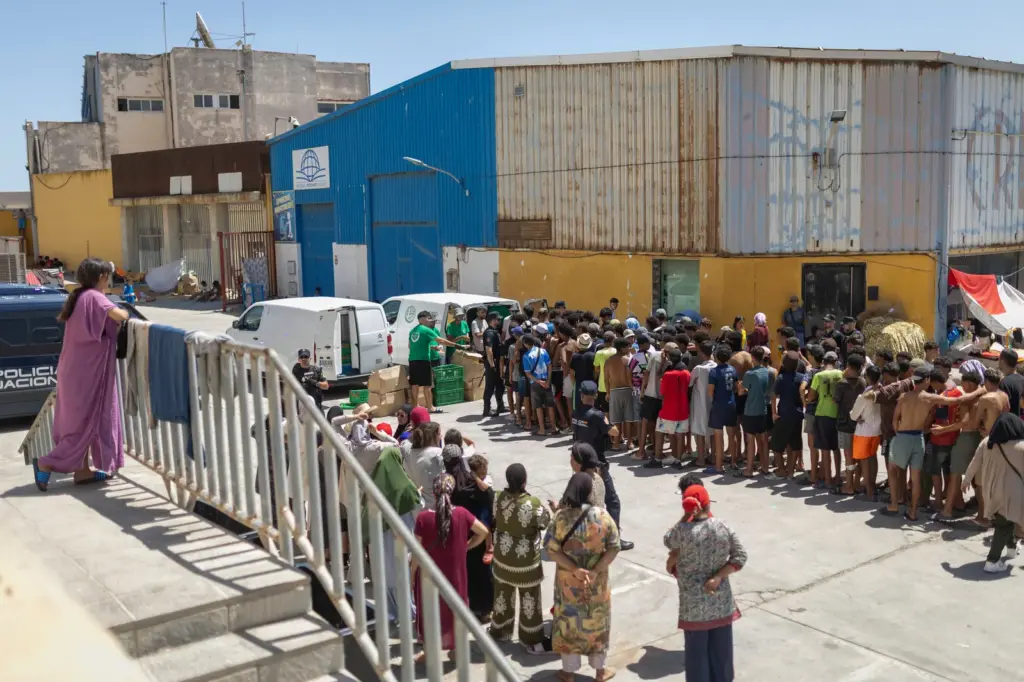
The discrepancy between official figures and those handled by NGOs and neighborhood associations highlights the magnitude of the migrant minor crisis in Ceuta. While the Government maintains that about 2,500 minors remain on the streets of the autonomous city after the massive entry on July 30 and 31, neighborhood associations raise the figure to 4,000 who are sleeping outdoors, pending identification, location, and referral to safe resources. Save the Children estimates that currently only about 1,500 children and adolescents are within the protection system. This Thursday, the Ministry of Youth and Childhood and the autonomous communities will meet online in the Sectorial Commission on Childhood and Adolescence. This will be the preliminary step to the Sectorial Conference, where the distribution of an extraordinary credit of 25 million euros destined for Ceuta will be addressed.
You can read the full information here
Vox demands Morocco assume the costs derived from the entry of immigrants to Ceuta
Read more Colombia’s new hardline threatens to worsen crime towards Ecuador
Vox has registered a series of parliamentary initiatives in Congress this Thursday to demand that Morocco assume the extraordinary costs of health care and security reinforcement derived from the entry of more than 70,000 people at the end of July in Ceuta coming from the African country.
Santiago Abascal’s party has presented two non-legislative proposals in this regard and has also requested the appearance of the Minister of Health, Mónica García, to report on the impact that the massive entry of immigrants into the autonomous city on the 30th has caused in the National Health System.
In their opinion, Spain should not bear the economic consequences of a security crisis caused, they claim, by massive pressure from Moroccan territory.
Therefore, they demand that the Government conduct a rigorous audit of all costs derived from the crisis and subsequently demand reimbursement from Morocco. (Efe)
The Civil Guard begins placing a new maritime barrier on the south breakwater of Melilla
The Civil Guard has proceeded to place a new maritime barrier on the south breakwater of Melilla, similar to the one placed on the El Tarajal pier in Ceuta after the massive entry of migrants swimming from Morocco, to “strengthen control” at the sea border.
Sources from the Civil Guard Command in Melilla have indicated that the implementation of the new maritime infrastructure “requires several phases of placement and anchoring,” so they have not wanted to estimate the time it will take to have it installed. The Armed Institute also reminds that, for security reasons, the area remains restricted to access, both by vehicle and on foot.
The Ministry of the Interior had included Melilla in the installation of maritime barriers, similar to those in Ceuta, with the aim of applying border rejections to migrants who try to access Spain by swimming after overcoming these containment elements. Thus, the Government responds to the recent Supreme Court ruling, which concluded that hot returns cannot be generally applied to those who irregularly enter the country, but only to those who try to enter Spain by overcoming established border containment elements. (EP)
Save the Children estimates 4,000 unidentified children in Ceuta after the massive entry
About 4,000 minors remain outside the Ceuta protection system, pending identification, location, and referral to social services, according to Save the Children, two weeks after the massive entry of more than 70,000 people irregularly through the border with Morocco.
Many of these children and adolescents remain on the street without a safe place to sleep or adequate access to basic services, this non-governmental organization has reported.
About 1,500 minors are currently within the protection system, according to Save the Children’s estimate, which has specified that the figure of those pending identification is an estimate due to the difficulty of locating all those who remain in different parts of the city.
Among the minors who remain on the street, the organization’s team has identified boys and girls alone, some under 16 years old, a situation that is especially worrying due to the risk of exposure to violence, exploitation, trafficking, and recruitment by criminal networks.
“Every day they remain in this situation increases their exposure to different forms of violence and, in the case of girls, including sexual violence, exploitation, or trafficking. We cannot wait any longer to put them to safety,” warned Save the Children’s migration specialist, Jennifer Zuppiroli.
The PP accuses the Government of being “submissive” to Morocco and of “disobedience” by not appearing in the Senate
The president of the Senate Interior Commission, the Popular Fernando Martínez-Maíllo, has accused the Spanish Government of being “submissive” by not wanting to “point out” Morocco as responsible for the massive entry of migrants through the Ceuta border and reproaches it for having “surrendered” to Rabat. He has also criticized the absence of ministers from the requested appearances in Congress, accusing the Minister of the Interior, Fernando Grande-Marlaska, of “absolute dereliction” of his duties, “total disobedience,” and carrying out an “act of rebellion.”
“As a governing party, our intention is always to have a good relationship with Morocco, but that does not mean being submissive (…). If Morocco has to be pointed out, it will have to be pointed out, but this attitude of surrender to the Moroccan government does not seem the best to us,” said the PP senator in an interview on Telecinco.
In this regard, Martínez-Maíllo stated that the Executive has shown with its management during the Ceuta migration crisis that it is not capable of “guaranteeing national security or territorial integrity” and pointed to the visit of the Minister of Defense, Margarita Robles, to the autonomous city this Wednesday as proof that she should have realized that “there is no normality in Ceuta.” He also questioned the measures the Government might take regarding unaccompanied minors in the city and also criticized the lack of speed in placing the “famous” floating barrier to stop massive entries. (EP)
Madrid will attend the Childhood meeting on foreign minors to support Ceuta
The Community of Madrid has announced that it will attend the meeting convened by the Ministry of Youth and Childhood this Thursday to hold a technical meeting on the care of unaccompanied migrant minors in Ceuta.
Isabel Díaz Ayuso’s government has notified that it will go to “support” the autonomous city, not as “endorsement of Spain’s inhumane migration policy.”
This has been conveyed by sources from the Ministry of Social Affairs, Family, and Youth regarding their attendance at this meeting with the general directorates of Childhood of the different autonomous communities.
The governments of the communities where Vox holds these competences —Castilla y León, Aragón, and Extremadura— have already announced they will not attend.
The Community of Madrid has insisted that they attend this meeting –which will be held online– to support Ceuta, but “at no time does this imply endorsement of the Sánchez Government’s inhumane migration policy, which continues to cost lives.” (Efe)
Migration crisis
Spain estimates up to 5,000 migrants from Ceuta can be accommodated
During the Ceuta crisis, about 80,000 people entered irregularly with Moroccan authorities looking the other way. But only about 8,000 remain there. And the real dimension of the crisis currently stands at 5,000 people: the sum of minors (about 2,500) and potential asylum seekers (2,500 more), according to government estimates.
You can read the full information here
Good morning. Here begins the live narration of the consequences of the entry of migrants to Ceuta this Thursday. The Minister of the Interior, Fernando Grande-Marlaska, meets this Thursday in Ceuta with the Government delegate, Miguel Ángel Pérez, and commanders of the National Police and the Civil Guard to analyze the evolution of the situation in the autonomous city.
Read more Brazil uses forensic science to combat illegal mining