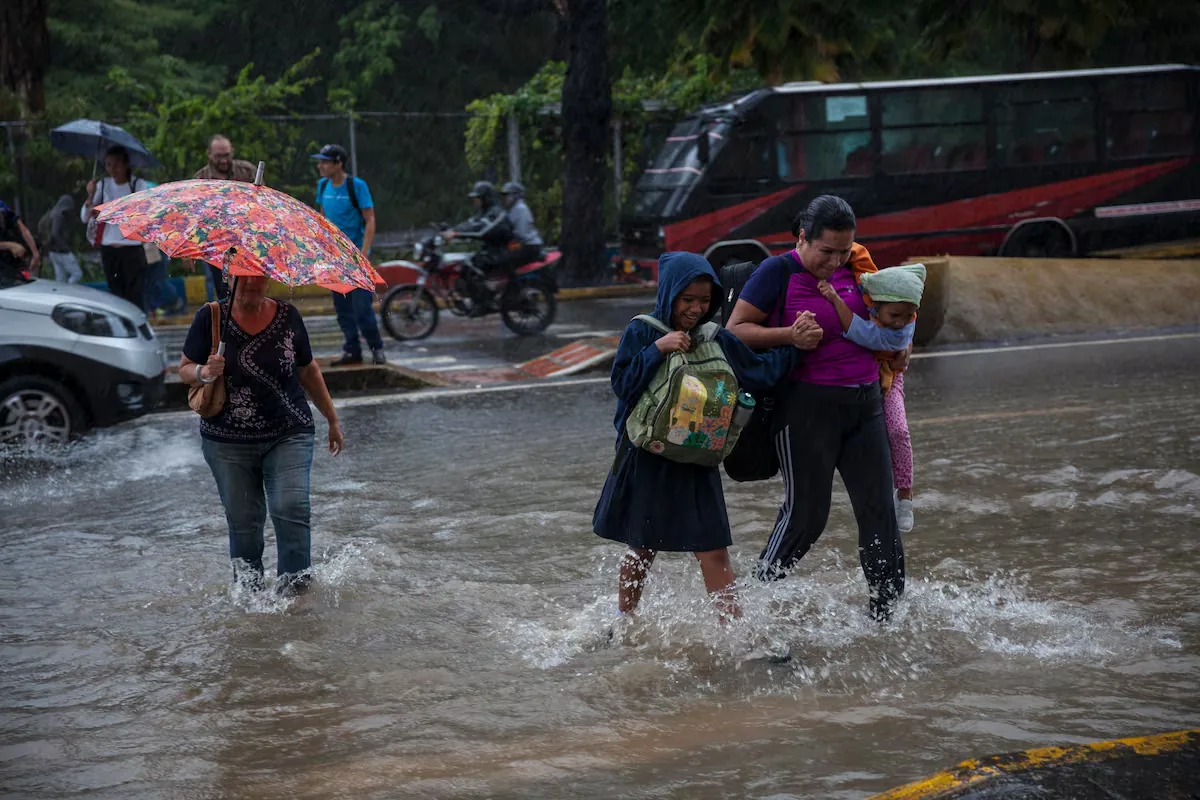
The heavy rains that took place in Caracas during the early hours of August 15 have left a toll of three people dead, due to the overflow of some culverted streams surrounding the city. The number of injured has not yet been reported. Numerous homes were temporarily flooded. The torrential downpours have also caused road collapses and damage to crops in the states of Trujillo, Yaracuy, Amazonas, and Táchira.
Read more El Barcelona ties Rodri until 2030
This natural disaster occurs just over a month after the seismic doublet that affected the country’s capital region on June 24 – the most serious natural disaster in Venezuela in two centuries – which has so far counted more than 6,000 dead, nearly 20,000 missing persons, and hundreds of thousands of affected people.
In some areas of downtown Caracas, such as Santa Rosalía, nearly a hundred families lost the temporary tents in which they were sleeping after the earthquake on June 24, due to the rains, according to information from the Capital District Firefighters. Many people who continue to sleep in improvised temporary shelters had to face severe weather conditions on the night of the 15th. On Bolívar Avenue, in the heart of the city, dozens of tents were flooded by the rains, affecting several families.
The head of the police of the Chacao Municipality – one of the five in the metropolitan area of Caracas – Alberto Prato, confirmed that two of the victims of the rains in the capital were teenagers aged 15 and 17. It was reported that they were swept away by a flood in the La Vega parish, located southwest of the city. The third victim is a 49-year-old woman, a resident of the El Peñón sector, Macarao parish, another large shantytown in the far southwest. Her home was swept away after an unexpected rise in the rain currents.
The rains in Caracas also caused flooding and waterlogging on several central roads in La Candelaria, San Bernardino, Petare, Antímano, Caricuao, and the Panamericana highway. The mayor of Baruta, another capital municipality, Darwin González, was seen in the early hours declaring an alert in the residential areas under his jurisdiction.
Read more Roberto’s welcome, a cage for Espanyol and torment for Levante
At this hour we are reinforcing the teams to attend to the incidents caused by the heavy rains of the early hours of this Sunday #16Aug in Caracas.
Now joining our brigades are teams from the Ministry of Public Works, as well as from the La Guaira Government,… pic.twitter.com/PxZypG4wDy
— Carmen Meléndez (@gestionperfecta) August 16, 2026
The Guaire River – a waste stream, once a river, that runs through all of Caracas – looked furious last night and was very close to overflowing. The unusual overflow of the Guaire tends to cause panic among the population. The force of the raging water even swept away some vehicles in popular areas on the outskirts of the city, such as Maracao and Ruiz Pineda. Partial power outages or fluctuations were also reported in many parts of the city.
The metropolitan mayor of Caracas, Carmen Meléndez, announced that the Civil Protection and Capital District Firefighters remain deployed working in the affected communities. The rains also caused the collapse of several of the gigantic trees that the capital treasures, some of which ended up damaging properties when they fell dramatically. August 16 has been rain-free in Caracas, but authorities maintain the alert call, following the path of one of the several tropical storms crossing the southern Caribbean in these months.
Before and after the damage caused by the rains, authorities slowly announce several plans for permanent and temporary housing solutions for the earthquake victims in Caracas, and even more slowly in La Guaira. A census has been conducted on the habitability status of most residences in the capital. At least 12 buildings completely collapsed in the capital, but a much higher number have partially affected structures or cracks. Condominiums that can afford it have undertaken repairs on their own. Many people have decided to return to their homes, even if they are damaged or uninhabitable, rather than continue sleeping in parks or parking lots. The vast majority of the affected know that they face a prolonged period living in provisionality and uncertainty, depending on volatile public aid and the interest of others.