









Two and a half years ago, I published a column in this same newspaper in which I warned about the growing political and cultural criticism of the social sciences in Chile. At that time, the controversy was related to the obtaining of public funds by prominent academics who until recently had held political and public positions: these were Fernando Atria, Lucía Dammert, and José Miguel Ahumada, all with a rich academic curriculum, being favored with funding for their research projects after competitive contests in which peer reviewers play a relevant role. On that occasion, four deputies from Renovación Nacional found nothing better than to propose an 18-month moratorium for those who had held political positions before competing again for public funds, punishing the return to academia in an expression of great anti-intellectualism. The matter did not escalate further (it was too absurd), but the seed of stigmatization towards entire disciplines was already sown: it was only necessary to wait for the institutional conditions of possibility to be produced in order to harvest, so that the social sciences and humanities would be subject to open hostility by a radical right-wing government and, along with it, the State through a ministry and the agency in charge of scientific research in Chile.
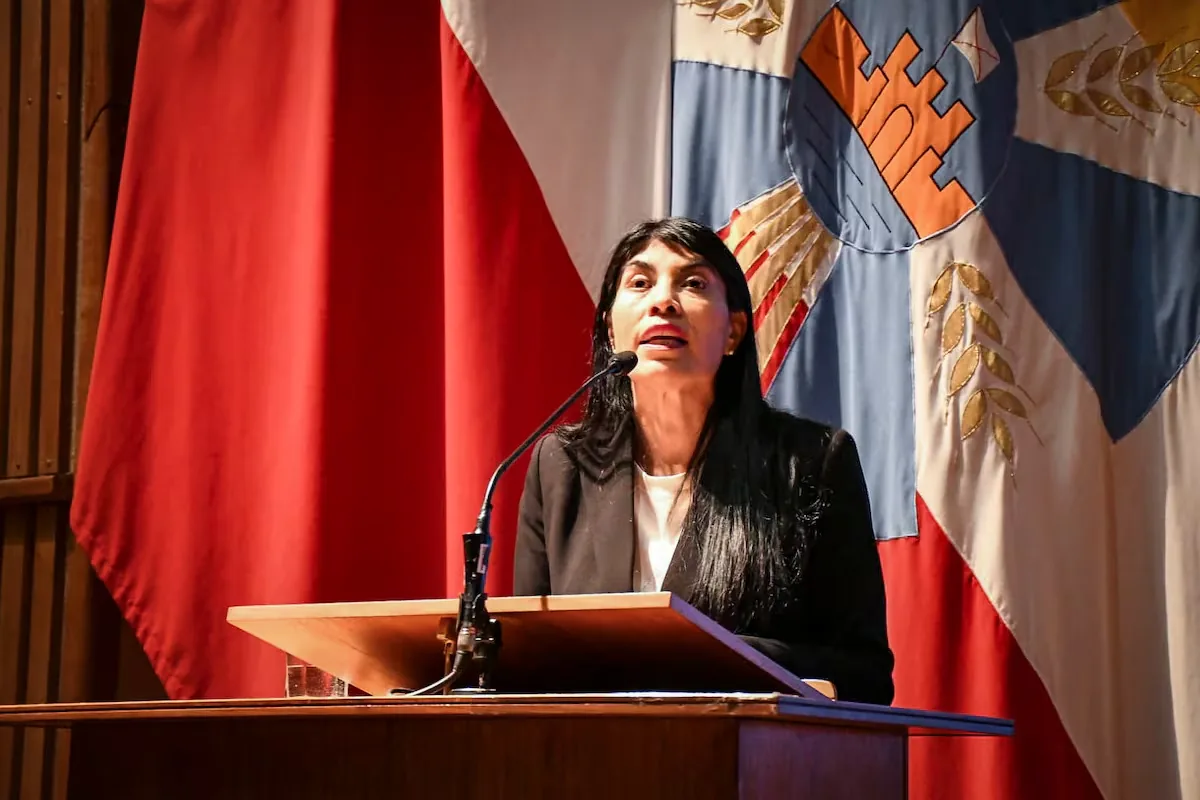
Well, that condition occurred when the Minister of Science, Technology, Knowledge and Innovation Ximena Lincolao unilaterally decided to formalize the new priority areas of Fondecyt for postdoctoral fellowships, within which the social sciences and humanities disappear as such. There is no doubt: the decision could not have been more senseless, but let’s agree that it is in line with the illiberal times today that are gradually reflected in the behaviors of the Chilean government. To be honest, the ministerial decision was already prefigured by a previous comment from President Kast, when he criticized the profitability of public funding for research in social sciences and humanities, whose objectification in books can be translated into “precious” objects placed on a shelf, but without creating any jobs.
The controversy inaugurated by Minister Lincolao escalates to unsuspected levels the conflict with the social sciences and humanities, when in a radio interview she had no better idea than to attack the rector of Diego Portales University Carlos Peña, ending up slyly reading the titles of some postdoctoral projects from this University in order to ridicule them. Personally, I had never seen anything like this: not only because the minister risks a “novel” definition of the humanities (without having any competence in the area, no article nor less any book), but because her public mood against a university is one of denigration.
It cannot then be surprising that columnists without university positions (for example in right-wing ideological universities where they find no space) have attacked academics of the social sciences and humanities without ever referring to them by name. Thus, for example, columnist Pablo Ortúzar constructs the problem of the social sciences and humanities as part of the woke movement, even explicitly calling some of its practitioners “paradocents and parasitic advisors of all kinds.” I do not doubt that this columnist knows there is a marginal fraction of these disciplines characterized by intellectual activism, but from there to labeling them with language that has a fascistoid history (parasitism and all its infections) is a whole stretch that explains why Ortúzar remains a columnist. Where do the social sciences end and where does the woke movement begin? Who draws the dividing line, who determines what is what and who is who? It is not a bad idea to prepare a report on the state of the social sciences and humanities by peers recognized in some objective way, but given the ideological drift of the controversy provoked by the government, the costs of preparing such a report have risen exponentially, especially for the prestige of those who could be its makers. I have no doubt that there is mediocre scientific and humanistic research everywhere, which is observed in the proliferation of micro-objects that are usually unscalable for general theoretical arguments. What could be a good scientific and intellectual discussion has degraded to a point close to no return, due to the responsibility of a stubborn minister who believes she knows things that the community of social sciences and humanities does not know: what boldness. This is precisely the limit of reasonableness that the minister crossed.
It is impossible to avoid the huge number of positions taken by intellectuals, rectors, research communities through articles, columns, interviews, and letters to the editor where a serious error of the Government is denounced (as clearly pointed out by Lucía Santa Cruz, who cannot be labeled as woke, nor as an activist, much less as a leftist). It seems to me that this is not a mistake: it is a conviction of the Government and the President of the Republic in the first person.
Anti-intellectualism is a fatality for culture and science, but when it feeds public policy, it is a tragedy that peoples do not see (science “only interests the elite,” and the humanities “nobody understands them”), but that they will resent from now on for lacking compasses whose coordinates have ceased to be communicated.
Read more Trump now threatens to bomb Oman if it «gets in his way»