









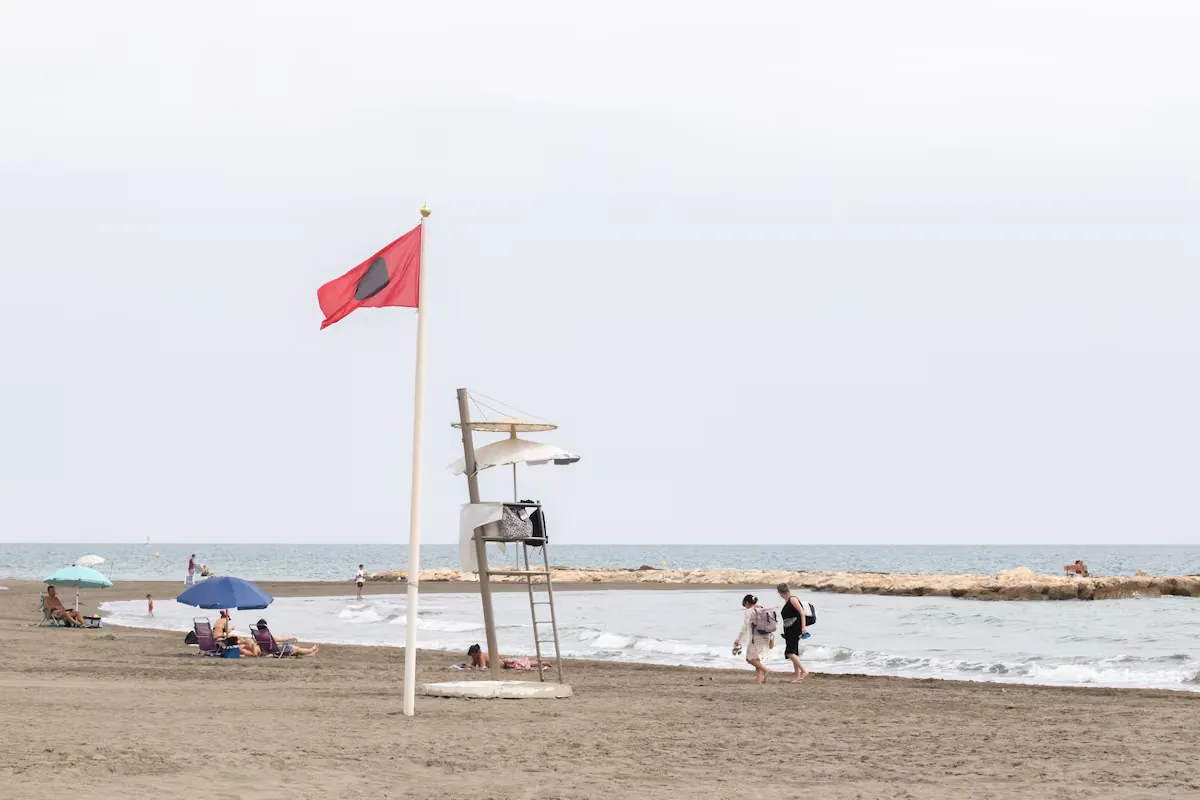
Wearing a fluorescent yellow t-shirt and red swimsuit, a lifeguard was blowing his whistle. He did so, around four in the afternoon, at one of the artificial coves in the El Palo neighborhood, east of the city of Málaga. A couple of bathers looked at him surprised and he was insistently pointing to a huge red flag with a black figure in the center, like an oil stain. “I’ve been like this all day,” the guy said desperately. “Some pay attention, many don’t. But I’m not a police officer, I can’t do much more,” he explained during his break before going back to educating. “There are bacteria, you can’t swim,” insisted another colleague, who recalled that this is not the first time this summer. A few meters away, several vacationers angrily looked at the sea because they couldn’t take a dip on a leaden day with haze in the sky, 32 degrees temperature and 60% humidity.
El Palo has been one of the beaches where swimming was prohibited this Monday due to the concentration of Escherichia coli (E. coli) —a bacterium with strains capable of producing toxins and causing serious illnesses in infected patients— above optimal levels, according to the Málaga City Council. And faced with the possibility of causing health problems for bathers, the municipality decided to raise the red flag and, with it, the swimming ban on much of its beaches from west to east. San Julián, Guadalmar, La Misericordia, Sacaba, and San Andrés, as well as the El Palo coastline. “The results of the analyses carried out on water samples taken this Sunday by the Municipal Water Company (Emasa) detected the presence of the E. coli bacteria at these points along the coast. In the coming days, analyses will be repeated to monitor the situation,” the City Council highlighted in a statement.
Except for the heat, the image offered by El Palo was almost wintry, with some coves practically empty and beach bars at half pace. Compared to recent days, when they recorded a large influx of people, now the bathers who approached resigned themselves to staying under the umbrella’s shade and splashing water on themselves in the showers, opened this year after the end of drought restrictions. Others ignored the lifeguards’ instructions. And some more decided to walk across the bridge over the Jaboneros stream from El Palo to reach Pedregalejo. There swimming was allowed. The contrast was evident: dozens of umbrellas coloring the sand next to the promenade under construction and a crowd in the water. “They haven’t closed La Malagueta either. Where there’s money, they don’t close, they don’t want the tourists to lose the beach,” said a neighbor, half ironic and half angry while cooling off in one of the beach showers.
The Málaga City Council, in a brief statement, reported that the cause lies in the storm recorded in the early hours of last Saturday, which left a maximum of 14 liters per square meter in one hour (far from data from other storms). Due to the downpour, “there were discharges [of wastewater] at various points in the city, with spills into the sea.” As a result, that day the red flag was established on four beaches —San Julián, La Misericordia, Sacaba, and San Andrés— where swimming was not advisable. The next day they obtained, like the rest, a green flag. And this Monday they are red again, now due to the presence of E. coli. The cause is, according to municipal sources, that the general sanitation system parallel to the coast combines rainwater and sewage in the same pipe and, if it rains, “discharges into the sea can occur” because otherwise “blockages and floods” of dirty water would occur in the city. The same sources explain that they are carrying out various works to separate the networks and that, in the future, 70% will be independent. “But the most important thing is citizen awareness. The public must be reminded that throwing trash or wipes into the toilet causes blockages at these points and greater discharge than should occur,” the same sources point out, also indicating that in Catalonia “they usually close beaches after rain because it is common for it to rain in summer there,” unlike in the south.
Read more Florida Primary Elections: When They Are and What’s at Stake
The presence of E. coli was also the reason why the beaches in the East district —El Palo and Pedregalejo— were closed at the end of July, when no storm was recorded. In March, swimming was also prohibited in the Guadalmar Golf Course area due to the presence, again, of the same bacterium. This was due to the breakage of a 50-meter section of pipe caused by the rise of the Guadalhorce River due to rain. To “minimize the effects,” the Municipal Water Company (Emasa) diverted the discharge offshore with an outfall nearly half a kilometer long, as reported by the City Council itself.
“Tourism catastrophe”
“Is there any beach left open?” lamented Toni Morillas, spokesperson for the municipal group Con Málaga. “Zero explanations about why there have been sewage discharges on Málaga’s beaches,” he emphasized on social media. Also from the opposition, the PSOE spokesperson, Mariano Ruiz Araujo, has lamented that “the City Council fills its mouth talking about tourism while Málaga shows a string of red flags.” “In the middle of high season, finding closed beaches again and again is a real catastrophe for Málaga’s tourist image, but above all, for the people of Málaga, who have the right to enjoy their beaches safely and normally,” Ruiz Araujo said.
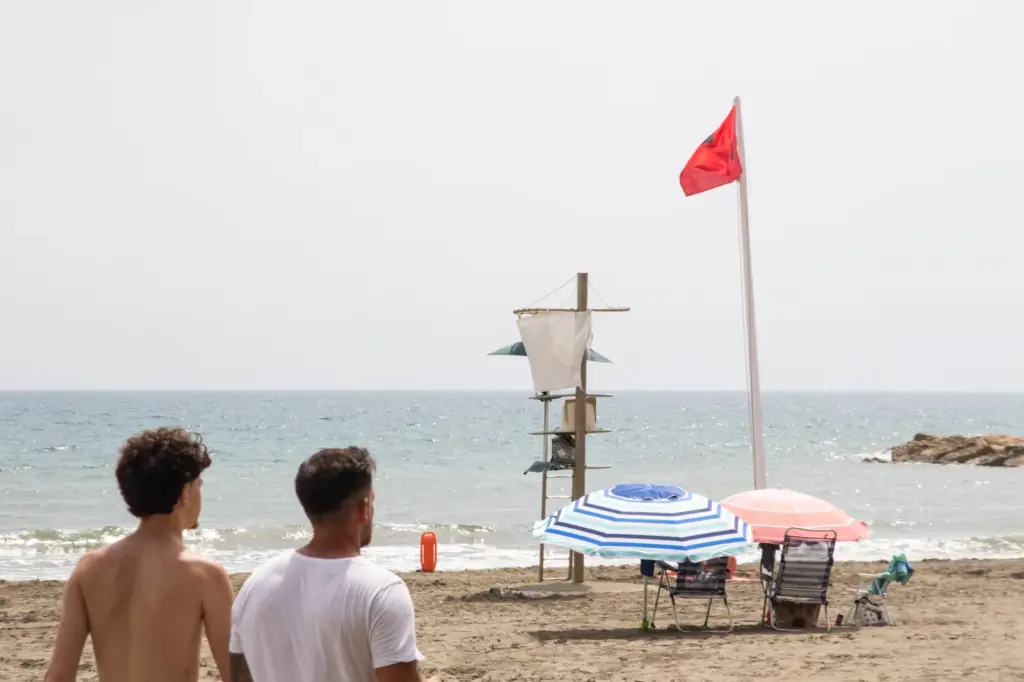
“Three episodes in one summer cease to be an anecdote and force the City Council to give explanations,” insisted the socialist spokesperson, while criticizing that million-dollar loss estimates were made when the AVE could not reach Málaga at Easter and now the same calculations are not made. “Don’t tell us it’s all the storm’s fault. Málaga grows, fills up in summer, but its sanitation and treatment infrastructures have to grow at the same pace. In the middle of the Fair: discharges, closed beaches, and red flags. Less excuses and more investment,” lamented Yolanda Gómez, Vox councilor.
Read more Five arrested for the brawl in Lleida between shopkeepers and alleged thieves