Things have changed a lot in Ceuta since 2021, the last time the autonomous city experienced a humanitarian crisis similar to the current one after the arrival of thousands of immigrants. Back then, there was collaboration and kind words between the central government and the autonomous government, led for 25 years by Juan Jesús Vivas, a PP president who has always stood out for having a different discourse from his party’s leadership, betting on collaboration with La Moncloa and firmly rejecting Vox and its xenophobic discourse. But this time it is very different. Vivas has been hardening his tone until this Monday when he exploded and even threatened to go to court over the government’s “inaction.”
Read more Mallorca 1820: X-ray of the last great plague epidemic in Europe
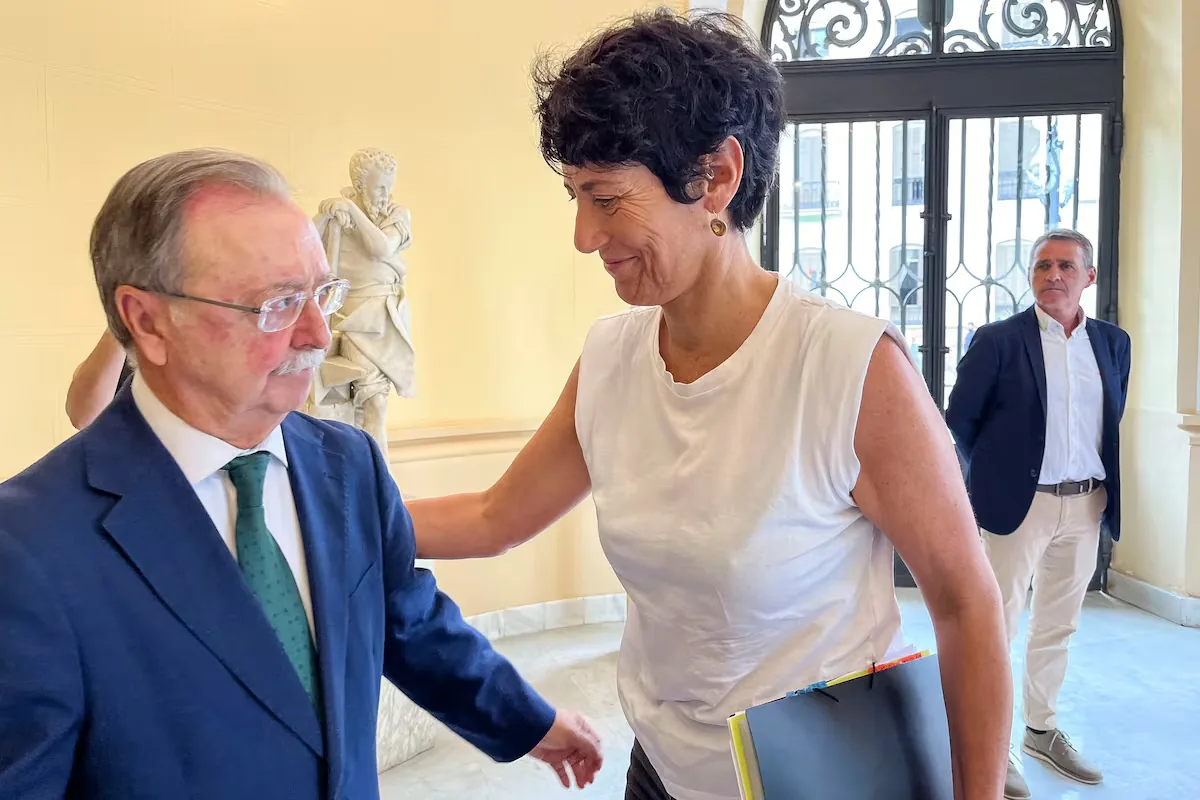
However, shortly after sending that very harsh message, Vivas met in Ceuta with Elma Saiz, Minister of Inclusion, Social Security and Migrations and spokesperson for the Executive. Both agreed to enable four new spaces to accommodate 1,500 people, which could be expanded in the coming days, and to start treating with dignity those who wander the city and sleep on the beach or in industrial areas.
This agreement, which the government trusts will have an immediate effect — more people could start being accommodated as early as this Tuesday to avoid the dramatic images of recent days — does not completely dispel, however, an unusual political tension between the two administrations, which various government sources consulted by this newspaper attribute to a radical change in attitude by Vivas and his team, believed to be due to very strong social pressure and a greater strength of the far right and racist and anti-immigrant discourses in Ceuta.
Sources close to Vivas, on the contrary, point out that the problem is that the situation is now much worse than in 2021, because more people have stayed in the city — the central government says it is not so different — and above all because the autonomous president is focusing on a single objective: that all those who entered on July 30 and 31 leave Ceuta as soon as possible, something that is practically impossible because there are very complex cases to resolve.
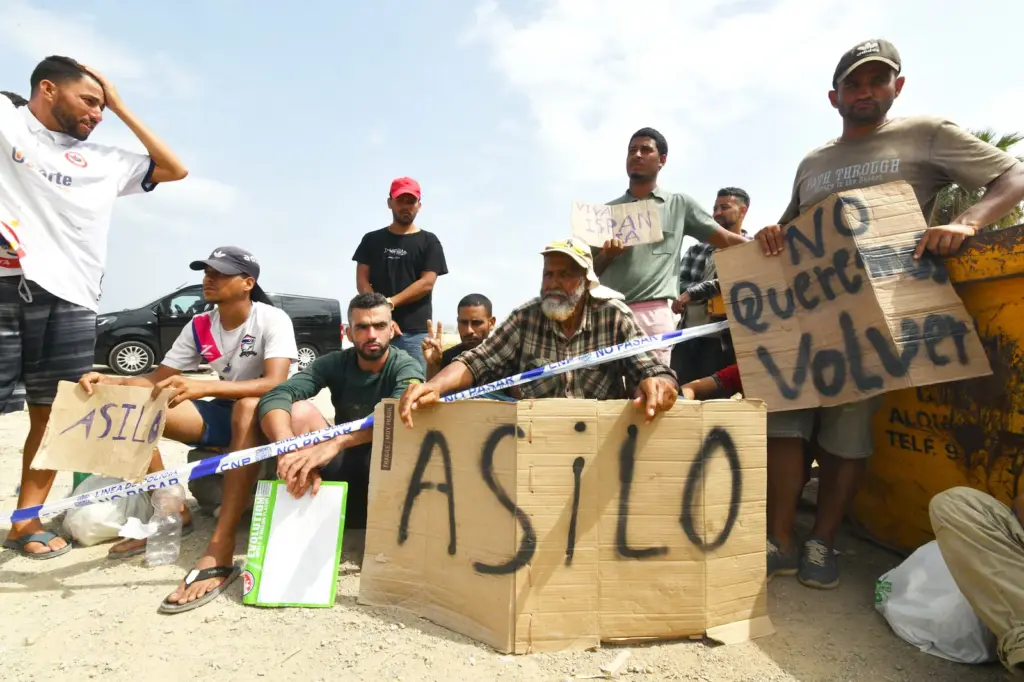
The underlying problem seems clearly political. While in 2021, even with the recent pandemic, collaboration was total and Ceuta made several public buildings available to accommodate immigrants and resolve the humanitarian problem, this time all government members consulted insist that the local executive has put up all kinds of obstacles and that every time a location was sought, neighbors protested and the autonomous government backed down.
The anti-immigrant social atmosphere has worsened in five years. Far-right agitators and racist propaganda on social media have much more strength. And everything seems more difficult now than in 2021. In addition, the city lives in a state of serious unease at the possibility that Morocco could allow a new assault of this kind in the future. Vivas was especially harsh and even hinted that Pedro Sánchez’s government might be delaying decisions so as not to upset Morocco.
The central government believes that Ceuta has so far bet on not accommodating migrants to see if they leave, as the vast majority have done on their own. But it insists that there comes a time when some stay. And they must be given humanitarian reception to avoid bigger problems for the Ceutans themselves.
“An important step forward”
Minister Saiz explains to EL PAÍS that the agreement with Vivas this Monday is “an important step forward that shows there must be collaboration between administrations, because it is the only way to solve problems.” The Minister of Migrations recalls that much has already been done in recent days, but maintains that now, with this pact, the reception capacity will be increased.
Not only will there be four new locations, but the temporary internment center is also being reinforced with new cots brought from the peninsula, which will also incorporate a gender perspective with women-only sectors to better protect those there. This is one of the problems the government is working hardest on, to avoid more sexual assaults, which will be more preventable if immigrants are controlled in spaces, registered and identified.
Read more Bonoloto: check Monday, August 17 draw
“What makes no sense is to keep treating them badly to see if they leave, leaving them stranded on the beaches waiting for them to decide to return, because many of them will not do so because they have applied for asylum or are awaiting some administrative resolution. We must have humanitarian care. We must take care of them for the good of all,” summarizes another government member.
Health Minister Mónica García reproaches Vivas for not having made available from the first moment a series of locations that depend on the city, while in 2021 this was done. “We are demanding management like in 2021, when different sites were offered. We need them to keep the public health situation under control. We are glad he has started to facilitate,” she concludes in conversation with EL PAÍS.

From Vivas’s team, they insist, on the contrary, that then there were far fewer people ―3,500 in 2021 compared to the current 9,000― and above all they demand that expulsions be sped up now with more officials and that asylum processing from Ceuta be suspended. Vivas and his team say the entire expulsion process can be accelerated. But the government recalls that everything is very regulated and, in fact, there are two people from the two administrations ― the former government delegate and the former vice president of Ceuta ― who have been disqualified by the courts for having hastily returned minors to Morocco.
At the origin of this new massive jump is a misinterpretation of a Spanish Supreme Court ruling condemning hot expulsions of people who have just entered Ceuta. The regulation is complex; taking immigrants to the peninsula is also complex because Europe pressures not to do so. And everything indicates that the solution will be gradual and individualized, trying to manage each case as quickly as possible, but without committing irregularities that courts later condemn.
In an extraordinary appearance, President Vivas made it very clear that the political situation is not that of 2021 and appealed several times to the resistance of neighbors as an explanation for the rejection of various temporary reception center locations, although shortly after he agreed on some of them with Saiz. The agreed locations, at least in theory, should not generate so much rejection because they are in more isolated places.

Vivas even threatened to go “to the president of the Supreme Court and the president of the Constitutional Court” if the problem is not resolved within a month. “Ceuta lives in a state of exception,” he insisted. The Ceuta president even hinted that there could be a hidden intention from La Moncloa not to restore the situation. “Until the definitive fall [of Ceuta],” he suggested, as if Sánchez wanted to hand it over to Morocco. “Hopefully this is not the reason,” the Ceuta president stressed. “The Ceutans are not going to give up; the government is a very important part of the state, but it is not the whole state,” he even said.
However, a few minutes after sending these very harsh, unprecedented messages from him, Vivas met with Minister Saiz and the tone was completely different, so much so that an agreement was quickly reached and she announced it in Ceuta without major problems. That is why the government interprets that Vivas, with whom it has always had a good relationship, is overacting due to very strong social and political pressure, with the PP increasingly hard on migration issues and the competition from Vox months before autonomous, local, and general elections. The political battle over migration, which has already had a strong episode in Europe and still pits Madrid against Rome, also reaches Spanish local politics with a clash between La Moncloa and Ceuta that had so far been avoided.