







“Spain is rowing against the current.” The phrase is repeated several times in the interview with Nacho Esteve, spokesperson for the Coordinator of NGOs of Spain. The solidarity thermometer published this week by this entity that brings together all the development organizations in the country corroborates his words: the volume of development funding is increasing and the number of people reached by that aid grew by 20% in two years. “Our country defends international cooperation in a clearly adverse global environment,” Esteve concludes.
Read more Rodalies does not detect landslides or fallen trees on the train tracks
All this in a time of global cuts in solidarity, decided by the United States and European countries such as the United Kingdom, Germany, or France, which are already having disastrous effects on health or education in the Global South.
Last week, the Organization for Economic Cooperation and Development (OECD) reported that official development assistance recorded a record decline in 2025: 23.1% compared to the previous year, considering data from the 34 countries it analyzes. In 2024, it had already declined by 7.1%. That is, in two years the volume of cooperation from the world’s main donor countries has decreased by more than 30%. Meanwhile, in Spain, Spanish cooperation increased by 12% in 2024 and 13% in 2025.
The total volume of development aid measured by the OECD represented about 150 billion euros in 2025, 0.26% of the combined gross national income of donor countries. Spain is slightly above that average, at 0.27% of its GDP, a modest figure compared to the numbers of Denmark or Finland, but showing an increasingly rare upward trend.
“Spain increases its contribution at a critical moment and plays a countercyclical role,” celebrated José Manuel Albares, Minister of Foreign Affairs. This “positions us as a reliable and strategic partner that helps mitigate the impacts of cuts and as a global actor that materializes its commitment to the international cooperation system and the multilateral system as a whole.”
Esteve, from the Coordinator of NGOs, explains that Spain’s commitment was clear when it became the host of the IV International Conference on Financing for Development, held in Seville at the end of June. Other meetings will follow in 2027, focused on research, prevention, and the fight against infectious diseases.
“We tragically experience this lack of international solidarity just at the moment it is most needed. It’s frightening. Because generating sustainable transformation requires time, effort, and funds,” says Blanca Mingo, from the organization ActionAid. “That’s why Spain increasing its level of cooperation at a time when agencies are closing is very good news. Staying at the same level would also be,” she adds.
That Spain increases its level of cooperation at a time when agencies are closing is very good news. Staying at the same level would also beBlanca Mingo, ActionAid
The Cooperation Law approved in Spain in 2023 after receiving votes in favor from all parties except VOX sets the goal of reaching 0.7% of its GDP by 2030. “It’s true that Spain is not at the desired pace. We should be at 0.4% of GDP to reach 0.55% in 2027, the goal of this legislature,” Esteve estimates. “Although it is true that the fact of extending budgets largely prevents us from meeting these goals,” he admits.
10 million more people
The report from the Coordinator of NGOs analyzes the years 2023 and 2024, a period in which the number of people who have benefited from more than 4,300 projects from over 600 NGOs in 100 countries has risen from 47 to 58 million.
Read more 091 transcend that 20th century they declared dead
“We have strengthened our actions to reach more than 10 million more people. It shows the commitment of these organizations to promoting development, defending human rights, and fostering peace and democracy,” explains Esteve.
Among those 10 million people are, for example, women from 45 villages in Niger, where the NGO Movement for Peace maintains a project that was expanded in 2023. “It is a very rural and impoverished area of the Tahoua region, where social and financial autonomy of women and youth is promoted through technical training, creation of commercial channels, education in human rights, and inclusion of women in decision-making,” explains Maite Serrano, responsible for Africa at the NGO.
The spokesperson explains that previously they had a project with 20 villages that was recently expanded to 45. The program is funded thanks to the Spanish Agency for International Development Cooperation (AECID) and decentralized cooperation, driven by municipalities or autonomous communities, which in Spain is a true engine of solidarity and sometimes reaches levels higher than the state. In this case, the Community of Madrid, the Junta of Castilla La Mancha, the Valencia Provincial Council, and the City Council of Ciudad Real currently participate in this project.
Going even more concrete, in Niger, Spanish funds are managing to “protect women and girls in these communities against forced marriages and gender-based violence,” says Oumaimatou Saidou, from MPDL in the African country. “Today, girls have the right to choose their partner and traditional and religious leaders, trained by the project, have become defenders of girls against these practices,” assures the official.
In Niger, Spanish funds are managing to protect women and girls against forced marriages and gender-based violenceOumaimatou Saidou, MPDL
More supportive citizens
In the case of ActionAid, highlights Blanca Mingo, thanks to a program funded by the La Caixa Foundation that began implementation in 2020, 3,000 small economic initiatives, mostly agricultural, have been created and more than 4,000 jobs generated, especially among women and youth, in the Indian region of Bundelkhand, in the State of Uttar Pradesh. “We have been able to grow and geographically expand the project. It is something that needs time to consolidate and for results to be seen. It is a very patriarchal region, where women face quadruple discrimination and where we work with historically marginalized communities,” she explains.
The report from the Coordinator of NGOs also highlights that, year after year, citizen support for development organizations continues to grow and exceeded 2.6 million people, that is, it recorded an increase of more than 100,000 between 2023 and 2024. On the other hand, in Spain there are currently more than 18,000 volunteers, 3.7% more than in the previous report.
Solidarity is reaffirmed in these complex times and so many crises. This proves that citizens continue to trust organizations and that is very good newsNacho Esteve, Coordinator of NGOs
“Solidarity is reaffirmed in these complex times, with so many crises. It is a fact that also proves that citizens continue to trust organizations and that is very good news,” assures Esteve.
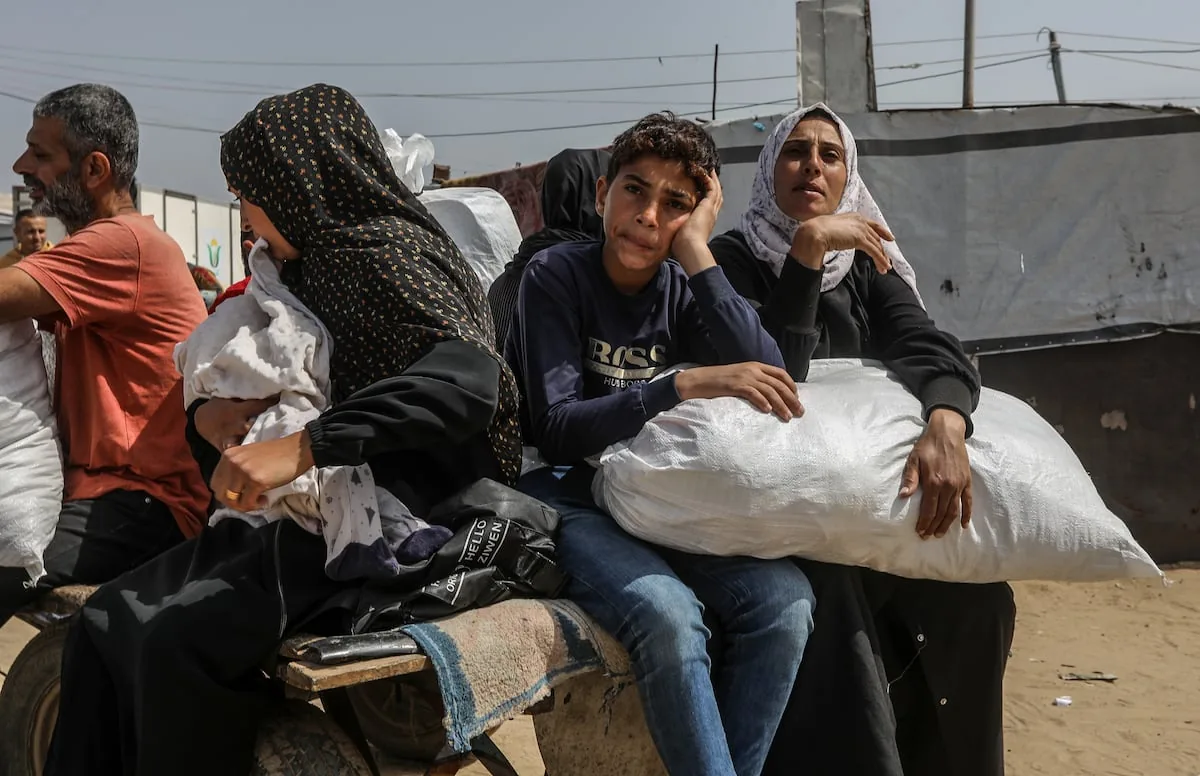
In 2024, funds for the Middle East increased especially, registering a 38% increase in funding motivated by the humanitarian drama in the Gaza Strip, and for Europe, specifically in Ukraine, where development aid increased by 20%. On the other side of the scale, the region that suffered the greatest loss of Spanish economic resources was Southern Africa, with a 26% decline in investment. The region is also the most forgotten by international funds, as global data show, although it concentrates the greatest number of needs, crises, and levels of poverty.
Read more Stephen Curry’s Warriors miss the playoffs and foresee the end of an era