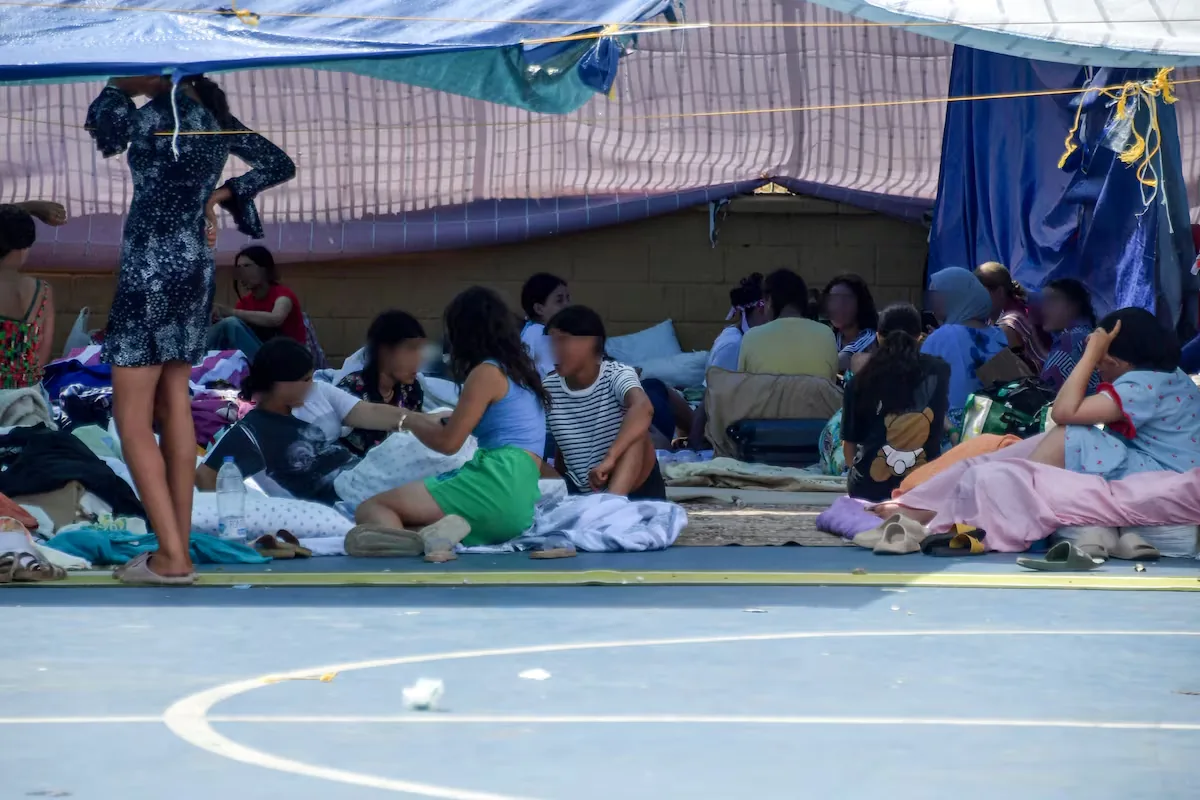
New political war over immigrant minors. But this time directly between the PP and the Government, without Vox’s participation. Santiago Abascal’s party even broke regional governments with the PP over this issue. Now, however, Alberto Núñez Feijóo’s position on migration has hardened so much that it has been directly him and ―the until now moderate― Juan Jesús Vivas, president of Ceuta, who have opened a political war over minors with unpredictable consequences in a press conference in the autonomous city. Both openly demanded that all those who entered in the “invasion” of July 30 and 31 be expelled at all costs, “minors and adults.” And they flatly rejected sending some of the minors to the Peninsula while the situation is resolved, as the Government proposes.
Read more France records 7,300 additional deaths during heat waves since May
The Ministry of Childhood was already preparing the departure of 500 girls, especially vulnerable, and trusted to have the support of the Ceuta Government, which has the competence and suffers the problem more directly. But this political war raises the question of whether that solution will be viable. The Government assures that Feijóo and Vivas are demanding a flagrant illegality, which they know it is, because a mass deportation of minors goes against the child law, as shown by the disqualification of up to nine years recently imposed on both the former government delegate and a Ceuta councilor, precisely for hastily returning more than 500 minors in the previous crisis, in 2021, when 10,000 people entered.
The head of Childhood, Sira Rego, is scandalized in conversation with EL PAÍS by what the PP proposes. “They are not talking about family reunification; we all want children to be with their parents, but many of these girls have no families or come from situations of violence,” she points out. In her opinion, from Feijóo’s party “they are proposing a deportation of children.” “And it is completely illegal. We will not do it under any circumstances. Deporting children is outrageous. Feijóo is joining Vox’s racist positions,” adds Rego. “From the Ministry of Youth and Childhood we will continue working to safeguard a society based on human rights,” the minister concluded on social media.
Feijóo and Vivas appeal to a recent modification of European legislation, which Spain opposed, that tightens regulation and allows returning minors even against their will. But the Government recalls that even that new regulation, with which it disagrees but must comply, always speaks of the best interest of the minor. And Spanish child legislation is strict, they recall, and the Juvenile Prosecutor’s Office has recently issued an order that reception must be facilitated.
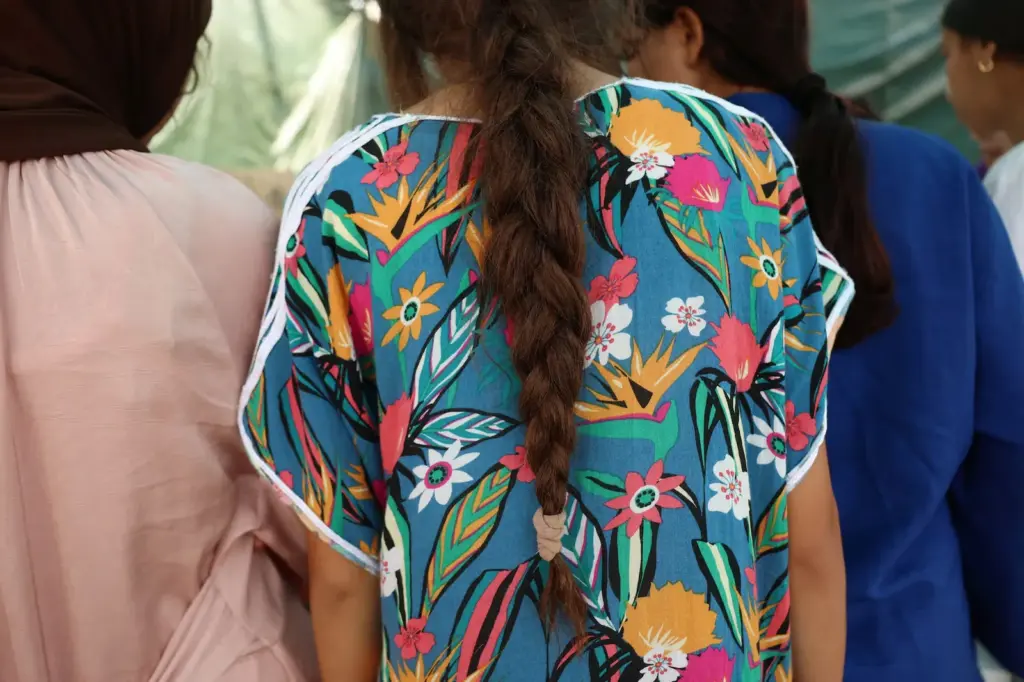
In the case of the 500 girls, according to Government sources, many of them are very young and therefore especially vulnerable. Not even teenagers, but girls. And the cases that social services are encountering are especially dramatic. The minors come from situations of violence and openly refuse to return; some even threaten to take their own lives if that happened. In many cases they have no family or are completely disorganized, and it is very difficult to guarantee that they would return to a safe environment.
In any case, to identify all situations, interview the minors, see case by case ―as the legislation requires―, time is needed. And since the facilities in Ceuta are completely saturated ―in theory there should be no more than 30 minors hosted in the autonomous city and these days there may be close to 3,000―, most are on the street. Therefore, to relieve pressure in Ceuta and especially with the most vulnerable ―the girls―, the Ministry of Rego, which has its Secretary of State, Rubén Pérez, there, was preparing a temporary solution to send 500 minors to the peninsula in private reception places paid for by the State. The competence is Ceuta’s, but the Government understands that it cannot assume it and provides the money, although it needs the city’s collaboration, which has guardianship of the girls.
Read more Feijóo, on the transfer of migrants: “Neither adults nor minors. They all must return”
Government sources trust that everything will remain a political message and Ceuta will finally allow the departure of these girls, because it is the main interested party. Feijóo and Vivas, however, were so categorical that the resolution of the conflict is unpredictable. The PP could try to block in an interterritorial meeting the 25 million euro allocation that Rego has prepared for this emergency. But the Government trusts that the Populars will not go that far.

Feijóo and Vivas were emphatic: all who entered must return to Morocco. Although when asked with what legal formula they would do it —there lies the main complexity—, they did not answer. “You cannot use an occupation of a country to then ask that minors who have entered can stay in that country,” Feijóo said. “How many minors could stay in Spain? How many millions of minors could stay in Spain? How many from anywhere in the world, even occupying and invading our territory?” he asked. Vivas proposed that Moroccan social services take care of them, although Spanish legislation is very strict and precisely for something very similar his councilor was disqualified. The president of Ceuta argued that Rabat cannot be a first-class country for some things and not for minors. “If Morocco is valid to jointly organize [with Spain] a World Cup, it will have to be valid to organize its minors,” he exclaimed.
The harshest tone was used by Feijóo, who even hinted that the presence of immigrants puts at risk not only the minors ―mostly Moroccan― but also the Ceuta natives. “What is happening in Ceuta for the Government to consider that 500 girls should be sent to the peninsula? And the girls who live in Ceuta and are Spanish, who protects them?” he concluded.
Now it remains to be seen how far the PP wants to take this political battle. The Government recalls that, despite the harsh tone of the Populars and Vox, who already govern together in several regions, last year almost 2,000 minors were transferred to the peninsula from the Canary Islands, Ceuta, and Melilla. And it trusts that with these 500 girls and other minors who will probably have to be transferred in the future the same will happen, although it remains to be seen if the PP, a few months before the elections, wants to maintain this standoff. What the Government completely rules out is a mass deportation of minors, which it clearly considers illegal. The new battle over unaccompanied minors remains open for the coming days, while the situation in Ceuta continues to become increasingly explosive.
Read more A minister on the beach