The Government probed through a minister to Felipe VI about the opportunity for him to make a call to the King of Morocco, Mohamed VI, to discuss the Ceuta crisis, according to sources from the Executive and the Royal House confirmed to EL PAÍS. The call has not taken place “for the moment,” according to the same sources. The Royal House is waiting to see how the events that began with the massive entry on July 30 and 31 evolve, pending action by the Government, and they are evaluating the opportunity for the call or even a visit to the autonomous city “when it is useful and reasonable” and requested by President Pedro Sánchez, something that has not happened.
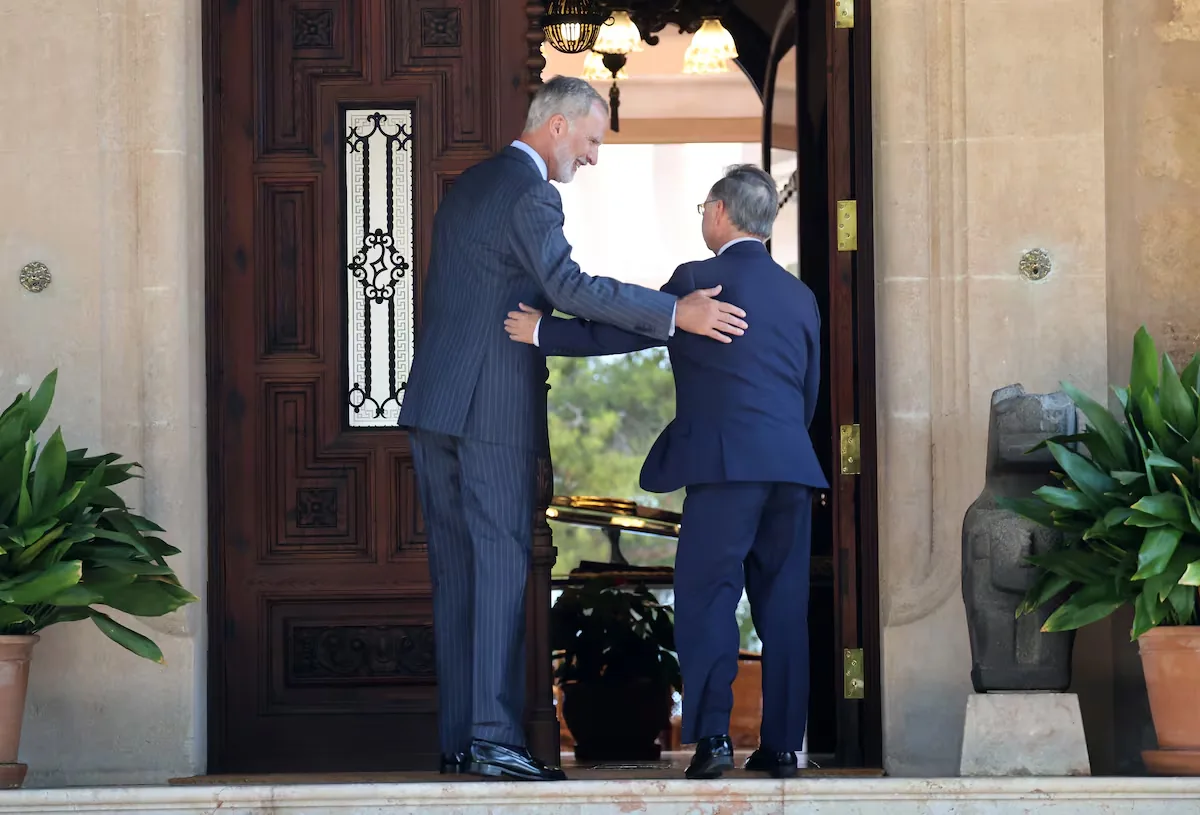
King Felipe VI is following the migratory, social, and political crisis in Ceuta daily. Unusually, and to reflect that concern, he received the president of the autonomous city, Juan Jesús Vivas, at his summer residence in Palma, and has called to exchange views on the serious situation with the head of the Executive, Pedro Sánchez, the president of Melilla, Juan José Imbroda, and the leader of the PP, Alberto Núñez Feijóo. The one he has not called yet is the King of Morocco, Mohamed VI.
President Sánchez has not directly requested that communication, but a minister from his Cabinet did convey to the Royal House officials the idea that this call to Mohamed VI, “motu proprio,” could “help” and be convenient “to thank him” for Morocco’s actions in the days following the influx of immigrants who entered Ceuta on July 30 and to appreciate that the neighboring country took them back, according to various sources familiar with that intervention.
The Government of Spain has avoided confrontation with Morocco as much as possible to hold it responsible for the serious incidents that occurred at the end of July or for the inaction of its police forces and has pointed to a pull effect driven and promoted by social networks and unidentified mafias. Alberto Núñez Feijóo’s PP initially reacted mildly against Morocco, focusing its attacks on the poor management of the crisis and a lack of foresight or information and intelligence by Sánchez’s Executive, but over the days its strategy has also hardened towards the neighboring country, which the popular leader even accused of practicing “blackmail” with such actions.
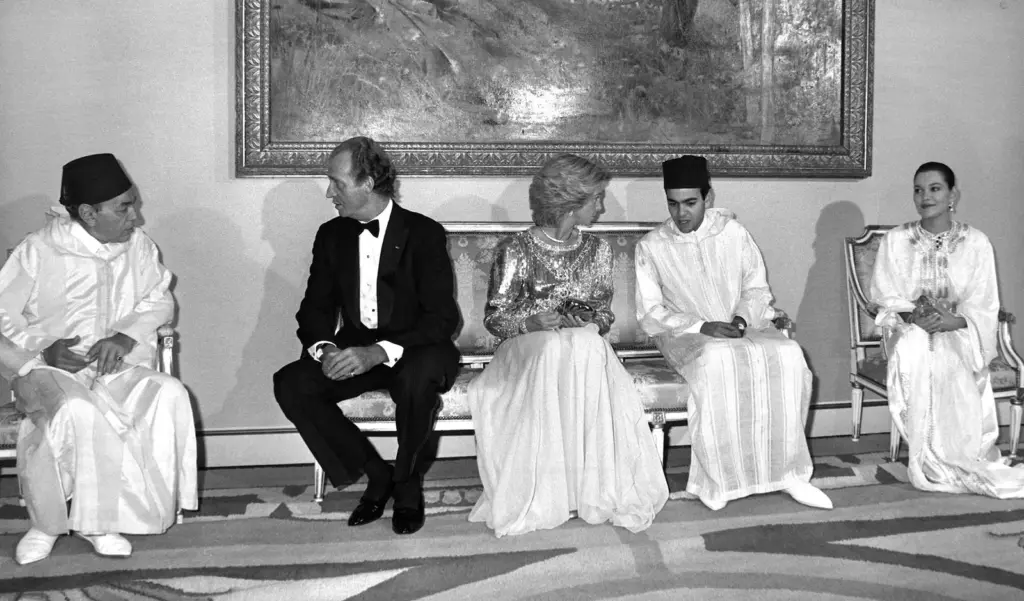
Finally, the direct connection between Felipe VI and Mohamed VI did not occur because the Royal House considered it could be publicly misinterpreted now, in a context where the crisis is still far from being resolved. The monarchs do not maintain the particular relationship or personal ties that King Juan Carlos and Hassan II had, who considered each other brothers and frequently spoke during the periodic crises between the two countries. Both Felipe VI and Mohamed VI are less expansive and more reserved than their predecessors, according to diplomatic sources who have been present at their most direct meetings. “The relationship is not bad, but it is different,” these sources explain. The interest of both in their respective countries is crucial, and in fact, the Spanish Royal House values that Mohamed VI once sought advice from the Spanish embassy in Rabat to find a Spanish teacher for his son, the heir to the throne, Mulay Hasan.
Read more Eurodreams: check draw for Thursday, August 20
The Royal House does not rule out that Felipe VI may, in the coming days or weeks, make that call to Mohamed VI or visit Ceuta, but when it is “useful and reasonable” and decided in accordance with what is appropriate and considered convenient by the Government, which determines the opportunity for such trips. This thesis is shared with the Government, which has sent eight ministers to the area in recent weeks and whose spokesperson has been settled in the city for several days. Other government sources pointed out that at some point during this crisis, the Royal House proposed the option of an express visit by King Felipe VI to Ceuta, like the one President Sánchez made on July 31, the day after the massive entry of immigrants into the city, but the idea was discarded. The Royal House denies this hypothesis. Since then, Sánchez has held several telematic coordination meetings with his ministers from his summer residence in La Mareta (Lanzarote), but he has not yet returned to the city.
The president of the autonomous city of Ceuta, Juan Jesús Vivas, was the first to indicate that the King plans to visit that population after holding the bilateral meeting with the monarch on August 6 in Palma: “The King is committed to his visit to Ceuta, it is a commitment he has made and he will do it because the King keeps his word; what I cannot tell you is when.” Vivas already specified that day that the trip will take place fulfilling the constitutional function of the monarch, referring to the fact that it will be organized according to what the Government schedules.
The current Executive is very aware of the special sensitivity that Felipe VI’s possible presence in Ceuta could arouse in Morocco, as happened with the only visit made on November 5, 2007, by the emeritus king, Juan Carlos I, with then-Queen Sofía. That visit lasted barely five hours but marked a historic milestone because it was the first by a Spanish head of state in 74 years. The previous one had been by the president of the Second Republic, Niceto Alcalá-Zamora, on November 4, 1933. Kings Alfonso XIII and Victoria Eugenia had been in Ceuta in 1927.
Juan Carlos I gave a speech during his stay in the throne room of the Ceuta City Hall without mentioning Morocco at any time, whose authorities protested because they claimed sovereignty over the city and that it had been plundered. Juan Carlos I then said: “I had a pending commitment with Ceuta, with the people of Ceuta and with its authorities, but also with ourselves as Kings who owe, above all, to all Spaniards.”