EL PAÍS offers the América Futura section openly for its daily and global informative contribution on sustainable development. If you want to support our journalism, subscribe here.
Read more Security and Rule of Law: efficiency and guarantees in the balance
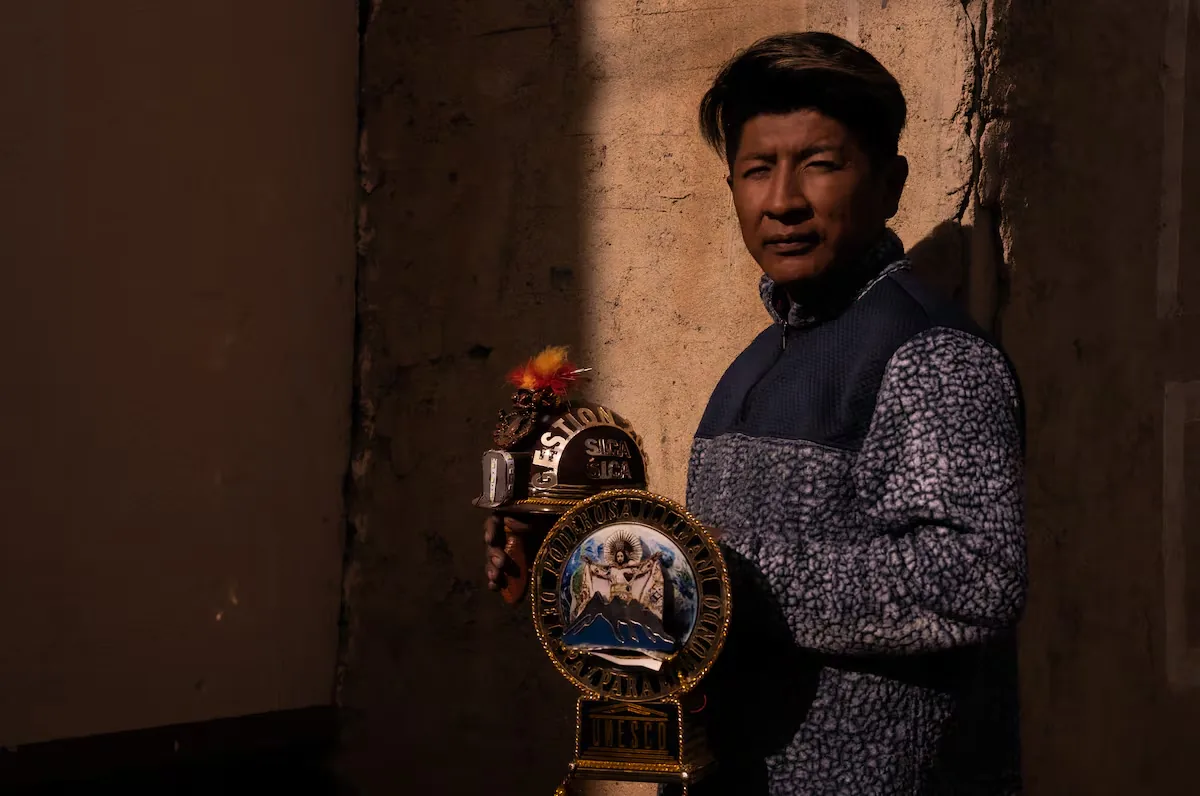
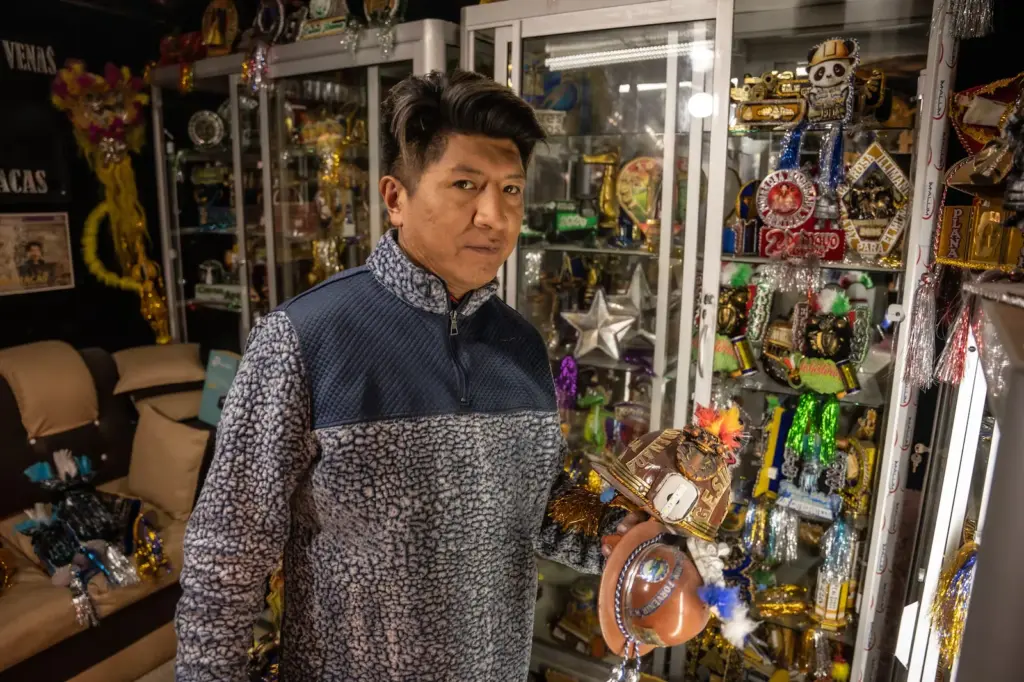
His taciturn air makes it hard to think that from his hands comes the roar that makes La Paz dance. Iván Vargas, 38 years old, has lived off folklore for as long as he can remember. “You could say I have been a craftsman since the cradle,” he says after recalling his childhood, when, as his first task, he dedicated himself to straining sequins and glitter onto the rattles his parents made.
The rattle is a wooden musical instrument equipped with a handle that, when turned, produces a rhythmic and crackling sound. It is used to mark the beat of the morenada, a dance typical of the western region of Bolivia and also danced in some areas of Peru and Chile. The sound of the rattle in the morenada, some historians say, evokes the clatter of the chains that slaves dragged on their feet. Its rumble, which to the foreign ear may seem monotonous, is a regular feature of the soundscape of La Paz thanks to the folkloric and patronal festivals held both in the city center and on its slopes and neighborhoods, which number in the hundreds between La Paz and El Alto throughout the year.
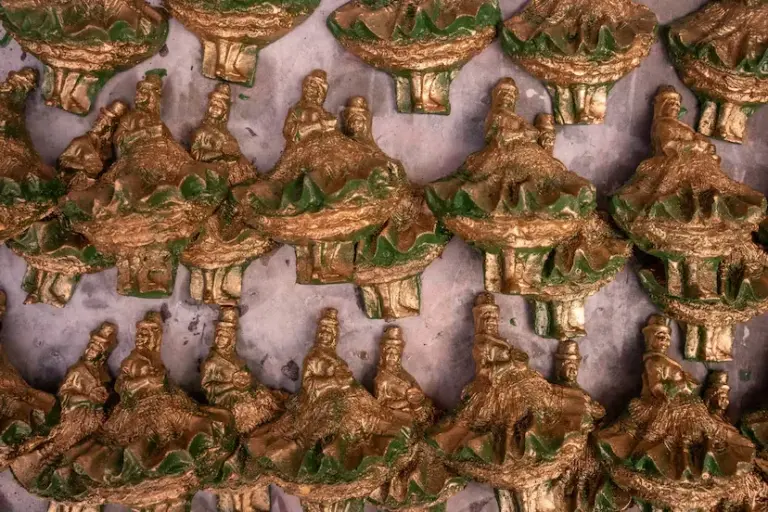
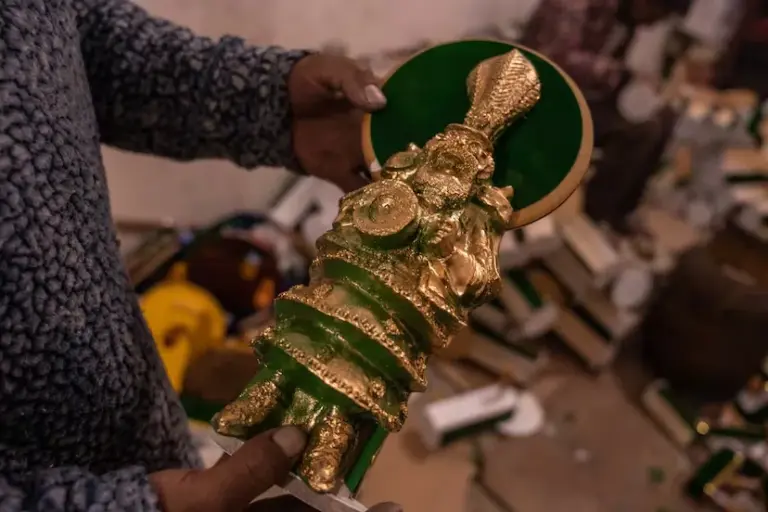
Described this way, rattles seem like brown and monotonous objects. That is why you have to see the work of craftsmen like Iván Vargas and others, whose rattles present various shapes – trucks, baby bottles, typical animals of the region – that represent the identity of the fraternity (group of dancers).
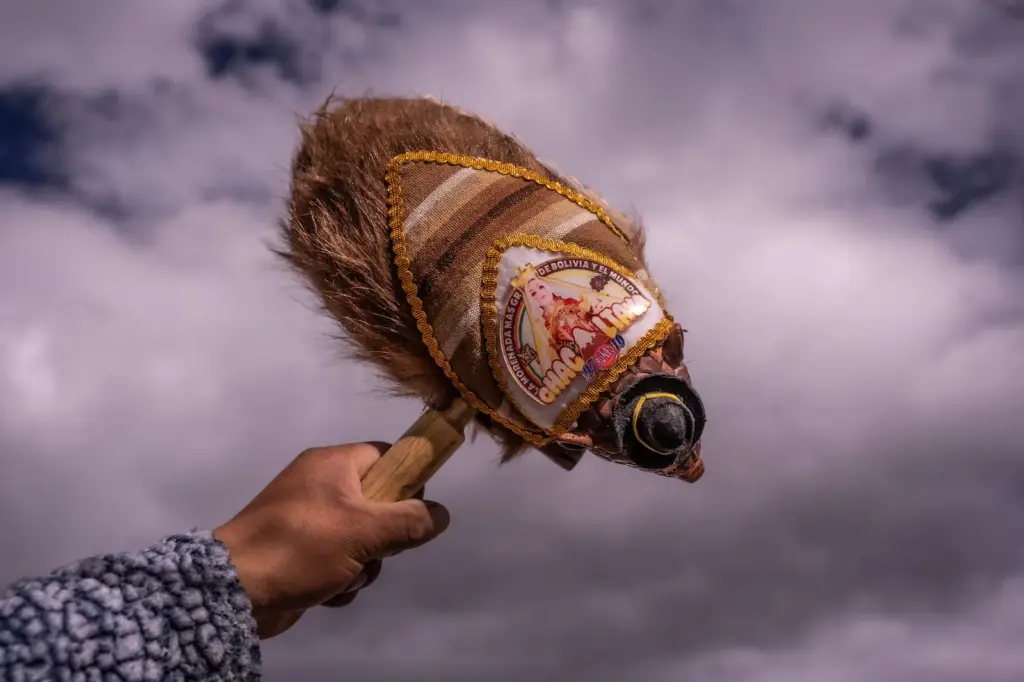
“They (a morenada fraternity) traveled precisely to Dubai and visited the Museum of the Future. They made music videos there. They wanted a rattle with the figure of the Museum of the Future,” Iván says to exemplify the challenge of creating rattles that, besides having a good sound, must reflect the group spirit.
Iván Vargas was born in La Paz. His parents, originally from the town of Pucarani, more than thirty kilometers from the seat of government, started in the world of folklore as operators of an embroiderer of typical costumes. He was the one who taught them the different artisanal branches within the world of dancers. The family has been in the business for forty years. Fifteen years ago, Iván opened his own workshop, which he named Matracas Monarca. “My brothers and I are the second generation. Half have dedicated themselves to rattles, the other half to other arts. For example, my older brother makes masks and scepters.”
The workshop room is decorated with the most memorable works of Matracas Monarca. On the wall opposite the door, we find the newspaper pages from the time Iván appeared in a local newspaper. A glass display case exhibits dozens of rattles from different fraternities of the Gran Poder. Among the pieces stands out a red truck with silver flames, alluding to Optimus Prime from Transformers. There is also a rattle carved with a silver armadillo and the legend “An eternal passion.” Other figures include a ship, a tank, and a llama in golden relief. In all, the crank stands out, the wooden piece that the dancer must turn by hand to bring the sound of the morenada to life.
The interviews for the report coincided with the prelude to the Gran Poder festival, a patronal festival in La Paz that annually gathers tens of thousands of dancers in folkloric dances such as the morenada, the diablada, and the caporales, in honor of the image of Señor Jesús del Gran Poder.
According to Valeria Salinas Maceda, an economist and doctoral candidate at the University of Salamanca, the Gran Poder festival generates approximately 100 million dollars during its entire festive cycle, which lasts about nine months. The morenada, whose heart is in the rattle, is the main dance of this event as it is considered a heavy dance due to its cadence and the large financial investment required to participate in it.
“Over the years, the social category of cholaje has known how to use dance and patronal festivals as a mechanism of identity vindication and has faced a La Paz society that discriminated against them,” says Salinas. “The morenada dance has become a performance where economic power is communicated through the expenditure on their attire.”
Read more Video | Comfort food for gray days
Today, the costumes of morenos and the cholas of La Paz convey prestige and exclusivity. Their cost has both economic and social value. Dancing morenada shows that someone has the money to afford that display. In such a scenario, the rattle is part of that same festive investment. Thus, every expense on clothing, jewelry, accessories, and rattles becomes symbolic capital that goes beyond the folkloric realm and enters other spheres of La Paz society.
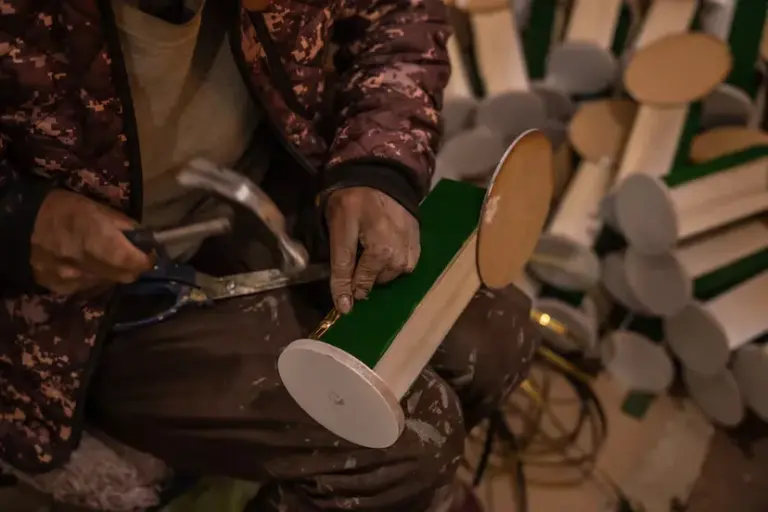
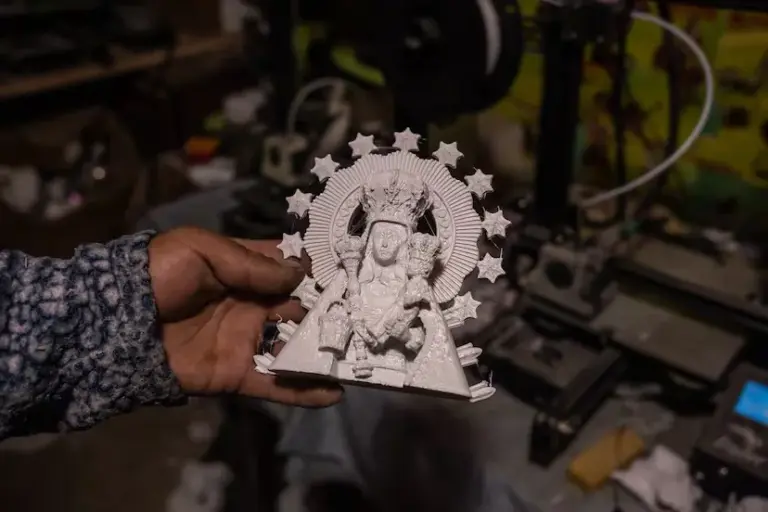
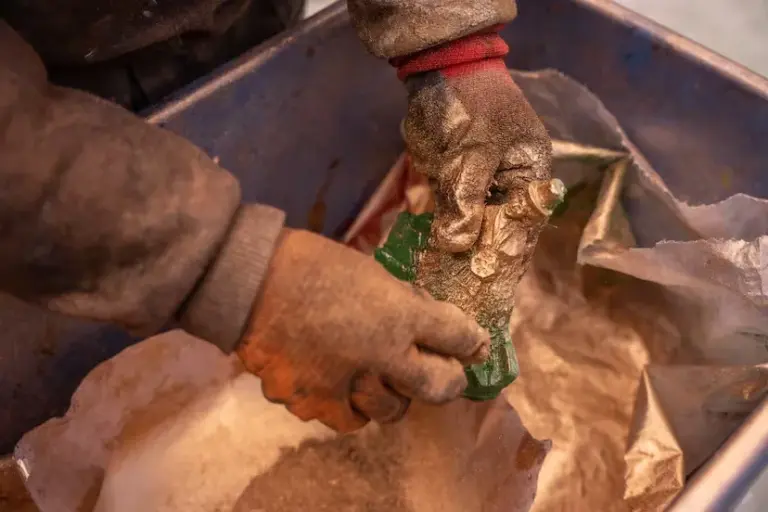
Currently, Iván Vargas’s workshop has twenty people and produces up to 15,000 rattles per year. The creation process of a rattle begins with the raw work (wooden structure, gear, sound) and continues with decoration according to the theme of each fraternity. The materials have evolved over time: from hand-soldered tinplate to wood carving, and from this to fiberglass. Since 2022, Matracas Monarca uses 3D printers for details.
Vargas recalls again the rattle inspired by the Museum of the Future in Dubai. “Making the museum in fiberglass was complicated. Then they gave me the 3D mold. It came out nice. But I was scared by the price. One little piece cost a lot and it took eight or nine hours to make one piece.”
Neither the price nor the time were obstacles. And shortly after, his artisanal curiosity led him to learn more about those machines. “A friend told me to buy the machines. ‘It’s not complicated,’ they told me, ‘you just have to find a good designer.’ Now we have thirty 3D machines.”
Vargas’s work combines tradition with modernity, without ever losing the essence of the instrument and the dance. He assures that the important thing will always be the sound, which depends on the mechanism inside the wood.
“For me, the Gran Poder means a demonstration of all the art we do with the craftsmen. That’s where all our work shines. It’s a great showcase,” says Iván, whose work is exported to countries like Peru, Argentina, and Spain.
It is August first. At the entrance of the Gran Poder, a group of morenada dancers shake their rattles in unison while a shower of red confetti falls on them. The dance is hypnotic. The spectators dance, applaud.
In that repetitive and explosive clatter lives the silent work of Iván and other craftsmen who, throughout the year, from their respective workshops, carefully sculpt and decorate the heart of the greatest dance of the Andes: the rattle.