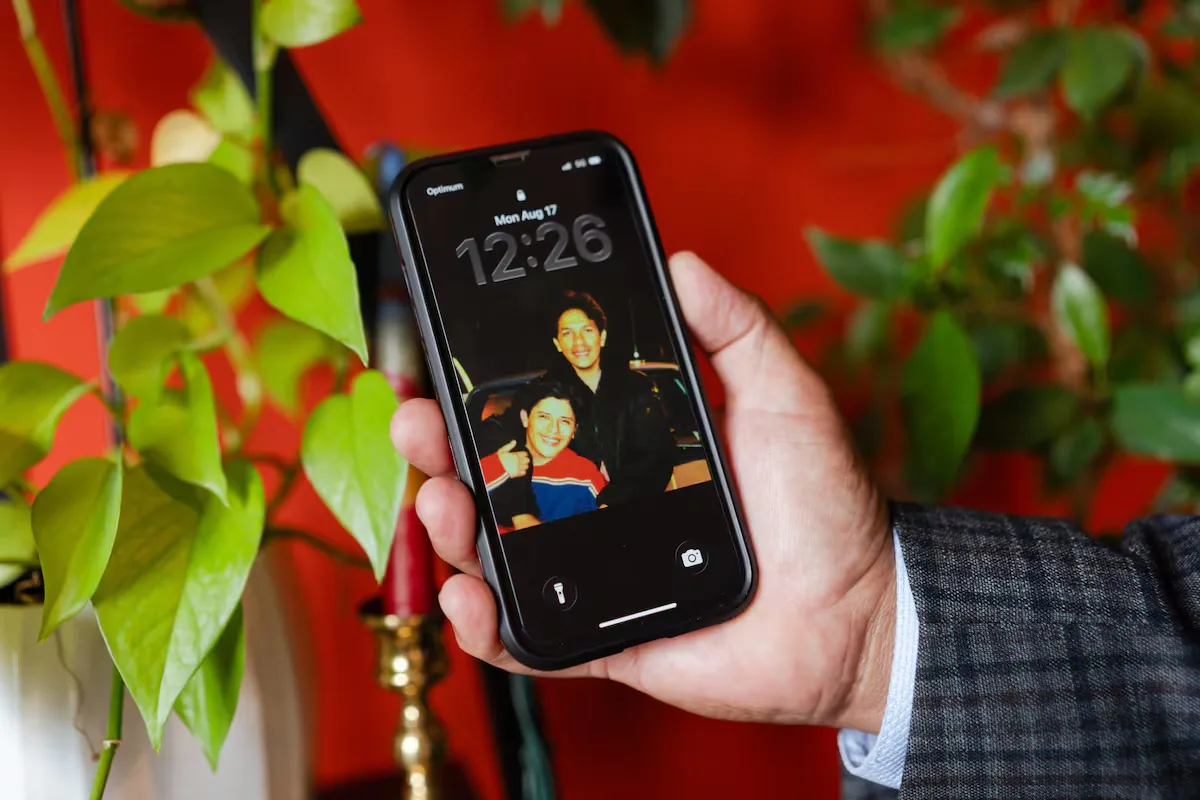
For that day, an important day, he dressed in a pink shirt and a blue suit, and when it was four in the afternoon in Washington D.C., Joselo Lucero took a seat in a room of the building located on F Street Northwest. Around him were lawyers, staff from the Robert & Ethel Kennedy Human Rights Center, the president of the LatinoJustice organization, representatives of the United States Government, and other attendees of the public hearing of the Inter-American Commission on Human Rights (IACHR). Among all present, Joselo is the only one who, at some point, will break down in tears. He has waited for this moment for almost two decades, since his brother, Marcelo Lucero, was a victim of a hate crime that raised alarms in Long Island and all of New York. The murder happened 18 years ago, but no one can assure Joselo that it could not have happened yesterday, today, or next week. Joselo takes the floor: “No immigrant family should face something like this: finding out that they killed my brother because he looks like me,” he said before the audience. “I am a citizen of this country, but I do not feel safe, neither in 2008 nor in 2026.”
Read more Elías Jaua: “After Chávez’s death there was no referee and we went at each other with everything”
The person presiding over the commission announces case 13,735, Lucero v. United States, the first of its kind before the IACHR, seeking that the U.S. Government acknowledge its responsibility in the death of an Ecuadorian migrant on November 8, 2008, at the hands of a group of seven teenagers who called themselves the “Caucasian Gang.” There was systemic fault in the death of an individual: the fact that authorities had never stopped the hate rhetoric against the Latino community. Marcelo takes the microphone, they ask him not to be too long, but to explain, for all those attentive to the case, who his brother was, what happened that fatal night, and what mark the death left on an entire family.
Marcelo begins to relive, as he has done many times over all this time, the moment he learned that his 37-year-old brother, the eldest of Doña Rosario’s four children, would no longer be there for dinner together, or call him from his neighboring home in Long Island, Suffolk County, to check how he was or what time he would arrive, because Marcelo, he says, was a “very strict” brother.
Doña Rosario had raised them practically alone in Gualaceo, about 35 kilometers east of Cuenca, Ecuador, after their father died when they were children. Their mother cooked food to sell, and the children helped her. “She taught us the values of work, respect for people. But also the value of education,” Joselo recounts.
Marcelo was the first of the siblings to leave Gualaceo, and he reached as far as New York City in 1993. He was 24 years old. “My brother’s decision to come to the United States is the same as many young people in our countries: he wanted to improve himself, help the family.” Joselo followed almost two years later. He had just turned 20, and until then nothing gave signs of what was going to happen in a few years, that is, that he would become the person who desperately sought justice for his dead brother.
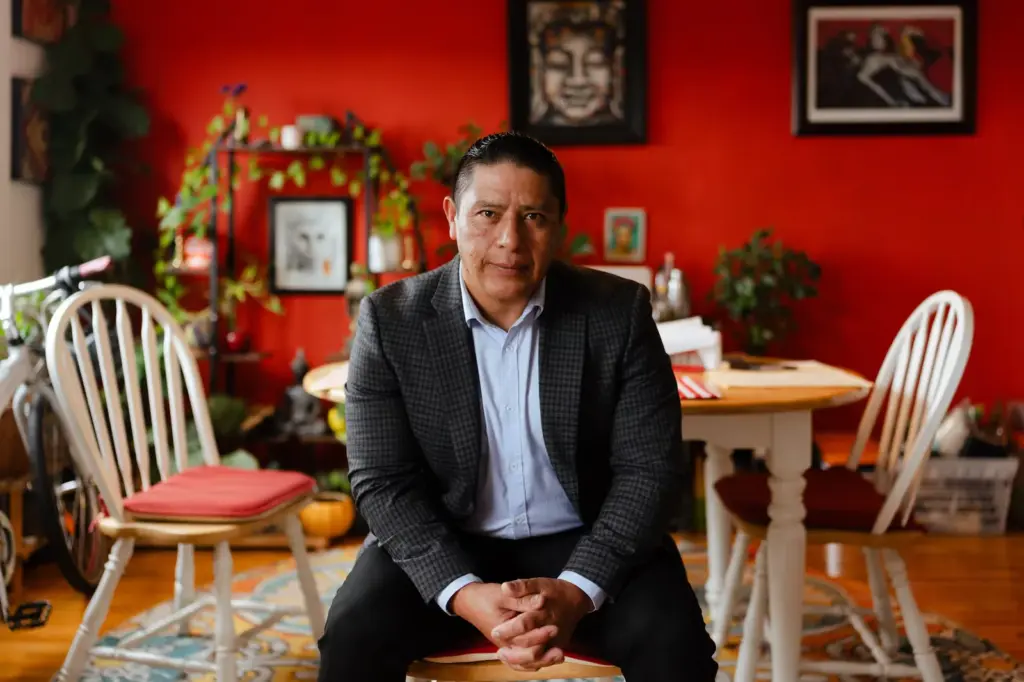
On Sunday, November 9, 2008, he was at home when a Long Island detective knocked on the door. His first reaction was not to open it. “He was looking for a relative of my brother, but at that moment one did not trust the police. The same thing that is happening now,” he says. The detective asked if he had any relation to Marcelo. Joselo answered yes, that he was his brother. The detective asked to enter the house and talk. “At that moment I felt that something bad was happening.” Indeed: the detective confirmed that, the previous Saturday night, Joselo had been fatally stabbed.
“That moment completely changed my life. It is something one never wishes on anyone. A person was murdered without doing absolutely anything, just walking down the street. It is the worst news a mother can be given. My mom was very affected, she got sick,” Joselo confesses.
Around midnight, his brother was returning home after finishing his work shift at a dry cleaner. His friend, Ángel Loja, accompanied him. Near the Patchogue train station, a group of teenagers approached them and began to utter racist insults. Later it was known that it was not by chance, but that they did it “for sport.” They usually went out to “attack Hispanics,” aware that most did not report them to the police for fear of being the ones who ended up detained. Around that time, between 2003 and 2006, hate crimes against Latinos reported in Suffolk County increased by almost 40%, and by 2007, 61% of all hate crimes in the county targeted Latino victims, according to data from the Robert & Ethel Kennedy Human Rights Center.
So, confident that nothing would happen, they went after Marcelo. When he tried to defend himself, Jeffrey Conroy, 19 years old, pulled out a knife and stabbed him in the chest. “I heard my friend’s blood running,” Loja later said before a Suffolk County court. “It sounded like water from a faucet.”
Joselo’s life, as he had lived it until then, changed forever. “I left everything. I spent everything I had to spend. I left my job as a welder, I found a part-time job,” he says. He wanted justice. He sought for the authorities, the Department of Justice, the FBI, to turn their attention to what had happened to his family, but which had been happening for a while to an entire community. Suffolk County Executive Steve Levy told the press at the time that the incident was “news for one day,” they wanted to imply it was an isolated event and not a hate crime. But Joselo was aware that the reason was different. “The evidence was there. Many people were attacked at that time, people who had been abused at their jobs, on the street. Unfortunately, all those reports did not come to light until my brother died,” Joselo says.
In the apartment where he now lives in Queens, a portrait hangs on the wall showing the anguished face of Doña Rosario, his mother, when she traveled to New York to participate in the first trial for her son’s death, after the Department of Justice opened an investigation into hate crimes in eastern Long Island and the role of the police in these incidents. In the photo, Joselo embraces his mother, trying to comfort a woman who could only survive three more years after the death of her other son. She had a stroke, got Parkinson’s disease. She died. No one visits Joselo’s house without stopping to look at the portrait of the day Conroy, the person responsible for the murder, was sentenced to 25 years in prison after being found guilty of involuntary manslaughter due to a hate crime. Then the other teenagers were sentenced to between five and eight years of imprisonment.
“That moment in the photo is a sad moment, but it is a moment of justice,” Joselo assures. “At that moment one realizes that the fight is not only mine, but of many people.” That day, when the trial for his brother’s death ended, he told himself: “The hunt for Hispanics is over, at least for now.” But over time he had to correct himself: “Now the hunt for Hispanics has started again,” he says.
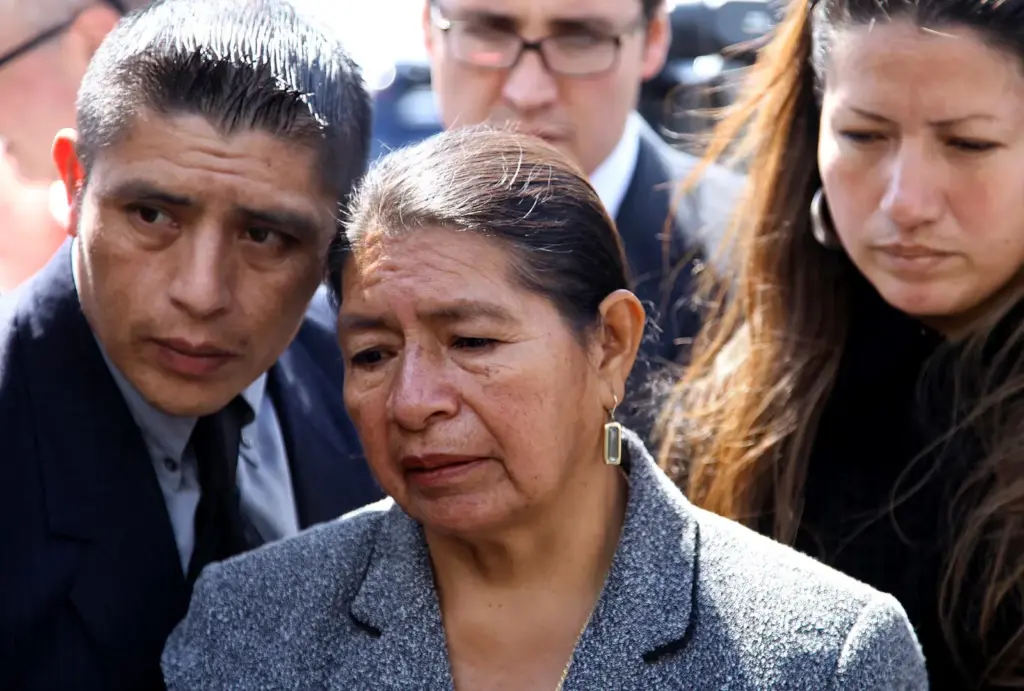
Eighteen years later, the shadow that covered his brother’s death was once again in the neighborhood, among his acquaintances, among people like them. “I know many who are suffering. There are those who are not going to work. There are lines of people at consulates signing powers to leave their children, canceling bank accounts,” says Joselo, who since then visits schools throughout New York to talk about bullying prevention and hate crimes among students. “People do not feel safe here. It is unfortunate that when they need us, we are welcome. But when they don’t need us, we are criminals. We are not moving forward, we are going back to the past. And the past is my brother’s story. The only difference is that before it was young people who attacked, now it is immigration agents.”
The Lucero case before the IACHR
The hearing that took place before the IACHR this month is the first of its kind, in which the commission publicly examined whether the United States has allowed the climate that fosters discrimination and violence among Latinos in the country. “The anti-immigrant and anti-Latino rhetoric of politicians, government leaders, has created this climate that empowered people who believe in that hate, in that division, and has empowered them to commit these crimes,” Rafaela Uribe, the lead attorney for the case, who appeared in Washington alongside representatives of LatinoJustice, told El PAÍS. “The government creates opportunities for police to racially profile communities, an environment where Latino people, migrants, are treated as criminals simply for existing. So that climate is really the reason why we sent the petition and why even today, especially today, it is so relevant.”
It has been particularly sensitive for both the Lucero family and their representatives that, almost two decades later, the country has not only accumulated a series of crimes against the community, but prisons are full of migrants, the number of deaths in detention has increased, and Washington politicians continue to attack a community they have made their enemy. In the last 10 years, nothing has changed for the better: figures show that hate crimes against Latinos have risen more than 200%.
“Aggression, arrests, excessive use of force by police and ICE (Immigration and Customs Enforcement) agents have been increasing, so it is something we believe that, as a society and as a country, we have the capacity to change,” Uribe says. “Our country has the responsibility to protect. The state has violated dignity with this anti-immigrant climate, and that means that under the law people are not equal, under the law they are not respected. What we are asking for and want to happen is that the commission looks at this climate, this context, and can determine what the responsibility of the U.S. government is, but also of all governments in the world to respect the dignity of migrants.”
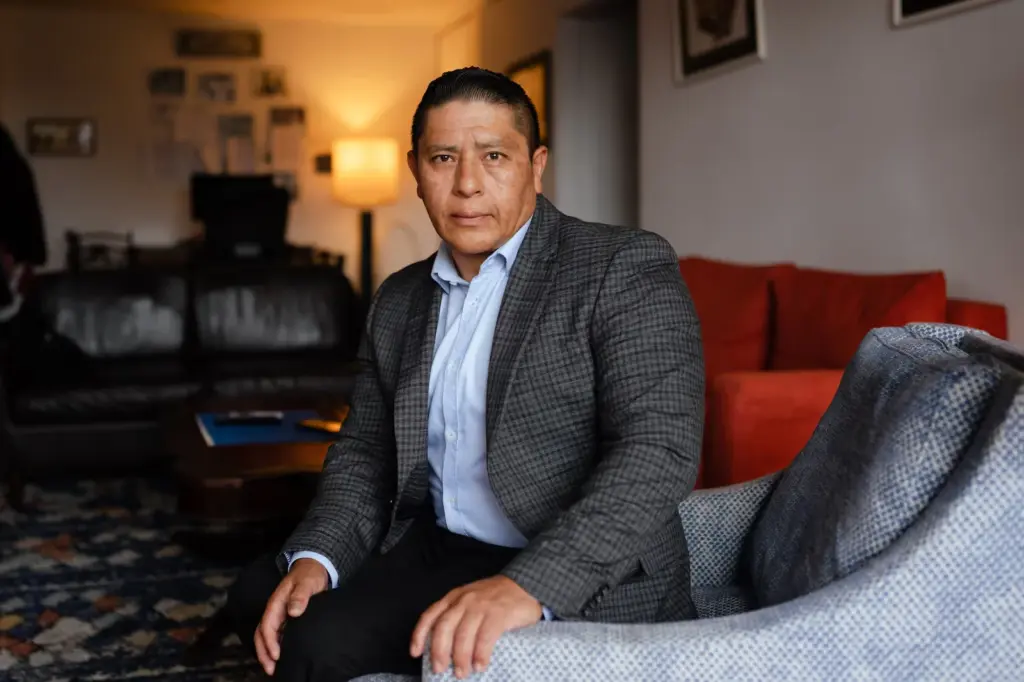
On behalf of Joselo Lucero, the Kennedy Center and LatinoJustice requested the IACHR to provide economic reparations to the family; to eliminate the 287(g) agreements, which allow state or local police agencies to act as ICE agents; and to increase educational programs on respect for diversity. If the IACHR determines that the United States was responsible for Marcelo’s death, it would be the first time the commission holds a government accountable for its hate rhetoric.
“That is very important on the international stage, especially because this is not just a problem we are seeing in the United States, but around the world, that countries are more against immigration and are criminalizing it,” the lawyer says. “It would be a document that will say that the government does have responsibility for the human rights of these communities. Marcelo was murdered just for being a Hispanic walking down the street. We are seeing that violence now on our street again, but now the responsible people are ICE agents, people with masks we do not know, with the permission of our government.”
Read more Ukrainian drones attack a warehouse of the Russian e-commerce giant Ozon for the first time