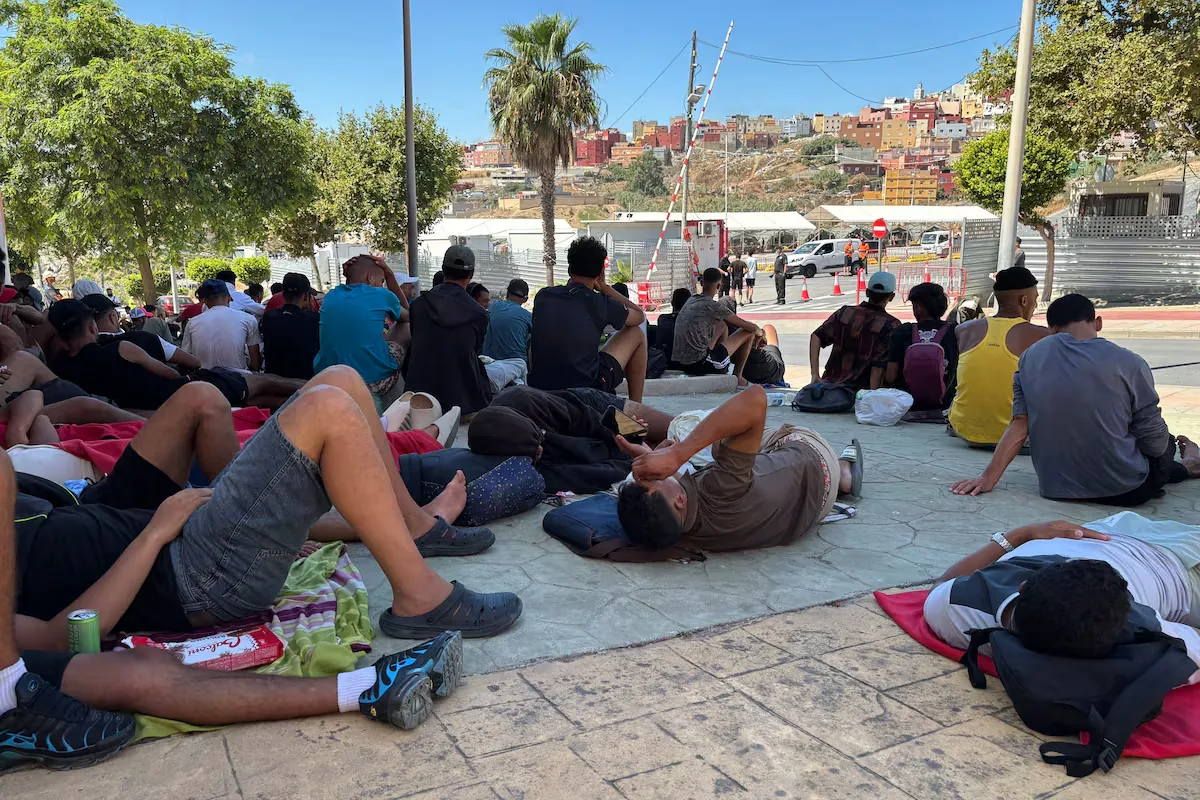
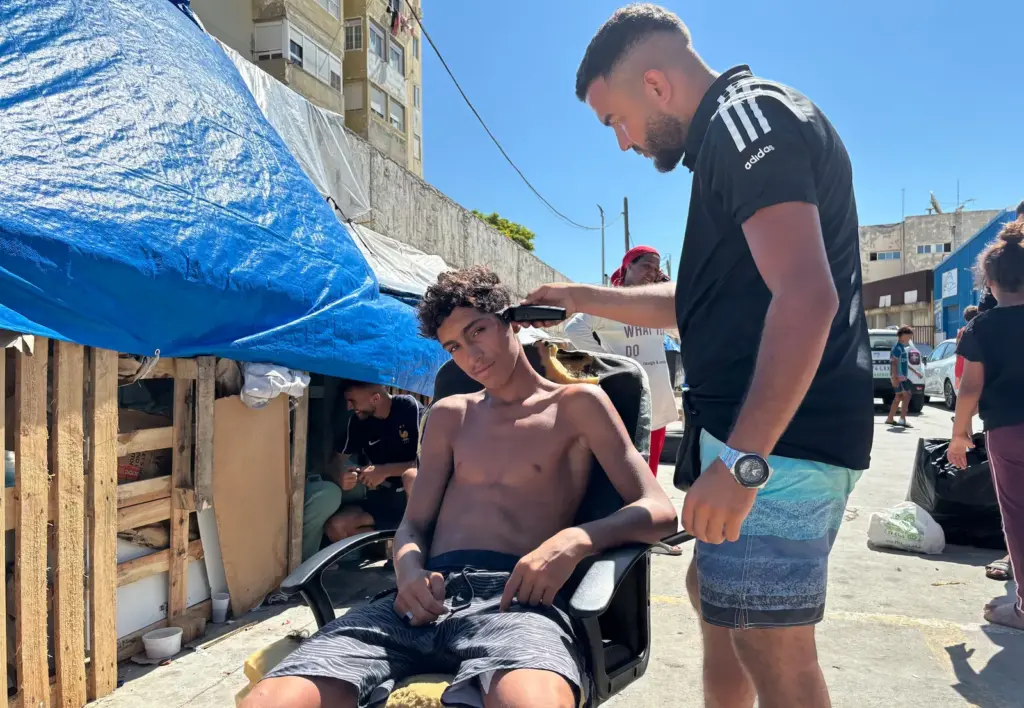
This Saturday Ceuta woke up at half power, with less traffic than usual and some areas gradually recovering an apparent normality. On El Trampolín beach, the epicenter of the main migrant camp, cleaning services made a new attempt and worked throughout the morning after being forced to stop the previous day for safety reasons, they explained. There are still about a dozen tents on the sand and, in the provisional showers, about a hundred young people are cleaning themselves simultaneously. At the same time, under any shade within 500 meters around the beach, there is someone living their life.
Currently, about 2,500 people sleep in centers organized by the ministry, the autonomous city, or various neighborhood associations. But just as many wander the city, dragging their feet and with their hands in their pockets for hours. Hasam and his friends, from towns near Tangier and Tetouan, explain that they prefer to sleep on plastic next to the road because they believe the reception centers are a trap. “They want to keep us there because it’s easier to expel us. I’m not going to make it that easy. If they come for us, here I can escape and throw myself into the sea if necessary,” he says in a mix of Spanish, Moroccan, and English under a scorching sun.
One of the places preparing to receive new migrants is the Hípica, a public-private club where 40 horses will coexist with the young people starting next week. The place had to accept the order from the autonomous city government, although its members have made their position clear with a banner stuck to the door: “No to the location of migrants in the Hípica,” says the hand-painted sign.
At the Temporary Stay Center (CETI), Jayte Balaar, from Sudan, has been sleeping in a real bed and eating hot meals three times a day for four days since he arrived on the afternoon of July 30. “I want to get to Madrid,” he says, and for that he admits he will endure there as long as necessary.
The El Tarajal industrial park is a very different reality. Among semi-abandoned warehouses and small businesses selling plastics and clothes for five euros, hundreds of young people live who admit they only leave here to get the bag that the Red Cross distributes daily. They are all men. Most of the women, including Hasan’s sister, are in the shelter set up by neighbors in the La Reina neighborhood, where the atmosphere is more cheerful, less heavy than in El Tarajal, although they also spend most of the time on the floor looking at their phones for hours.
Read more Elías Jaua: “After Chávez’s death there was no referee and we went at each other with everything”
The forecast is that next week all these women will leave this place protected by plastics and carpets donated by several mosques and movements, according to the announcement by the Ministry of Inclusion, Social Security, and Migrations. The Hípica space is set to become the place where women and children from the devices enabled during this crisis will stay.
Another Mohamed, this “lifelong Ceutan” and owner of a small grocery store on Africa Street, says he sees everything as “a complete disaster,” although he admits the situation “is a little better than the first days.” Among the Ceutans, however, an unpleasant murmur ran through bars and venues near the football stadium hours before their team played its second match of the season this Saturday.
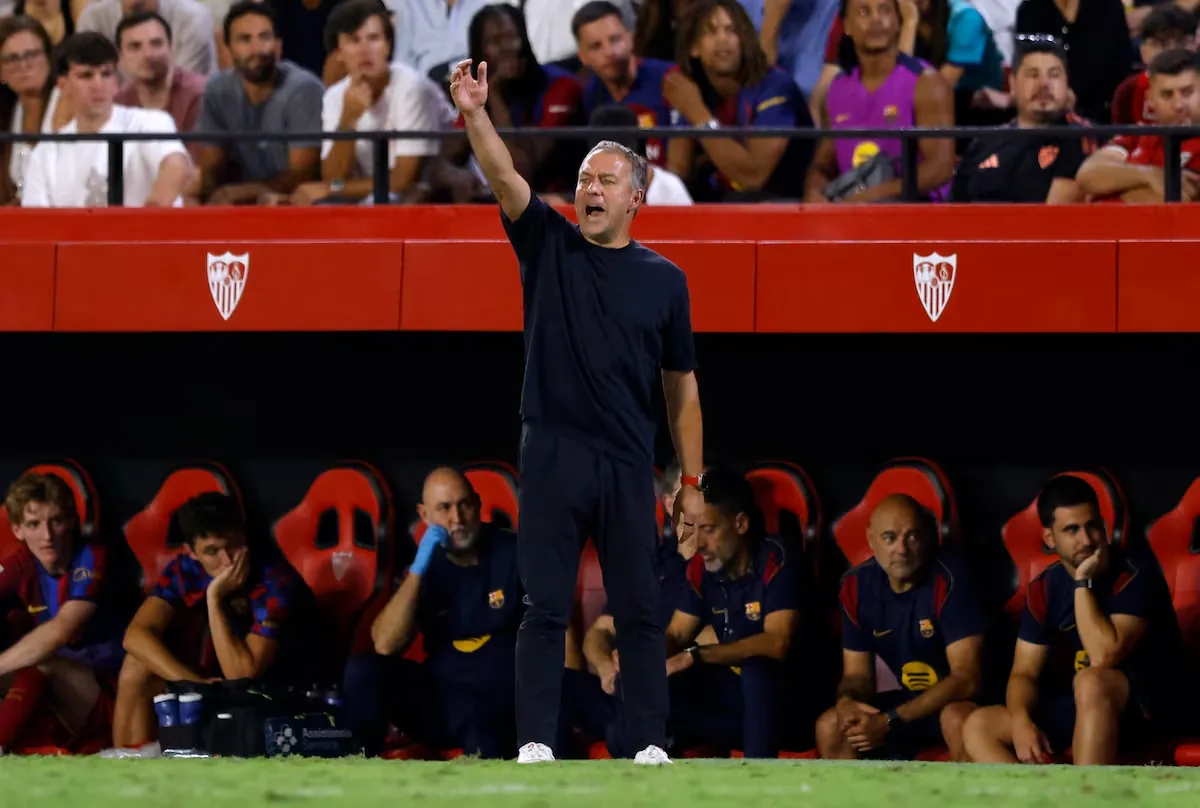
The hours before the match between AD Ceuta and UD Las Palmas were marked by off-field issues due to a controversial decision by the Canary Islands team’s board, which at the last minute decided to back down from going onto the field with the slogan: ‘Ceuta is not for sale, Ceuta is defended.’ AD Ceuta will indeed take the field with a shirt bearing the phrase, but at the last minute the yellow team decided to back down. No one has explained the change of stance, but in one of the bars near the stadium it is the only topic talked about at the bar. “They are afraid of reprisals from Morocco because the team returns to the island via Tetouan,” says one man. “They chickened out and once again they leave us stranded,” adds another. “If anyone should support us, it would be the Canarians,” completes the one in the back.