









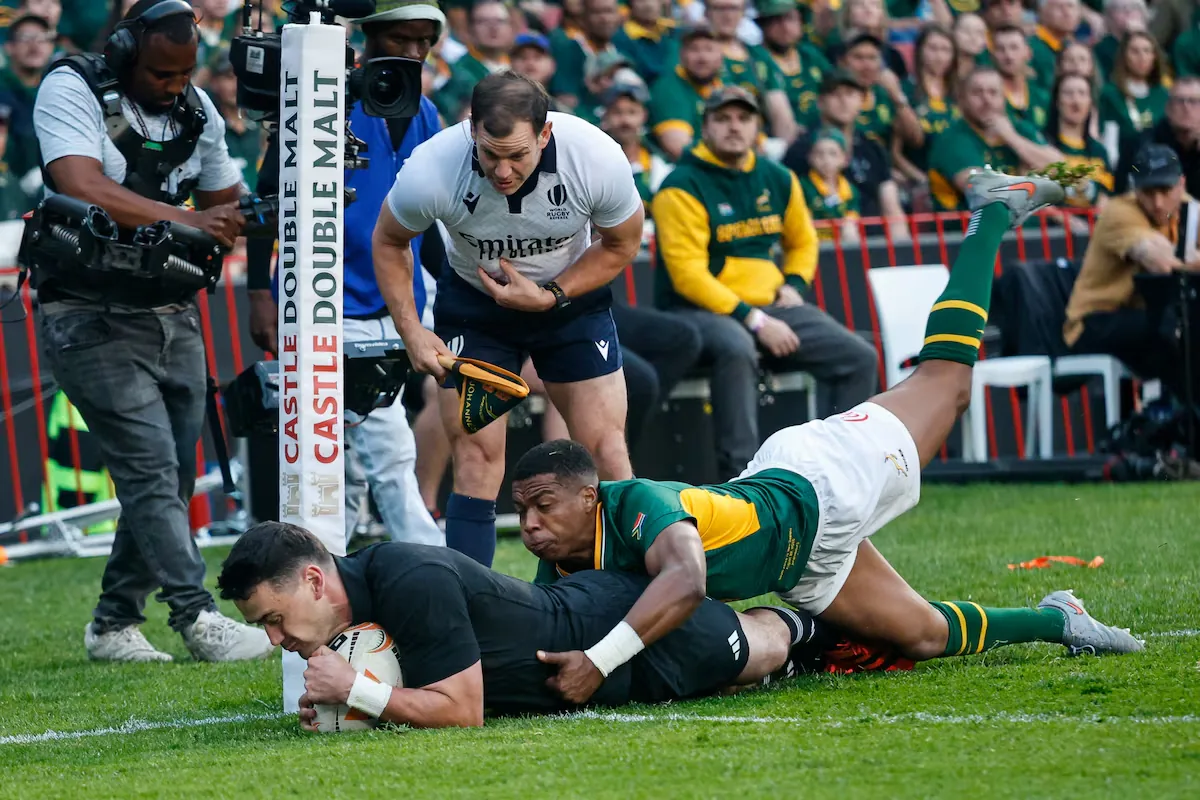
New Zealand gave the first blow this Saturday at Ellis Park in Johannesburg in the Greatest Rivalry Series against South Africa, a menu of four matches between the two best rugby teams. A format that decades ago, when there were no World Cups, served to optimize travel and today tries to maximize ticket and television revenue. The clash of giants smiled on the All Blacks’ trip — they will play two more matches in South Africa before the epilogue in Baltimore (USA) — and their assault on the world throne, that of the 2027 Australia World Cup, against the champion of the last two cups with a victory (16-33) in which, unlike the hosts, they converted their phases of dominance into points. The Springboks have three more opportunities to assert their dominance in recent years or open the door to succession.
Read more Migration crisis: Spanish politics settles into a favorable framework for the far right
The data supports the pompous headline of the series. Two countries that hold 70% of the world titles — four from South Africa, three from New Zealand — and that have alternated almost by default the top spot in the ranking. The Springboks occupy it because they had won four of their last five duels against the All Blacks, including last year’s thrashing in Wellington (10-43). The rivalry’s history, with 110 matches played over 105 years, smiles on the Oceanians — 63 wins to 43 South African and four draws — but the two World Cup finals were green and gold. The one in 1995, in the same Ellis Park temple where they met this Saturday, and the one in 2023, in Paris.
The meeting between the two teams has knocked down the Rugby Championship — the annual tournament completed by Argentina and Australia — of 2026. Recent years have drawn a chasm with the Australians, in clear decline since they were finalists in the 2015 World Cup. Meanwhile, the Pumas have achieved frequent victories but have not had a perfect summer to win a tournament that, since its current denomination — in 2012, with the four nations — has nine New Zealand victories, three South African — including the last two editions — and one Australian. So the Springboks and All Blacks have played alone what they used to do with company. The tournament will return in 2027, but the precedent leaves the door open for more series formats.
Not long ago the concept of rivalry hung by a thread, as the All Blacks handed 57 points to the green and gold in 2016 and 2017. South Africa’s coach, Rassie Erasmus, transformed the 57-0 block into world champion in just months; the passing years have consolidated it as one of the best teams in history. Beyond the traditional forward ingredient — muscle, dominance in ball conquest, depth — it has much more: from kicking game to counterattack of a very fast backline. Added to that is experience, key in such a tight final: it won the quarters, semis, and final of 2023 by one point. Even without the captain, Siya Kolisi, an imposing group went out to Ellis Park that forced two quick penalty kicks from the New Zealanders for holding the ball to open the scoring.
Read more Video | Watch live Gustavo Dudamel’s concert to support the victims of the earthquake in Venezuela
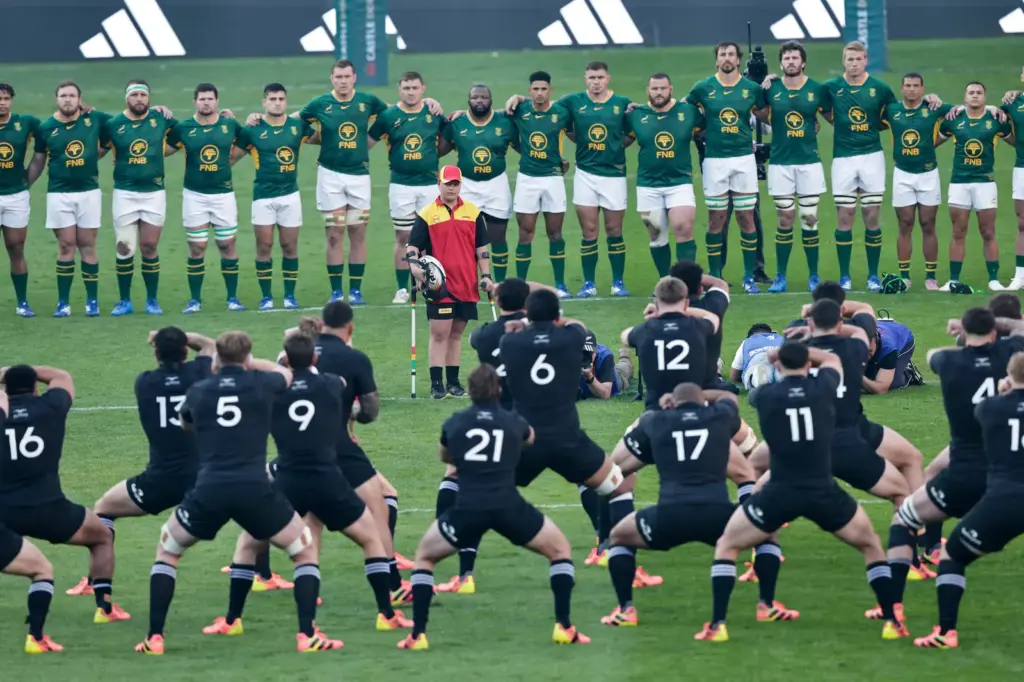
Against that granite architecture, the All Blacks’ formula was always tempo: the precision to chain phases at a very high pace with very few errors blurred anyone and left defenses exposed on the counterattack. But the last generations have lost the magic of the champion teams in 2011 and 2015. The cracks of recent years cost the coach his job in January, Scott Robertson; his successor, Dave Rennie, has sewn up the defense, enough for a country with talent in every corner. That’s how the tries came. Will Jordan, posing next to the right corner a quick release from the scrum-half and Cam Roigard, with the South African backline on his try line. More paradigmatic of their style was Josh Moorby’s, collecting Tupou Vaa’i’s assist while being tackled. However, the visitors’ lead was fleeting because South Africa had territory and possession, the perfect sandwich for the charges of giants like Andre Esterhuizen; it took just a half tackle to break it and score a try. In those moments, the blacks limited damage with a couple of saving defensive actions like Jordie Barrett’s slap on Malcolm Marx when he was about to put the finishing touch to the local platform with his try. A small redemption for the guy who missed the kick that won the 2023 World Cup. The 13-12 at halftime sounded like Kiwi relief.
In two teams that know each other to the extreme, the surprise came with the two meters of New Zealand lock Fabian Holland to block Grant Williams’ telegraphed kick to break the South African scrum. That’s how he scored a try that nullified almost 20 minutes of local dominance. It was the free verse of a poem that rhymed with the recurring fouls of the All Blacks with the forwards and, at the same time, the feats on their try line, from overturning the tackle to showing muscle with a scrum that was being overcome. South Africa also put out fires with Damian Willemse’s tackle when the break of the other fullback, Damian McKenzie, smelled like a try. But it only delayed the inevitable: what the counterattack did not achieve was done by the forwards, with Luke Jacobson charging through three rivals to score his team’s fourth try and put the +10 (16-26) with 20 minutes to go. There was no reply. After the opportunity passed, South Africa knelt with two yellows that made them finish the match with two players less. Three assaults remain.
Read more Sheinbaum lashes out at Rocha: “Power without principles becomes arrogance”