









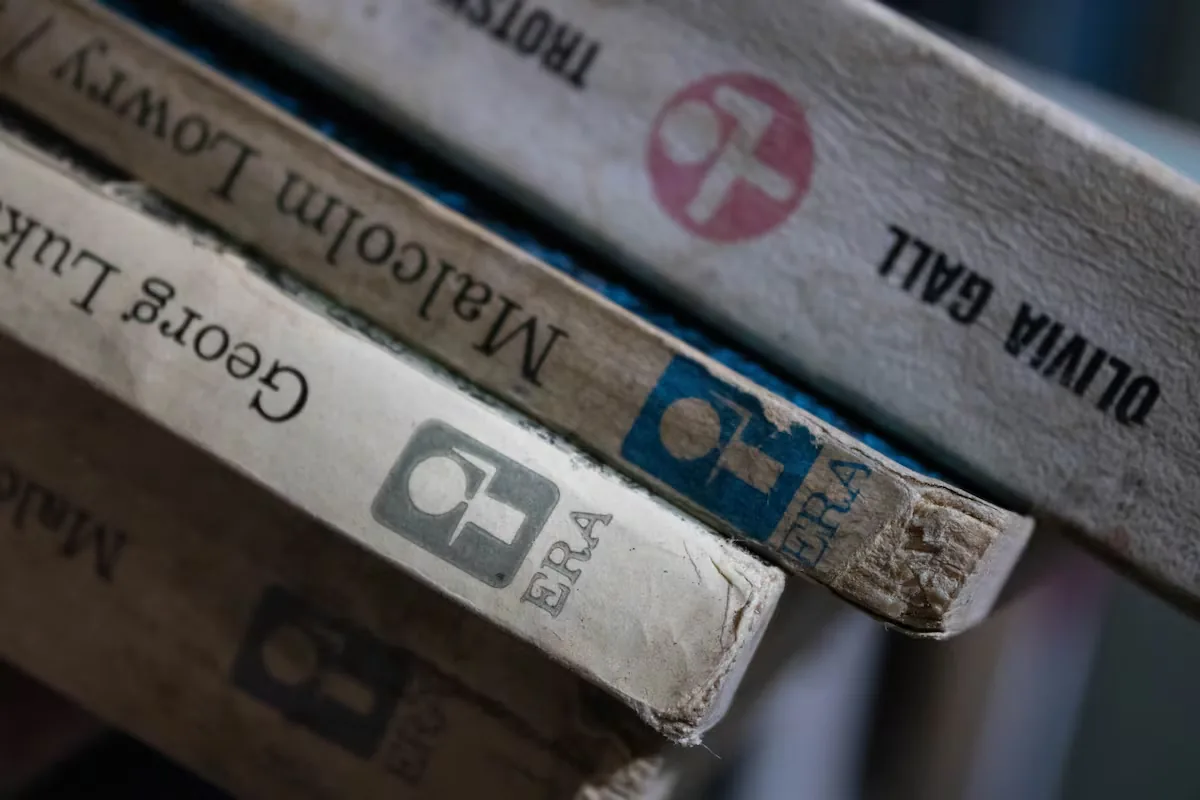
In the beginning, it was a bookstore. Tomás Espresate, a Catalan editor who had arrived in Mexico at the end of the thirties exiled from the dictatorship, had a bookshop in the center of what was then the Federal District. His children and other young Spaniards would come by to distribute anti-Franco propaganda, which they printed on a small press also associated with the bookstore. Until on August 5, 1960, one of those twenty-somethings proposed using the press to also publish important books. Thus, Era was born, a double name, referring both to the great cycles of history and to the acronym of its young founders: Espresate, Rojo, and Azorín. A publishing house that for decades lived up to its ambitious name, contributing to modernizing the aesthetic and political culture of a country in transformation: from the hardest PRI to generational openness, from folkloric muralism to abstract rupture, from rural novels to poetry and urban modernism open to the world.
Nothing less than all that Era represents in Mexico, which this week, almost exactly 66 years later, announced that it is closing. Or, as it clarified in a second statement, it is reducing “to a minimum its operations.” Beyond the confusing noise of statements, the final result means, according to sources close to the publisher, who preferred not to comment for this report, the definitive sunset of the historic publishing house, cornered by debts and falling income. The company has already notified the Mexican Tax Administration (SAT) of the temporary suspension of activities. A move that gives a six-month period to cancel distribution and book sales contracts, as well as to negotiate with authors, with whom most of the debts accumulate, but with whom there is good willingness.
Just as in the beginning, now at its end, bookstores are also involved. Since the blow of the pandemic, sales barely represent a quarter of what they were before, according to their statements. And, like the rest of the independent publishers, it is suffering the blows of an increasingly concentrated and reduced book market, where bookstores focus on short-term profitability: a book that does not sell in two months is discarded. That policy of immediacy ends the so-called backlist books, away from the new releases and part of the historical or permanent catalog of a publisher. Precisely, Era’s strong point.
Its first book was The Battle of Cuba, a very period-specific plea in favor of the then young Castroist revolution by historian and anthropologist Fernando Benitez, who shortly afterward would take charge of the magazine Siempre!: Culture in Mexico, a pioneer and beacon of Mexican cultural journalism. By the way, with Vicente Rojo, one of Era’s founders, in charge of the innovative design. Over the years, its impressive catalog grew with new names that would become canonical: Elena Poniatowska, José Emilio Pacheco, Sergio Pitol, Carlos Monsiváis, Salvador Elizondo. All under the editorial and aesthetic umbrella of Rojo, one of the first visual artists to rise against the omnipresent muralism, folkloric and ideologized, that dominated Mexican art until the mid-last century. Rojo championed the so-called Generation of the Rupture alongside José Luis Cuevas, Manuel Felguérez, and Fernando García Ponce, whose brother Juan, an avant-garde and cult writer, was also one of Era’s notable figures.
That generational, political, and aesthetic renewal connected with the rest of a world immersed in the transformations of the sixties: civil rights, feminisms, counterculture. “It represented a different vision of how to think about Mexico and culture. It helped modernize the country by bringing together new voices and reinventing the classics,” says Alberto Ruy Sánchez, an author for decades at Era and editor of Artes de México, a sister editorial project that was born even before, from the same press of the Spanish exiles. They were part of a broader cultural ecosystem. Publishers like Fondo Economía de Cultura or Siglo XXI and heavyweight figures of an earlier generation like the future Nobel Octavio Paz, who also left his mark on Era. Editing, for example, an art book about Marcel Duchamp, publishing an avant-garde play, or playing with concrete poetry and design, alongside Rojo, to create the so-called visual discs.
Read more Forest fire in Segorbe stabilized after burning 630 hectares in the Sierra Calderona
Several of the flagship titles in its catalog even became required reading in Mexican curricula. Like Aura, by Carlos Fuentes, or The Night of Tlatelolco, by Poniatowska, that gem of testimonial literature about the Mexican ’68, when hundreds of students were massacred for demanding more democracy and less authoritarianism from the iron PRI government. “Era was part of our sentimental education,” says Verónica Murguía, with several ambitious storybooks published by the publisher that delve into European medieval mythology. For her, moreover, Era also represents an even more personal bond. Widow of the poet David Huerta, another pillar of the label, she recalls the first books her partner gave her, exquisite jewels of the house brand: Blue Flowers, by Raymond Queneau; or a correspondence of Lezama Lima.
Among the open debate following the closure announcement, there are more critical voices, who consider that the publisher could have sought ways to survive, such as opening up to more commercial titles, younger authors, or modernizing its work pattern. “It’s debatable, like the fact of having been able to balance the catalog as other independent publishers do, but other criticisms are unfair because they have indeed been publishing contemporary authors,” adds Murguía. Like herself, or names like Gonzalo Lizardo or Eduardo Antonio Parra, who acknowledges that “it was an old-fashioned publisher, demanding, who chose its authors very well and trusted more in the works than in advertising. That meant that, as an author, you knew they would take care of you, that you would remain in the catalog.”
Ruy Sánchez, with several poetry titles still active on the label, agrees that its “commitment to the book was very meticulous,” and recalls a phrase repeated by Marcelo Uribe, the director of the ship in recent decades after taking the baton directly from Rojo, which could serve as an epitaph: “I have never published a book I am ashamed of.”
Read more When the last Austro-Hungarian vacationed in Benidorm