









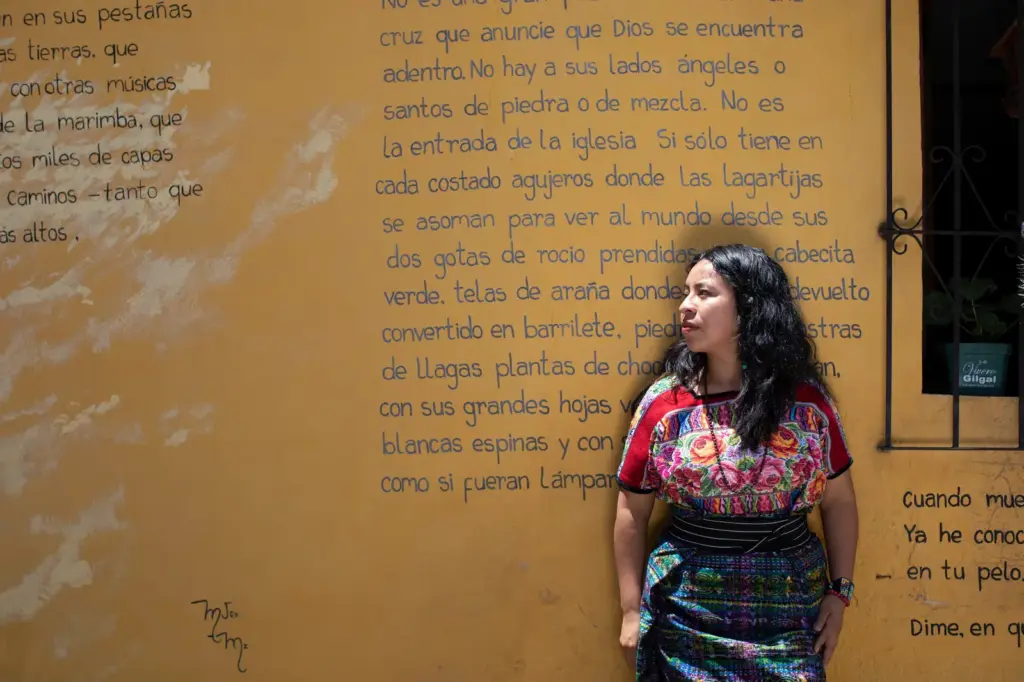
San Juan del Obispo, a village in Antigua Guatemala known for its cobblestone streets and privileged view of the Agua volcano, houses a brightly yellow-painted house with phrases from the poet Luis de Lión written on the facade. There, in the House Museum that today preserves the memory of the author of Time Begins in Xibalbá — kidnapped and disappeared by the Army in 1984 — the Maya Kaqchikel singer Sara Curruchich welcomes EL PAÍS. The location was no coincidence. The singer-songwriter is setting some of De Lión’s poems to music for her next album and wanted the conversation to take place precisely there, among the murals and the library that the poet himself founded in 1962.
Read more Reward the rich, punish the poor
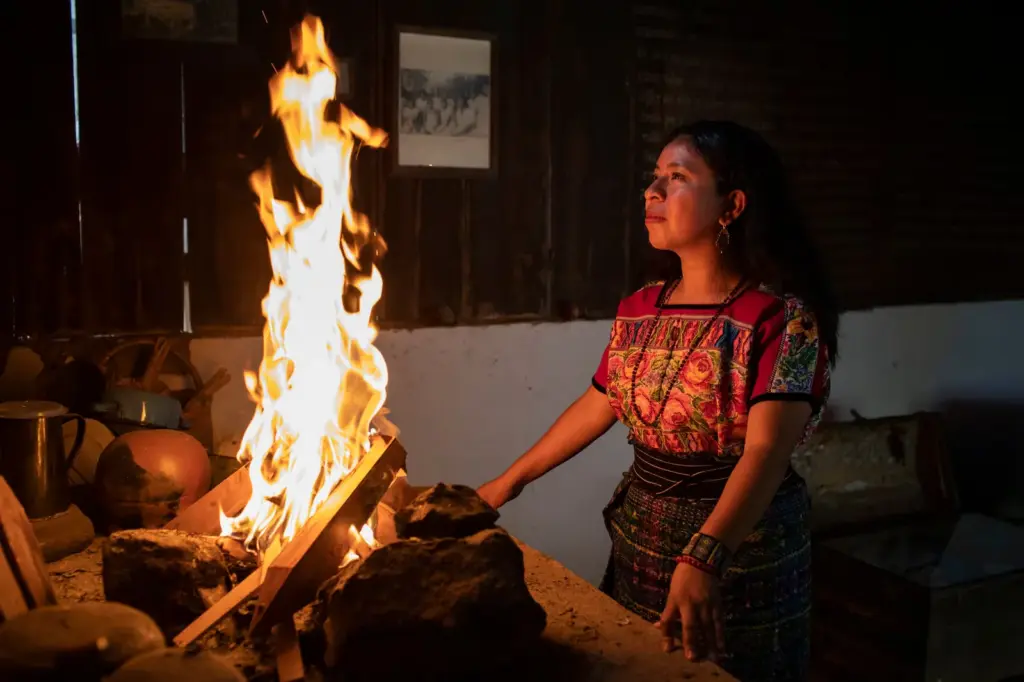
Sara was born 33 years ago in San Juan Comalapa, Chimaltenango, an indigenous community located about 80 kilometers northwest of the capital. She is the youngest of six sisters and daughter of a farming family: her father, Eladio Curruchich, worked the land; her mother, María Cúmez, is a weaver and also worked in private homes. From them she inherited, she says, the everyday singing that accompanied household chores. “My mom whistled, my mom sang, and she sang things she made up,” Sara recalls. “Over the years I understand that these were wonderful forms of composition that happen daily in indigenous communities,” she explains.
Her father also sang while working, and she and one of her sisters played at “being singers.” At seven years old, she asked her dad to let her take singing lessons with an instructor who came to the village to lead religious choirs. It was at that age that she first thought her dream was to be a soloist, although her father told her she was still too young for that.
Don Eladio died when she was nine years old. “I feel, and I have learned through music, that it is also a wonderful way to connect with other dimensions, like his now,” she comments. Years later she moved to the city to study music, a mid-level career from which she graduated.
From Comalapa to stages in Europe
Sara began writing songs in 2011, at a time when she was constantly traveling between Comalapa and Guatemala City to study. It was there that she became aware, she says, of a different treatment towards her for being an indigenous woman: “In the end, it was racism disguised as jokes, which pierced my body and pierced my feelings as a Maya woman,” she explains.
Writing became an intimate healing process rather than a public profession: “It was a process of channeling, of healing — which I can now name as such — and a wonderful process of reaffirming identity,” she says.
She sang her first original song in a now-defunct restaurant in Comalapa, El Adobe, a meeting point for a local cultural movement. In 2015 she shared that song on social media and, on November 25 of that same year, gave her first formal concert in the capital, at the pizzeria L’Aperó. Since then, she has built, together with a team of three women, a path that has taken her to festivals and stages in Spain, Portugal, Finland, France, Germany, Italy, and South Africa.
“There is a discourse that, besides wanting to make us invisible, tries to immobilize us. Facing that is a disruptive action,” she says about the effort to make her way in spaces where, she admits, there are still those who believe that “Maya peoples no longer exist.”
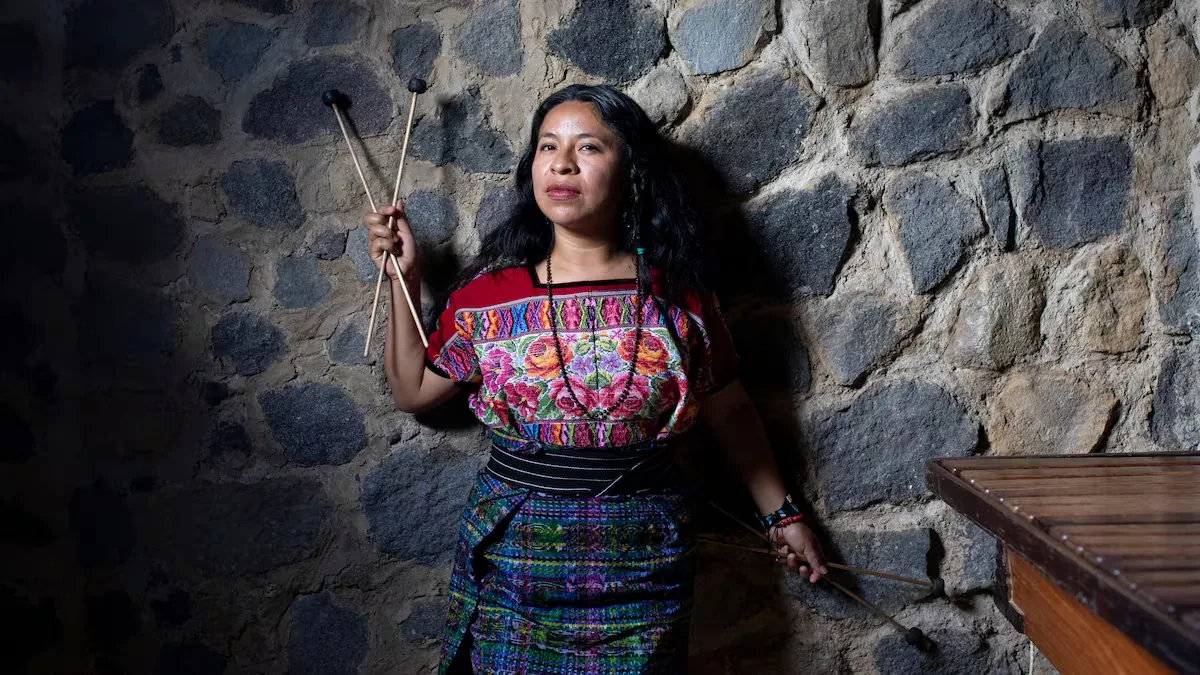
Her music, which she describes as world music — although she prefers to call it “root music that walks” — combines contemporary rhythmic explorations with traditional sounds like the marimba, drum, and clay instruments. In 2019 she recorded Somos, her debut album, between Guatemala, France, and Spain, under the artistic production of Gambeat (bassist of La Ventura, Manu Chao’s band) and with the collaboration of Amparo Sánchez, former vocalist of Amparanoia.
In 2021 came Mujer Indígena, produced by Amparo Sánchez herself for the Mamita Records label, with collaborations from Lila Downs, Rosalina Tuyuc, Carmen Cúmez, and Muerdo. That same year she received the MTV MIAW Transforma award for her artistic and social work in favor of gender equality.
In May 2026 she added a new international collaboration: Quisiera ser, a single recorded with Andrea Echeverri and Héctor Buitrago, from the Colombian band Aterciopelados.
Today she is accompanied live by a band made up only of women: Sandra Moreno on marimba, Moty on drums, and Karla Molkovich on bass, all Mexican. “It is evident that there is great amazement in the audience because we are a band of women,” the artist says. “We try to take spaces that have historically been quite limited for us,” she explains.
Read more The nearly 100 days that Yei, Nicole, and Janet took over the National Polytechnic Institute
Singing in Kaqchikel to audiences who don’t understand it
One of the stories that marked her most happened during a concert tour through remote Guatemalan communities in 2017, a project designed to decentralize access to art. “We arrived at very distant communities where there were only women, because men, from the age of 13, migrated,” she recalls. In one of those communities, people resisted sitting in the chairs arranged for the concert: they thought those seats were not for them.
“We see that residue of historical violence that still exists in the country,” she points out. Despite the initial shyness, they ended up dancing, singing, and even improvising a song together. “That has enormous value to reaffirm that music does allow us to heal, get closer, and accompany each other,” she explains.
Singing in Kaqchikel outside Guatemala has also not been an obstacle, but “an exercise of liberation and even of encounter. People are happy and sing in Kaqchikel.” The singer-songwriter has learned English and a bit of French to communicate with international audiences, although she insists that her songs do not have a literal translation and prefers to share, in each country’s language, “what the message or the heart of the song is.”
That commitment has also had a personal cost. “The fact of making these approaches has exposed me many times to digital attacks, hate speech, and threats attempts,” she recounts. At those moments, she says, her mother has been a fundamental support by constantly reminding her “that we, as women, also have a lot to say. And that there are people who may feel uncomfortable is also important: we have to make those who don’t want to listen uncomfortable,” she comments.
A third album with the poetic voice
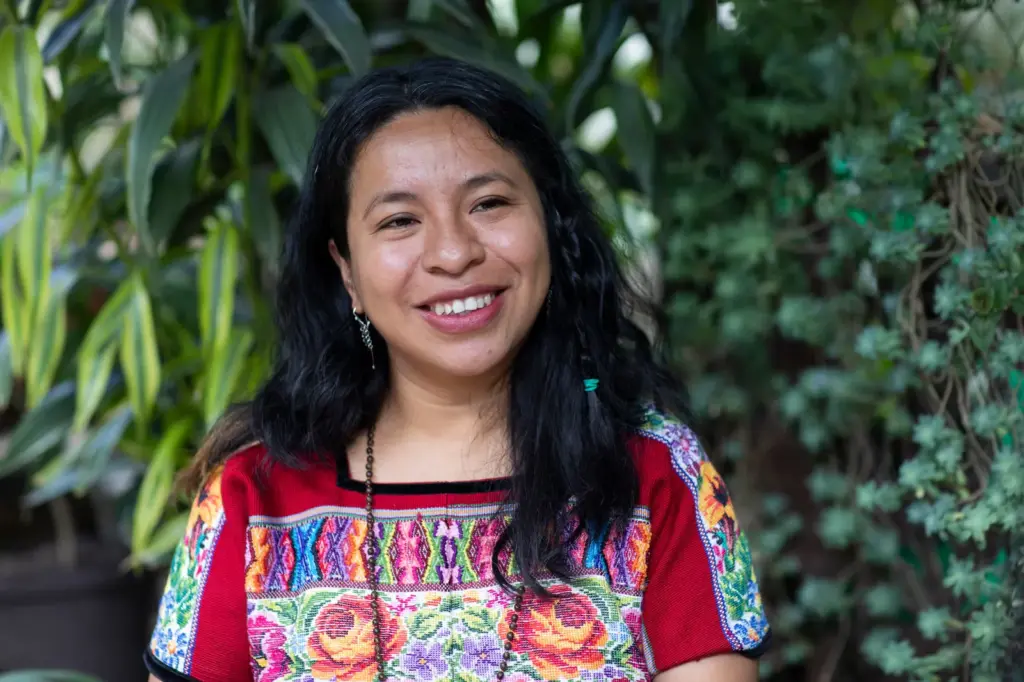
The artist is now going through a new stage. Besides composing, she has begun producing music for other indigenous colleagues. She is currently working with Paola, a Maya Kaqchikel singer-songwriter from San Antonio Aguas Calientes (Sacatepéquez), because she believes it is necessary “to create or strengthen spaces to listen to other voices and other indigenous artists, so they can express themselves from their own history.”
Her most personal project at the moment is her third album, still untitled, in which she sets poems by Luis de Lión to music. “It has been a very beautiful experience, because for me it is an invitation to listen to what the sound of poetry is, particularly the words that make up Luis de Lión’s work,” she says sitting in the same house where the writer was born and where today the cultural project directed by his daughter, Mayarí de León, operates. The idea is to finish the recording and then offer a concert residency in that same house, to later take the new repertoire to different communities in the country between October 2026 and June 2027.
Offstage, Sara Curruchich keeps small rituals. On her guitar — the instrument that accompanies her most along with her voice — she likes to hang bracelets and woven items: “I feel it is a way to bring a lot of color.”
In her Spotify playlist, she combines different generations and geographies: she listens to Chilean Ana Tijoux, Argentine Milo J, and Mapuche singer-songwriter Daniela Millaleo. “Songs and all musical proposals can give us a lot of strength and a lot of calm,” she explains, adding that finding that serenity “in the midst of daily chaos is something wonderful.”
When she is not composing, producing, or traveling, she barely has time for activities unrelated to music. She used to weave on a backstrap loom, a craft her mother taught her at six years old and that she hopes to resume at some point.
Between trips and tours, she is studying Sociology, after having studied two years of Music at the University of San Carlos of Guatemala. Her next geographic goal is South America: after having visited Colombia and Bolivia, at the end of August she will travel to the Orígenes Festival in Colombia, and she dreams of also reaching Ecuador, Peru, Brazil, Chile, and Argentina. “We share a lot of roots and I would love to connect with the beautiful roots of those territories,” she says.
When asked what she would say to indigenous girls who dream of singing or following any other path, she answers without hesitation: “Embrace your dreams a lot, embrace what makes your being beat; be stubborn, hold on to your goals, and remember that your voice and your path are very important. We need to listen to you. Let no one make you believe that you are not important.”
Read more Fear of ICE hinders the rebuilding of areas devastated by wildfires in California