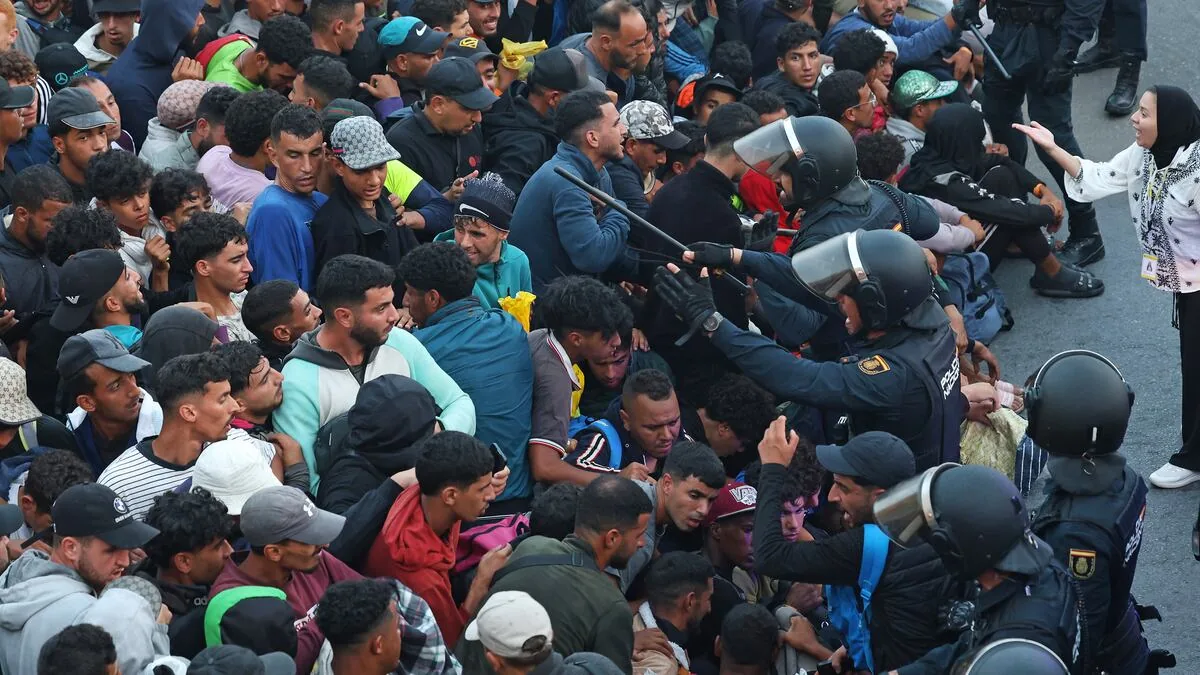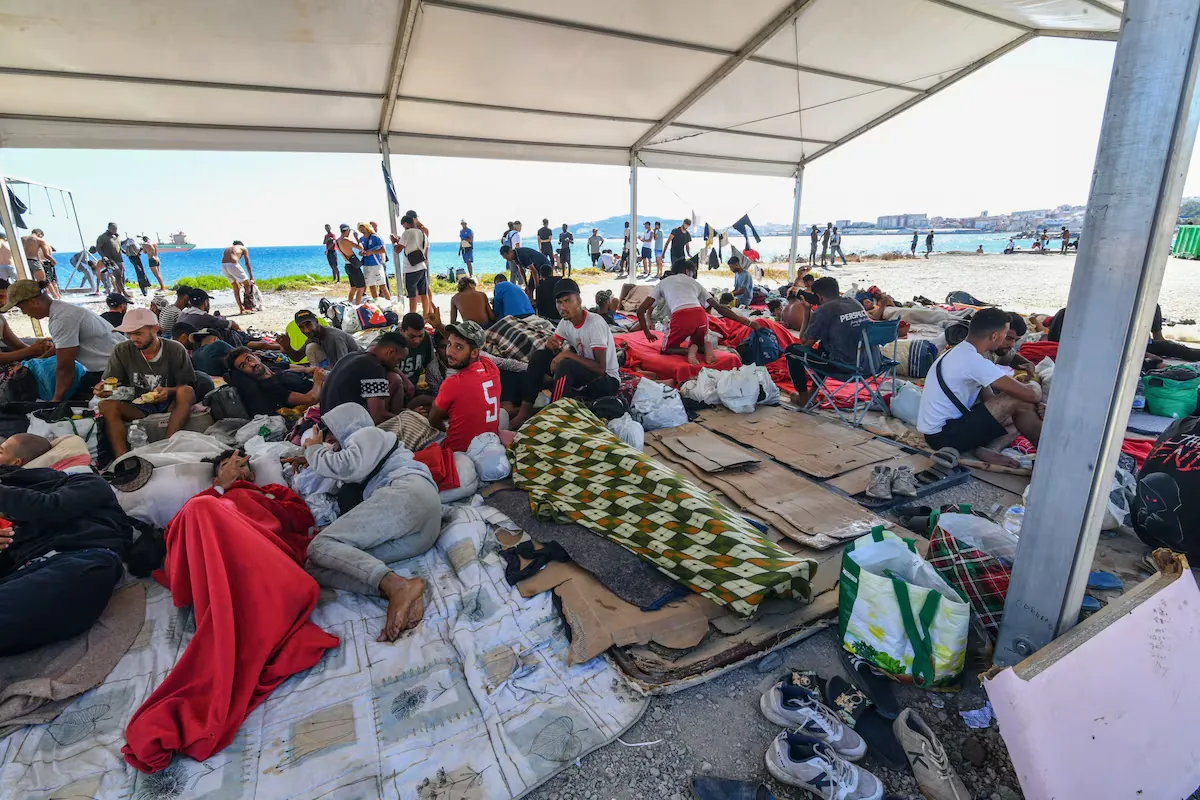
The growing rejection of immigration detected by all surveys increasingly complicates the management of an emergency like that of Ceuta, with thousands of people wandering the streets after the latest large jump at the border, in which about 80,000 people entered although shortly after about 70,000 left.
Read more Video analysis | The security promise of Abelardo de la Espriella’s government
In private, some members of the Government self-criticize their management, admitting that they should have acted faster, that they were slow. But others, especially those more involved in the emergency, explain that many days were lost precisely because neither Ceuta nor Spain are what they were in 2021, when the previous large jump occurred, then clearly encouraged by Morocco as retaliation. This time, various sources at the highest level insist that they believe Rabat lost control of the assault but did not encourage it.
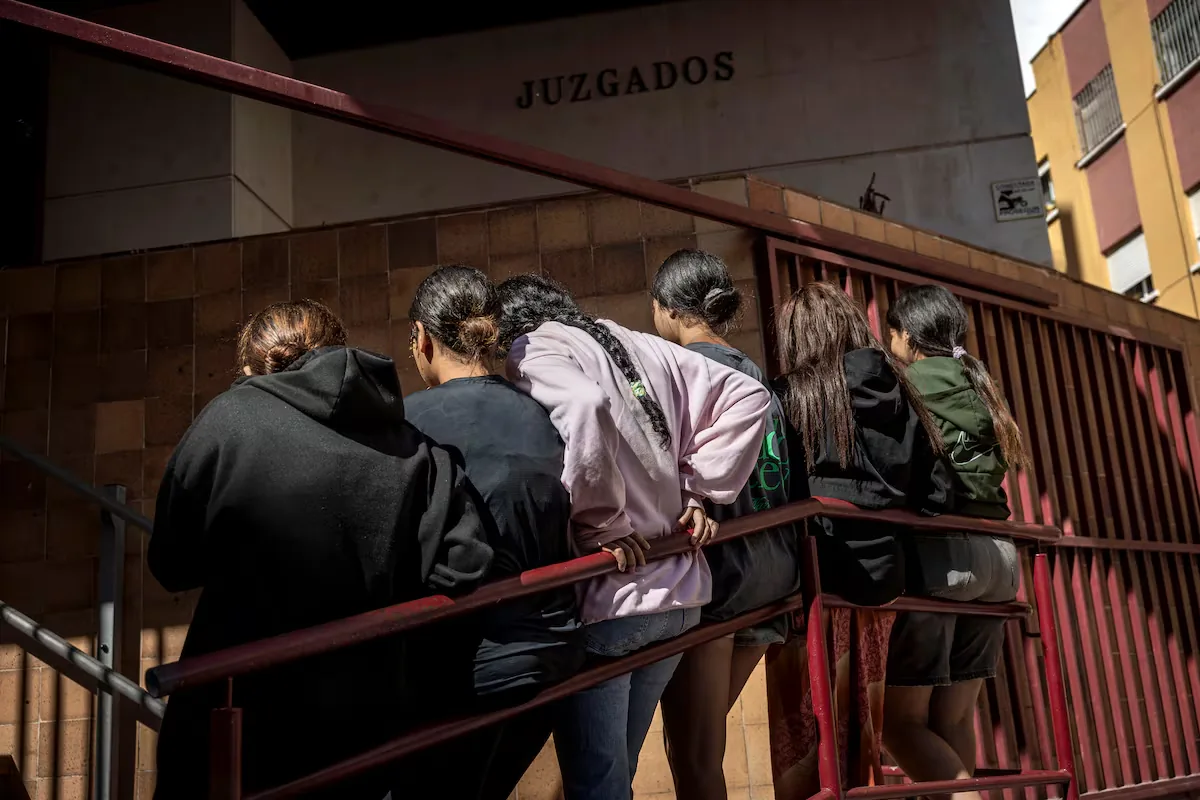
In 2021 more than 10,000 jumped, this time 80,000. The numbers of those who stayed, however, are not so different. But then, the central Government and that of Ceuta quickly agreed on where to put them, how to attend to them. This time, the ministers and the counselors of Ceuta have played cat and mouse for several days, with enormous pressure from neighbors who reject any temporary placement for immigrants near their homes.
In 2021 Ceuta immediately ceded the sports center and other facilities. But this time it resisted much more, according to various sources, and offered nothing concrete. Ceuta rejected options as neighbors found out and pressured. Finally, in the middle of last week, Ceuta proposed that the port was a good option. But again there were protests, this time from businesses, and Vivas backed down. And this Monday he asked Elma Saiz, who was already in Ceuta, not to go to either the port or the flour factory, two facilities controlled by the Government but with neighborhood or business rejection.
After many negotiations, with Vivas just back from a very tough press conference in which he launched a fierce attack against the Government, the Ceuta president offered the containment area, a facility controlled by the city. Finally, there was an agreement, but always amid great tension between La Moncloa and the Government of Ceuta, which until this jump had understood each other very well.
Concern
The crisis thus becomes almost impossible to manage, between the clash between administrations, the pressure from neighbors, and a group of distrustful immigrants who do not know whether it is better for them to accept the new placements or keep wandering to avoid being expelled. The accounts are increasingly disturbing. “Some are starting to sniff a lot of glue. The nights are complicated. Some also start prostituting themselves to make some money. We need a location for everyone and many minors will have to be transferred to the mainland. It makes no sense for Ceuta to reject that, it is a great relief for them. Vivas is unrecognizable, he was never like this,” says one of the Government members involved in the emergency.
Others admit that much time has been lost, but mainly because in the first days not much was done waiting for the immigrants to return to Morocco, as the vast majority did. “The city did not want us to put them in any center because that would encourage them to leave. But that has already passed. Those who are here now are not going to leave. They have to be put somewhere to control them, register them, and see what to do in each situation,” says a minister. Time is pressing. Classes are starting now and two perfect locations, two schools, are lost. More will have to be found, neighbors pressure, and the PP rejects sending anyone to the mainland. Solutions are scarce, but loopholes are sought every day.
The pressure from the PP
Juan Jesús Vivas, who has been leading the city since 2001 and who had always had a good relationship with Pedro Sánchez’s Executive, is being very harsh. “The Government has abandoned Ceuta,” he insists daily. Half a dozen ministers consulted, who know him well, are very surprised and upset by his change of attitude. Meanwhile, in Vivas’s circle they point out that the problem is that the Government does not want to speed up expulsions so as not to upset Morocco, but they insist that this would be the only real solution. “The PP is asking us to break the law with minors,” says Sira Rego, Minister of Youth and Childhood. “We will not deport minors. It is illegal and immoral. No one will sign that, officials know it is misconduct, which is why the former Government delegate and the former vice president of Ceuta were disqualified. We have to fight politically to prevent the growth of xenophobic discourse. We are a progressive government and have a human rights approach to immigration,” she concludes.
Read more Without sovereignty or foreign policy
Elma Saiz, who has been in Ceuta all week, believes that at least the problem is being channeled with the new temporary locations that have been set up to attend to immigrants. And she believes that Vivas is so harsh because he has a lot of pressure from the PP, which has seen this as a great political opportunity.
Meanwhile, the leader of the Popular Party, Alberto Núñez Feijóo, accuses Sánchez of being surrendered to Rabat. “What is clear is that Morocco either consented to or encouraged the invasion,” Feijóo says in an interview with Europa Press. “Sánchez behaves more like a subject of Morocco than as the president of the Government of Spain,” he insists. Feijóo also says he is “convinced” that the King wants to go to Ceuta and asks the Government to authorize him. The head of State never went to Ceuta while the PP governed, neither with José María Aznar nor with Mariano Rajoy. He only did so once with a PSOE government, with José Luis Rodríguez Zapatero in La Moncloa, in 2007, and the visit generated much tension with Morocco.
Trump and Musk
At La Moncloa and the Foreign Ministry they flatly reject that Morocco is behind the massive jump to Ceuta, as Feijóo claims. “They have told us repeatedly that it was not them, that for Rabat this is a problem, that they are willing to pick up all those who return, that they will prevent more from coming, as they did on August 15. When Morocco wants to retaliate through a massive jump, as in 2021, they say afterwards: it was because of [Brahim] Ghali [leader of the Polisario Front who was hosted in Spain that year seriously ill with covid]. Here they insist that they have no complaint, not even about Sánchez’s trip to Algeria. They insist it was an episode that exploded on social media and they have not managed to control it. And we believe it is true,” government sources say.
The Executive has avoided criticizing Morocco and will continue to do so, because Sánchez and his ministers are convinced that all possible exits go through Morocco and it makes no sense to clash with them. Various ministers consulted point much more to the “far-right international” and especially to social media magnates as responsible for amplifying the July 30 jump, more than Morocco. “They are eager to destroy the main government in the world, along with Lula’s, which stands up to them. It is incredible how quickly Trump and Musk spoke about Ceuta. This is another deeper battle, they know this puts us in a huge contradiction,” a minister concludes.
Ceuta for a while
The Government is making every effort, with dozens of people on the ground, to try to channel an almost impossible to manage crisis that harms it from almost every point of view, because it calls into question its pro-immigration discourse and encourages a feeling of rejection of foreigners that was very minor in Spain, unlike the rest of the EU, but now is spreading rapidly.
Little by little, immigrants are starting to be controlled, registered, and attended to in healthcare, and minors are ready to be transferred. But much remains to be done. At La Moncloa they know Ceuta is here to stay. And the PP sees it as the perfect occasion to wear down the Executive on an issue they believe also weakens it among part of the PSOE electorate, more critical of immigration. The political season starts inflamed with the issue that dominates European and American politics. Much of the left’s future expectations depend on the Government’s ability to manage it.