









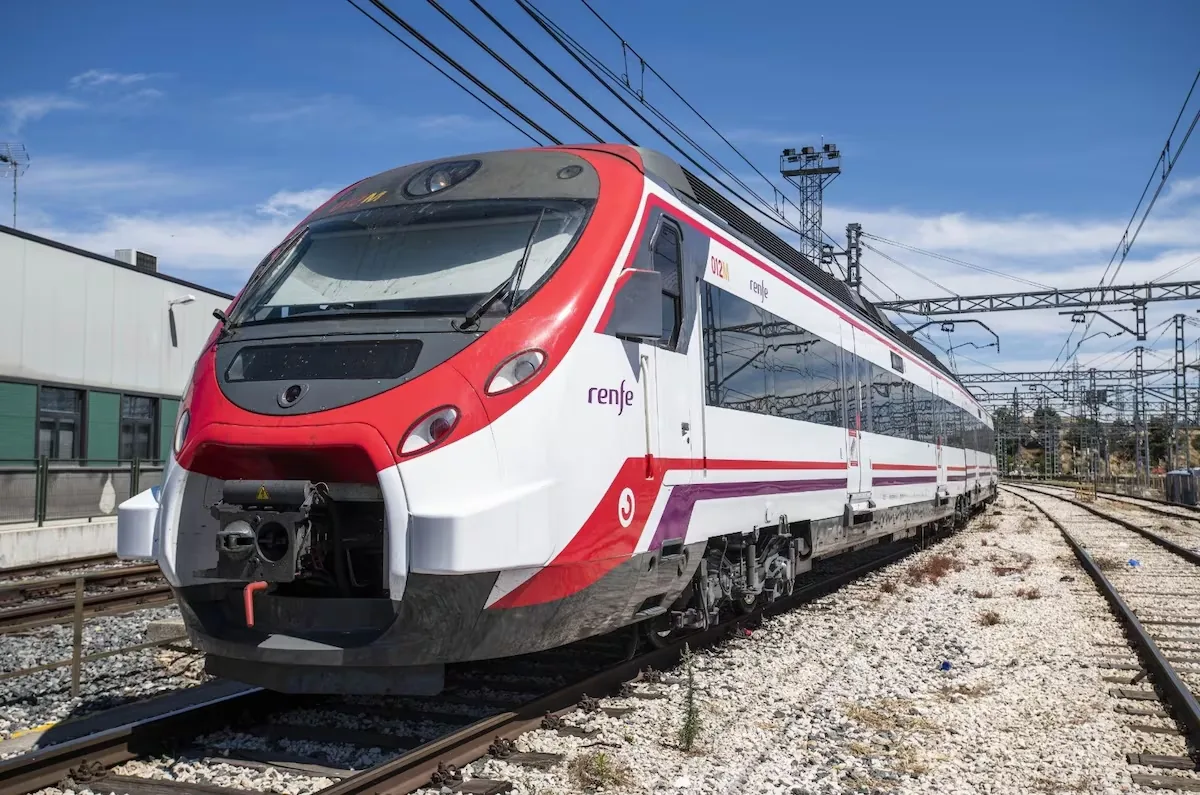
Valencia Commuter Rail will increase frequencies on lines C1, C2, and C6 starting September 7 with the gradual arrival of 41 Civia 465 trains, which are more modern and have better features than the current ones and will allow a 30% increase in capacity. Specifically, on the C1 (Valencia-Gandía) line, 10 additional trips will be added, and on the C6 (Valencia-Castelló de la Plana) line, there will be an increase of 7 trips.
In total, there will be 79 trips on both the C1 and C6 lines. This frequency increase will be introduced gradually throughout September, also for the C2 (Valencia-Xàtiva-Moixent) line, and will make it possible to better adapt the schedules of the Polytechnic University of Gandía campus to the needs of the students.
The incorporation of the Civia 465 trains into Valencia Commuter Rail is part of a fleet reorganization by Renfe’s Public Service to adapt the available trains to the specific needs of each territory.
In the case of Valencia, the priority is to increase capacity to meet growing demand, with the addition of 41 vehicles, 22 from this August gradually, and 19 more throughout 2027, which will be gradually introduced to the mentioned lines.
Renfe has carried out a complete review and overhaul of these trains, with an investment of over 7 million euros, which included technical inspections, renewal of interior and exterior elements, and updating of passenger information systems.
These trains already have accumulated investment that ensures they provide optimal performance, according to Renfe. In addition to first-level maintenance, during the service period of the Civia trains since their commissioning, they have undergone several maintenance interventions. These works have involved an investment of 80.69 million euros, to which the 7 million for the overhaul must be added.
The Civia 465 trains are high-capacity trains. Each unit has 748 seats, compared to 549 in the models being replaced. They also have more seated places: 277 seats compared to the current 219/233. They are the most modern vehicles that Commuter Rail currently has, with an average age of 17.2 years.
Read more City of Blood
With the incorporation of this fleet, Valencia reduces its average age by more than ten years, going from trains with an average of 27.8 to 17.2 years, becoming one of the networks with the youngest fleet. It should be noted that the estimated useful life of a train is 40 years, so these units still have a long operational life ahead.
The trains include improvements in the air conditioning system and are equipped with a power system consisting of two identical and independently operating units, which guarantees greater reliability throughout the service.
The Civia 465 trains arrive in Valencia from the Madrid network, which is at its limit and unable to increase train frequencies due to infrastructure saturation, so the only possible response is to incorporate higher capacity trains. It is important to note that, in no case, the departure of the Civias is related to the age of the trains.
For this reason, new trains are already arriving at the Madrid network, some with a capacity of up to 2000 seats, to address the need for high-capacity trains in the Madrid network, which is saturated in its urban tunnels (Recoletos and Sol) and aggravated by mobility asymmetry, as the most important flows of most lines enter from the south (C2, C3, C4, C8).
The Community of Madrid records more than 200 million trips per year, approximately ten times more than Valencia. Therefore, each network requires a different fleet solution.
Related to this fleet reorganization, some units of the 447 series currently operating in Valencia will soon be transferred to the Basque Country. These trains are compatible with the Basque network and will improve accessibility.
Read more The Drop: a Snowfall story