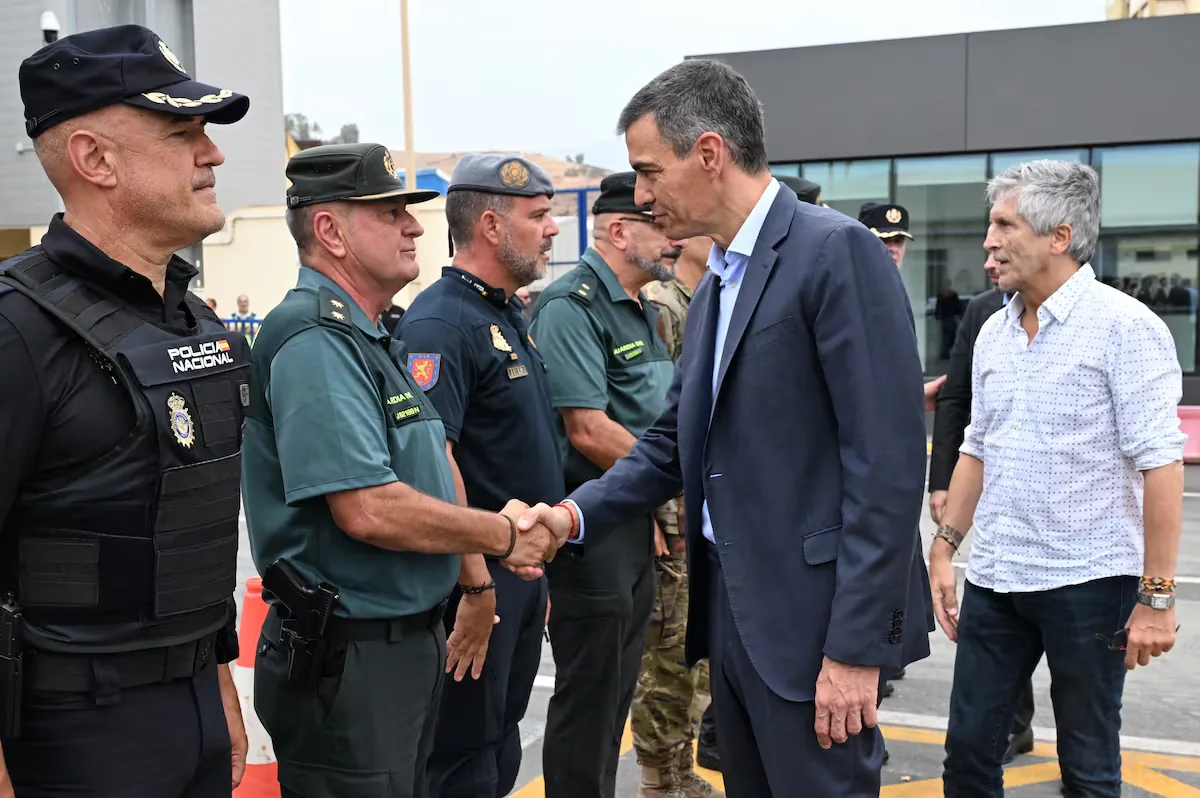
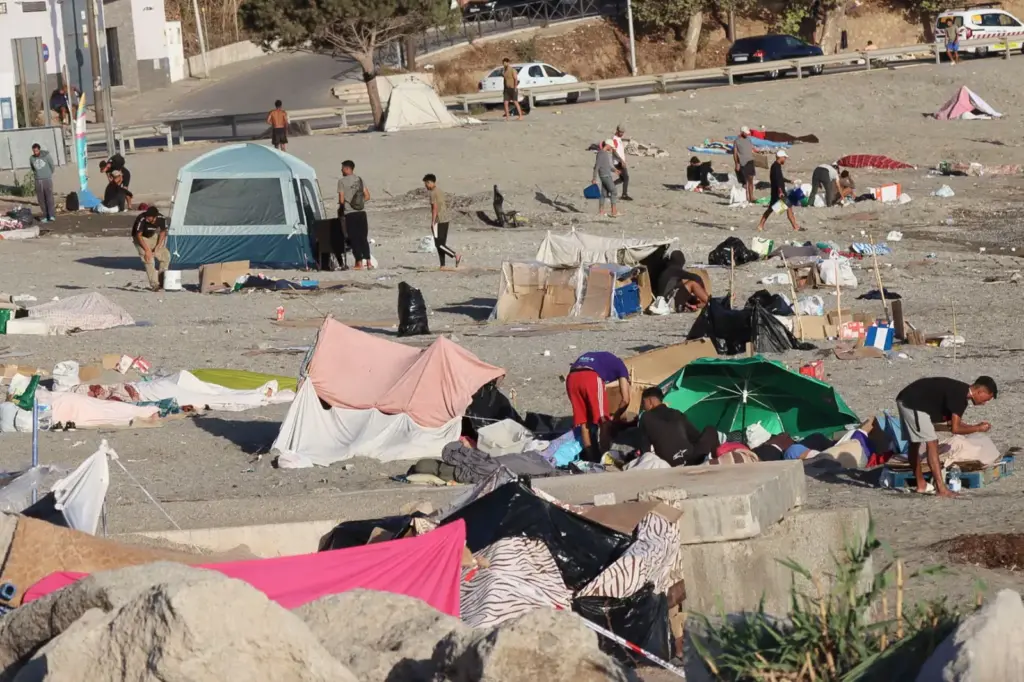
The President of the Government, Pedro Sánchez, will preside this Tuesday over a meeting of the National Security Council to address the serious situation that Ceuta is going through after the irregular entry, on July 30 and 31, of around 80,000 migrants. The call comes 26 days after the outbreak of the crisis and when the normalization of the autonomous city still seems distant, with more than 5,000 people, including 2,500 minors, in temporary camps and on its streets. The meeting will start at 8:30, hours before the start of the first Council of Ministers after the holidays, and the president of Ceuta, Juan Jesús Vivas, who will participate remotely, has been summoned, reports Juana Viúdez.
Read more Renfe increases frequencies on three Cercanías lines in Valencia starting September
The announcement of the call is known 24 hours before a series of appearances by several ministers begin in Congress to give explanations about the migratory crisis. The first will be this Tuesday Margarita Robles, Minister of Defense, followed on Thursday by the Ministers of Justice, Félix Bolaños, and Health, Mónica García. On Friday it will be the turn of the Ministers of the Interior, Fernando Grande-Marlaska; Foreign Affairs, José Manuel Albares; and Inclusion, Elma Saiz. The Minister of Youth, Sira Rego, will be scheduled for Monday the 31st.
The Security Council is also convened with the distant but still not extinguished echoes of Grande-Marlaska’s insistence on denying the existence of a prior report from the National Intelligence Center (CNI) warning of a possible massive arrival of immigrants, which seemed to question the work of the secret service and caused Robles to make a strong defense of the work of its agents. Finally, the Minister of the Interior wanted to close the controversy in a press conference held on August 4 by stating that “there are many things that happen and there does not necessarily have to be responsibility.”
In the background is also the role played by Morocco during the crisis, which has been questioned both by the opposition and by some members of the Government. The first analyses of the secret services about what happened point out that the Moroccan authorities not only did not stop the human tide heading to Ceuta, but allowed it to pass and have taken political advantage of the international repercussion of the event. Against all this, Grande-Marlaska has repeatedly insisted on the good collaboration between both countries and emphasized that the situation caused by the massive entry of migrants could be largely reversed quickly thanks precisely to the support of Rabat, which initially allowed the return of the vast majority of people who swam across the border at the end of July.
The council is the body responsible for advising the president on issues affecting national security and in it, in addition to Sánchez, participate the vice presidents Carlos Cuerpo ―who visits Ceuta this Monday―, Yolanda Díaz and Sara Aagesen, as well as the ministers Albares, Bolaños, Robles, Grande-Marlaska, García, and the heads of Finance, Arcadi España; Transport, Óscar Puente; Digital Transformation, Óscar López; Industry and Tourism, Jordi Hereu; and Science and Innovation, Diana Morant.
In addition, the director of the Presidency Cabinet, Diego Rubio; the Secretary of State for Security, Aina Calvo; the Secretary of State for Foreign Affairs, Diego Martínez Belío; the director of the National Intelligence Center (CNI), Esperanza Casteleiro; the director of the National Security Department, General Loreto Gutiérrez; and the Chief of the Defense Staff, Admiral Teodoro Esteban, are also summoned. Other ministers may be called and King Felipe VI himself may preside over the meeting.
The National Security Council always meets at the initiative of the president at least once every two months, although it can be more often if he considers it necessary, “as well as when circumstances affecting national security require it,” according to the organization’s own website. Since Sánchez has been in the Palace of La Moncloa, it has met 31 times, although so far this year it has only been once. It was last April 24.
At that meeting, the Council approved the 2025 Annual Security Report in which, precisely, reference was made to a notable increase in migratory pressure in Ceuta and Melilla attributed “mainly to the phenomenon of swimmers trying to access by circumventing the border perimeter through the sea, which in itself poses a serious risk to their own lives,” as finally happened massively on July 30.
This document ―which also highlighted the reduction of migrants to the two autonomous cities by about 43% compared to 2024― also focused on the spread of hoaxes about immigration to provoke “intercommunity tensions” in which “the narrative about migration intertwines with insecurity and episodes of social conflicts are instrumentalized to project a deterioration of public security.”
Read more City of Blood