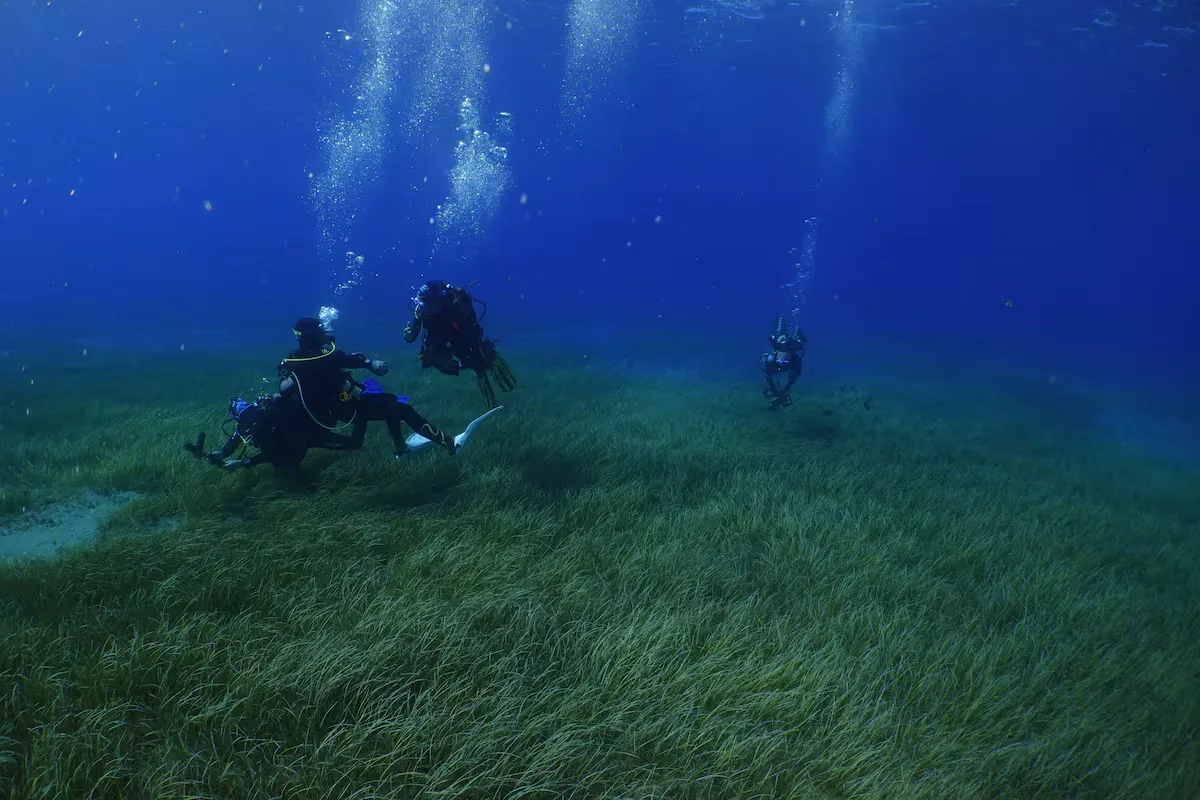
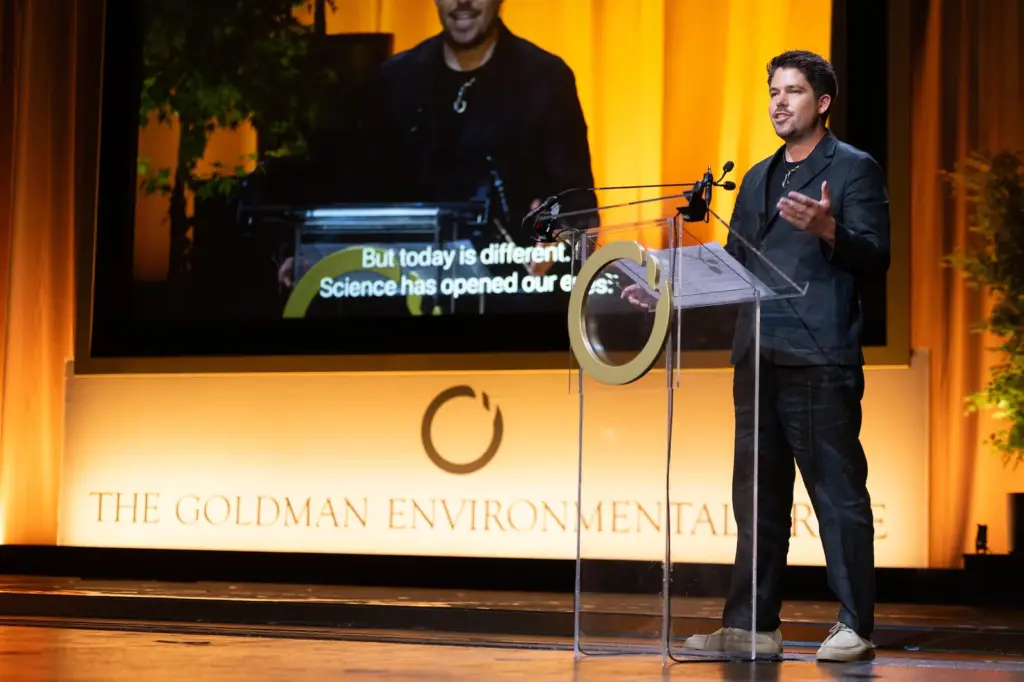
Innoceana and the Tenerife Council carried out this Tuesday in Abades (southeast Tenerife) the first planting of seagrass cultivated in the laboratory, with seedlings of Cymodocea nodosa germinated from seeds collected in El Médano and La Jaquita. The action, authorized by the Ministry for the Ecological Transition, aims to reinforce an area of seagrass that has lost density in recent years, in an archipelago where half of the surface of these marine meadows has already disappeared. “We are returning to the sea the first plants we have germinated in our laboratory,” explains Carlos Mallo, founder of Innoceana and winner of the 2025 Goldman Environmental Prize, considered the Nobel of environmentalism. “But we have to make it clear that we cannot plant seagrass at the same rate that we continue to destroy it,” he warns.
Seagrass meadows are meadows formed by Cymodocea nodosa, a marine plant that in the Canary Islands is popularly called seba. Far from being a simple green carpet over the sand, these ecosystems are crucial. “Seagrass meadows are true underwater forests formed by marine plants that produce the oxygen we breathe, capture carbon, stabilize the seabed, and serve as refuge, feeding area, and breeding ground for numerous species,” details Carlos Mallo. “Although from the surface they often go unnoticed, they are one of the most valuable ecosystems in the Canary Islands.”
The activist details that in the last 25 years, approximately half of the seagrass meadows in the archipelago have been lost. “This regression is the result of the enormous pressure we exert on the coast,” assures Mallo. Wastewater and other pollutants deteriorate water quality; coastal development transforms the seabed and increases sediments; and boat anchors directly uproot the plants. Additionally, Innoceana points out other threats, such as coastal development, shoreline works, and the general deterioration of water quality.
Restoration is important, but it represents only a small part of the solution. “Planting seagrass while maintaining the same pressures would be like reforesting a forest without first putting out the fire,” Mallo concludes. “That is why we must act in two directions. On one hand, reduce threats: improve sanitation, avoid discharges, regulate coastal development, reduce pollution, and create properly designed ecological anchoring fields. On the other, we must promote restoration by creating more seagrass nurseries in the Canary Islands that allow effective seed germination and produce plants to reinforce the meadows that are in regression.
Laboratory
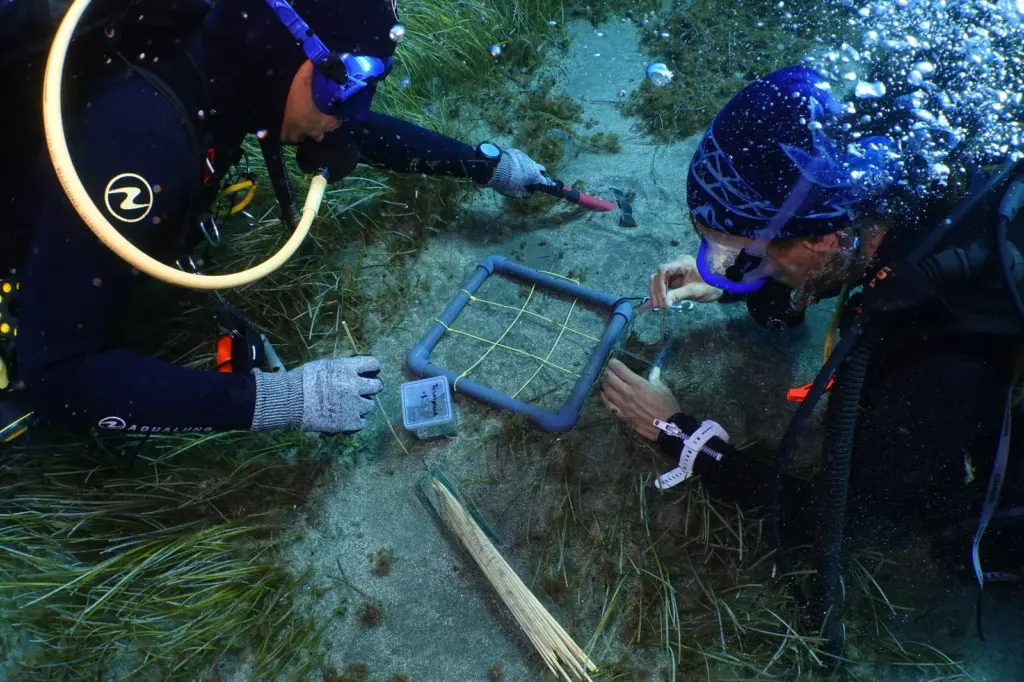
In fact, the transplant carried out this Tuesday comes from the cultivation of seeds manually and distributedly collected between both patches, so as not to concentrate extraction in one point and not harm the natural regeneration capacity of the source meadows.
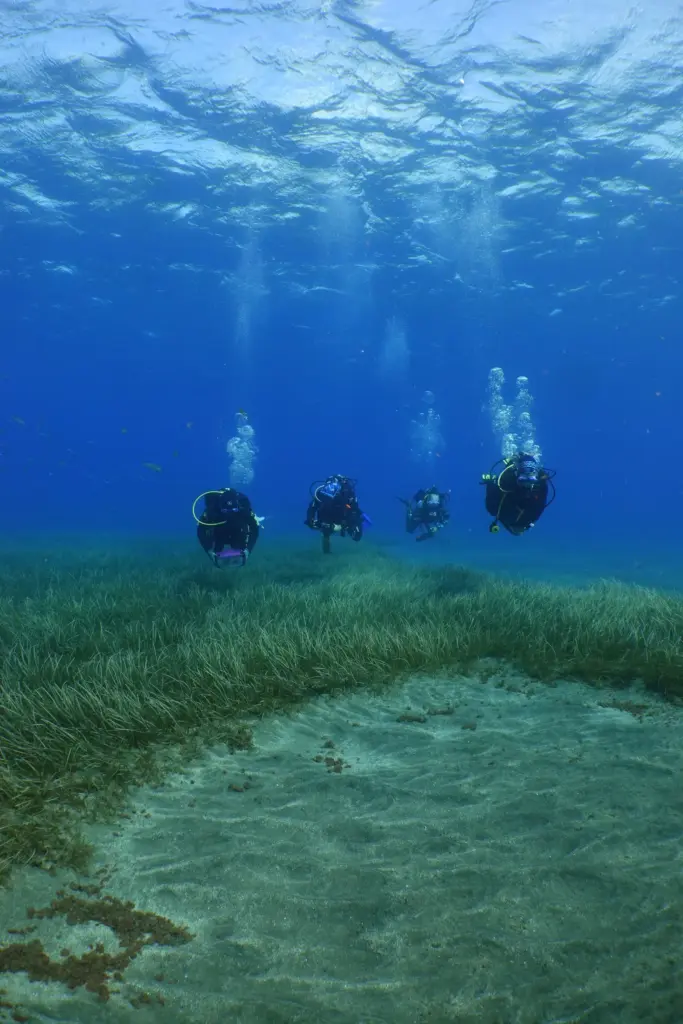
After several months of germination and cultivation in the Innoceana laboratory — with the collaboration of the Marine Plant Physiology and Biotechnology Group of the ULPGC — the seedlings have been ready to return to the sea. The action has been carried out between 8 and 12 meters deep, with the seedlings arranged in groups and fixed with biodegradable systems, in an area of seagrass that has been losing density over the years. Innoceana plans to monitor their evolution for at least three years to verify if the methodology allows redensifying the degraded patches.
Read more Live video | Buñol celebrates La Tomatina 2026 with the launch of more than 150 tons of tomatoes
In the long term, the organization — under the project Sea Gardeners — proposes a more ambitious goal: to promote a network of seagrass nurseries in the Canary Islands that allows administrations, scientific centers, and companies to responsibly collect seeds, germinate them, and use them to reinforce degraded meadows in different parts of the archipelago.
“This planting shows that we can actively help recover our seabeds, but the real goal goes far beyond planting,” concludes Mallo. “It is about changing the model with which we occupy the coast and coexist with the ocean. Restoration is necessary; stopping destruction is essential.”
Carlos Mallo is a civil engineer by training. His turn towards marine conservation began in 2016, when he was working on the construction of the Tenerife island ring road, in the Teno-Rasca marine strip, a Special Conservation Area of 70,000 hectares with seagrass meadows, sea turtles, and one of the largest whale sanctuaries in the world. Realizing that the road he was working on would connect to a port that threatened that ecosystem was, according to him, the trigger that led him to leave engineering and found the NGO Innoceana. Shortly after, he helped lead the campaign against the Fonsalía Port project, in Guía de Isora, which the Canary government finally canceled in October 2021.
In his statements, Mallo has been critical of the Canary Islands’ tourism model, which he points to as the main factor of environmental deterioration in the archipelago, with places like Los Cristianos or Las Américas (Tenerife) as examples of its most aggressive effects. He advocates not only reducing tourist activity but changing its model to one that leaves “a positive footprint,” even if that makes the islands more expensive as a destination, and calls for opening the debate on dismantling obsolete infrastructures.