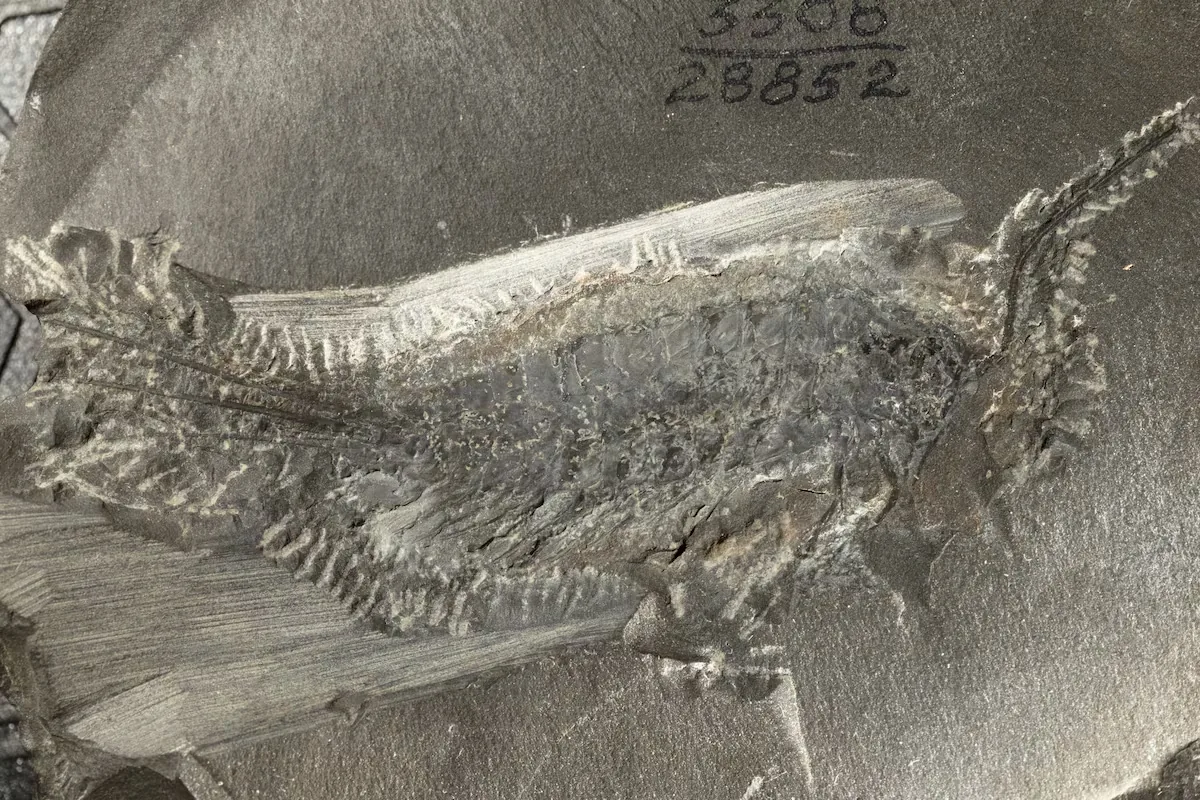
For the Navajo (or Diné, as these Native Americans call themselves), the first inhabitants of the world were the insect people. In their creation myth, insect-like beings are the protagonists of the emergence onto the current Earth, with all other peoples descending from them. This story inspired a group of paleoentomologists to name a creature that emerged from the water to live on land some 324 million years ago. They have named it Chosa praecursor. The first word identifies the genus and comes from ch′osh, the Navajo term for insects. The second refers to the species and, in Latin, means predecessor or pioneer.
Read more Meta will pay almost 18 billion dollars to settle lawsuits over teen addiction to its tools
“Chosha was not the first insect to set foot on Earth,” clarifies Erik Tihelka, a paleobiologist at the University of Cambridge (United Kingdom) and lead author of the detailed study of this creature, published in Nature. Initially, for millions and millions of years, there was only complex life in water. We have to wait until about 405 million years ago for some hexapods (six legs) to venture onto the land surface. “They already look completely terrestrial: they possess prehensile limbs and an intestine full of terrestrial plant material and fungal spores,” adds Tihelka. Genetic dating suggests that they diverged from their ancestors, marine crustaceans, several tens of millions of years earlier. “Chosha lived about 324 million years ago. It arrived later in this story by 80 million years or more,” he concludes.
But this species of protogamba (see recreation below) is special: “It still retained the complete set of ancestral tools: articulated and functional legs that ran along its belly, on nine of its eleven segments,” says Tihelka. No living insect possesses anything similar. “Those legs are the same limbs that a shrimp uses as fins for swimming. Living insects have reduced them to useless stumps, fused them into a jumping spring, or lost them completely,” adds the researcher. Its relevance, therefore, is not so much in its antiquity, “but in being our best window to understand the transition [to terrestrial life].” Everything indicates that C. praecursor was an amphibious animal that was not yet fully adapted to land.
“In the process by which animals colonized land, there may have been various attempts in the past, but very few have been fruitful,” recalls Jesús Lozano, a researcher at the University of Barcelona and co-author of the study. One such success story was that of the first terrestrial tetrapods, from which all subsequent vertebrates, including humans, originated. “The interesting thing about arthropods is that at least three of their groups: arachnids (spiders, scorpions,…), myriapods (centipedes and millipedes), and hexapods (which includes insects) have colonized the terrestrial environment independently,” adds Lozano, specializing in invertebrate paleobiology and the terrestrialization process of these animals. “The fossil record indicates that they were the first to do so,” the researcher concludes.
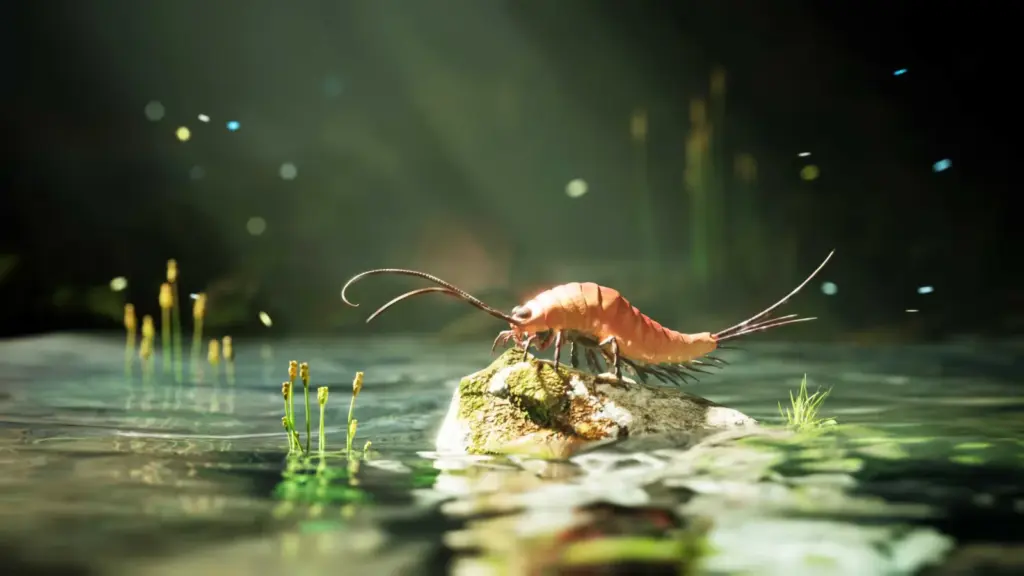
As Lozano recalls, “it was established about 30 years ago that hexapods are nothing more than an incredibly successful lineage of crustaceans that colonized land.” But between the first, from about 405 million years ago, and the time of C. praecursor, another 80 million years pass, which experts call the insect gap. Everything indicates that they should be there, but the fossil record still hides them. “Our opinion is that it is an artifact of the fossil record; we believe that perhaps there were few possibilities for the preservation of terrestrial ecosystems during that era,” says the Spanish scientist. That is why they gathered and reanalyzed the specimens found (no more than five) from that period, about which very little information is still available, to try to fill the gap.
Read more Mark Carney will attend Von der Leyen’s EU speech in September
“The role of the main fossil we show, Chosa praecursor, is that we slightly shorten that hexapod gap by a million years (nevertheless, a much longer one still remains),” highlights Lozano. But, for him, as for Tihelka, what is relevant is that they demonstrate that C. praecursor is a hexapod and not a crustacean, “specifically an insect, which possesses both insect-specific characteristics, such as thoracic division or antenna type, and crustacean characteristics, such as limbs on the abdomen, which were potentially used for swimming.” They believe it had terrestrial life and could make forays into aquatic environments. “It is possible that during evolution there have been many failed water-to-land transition experiments, and few have been successful,” he concludes.
Shortly after that half-insect, half-shrimp creature lived near a lake or pond in what is now West Texas, the definitive explosion of insects occurred, appearing by the hundreds in the immediately subsequent fossil strata. From that time are the first winged insects. Today, with a million described species and perhaps twenty times more to discover, it is the largest group of animals, also representing the greatest biomass. What is striking is that, having originated from the sea, there are only five marine species among so many millions.
“All belong to a single genus, Halobates, known in English as sea skaters. They are close relatives of the pond skaters seen in any pond in Spain,” says Tihelka, the lead author. “They are extraordinary animals. They live permanently on the surface layer of the open ocean, hundreds of kilometers from land, never touching it, completing their entire life cycle there,” he adds.
As Tihelka details, these tiny creatures have a lot in common with whales: “They left the sea, spent 400 million years having spectacular success on land and in freshwater, and then a small group returned. The sea skater family is only about 55 million years old, so this return happened very recently in insect terms. Whales began returning to water about 50 million years ago. The two journeys are essentially contemporary.” But there is a big difference, which the scientist highlights: “Whales went in completely. Sea skaters only reached the surface. They walk on the sea; they never enter it.”
Read more Aibmoloc