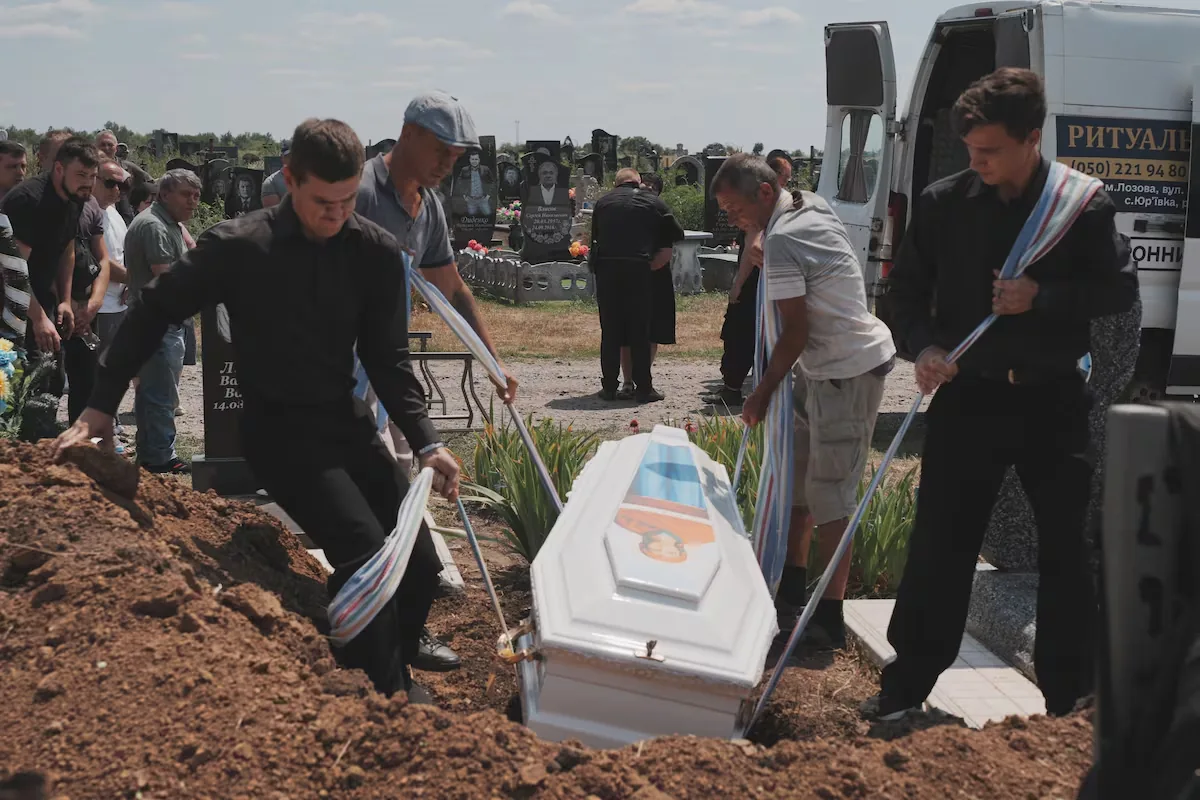
The double Russian attack against a shopping center in the Ukrainian town of Kryvyi Rih last Friday killed 16 people and left 140 injured, including 23 children. The building was hit by a drone, and half an hour later, when rescue teams had already arrived at the scene, it received a second blow. A few hours later, another bombing killed three children in Mykolaiv, less than 200 kilometers to the southwest. At an increasingly frequent pace of air attacks, the number of child victims of the war is growing again and reached its highest level in July since April 2022: 17 children died and 166 were injured.
Read more Actress Busy Phillips reveals she has undergone two surgeries to treat a brain tumor
These figures, compiled by the United Nations Human Rights Monitoring Mission in Ukraine (HRMMU), represent a 49% increase compared to June (when seven child deaths and 116 injuries were recorded). In comparison, in April 2022, two months after the start of the full-scale Russian invasion, 62 children lost their lives and another 149 were injured.
Russian shelling hits areas particularly important for children. “We have seen that many homes have been hit, many children’s areas, and also public or community spaces, such as schools and parks,” says Vittorio Paolo Milanes, UNICEF spokesperson in Ukraine, from Kyiv.
In total, since the start of the Russian invasion in February 2022, the UN mission has recorded 3,946 child victims in Ukraine: 820 children killed and 3,126 injured. The entity states that it estimates the real figure is probably higher, due to the difficulty of counting all cases, especially in territories occupied by Russia.
A routine under the bombs
The fear of bombings has already become a constant in the lives of Ukrainian children. “They have lived with this fear since 2022. Every time an alarm sounds, you just duck and naturally panic,” Milanes says by phone. Beyond the alarms, explosions also cause dread. “For children, it is still a very shocking experience and a familiar fear every time they hear that sound, because it can remind them of what they experienced in the past, if they witnessed an explosion, or the moment they lost a family member or friend in an attack,” the spokesperson emphasizes. One in five children claims to have lost a family member or friend since 2022, according to UNICEF.
Unlike the beginning of the war, bombings in urban areas far from the front line are increasingly common. Long-range projectiles, missiles, and drones are the main cause of the increase in civilian deaths in Ukraine, HRMMU points out. Ukrainian airspace is particularly vulnerable due to the scarcity of anti-aircraft defense systems, which leaves civilians exposed to Russian bombings.
Ukrainian children have to adapt to a routine very different from that of many other children in the world. A routine that, Milanes reminds us, no one should have to get used to: “Going down to a shelter, to a subway station, having to stay there for an entire afternoon or for several hours. All of that is affecting their mental health.” The organization’s figures indicate that 32% of households report signs of psychosocial distress in children.
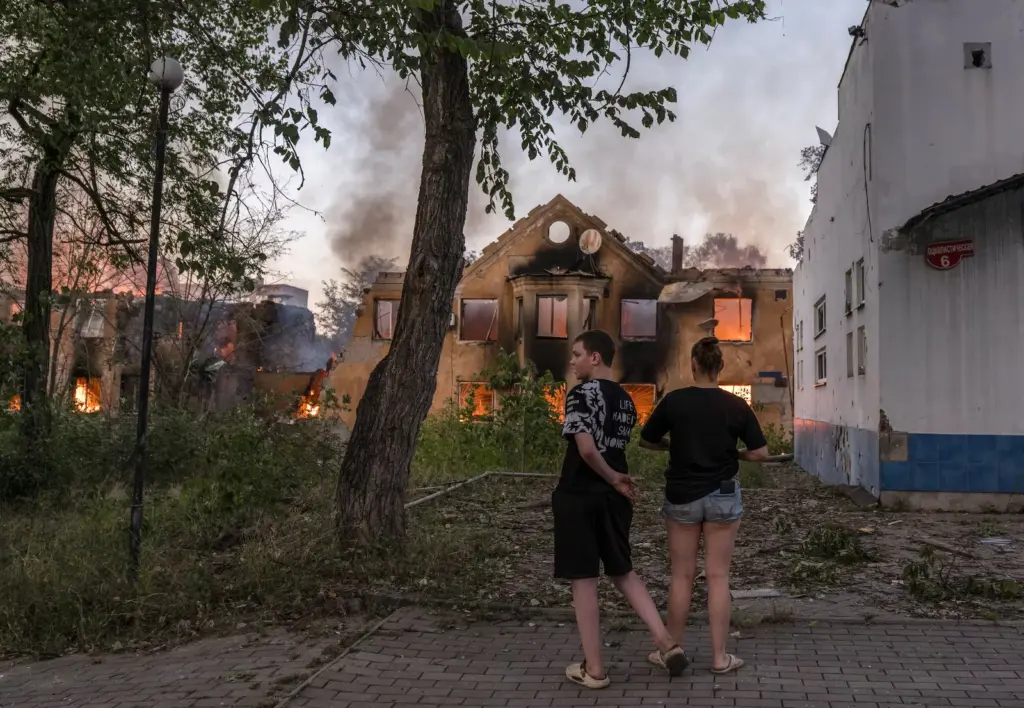
“We have verified attacks that have directly affected schools and hospitals, which constitute serious violations against the rights of children in armed conflict situations,” Milanes asserts. As of June, more than 1,700 educational facilities have been counted as damaged or destroyed. “When they are at school and an alarm sounds, children also have to go to the shelter inside the school, interrupting their daily routines.”
Many families have had to leave behind their homes, schools, friends, and part of the environment they were accustomed to. UNICEF estimates that there are 3.4 million displaced people within Ukraine. Among children, more than a third remain displaced.
In areas near the front, “many children have had to learn online or in a hybrid modality, which deprives them of socialization and learning with their peers, which are an important part of the educational experience,” narrates the UNICEF spokesperson. “They are also deprived of opportunities to play because it may not be safe to go out.” In these regions, the organization estimates that four out of five children no longer attend early childhood education.
July has also been the deadliest month for civilians since May 2022. The UN mission recorded at least 437 civilians killed and 2,610 injured. The sum of fatalities and injuries is 70% higher than that recorded in the same month last year, when 312 people died and 1,482 were injured. Both sides deny that civilians are the target of their attacks.
“Children are dying and being injured in their homes, on their playgrounds, and in their communities,” declares Anne-Claire Dufay, UNICEF representative in Ukraine, in a statement published this Tuesday. “Schools and hospitals are being attacked. Too many young lives have ended too soon or changed forever. This is unacceptable. Children need peace.”
Read more Father of USS Abraham Lincoln sailor released after ICE detention