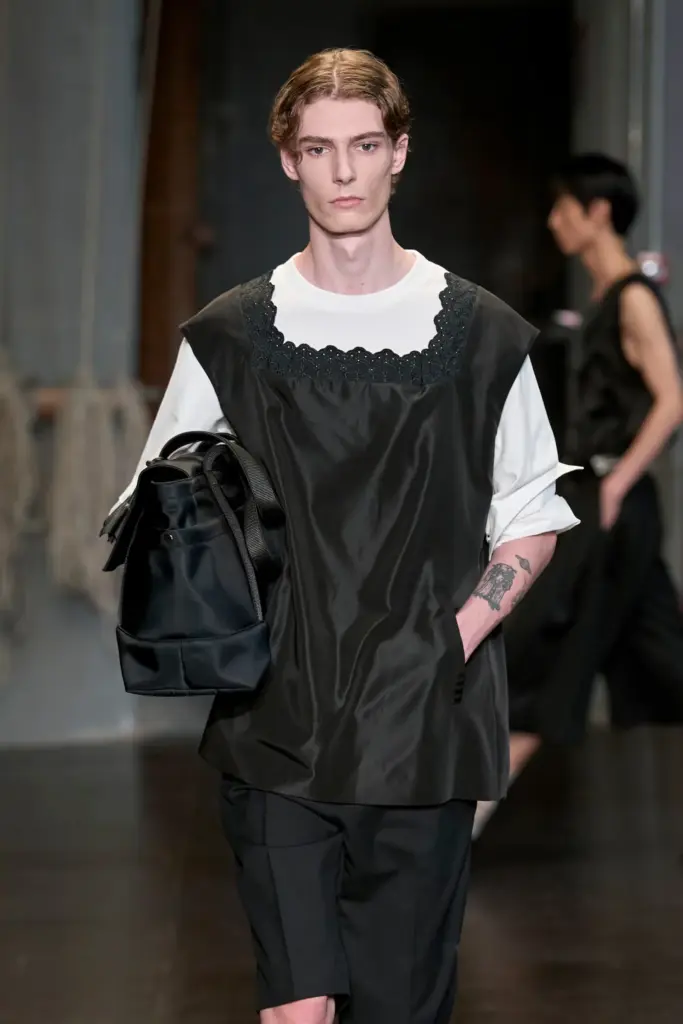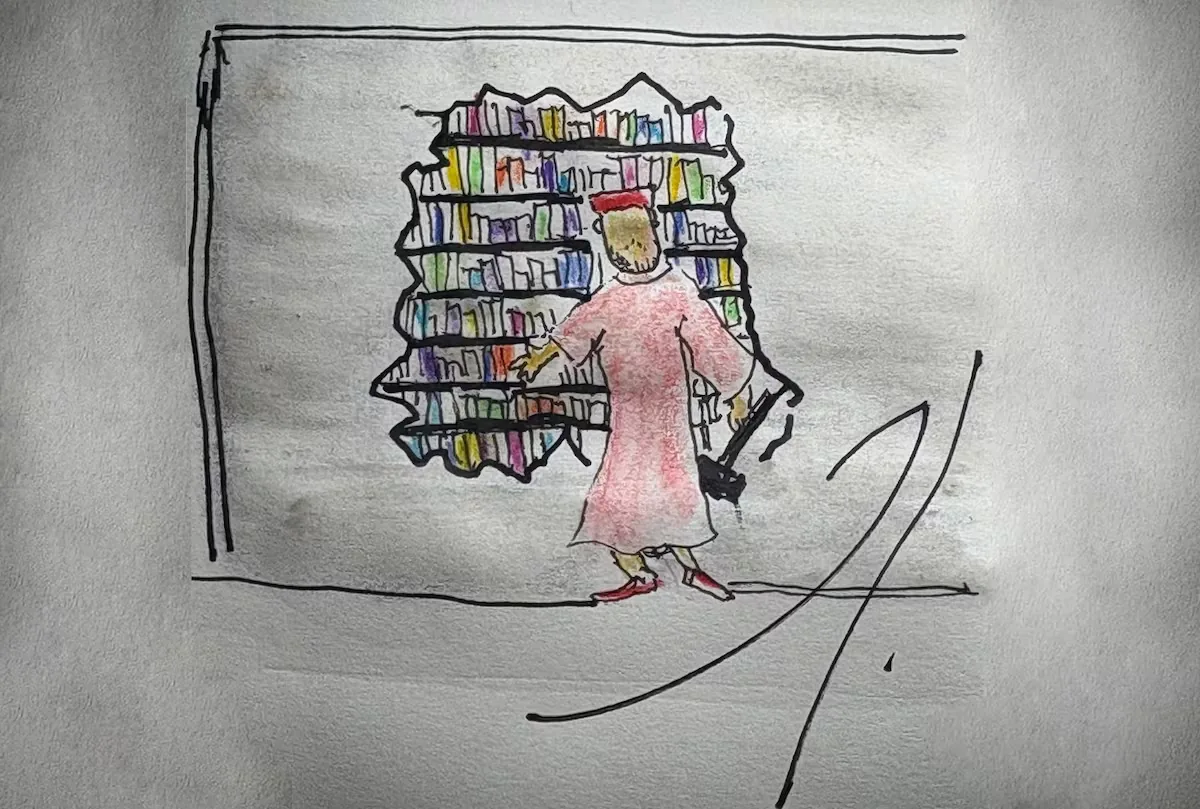
The residents of Laza, in the Ourense region of Verín, like to get feisty, at least once a year. It happens between mid and late August, depending on the circumstances: during a long weekend –from Friday to Sunday–, they decorate tractors, take to the streets, share popular food, compete in the xogos labregos and spend the night of foliada singing and dancing. Since 2022, the Romaría Ponte Farruca is the benchmark agro-festival in Galicia; a full-fledged pilgrimage, except that, instead of taking the saint or saints in procession, the only religious fervor is unleashed by the apron. A pagan textile cult that channels that mystique of femininity/eternal feminine in its most ungrateful form (that of submission and surrender to others in a rural version) to make it visible with haughtiness and pride.
Read more Yayoi Kusama, the artist who turned polka dots into an exponent of psychedelia, dies at 97
Mandil or mandilón in the northwest, mantala or mantal in the north, bambo or bambita in the south, simply ‘bata’ (smock) from one end of Spanish territory to the other, here is the garment that proclaims the importance of bringing the formidable role of women in the countryside back to the center of the conversation. That is why the residents of Laza have elevated it to the category of a symbolic uniform for their xuntanza, which even men wear in homage to those who have sustained community life for decades in the shadows, but also as a defiant exercise of disruption and gender diversity.
Wearing the mandilón thus creates a bond of territorial identity so that anyone “feels at home,” argue the organizers who, in a display of marketing fantasy, for this edition –from August 28 to 30– launched the drop farruco, a mini-capsule to cover expenses, dispatched in the likeness of the old drip-feed exclusive sales system of urban fashion brands (today cannibalized by luxury) and whose premium package included the so-called Mandilón de la señora Farruca. A smock to break stereotypes, re-signify the rural domestic sphere, and reappropriate the festive public space with it. So that Miuccia Prada can then come and give lessons on feminist symbolism from the top of a runway.
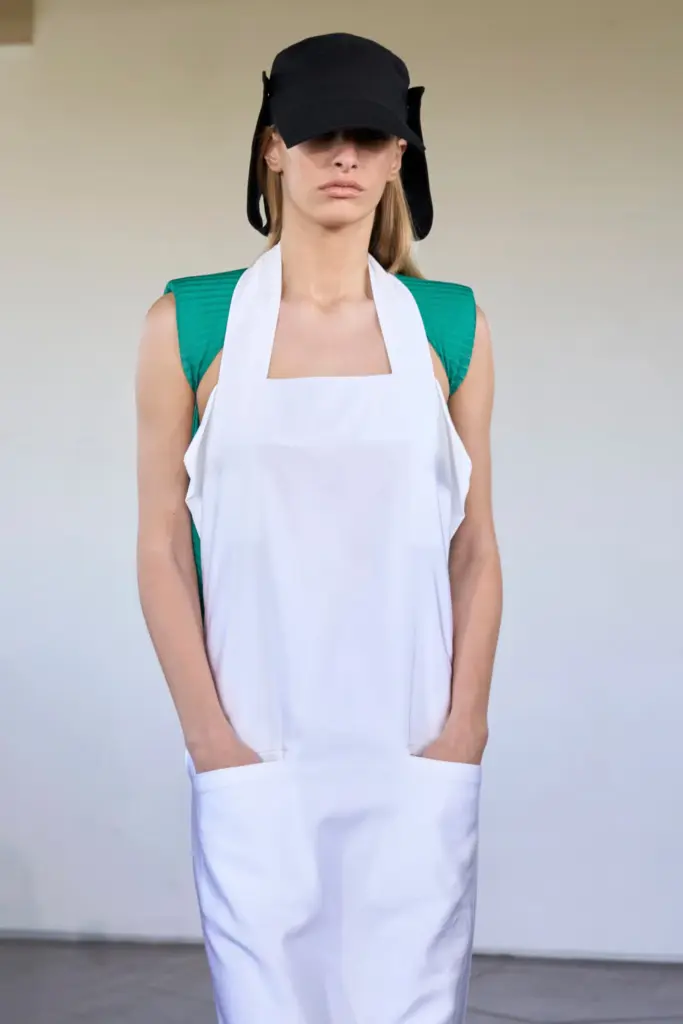
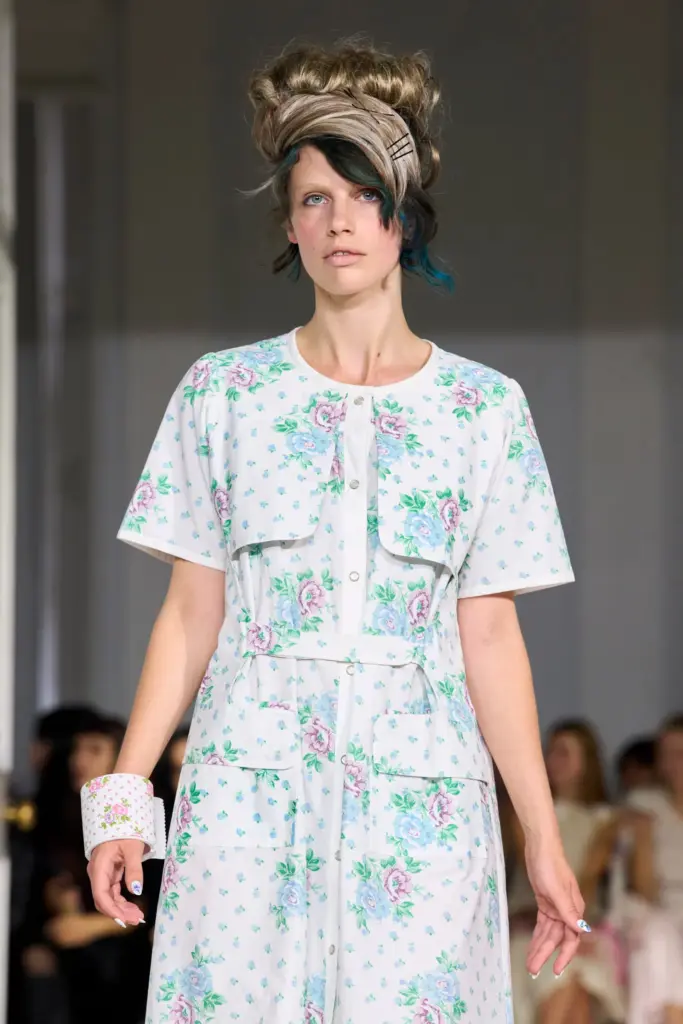
Seen in Miu Miu’s Spring/Summer 2026 collection, the second label of the Prada Group (first in terms of economic impact), the utilitarian village smock burst onto high-flying prêt-à-porter this season like a cow without a bell, cut from lightweight cotton poplin with a washed or lightly textured effect to feign use/wear; fine tailoring modeled by celebrities of the caliber of Sandra Hüller and Milla Jovovich.
“The apron speaks of women’s effort, it is a symbol of work that can express multiple messages or ideas,” signora Prada tried to explain at the end of that fashion show, justifying such an exercise in social extraction as “an attempt to focus on factories, services, care, and the home.”
Although the Italian’s was the most viral, it was not the only one: there are the British designers Talia Byre and Ashley Williams in tune with the rural zeitgeist, operating the same process of textile transubstantiation that extracts the garment from its context of precariousness to introduce it into the luxury stock market circuit. The Irish designer Simone Rocha extends it a little further, deriving it into her men’s proposal for Autumn/Winter 2026-2027, convinced that she can bring out the tender side of men by dressing them in traditional attire associated with the feminine domestic sphere, as she expressed during the presentation at the Pitti Uomo show in Florence last June. No, do not look for empathy in any of these movements, as it is only about the plundering of the last stronghold of clothing free from the logic of late-capitalist hyper-consumption: the civil uniform of invisible labor, care, and the economy of the margins.
Read more The strange death of an Irish couple in the jacuzzi of a house in Cullera (Valencia)
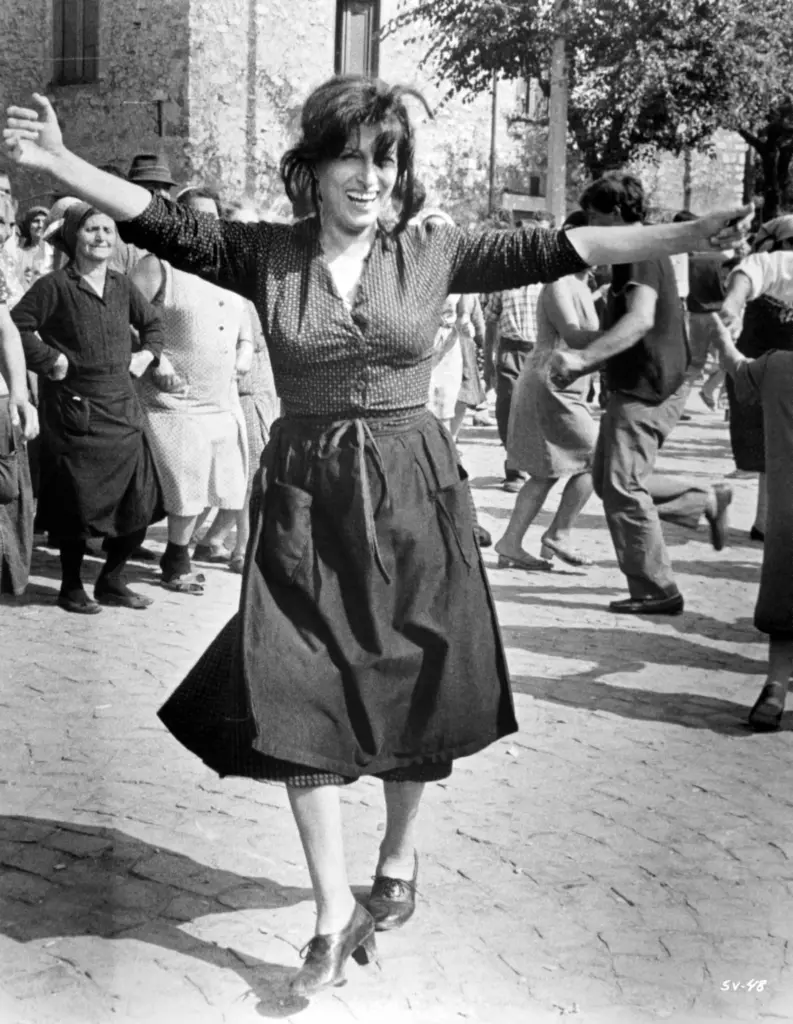
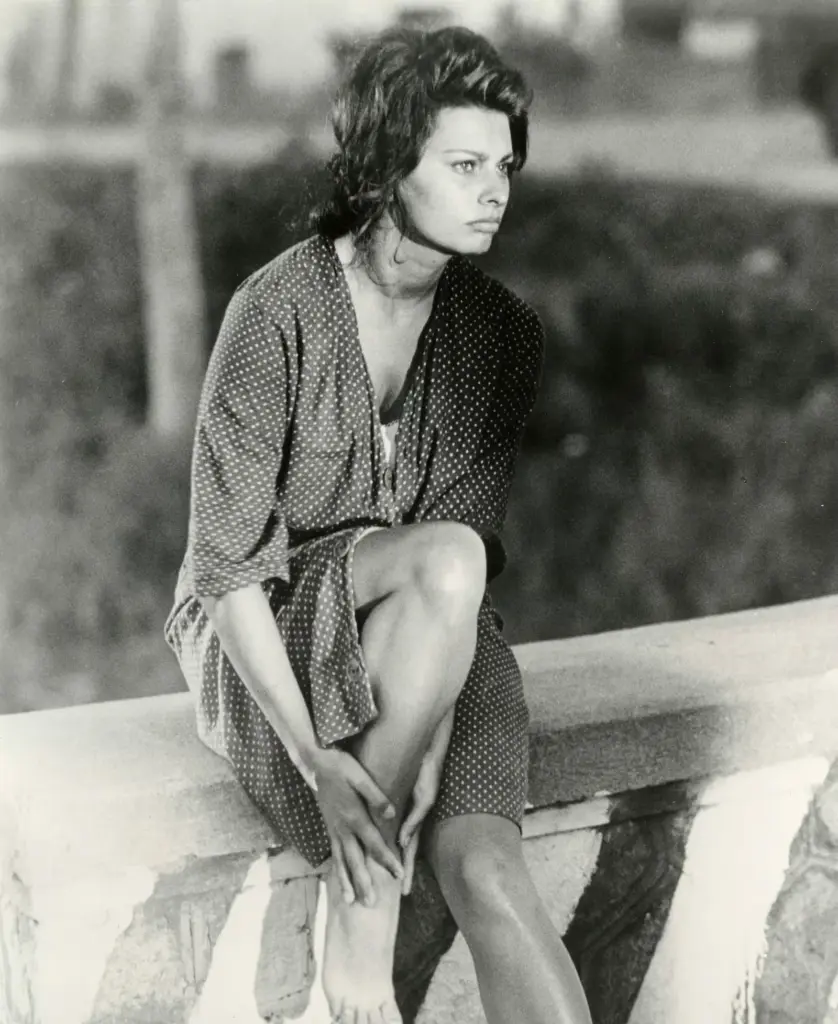
Although there is an invisible line, perfectly traced by 20th-century industrial design, that connects the twill smock from the countryside with the cosmopolitan settings where fashion trends are dictated, the problem is that we are talking about a garment not at all conceived to be seen, but rather to make the wearer invisible. Its structural genealogy, on the one hand, is pure class hybridization. A distant relative of the 18th-century robe volante, an informal negligee that aristocrats wore in private, its true matrix is the 19th-century guild apron and the dust coat.
In post-war Mediterranean Europe, it would finally acquire its dimension as a raw infrastructure of economic resistance: a work armor that allowed weeding the garden, fixing equipment, or cleaning the stable. It was enough to unbutton or untie it in a second to appear clean and decent before an unexpected visit at the doorstep or to go out to the main street of the village. Its technical design thus reveals itself as a work of movement engineering. Front buttoning or side tie systems deliberately dispensed with zippers, while the front pockets held the tools of family production: pantry keys, thimble, seeds, matches, scissors. The print –checks, stripes, flowers– helped camouflage stains.
And then there was social engineering, of course. Sacralized as the pattern of the perfect housewife, the loose-fitting smock, devoid of a waist, responded to a political objective: to desexualize the female anatomy. By suppressing the forms of the silhouette, the rigid percale nullified any hint of desire and subordinated the woman’s body to the ergonomics of reproductive labor in 14-hour days: giving birth, caring, and cleaning. A cotton cell at the service of a certain national-Catholic morality that equated the home uniform with the suit of submission. This architecture of appearance connects directly with the anthropology of informal spaces in rural Spain, a territory where, surprisingly, the smock configured the only true and sovereign public place for them. In summer, as evening fell, the ritual of taking the fresh air on the threshold of houses became a neighborhood parliament. Shielded by the uniformity of their aprons and bambos, women wove networks of mutual support and exercised a silent community resistance. The garment was the credential that validated their presence outdoors without raising suspicion. They were on the street, yes, but their attire declared that they were still working, thus circumventing the boundary of domestic confinement.
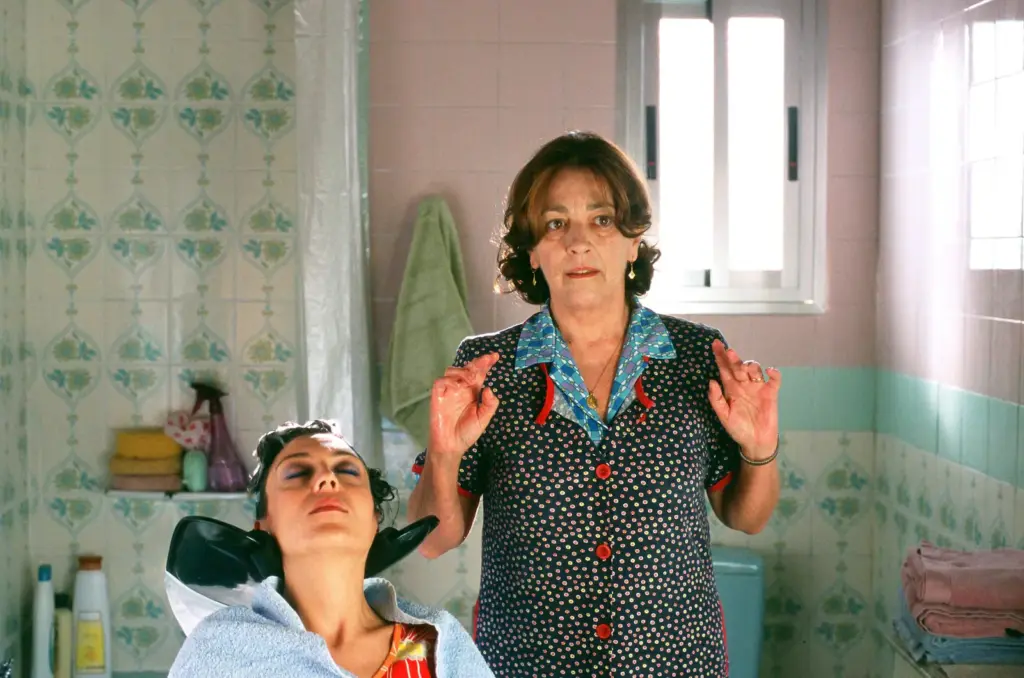
Today, the real smock resists exactly where it always was: on the tired bodies of the women who populate the peripheral geography. That hard cotton apron is not bought in a designer boutique; it is sought at weekly fairs (the market days that still set the pace of the agricultural calendar) or in shops with the scent of old haberdashery that miraculously avoid closures due to retirement. At such counters, the mandilón is not fashion; it is a legal tender garment acquired for its resistance and durability. A unique functionality that fragmented Southern Europe into a subtle and precise geopolitics of cut, from the Portuguese bata de trabalho to the French blouse, passing through the Italian vestaglietta –glossed by Rosselini or Pasolini as the second skin of a forced matriarchy, forged in scarcity and widowhood– or our own variant, which has given filmmakers of Pedro Almodóvar’s caliber so much scope when portraying the Manchegan female landscape and the ritual of neighborliness.
Fortunately, in contrast to the cynicism of the runway and the frivolity of social media, where the algorithm dispatches percale under the reactionary label of the tradwife or the stylistic condescension of grandma core (village grandmother aesthetic), there are projects that do approach the garment with respect and knowledge. See La Pregonera, an ethical fashion initiative born in a Jaén village of barely 15 inhabitants to sew stories of living memory in the workshops of Andalusia. There, far from sociocultural plundering, each smock is made with its own name –Cinta, Ani, Carmen– to place mothers and grandmothers at the center of the conversation and to remember that in those wide pockets, not an ephemeral trend fits, but an entire life.
Read more Partial lunar eclipse: when, where and how to see it this August 28