



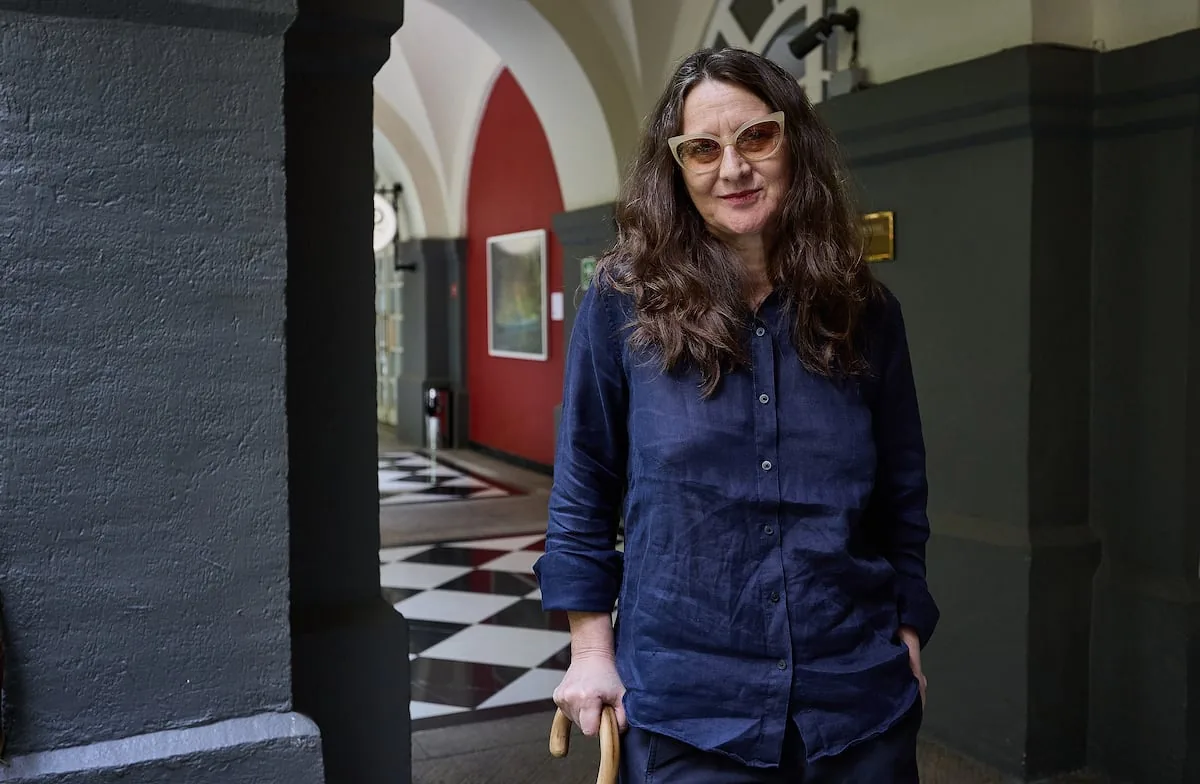
Perhaps little Lucrecia Martel, who dreamed of being an astronaut, would have watched the lunar feat glued to her television screen. For the 59-year-old filmmaker, however, it has passed without fanfare. “I didn’t follow anything because I’m so angry with Trump, it seems so much like an act of war, that an event that should be a scientific celebration, of humanity, I’m experiencing with anger,” she says without getting upset. There is no acrimony in her voice; she simply isn’t afraid to name reality as she sees it. It’s a trademark. The Argentine director has landed in Mexico City to present her latest film, the documentary Nuestra tierra, and her first book, Un destino común. Intervenciones públicas y conversaciones (Caja Negra, 2025), two works that intertwine and perfectly summarize her relationship with cinema: telling stories to be able to talk about them afterwards, about what they tell and about everything that is not seen, but gravitates around, challenging us.
Director of films such as La mujer sin cabeza (2008) or Zama (2017), among others, Nuestra tierra, awarded at the London Film Festival, is her first foray into non-fiction. It was a long-term project that took her a lot of time, to the point that the indigenous community she was portraying, the Chuschugasta from the province of Tucumán, in northern Argentina, didn’t understand what she was doing with them. “In cinema, they understood the value of a film more,” she notes: “The distrust slowly disappeared.” If there was one thing the Chuschugasta had, accustomed to the weariness of constant struggle, it was the right to suspicion.
The feature film stems from the trial for the murder of indigenous leader Javier Chocobar at the hands of those who wanted to exploit the area with a mining company and who were, on paper, owners of land that the community defended as its own. There lies the beginning of a problem that dates back to colonial times. Does the written word document a reality or create it, overriding what already existed despite not being reflected on paper? The arbitrariness of what we call History is one of the many questions that hover in a film where looking at things from an aerial distance is more than an aesthetic choice. It is the only way to understand the event in its context. “It’s very difficult to understand a community that lives in the mountains, because from the road you don’t see the people and you don’t see the houses. You think they’re just a couple of crazy cats. Then you go with the drone and you see that there are crops, there are roads, there’s a whole way of using the space. They’re not little houses that were built yesterday,” Martel argues.
Descending onto the territory to reconstruct the facts was a key factor in the trial ultimately leaning in favor of the community. The land enveloped their sparse words in such a way that the loquacity of the accused and their infinite piles of papers lost the overwhelming force they demonstrated in a four-walled room. “The great invention that arrived with the colony was written paper. Whoever possessed writing had the advantage of constructing history as they wished. Before justice, where evidence, many times, consists of papers, communities are totally unprotected,” reasons the filmmaker.
With powerful audiovisual material covering everything from the moments leading up to the murder to the public hearings of the trial, Lucrecia Martel exposes the traps and power imbalances of a system that has been flawed from the beginning and that is repeated, in essence, throughout the rest of the continent. It is the history of colonization, evangelization, and dispossession, which countries did not review after becoming independent. “All nation-states used the massacre on Spain’s side as an argument for their history. And it’s true that it happened, but what Latin American nations did to indigenous peoples is worse, because in the colony the arguments were clearer. In nations that claim there is equality before the law and what have you, it’s more ambiguous, more deceitful,” she states.
Religion runs through the documentary as it does in the social and territorial conflicts of America, a legacy, once again, of the colonial era. It is present in the origin of the dispossessions, centuries ago, but also today, in oaths before the judge, in the presumption of being “good people,” in prejudices, and also in the deepest and most intimate beliefs. “The God who arrived with the colony is a savage God. The communities, many of which are Christian, converted that God of war into a more peaceful God, of agriculture, more similar to the deities that existed on the continent. The communities improved God,” she concludes logically.
Read more The presidential campaign is approaching the polls without a debate between the favorites
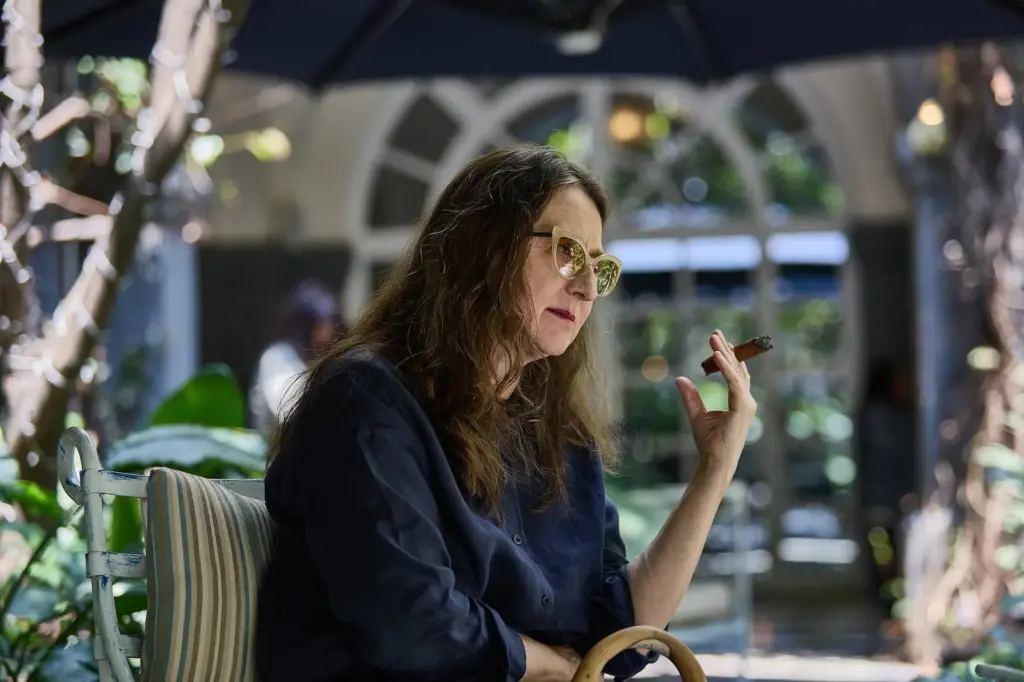
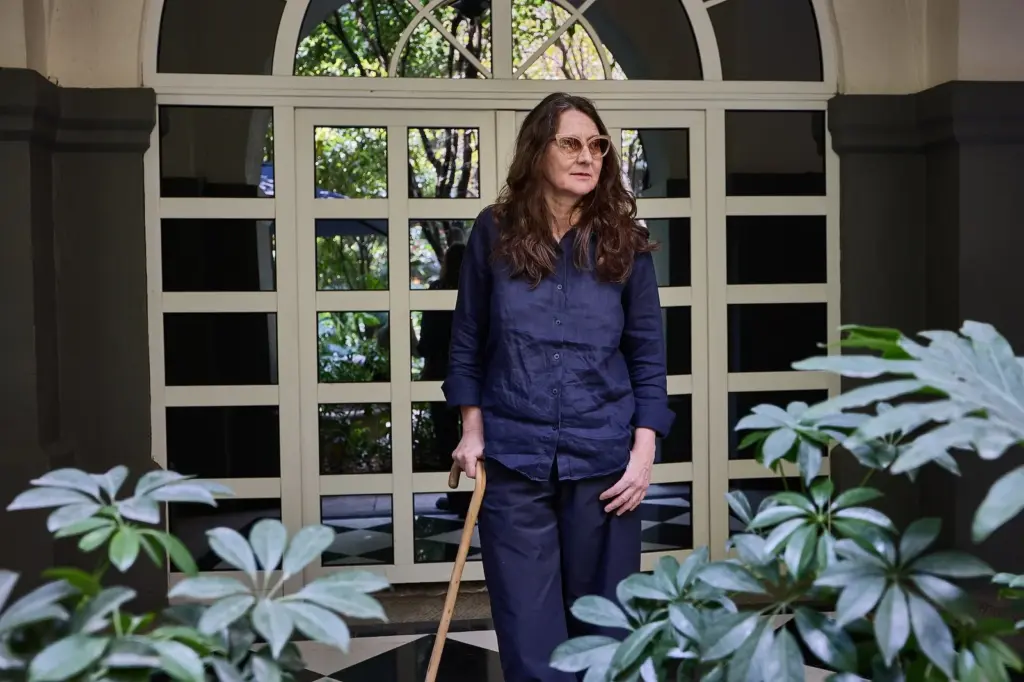
Her book, Un destino común, based on her lectures and conversations with journalists like Leila Guerriero or filmmakers like Carla Simón, progressed at the same time as her research for the documentary, which, according to the editors, “constantly seeps” into it. A few days before its presentation at Lago Algo, in the Mexican capital, some 2,000 people had already registered to listen to the filmmaker, who is received like a star. She reinforces this feeling with a look that is already a hallmark: semi-transparent glasses pointing upwards, a cane in one hand, a cigar in the other.
She does not, however, hide behind those glasses. Lucrecia Martel speaks with lucidity and transparency about the issues that concern her; she fears no repercussions or punishments from an industry where some also tread carefully. One of these issues is the use of artificial intelligence. The recording that serves as a witness in favor of the community’s version, as has happened in other cases of police violence, could, in another context, play against it, she says. “I think we’re going to have a problem there. How will images play out in trials in the future?” she asks herself. “It’s becoming complex. As long as there are many witnesses, I think it will play in favor. When there’s only one video, it will be extremely dangerous,” she answers, and illustrates it thus: “Trump comes, presents us hours in advance that such and such a leader from another country has been assassinated. Until we discover it’s false, it creates chaos. The consequences of the false image are real.”
There is also the concentration of capital in the industry. “There are few platforms that belong to a single country, that are millionaires and that are producing the cinema of the planet. They have their own businesses, their own ideas of what they want,” she tempers the joy with which these companies’ local ventures are sometimes experienced. “I spend my time ranting against them,” she maintains indifferently. Around her, however, she sometimes perceives the fear of other colleagues who depend on them to carry out their work.
In the background, once again, is the question of how each country narrates itself. The stories that are told end up telling History. “There’s a problem with people in cinema regarding what the focus is being put on. We have societies full of very interesting issues. Colombia or Mexico have millions of issues to echo in cinema, but the narco one is like an action movie,” she criticizes about a topic that is predominant in the industry and in the foreign perception of these countries: “I think there’s self-censorship.”
She speaks with the freedom of someone who can do so and, moreover, chooses to use it for something. That something is, above all, to talk, reflect, share, and accept the invitation to think that a film should pose. This horizon is repeated in all her works and she writes it clearly and without room for doubt in her book: “I can define with total precision what I intend for humanity. To walk without fear, to move as one can, and to converse with people.” And she adds: “That is culture: the things we do that generate conversations and connect us, and then remain in memory.”
Read more The mouse to guard the cheese