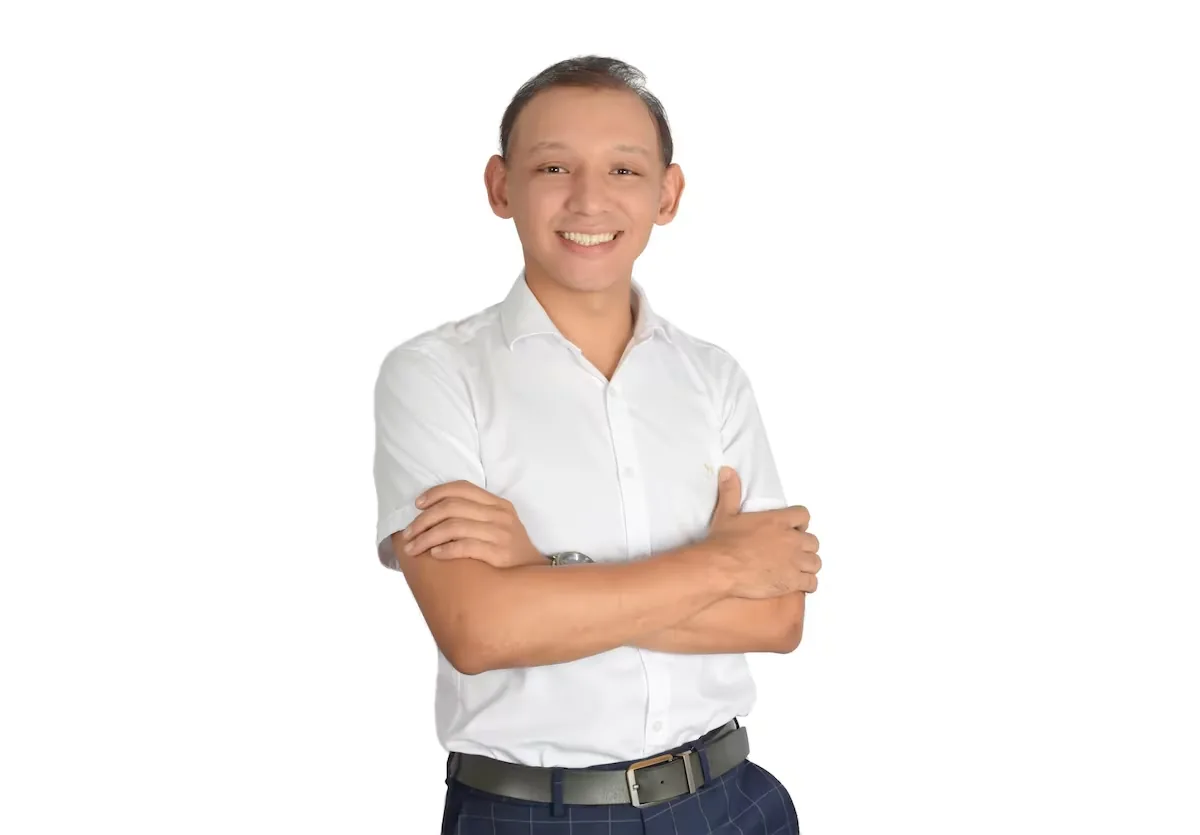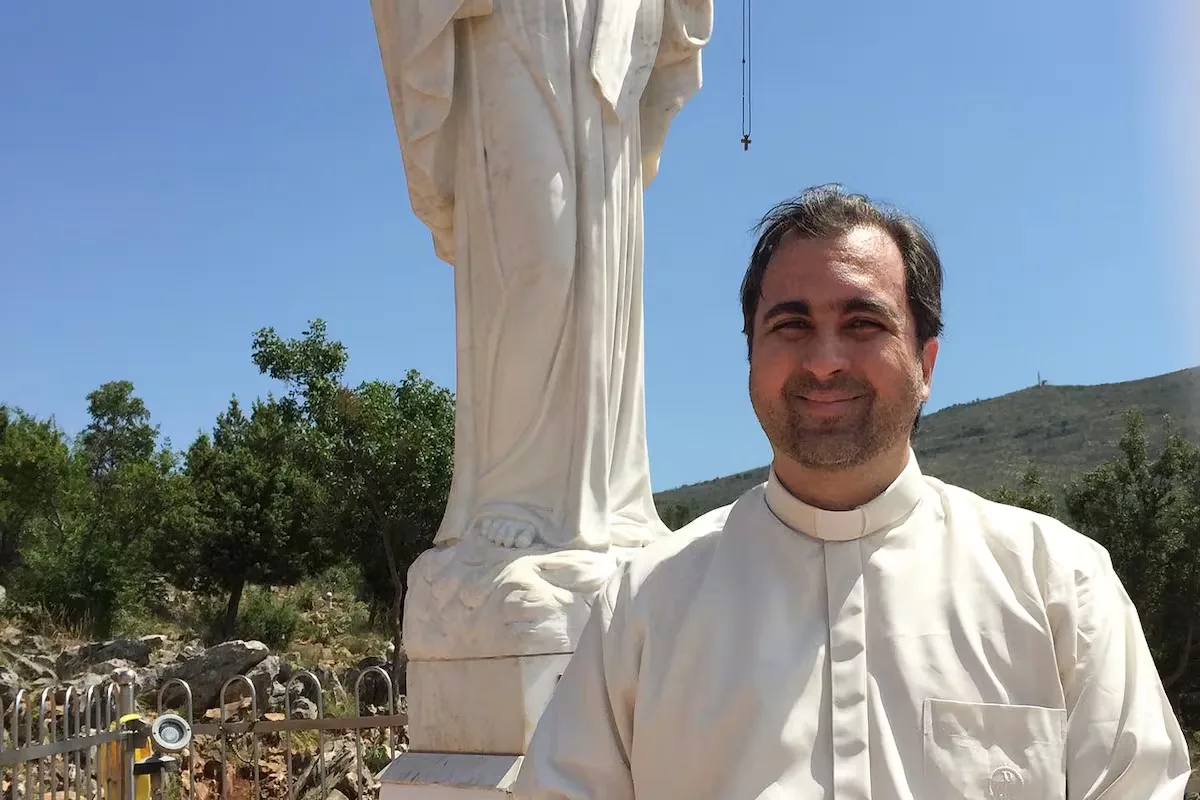
The life of Colombian priest Rodolfo Londoño has changed radically in recent months. He has left behind his work as a parish priest in Madrid, the Spanish capital, to take a prominent place at the center of the political power of his country. President Abelardo de la Espriella has appointed him chaplain of the Casa de Nariño: he led a spiritual retreat for the high government before its start, officiated as master of ceremonies during the inauguration, and together with the first lady called for a massive prayer in Bogotá’s Plaza de Bolívar to ask God to help rebuild Colombia after an earthquake. But his power is no longer limited to spiritual life. The president has asked him to fully engage in university politics. He will be his delegate on the governing boards of five of the most important public universities: the National, Antioquia, Valle del Cauca, Atlántico, and Pedagogical.
The Casa de Nariño has assured that the appointment responds “to criteria of suitability and service.” “It seeks to contribute to the strengthening of higher education, promote institutional dialogue, and guarantee responsible communication between the national government and university communities,” it stated in a communiqué that refutes any kinship with the president — his second surname is De la Espriella. The priest will represent the president in the collegiate bodies that appoint rectors, approve budgets, and issue regulations. From there, he will promote proposals such as the creation of short programs linked to the technology sector or closer ties with the private sector. He will be caught between a student movement that mostly rejects the president and an administration that promises to suppress any violent protest.
Londoño inherited faith from his mother, as he recounted at the end of July on the Catholic podcast Somos Eternos. “She was a Dominican nun of the Presentation for eight years. When she was about to take her perpetual vows, she left to study psychology and there she met my father. Faith was always very present,” he related. His father was a rancher from Sahagún (Córdoba) and was murdered as part of the armed conflict. Londoño spent his childhood and adolescence between Bogotá and the Caribbean: he studied at Gimnasio Los Cerros, an Opus Dei school in the capital, and at Sagrado Corazón in Barranquilla. He completed an undergraduate degree in Law and worked for a few years as a legal advisor in a state company. “I had farms, horses, cows, material things, a long-time girlfriend with whom we thought about getting married (…). But I felt a deep emptiness in my heart,” he narrated, referring to his decision to become a priest.
The now presidential chaplain is part of the Catholic Charismatic Renewal, a movement that promotes an intense and personal contact with the Holy Spirit. On Somos Eternos, he commented that God and religion dominate his life. “In free time, one is left to pray,” he said. He even prioritized his religious work when participating in basketball games with parishioners from his parish in Madrid. “I cheat because if I have free time, it is to evangelize. I am evangelizing because I am in the group, and at the same time I play basketball, which is what I like,” he noted. He mentioned that his favorite books are the autobiography of Saint Teresa of Ávila and Story of a Soul by Saint Thérèse of Lisieux.
In another interview with Cope, he elaborated on his missionary relationship with Spain. “I wonder where those missionaries who crossed the Atlantic are. Now we have to give them a bit of the much they gave us. I live grateful for the Spanish heritage,” he said, referring to the evangelization process imposed on indigenous peoples. “Saint Luis Beltrán and Saint Peter Claver, two Spanish saints, marked the history of my country. They brought us faith, the knowledge of Jesus Christ, and that is the greatest gift,” he added.
He has always been interested in politics. In the 2022 elections, he published a video on YouTube with several pieces of advice. “Voting well is voting consciously, in prayer and without emotions,” he said on his channel, which has more than 60,000 followers. “God is the truth par excellence (…). One is not voting with discernment if voting for proposals or candidates that do not support the family, life, human dignity, justice,” he concluded before asserting that “Colombia belongs to the Sacred Heart of Jesus.”
From the pulpit to the university
One of the defenders of Londoño’s appointments is Professor Diego Torres. He opposed the policies of Gustavo Petro’s government as a representative of teachers on the Superior Council of the National University and will now be De la Espriella’s other delegate at that institution. “The university is society, and the representatives of society are also religious communities,” he highlights in a phone conversation. He defends that spiritual life and education can go hand in hand: the National University has a chaplain, Albert Einstein and Max Born described their great scientific discoveries as “epiphanies,” and the University of Qarawiyyin was founded in the 9th century by Islam. He believes Londoño opens the institution to other ideas. “During the years of Gustavo Petro’s government, the council was a meeting of friends: everyone said exactly the same thing,” he questions.
Education policy expert Andrés Felipe Mora refutes this view. “It is valid to consider how society should participate in the university. But this is not that, but the representation of a government that considers there is a social sector that can be prioritized in terms of its ideology. Why don’t we then give voice to people coming from the social movement or scientific colleges?” he comments by phone, while emphasizing that the academic community should be the one to define the criteria for choosing representatives of civil society. He also points out that the Constitution enshrines the secularism of public universities and expresses concern about the context in which Londoño arrives, whom he never encountered in years of debates on university politics. “The government has a ‘cultural battle’ project that comes from a religion that has been important in the president’s election and that proposes to end inclusive language, the supposed gender ideology, the supposedly radical progressivism,” evaluates the professor, interim rector of the National University between late 2025 and early 2026 with the support of Petro’s government.
University democratization
Underlying this is a struggle between two visions of the university. Mora advocates greater student participation in its governance. “Petro tried to have his delegates come from the student movement and faculty, a way to guarantee profiles closer to the historical claims of universities,” he highlights. For him, the institution must advance reforms such as the direct election of the rector by the academic community. He considers that this strengthens the institution’s autonomy to define its priorities. “The educational project of universities corresponds with their governance structure,” he emphasizes. He also points out that De la Espriella’s vision likens the institution’s governance to the management of a company.
Torres, on the other hand, defends that the University Superior Council should not yield to student pressures. “When a plane is falling, one does not hold a vote among passengers, but chooses the most capable pilot. And the same happens with universities: they choose excellence,” he stresses, while questioning that students hold positions of responsibility because “they are passing through” and have an incomplete vision. He recalls that the previous government had controversial appointments such as that of young official Juliana Guerrero, accused of falsifying her university degree and leading a corruption network, at the University of Cesar. “Millions of public funds were moved to sustain a lie that affected thousands of students. What do we want? A person who allegedly committed a crime like her? Or someone who has honorably preserved all the precepts of society?” he comments referring to Londoño.
De la Espriella’s decision to have his chaplain participate in five universities simultaneously draws attention. Torres avoids defending this point. “It is a decision of the president of the Republic, he surely had the criteria to do so,” he states. Mora agrees in pointing out that it is a presidential prerogative. “The president can do it calmly. More than legality, it is a matter of sense of responsibility. The question is whether the same person can do everything at the same time,” he emphasizes. The priest will have to travel between four cities and think about more than 160,000 students, without neglecting the spiritual guidance of the president.