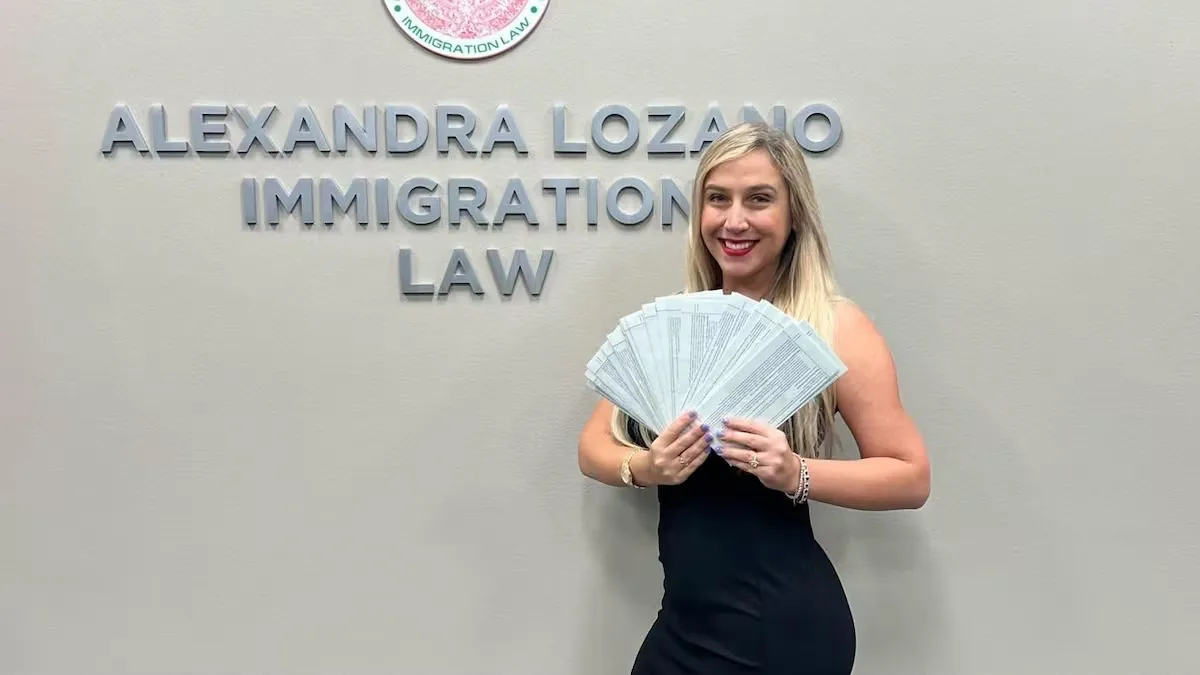
No one knows where Alexandra Lozano is. The self-proclaimed “Miracle Lawyer” faces two class-action lawsuits accusing her of enriching herself at the expense of the pain of dozens of migrants who paid her thousands of dollars trusting she would get them out of the shadows, but some were even deported to Mexico. While she remains silent, the federal government already has her under scrutiny: agents from a specialized unit combating immigration fraud have begun interviewing complainants as part of an investigation that could lead to criminal charges.
Read more Contact zones: the future of trees in Mexico City
The case investigations are being handled by agents in Seattle, Washington, from the Fraud Detection and National Security Directorate (FDNS), which is part of the United States Citizenship and Immigration Services (USCIS), according to federal officials who spoke to EL PAÍS on condition of anonymity because they were not authorized to speak to the press. “They are talking to witnesses. The goal is to present the case before a Grand Jury so they can file a judicial accusation in the Western District of Washington,” explained a source.
The FDNS, the agency keeping Lozano on its radar, has among its objectives “to protect the integrity of the legal immigration system, combat fraud in applications, and detect threats to national or public security,” as explained on the USCIS portal.
For now, Lozano faces no criminal charges. Her lawyers from the firm Angeli & Calfo, with offices in Seattle and Portland, did not respond to requests for comments sent by this outlet. Days ago, Angelo J. Calfo, the main legal defender of the “Miracle Lawyer,” rejected the allegations made against his client in the two class-action lawsuits. “Alexandra denies the accusations presented by this small group among the thousands of people she has represented,” he told Telemundo Noticias. “She will respond to these allegations in court,” Calfo added.
54,000 cases in limbo
The fall of the “Miracle Lawyer” began when complaints multiplied from clients accusing her of having deceived them by processing their permanent residencies (green cards) with false information, charging exorbitant fees, and initiating immigration processes she knew were destined to fail. It was also reported that her staff memorized scripts to make misleading promises and that the firm designed legal strategies based solely on a computer program without reviewing the files.
Many of the cases promoted by Lozano relied on the Violence Against Women Act (VAWA), enacted in 1994 to allow victims of domestic violence married to U.S. citizens or legal residents to obtain immigration benefits without depending on their abusers. However, Lozano allegedly submitted false or exaggerated testimonies to support those applications, which ended up being rejected in immigration courts, according to the accusations.
Illicit enrichment, organized crime, legal malpractice, and breach of contract are some of the alleged crimes mentioned in the complaints against Lozano. According to the class-action lawsuits, she represented more than 80,000 people, mostly undocumented Mexican migrants, who paid between $10,000 and $25,000 per case.
With part of those earnings, the lawyer acquired a Bombardier Challenger 300 private jet, valued at about $25 million, which she had painted pink and used for business and pleasure trips. It is alleged that her main bet was to build what the lawsuits describe as a “multimillion-dollar portfolio of national real estate.” Among her assets were two luxurious condominiums in Seattle and Chicago, valued at over $4 million, as well as two properties in Mexico. The most expensive was a mansion located in Bosques de las Lomas, one of the highest-value areas in Mexico City.
Read more Once Upon a Time
When she resigned her professional license last May, a maneuver to avoid disciplinary measures by the Washington State Bar Association, she left nearly 54,000 immigration cases in limbo.
“She is hiding, not facing up,” said lawyer Vicente Barraza, who represents the 34 plaintiffs. The litigator regrets that the case has put so many people at risk at a time when migrants are targets of the harsh policies of the Donald Trump Administration. “It’s another thing when a lawyer has the lives of her clients in her hands,” he said.

From false trafficking victim to deported
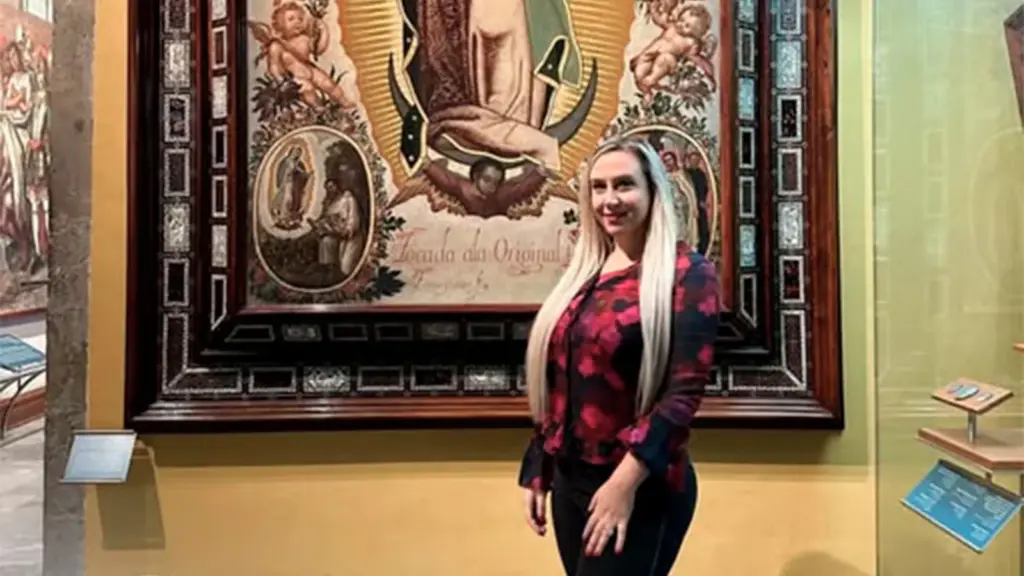
With her characteristic blonde hair and a Spanish with a slight accent, Lozano used to record videos in front of a painting of the Virgin of Guadalupe or wear garments whose design evoked the Sacred Heart of Jesus. It was part of an aggressive marketing strategy on Facebook and TikTok that projected an almost divine image of her services.
“Lozano’s promotional materials gave the impression that she was capable of working miracles thanks to her connection with the Virgin of Guadalupe and the Catholic Church, and that Lozano represented and followed the values associated with the Virgin,” reads one of the lawsuits, filed on behalf of 34 clients, at least six of whom have been deported to Mexico.
One of them is Mexican Severo López Contreras, who paid $17,500 hoping to be protected from Immigration and Customs Enforcement (ICE) raids. The opposite happened. According to the lawsuit, Lozano’s firm tried to falsely present him as a “human trafficking victim,” arguing that his construction company had not received payment in 2016 for drywall installation work. The “Miracle Lawyer” assured him that this made him eligible for a T Visa, which is granted to survivors of sexual or labor trafficking. The promise was that he would obtain a work permit in just six months and the green card in two years.
The excitement faded on October 1, 2025, when López Contreras was detained during a raid. While in ICE custody, he called Lozano, who informed him that despite charging him so much, her office had never initiated the T Visa process. “Without showing remorse or assuming any responsibility for the failure, Lozano demanded an additional payment of $20,000 after Mr. López Contreras’s detention to file an asylum application on his behalf while he remained in a migrant detention center,” the lawsuit states.
The lawyer never returned a cent, and López Contreras ended up accepting his deportation to Jalisco, ending three decades of life in the United States.
Read more The reforms that democracy can no longer postpone in Colombia