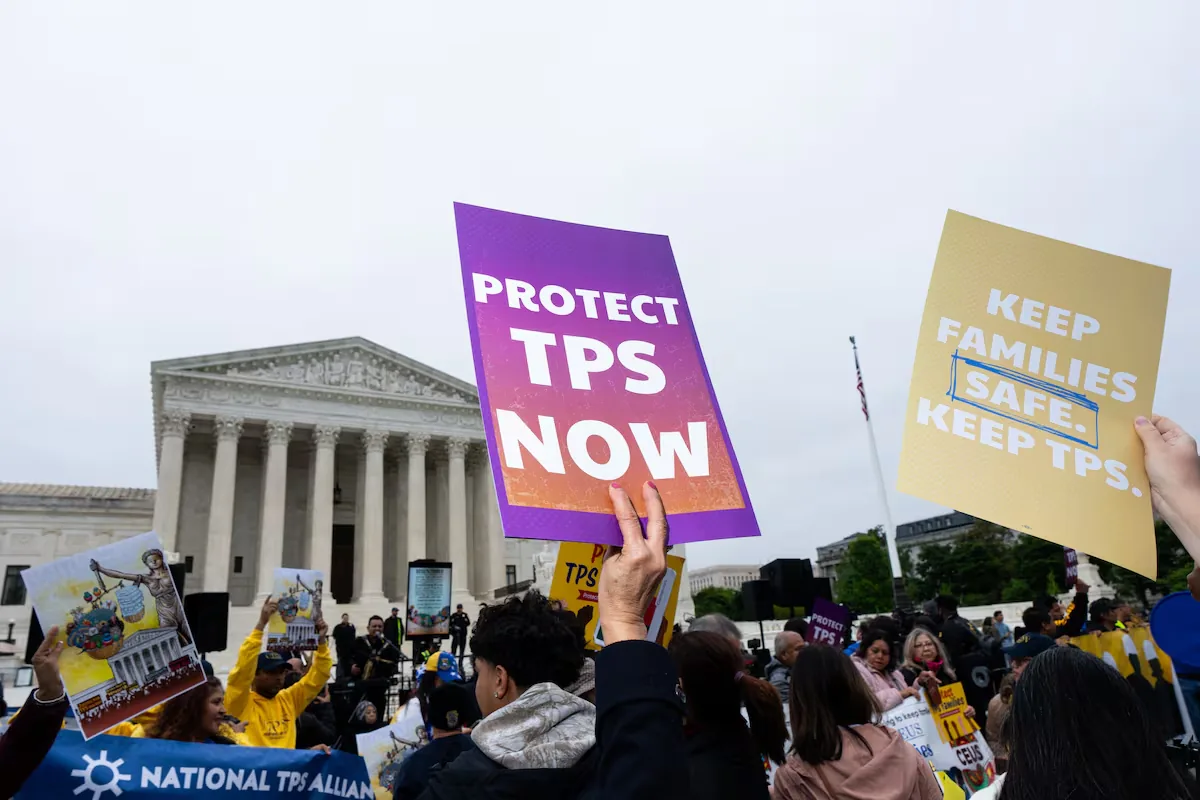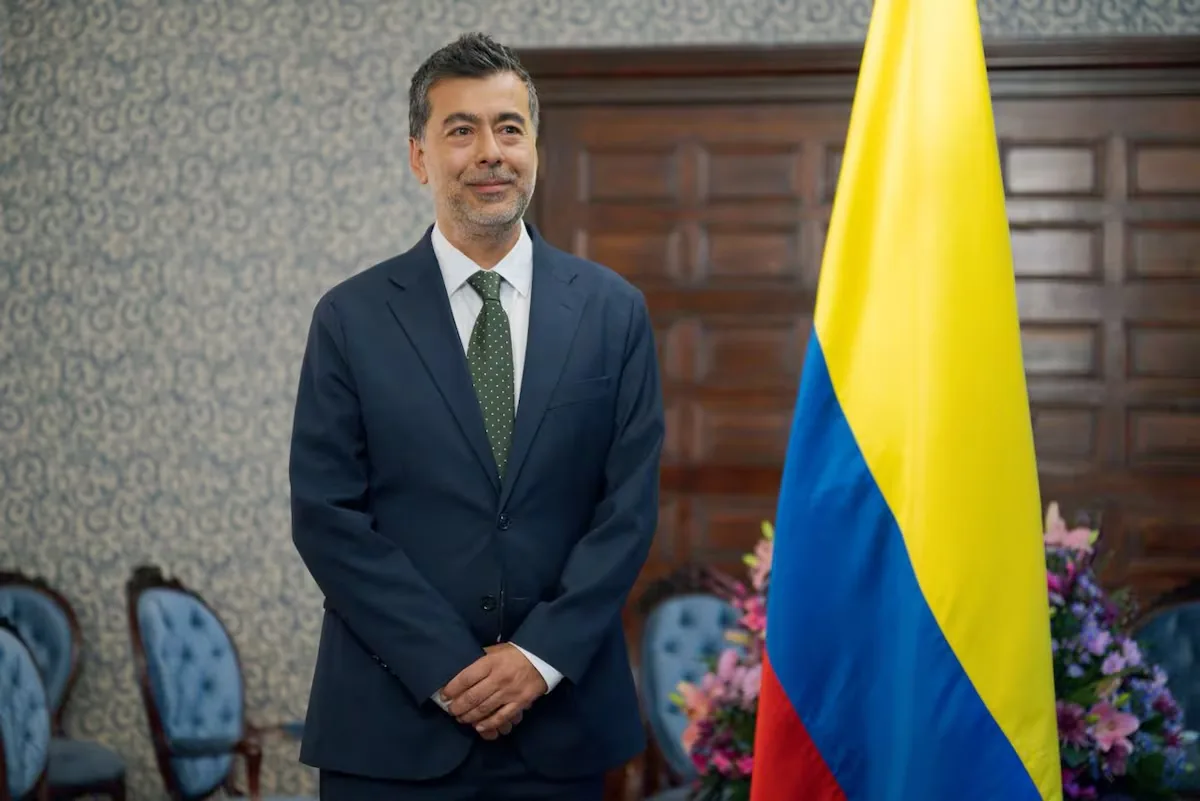
Although it was not a central topic in the campaign, President Abelardo de la Espriella decided, just days before completing a month in office, that migration policy would become one of the main pillars of his mandate. The order, in line with his tough stance on security, is to immediately deport “illegal immigrants” from Colombia, starting with those who have committed a crime, and then moving on to those without proper documentation. The task will be handled by José Luis Castañeda Tiria, a retired Police colonel, who has been appointed director of Migración Colombia, the entity that will carry out these expulsions.
Castañeda had a career in the National Police focused on intelligence operations, citizen security, and combating common crime. The last position he held during active service was in 2018, with the rank of lieutenant colonel, as commander of the entity in the Cesar department, located in the Caribbean Coast. He now replaces Gloria Arriero, who was appointed just over a year ago to lead the entity and who resigned with the change of government.
The Ministry of Foreign Affairs, under which Migración Colombia operates, detailed that Castañeda’s task will be to “transform the entity into a modern, efficient organization aligned with the national government’s policies and the international agreements signed by the State.” It also highlighted in a statement that the new director’s profile “directly responds to the current regional landscape,” which requires “rapid institutional responses and secure shielding of national borders.”
“I will not accept illegal immigrants, wherever they come from, who are committing crimes in Colombia. They will leave and we will deport them. It is a political and administrative decision,” said De la Espriella in the announcement of his new policy, which will disproportionately affect Venezuelan migrants. Currently, 2.8 million live in Colombia, representing 90% of the total immigrants in the country. According to Migración data, 848,000 have irregular status.
The expulsions began very discreetly. One day after being sworn in, on August 28, the entity now led by Castañeda announced the first deportation operation within the framework of the campaign launched by the president. Five people, all of Venezuelan nationality according to Migración, were expelled. Four of them represented “a risk to national security” due to prior citations for carrying weapons, disrespecting authority, or drug use in unauthorized places. The other had served a sentence in Colombia for extortion.
Civil organizations have already expressed their concern. About thirty of them, including the Washington Office on Latin America (WOLA), issued a statement this Tuesday warning about the criminalization of migration and rejecting returns when “the structural conditions that caused millions of Venezuelans to leave not only persist but have worsened.”
Read more Chess Analysis | Sindárov remains very consistent
“Experiences from other countries in the region have already shown that these announcements of aggressive persecution of migrants and the corresponding operations of capture, detention, and deportation have adverse effects on the population, which faces barriers to accessing rights such as health, education, and work due to fear of leaving their homes,” the statement says, while also asserting that Castañeda’s appointment reinforces “a shift towards a securitized approach to migration” and represents a “deterioration of the civil character that should govern the institution.”
Governments in Colombia — center, right, and left — had been, with their own nuances, guarantors of Venezuelan migration following the massive exodus of 2015. Now, a decade later, the country makes a complete turn in its policy with a nationalist discourse: “First the Colombians, second the Colombians, and third the Colombians,” emphasized De la Espriella. His stance coincides with the advance of the far-right wave on the continent led by the American Donald Trump, the Argentine Javier Milei, or the Chilean José Antonio Kast. All have conducted mass expulsions, and the Colombian plans to follow suit.
The president’s main obstacle is the Constitutional Court’s jurisprudence. The high court prohibits mass deportations and requires that each case be evaluated individually to comply with due process. Every expulsion order must be motivated, which would imply a greater effort for an entity that promises to become increasingly efficient.
For now, Migración Colombia has published a new “regularization route” for Venezuelans offering three pathways. One is for minors, of whom, according to the agency, 193,000 have irregular status. Another is for their guardians, with a residence permit that, by itself, has little practical use. The third is a special visitor visa, which allows working and living in Colombia for two years.
They do not seem sufficient, says Ronal Rodríguez, researcher at the Venezuela Observatory of the University of Rosario. “Many do not have access to either the documents or the money required for the process,” he explains, so hundreds will remain unprotected. Another concern of the expert is the high number of children and adolescents who are out of school: “There are almost 200,000 [Venezuelan] children outside educational institutions, and there is a high risk of recruitment or instrumentalization by criminal groups,” he adds. NGOs also call on the government to cease xenophobic rhetoric and establish mechanisms for regularization.
Read more The Roosters crash at the SailGP in Valencia on a windless day