









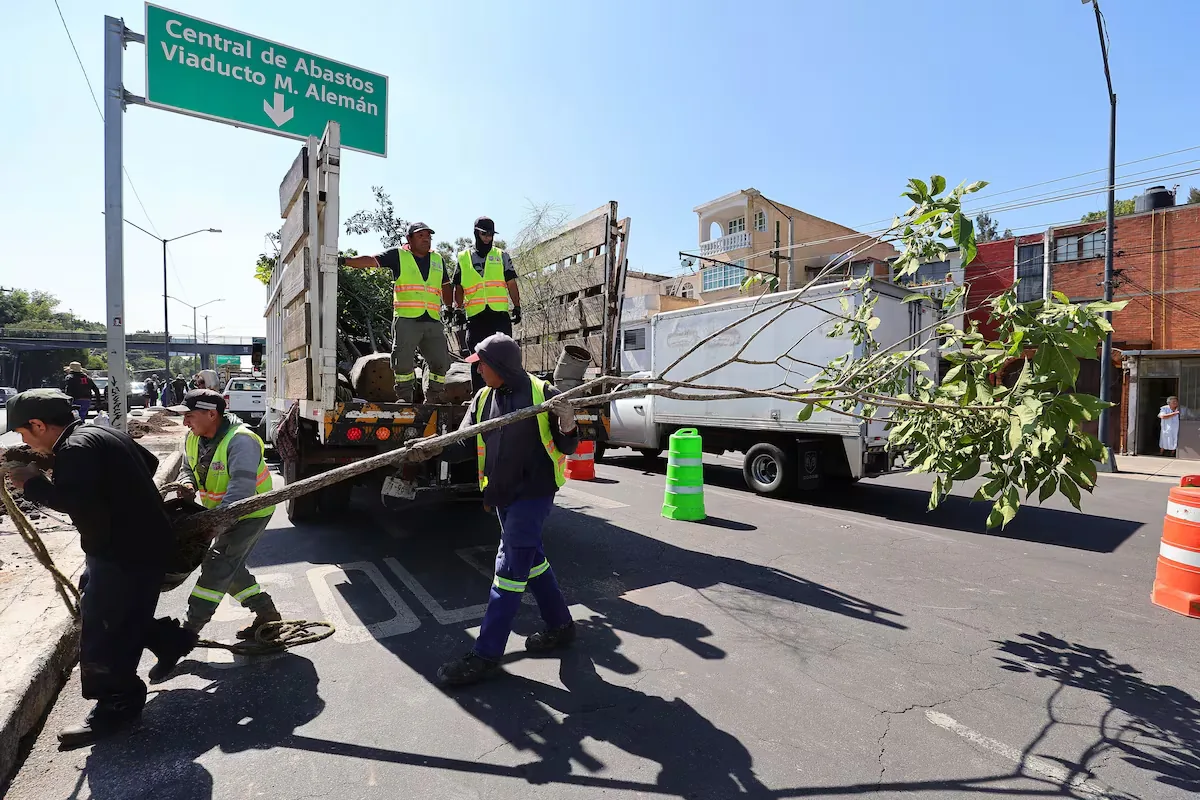
I remember that distant summer of 2022 when the city froze. For a couple of weeks, the main activity consisted of monitoring the fragile health status of the newly transplanted tree. We fed on press releases from the Government – and memes – that tried to inject hope into us: the tree was on the verge of a rebirth. Very quickly we understood that this tree, which was losing leaves at the same rate it was gaining followers, was opening itself to death as a possibility. The expectations carried by that ahuehuete tree in the Reforma roundabout seemed too many: to replace the royal palm that, after more than a century of being the image of the city, was dying, devastated by an uncontrollable plague.
Read more Érase que se Era
Four years later, on August 10, Clara Brugada announced her urban reforestation program that aims to cover the city with 500,000 trees. It echoes Claudia Sheinbaum’s national reforestation campaigns and her goal of planting more than 1.5 billion plants and trees across the country by 2030.
It seems like good news: many of us have the perception of losing trees in the city for decades. Neighborhood chats fill with complaints about pruning that is confused with lopping and leaves the tree bare, unbalanced, tangled in wires, ready to break in half with the arrival of the rains. And then, complaints as a prelude to fallen trees, reported by neighbors wandering through fog after the storm passes. The news sharpens that perception. Every so often, a row of trunks barely emerging from the ground appears on screen, accompanied by headlines about illegal logging done for some construction. But in reality, just walking the city is enough to confront the inevitable palms. Dead, but standing: they seem to resist oblivion.
However, our perception is nothing more than a fragile construction of reality. We need data to know the number of trees in the city, we need historical figures to compare if we are better or worse and how many trees we need – they will never be enough.
Jorge Liber Saltijeral, advisor to the Secretary of the Environment of Mexico City, tells me that until very recently the city only had an inventory of urban green areas published in 2017. It had been a count based on satellite images supported by large approximations. It was resolved by talking about percentages of vegetation, without giving details about the number of trees, species, or much less about their health status.
I then wonder how to develop a solid urban reforestation strategy when historically we have a deficiency in data. What is the Government’s perception of the trees in the city? What reality will it choose to build?
Liber tells me that, due to the inaccuracy and age of the inventory, the Government decided to develop the city’s first tree census, designed in phases and aligned with the reforestation strategy. In its first stage, it managed to estimate the number of trees from satellite images and at street level. It shed light on something already intuited: inequality is also green. From above, the poorest neighborhoods are identified by the absence of trees. If we get closer, the contrast is also physical: when the landscapes are concrete, temperatures rise from two to five degrees.
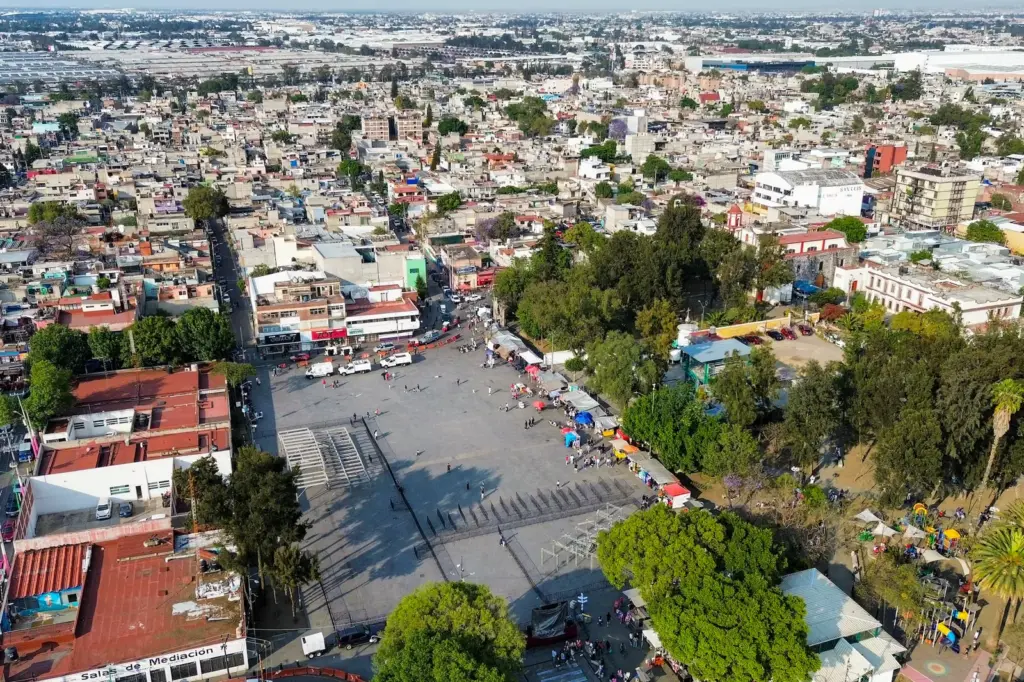
The census was input to select priority reforestation polygons: lower vegetation cover, greater social inequality, but also higher temperatures; with the aim of addressing the critical points of heat waves.
Read more The reforms that democracy can no longer postpone in Colombia
In its second phase, the census will provide details about the height and health of the trees. And, above all, the species, to understand which are less vulnerable to pests, prioritize native species and those that do not accentuate ozone generation, the biggest air quality problem in the city.
In a global context where more and more cities oscillate between deadly heat waves and floods, the trend is to alternate open vegetation spaces with dense concrete points. That is, to let nature invade us or, in environmental jargon: introduce nature-based solutions (NbS). These mitigate climate change, fight heat waves, and reduce the impact of floods. They contrast with technological solutions such as, for example, artificial sinks for carbon capture in soils, which tend to be more costly and less effective.
I resist using the NbS mention because it hides a way of thinking, acting, seeing the world: solutions as something utilitarian, tools at our service with, perhaps, some benefit for other species, positive but unplanned, a fortunate accident, barely collateral in the matter. Letting oneself be invaded by nature, on the contrary, suggests nature as an active being that exists and reacts beyond the benefits it provides us. And letting oneself be invaded also as that blurring of the boundary between us and the others, them, nature and its species.
The central Government is pushing the greening of the main arteries, but it will be the responsibility of the boroughs to continue and expand the project.
I then think about the role boroughs can play if they expand their budget to plant trees, provide maintenance and care, offer training to improve pruning. They also have the opportunity to reinforce the census through field counts: the intimate stories about the life of trees are not revealed to those who observe from above. Imagine, then, the census as that living root-document that absorbs information gathered from the source, that inspires and modifies a flexible reforestation strategy, capable of adapting to the changing reality supported by data.
And thus, build, little by little, a city nourished by its urban forests. Anthropologist Anna Tsing talks about those friction spaces where nature opens possibilities: physical porosities that connect us with other species. Letting oneself then be contaminated to co-create more biodiverse cities, more livable cities. Contact zones that widen, blur the boundaries of our old worlds to seek new points of balance and in doing so, prepare us for other ways of existing.
Read more Mexico City opens Pandora’s box of dispossession: «My daughter took my house»