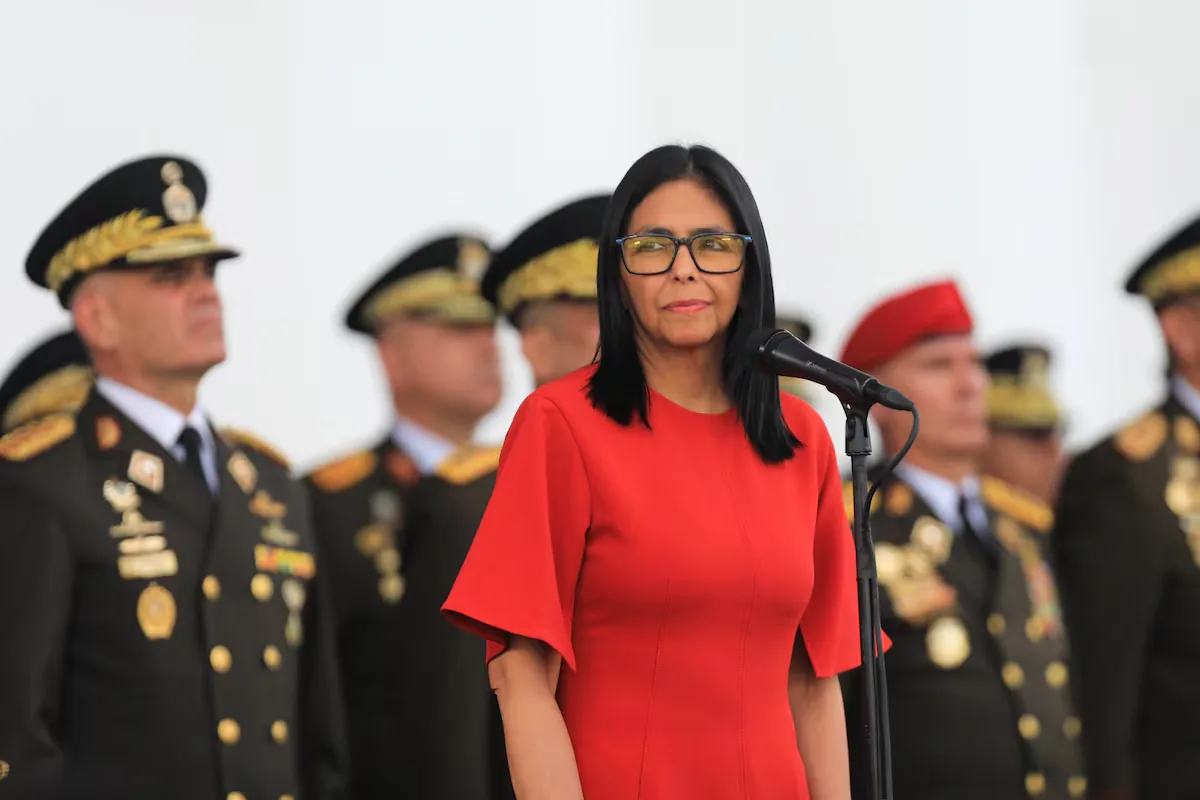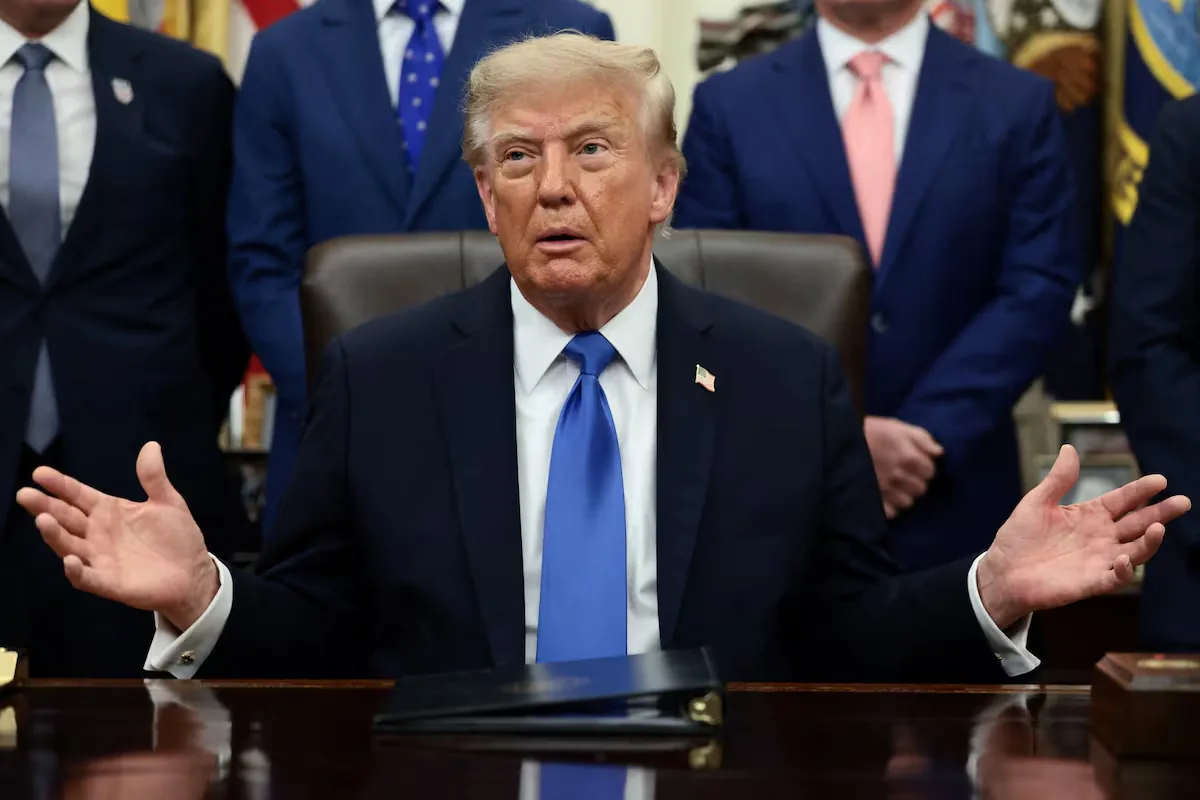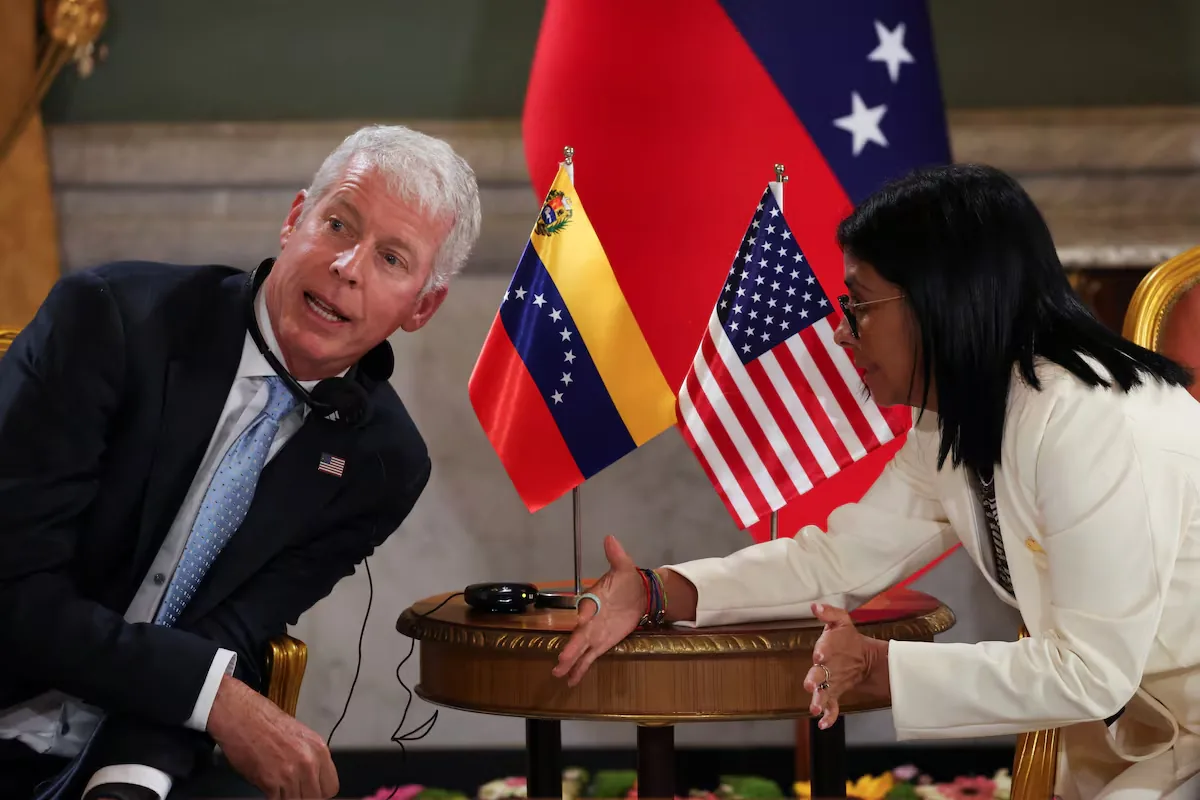
The United States will become the owner of a large part of Venezuela’s oil sector. This was announced by President Donald Trump, proclaiming a surprising and enormous agreement with the government of Delcy Rodríguez in Caracas, through which Washington will gain majority control over one-fifth of Venezuela’s oil reserves — the largest in the world, estimated at 300 billion barrels — and will double its current reserves. The Venezuelan interim president has confirmed the “historic” pact.
“Under my direction, Secretary of State Marco Rubio and Secretary of War Pete Hegseth, in close collaboration with the highly respected interim president of Venezuela, Delcy Rodríguez, and through a partnership with the private sector, have secured for the United States majority control of more than 65 billion barrels of proven oil reserves in Venezuela, at no cost to the American taxpayer,” the Republican wrote on his Truth Social account.
“This historic transaction MORE THAN DOUBLES U.S. oil reserves, significantly increases our oil supply, and will substantially reduce gasoline prices for all Americans in the long term, while helping Venezuela continue to move toward tremendous success and great prosperity,” the announcement made by Trump this Friday continues.
In a parallel statement, Rodríguez explains that the pact foresees “the development of 17 strategic fields, with a proven potential of 65 billion barrels of oil, an investment of more than 100 billion dollars, and more than 209 billion dollars in taxes for the state.” These investments, she claims, “will contribute not only to the recovery and modernization of our industry but also to the economic growth of our country, the energy security of our hemisphere, and greater balance in international markets.”
The agreement, which currently includes the oil company Chevron and the service provider Halliburton, according to the Wall Street Journal, doubles U.S. proven reserves.
The agreement also comes at a time when another type of reserves — strategic reserves, resources already extracted from underground and stored for tense moments like the current one, with the Strait of Hormuz closed — are also at four-decade lows. These deposits are at 41% of their capacity, consumed to counteract fuel price increases following the COVID pandemic and the war in Ukraine first, and the war in Iran later.
In a message on the social network X, Marco Rubio called the agreement “a huge victory for both parties,” which will allow Washington to acquire “stable and low-cost crude reserves in our hemisphere, and lower gasoline prices in our territory.” For the people of Venezuela, he added, “this agreement will bring nearly 100 billion dollars in private investments, support thousands of well-paid jobs, and be the engine of the reconstruction of their country’s economy.”
The Venezuelan interim president, for her part, has assured that the agreement “will have a significant impact on the country’s rebirth.” The initiative “will facilitate an important flow of investments aimed at the recovery and reconstruction of strategic infrastructure for the development of our hydrocarbon industry.”
Betancourt, key figure
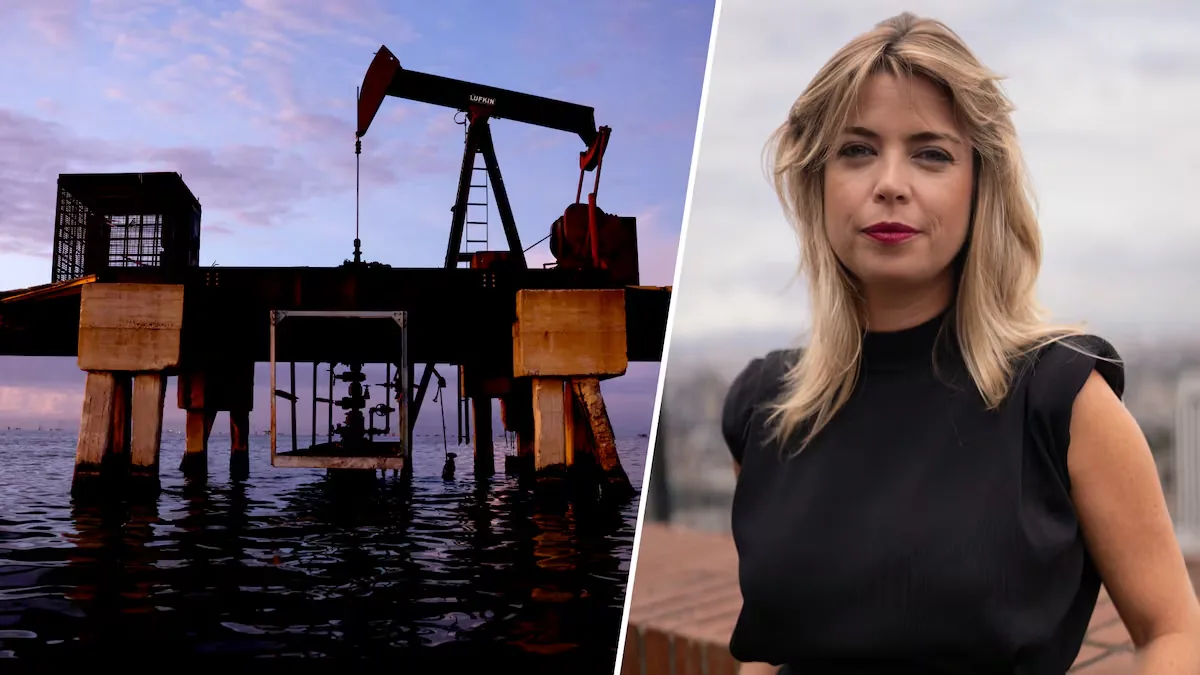
Trump has not detailed how this historic operation will be executed in practice, but Bloomberg and other sources have revealed that behind the deal is Venezuelan businessman Alejandro Betancourt, investigated for money laundering in Switzerland and Spain.
Despite the suspicions surrounding Betancourt and the rejection he provokes in his country, the businessman is today a central actor in shaping the new Venezuela with invaluable help from Washington. Betancourt is the majority partner of North American Blue Energy Partners, Venezuela’s second-largest producer after Chevron, and has been working for Washington’s interests for months. “He has been invaluable to the U.S. government,” said Mauricio Claver-Carone, until a few weeks ago an unofficial envoy in Venezuela, to the Washington Post.
Read more This summer 2026 is going to be the hottest since records began in mainland Spain
The Post itself revealed this Thursday, confirming and expanding information previously reported by EL PAÍS, that Washington’s protection led to high-ranking U.S. officials intervening directly to resolve the Swiss criminal case against Betancourt without him facing charges. The U.S. intervention allowed the lifting of movement restrictions that kept him confined to his two mansions in the United Kingdom.
Since June, Betancourt has been traveling on private planes from Europe to the United States and from there to Venezuela. Prosecutors, despite lifting travel restrictions in May, extended the international arrest warrant against Betancourt and sent a request to the U.S. Department of Justice to arrest him there.
Since the U.S. military operation that kidnapped Nicolás Maduro in Caracas on January 3 to take him to New York for trial on drug trafficking charges, Trump has constantly referred to Venezuela’s oil as his main focus in the South American country, which has become a de facto protectorate since then. The three-phase reconstruction plan proposed by his Secretary of State, Marco Rubio, initially foresees as the first objective the stabilization and reconstruction of the oil sector; elections were left for the final stage. Since the capture, Washington has closely overseen Venezuela’s energy sector from a bank account in New York.
Control of the oil is perhaps one of the decisions that most clearly exposes the immense power Trump wields over Venezuela, which he has called on several occasions his “51st state” (referring to the 50 U.S. states). Many Venezuelans applauded the U.S. intervention that removed Maduro from power, but months later concern is growing in various economic and political sectors over the opacity and arbitrariness with which the Americans act, with the help of Delcy Rodríguez’s government.
A source in the oil sector acknowledges the dilemma. “We had fields that had been idle for years or producing well below capacity, which now generate royalties, taxes, and jobs that did not exist before,” he explains. “But one thing is that field development benefits the country and another that Venezuela is forced to sign precisely with whom Washington decides.” There is also no transparency or many filters. “It was expected that the OFAC — the U.S. Treasury office that authorizes these operations despite sanctions — would act as a filter for new licenses, discarding unreliable operators, but that has not happened. There are companies with known track records in the sector, but also others whose real identity no one seems to know for sure.”
Since U.S. special forces captured Maduro to transfer him to New York, where he awaits trial for drug trafficking, Trump has put all his people to make money. According to U.S. press estimates, Washington has already collected more than 13 billion dollars from the sale of Venezuelan crude, although the Republican claims the real figure is even higher. Trump himself maintains that this money has covered “several times” the cost of capturing Maduro, although there is no public audit to verify that account. Nor any other.
The contrast between this rain of millions and what reaches Venezuela, drop by drop, is seen in its streets. Spending capacity remains suffocated, public services remain deficient, and power and water outages persist. Annual inflation is around 600%, and the minimum monthly income — about 240 dollars, mostly distributed via bonuses — covers less than half of a basic basket that exceeds 500 dollars. The country is immersed in a two-speed economy: the oil sector and state accounts improve, while the daily life of Venezuelans remains stuck in the same old crisis. The bilateral relationship that many compare to that of a kidnapper and his hostage has yet to improve citizens’ wallets.
Negotiations had been ongoing for months, but their pace accelerated recently as urgency increased for the Trump Administration. The November midterm elections, in which Democrats and Republicans compete for majorities in Congress, are just around the corner. Polls warn that Trump’s Republicans could suffer a harsh blow from voters concerned about high prices in general and gasoline prices in particular. The president had returned to the White House promising a great economic boom and laughably low prices.