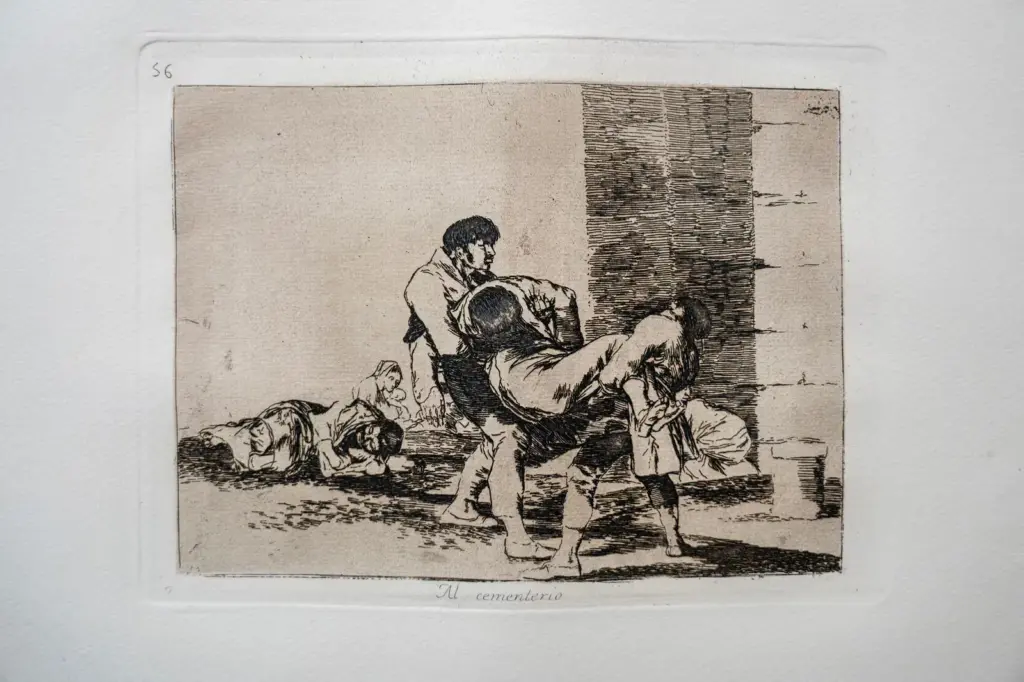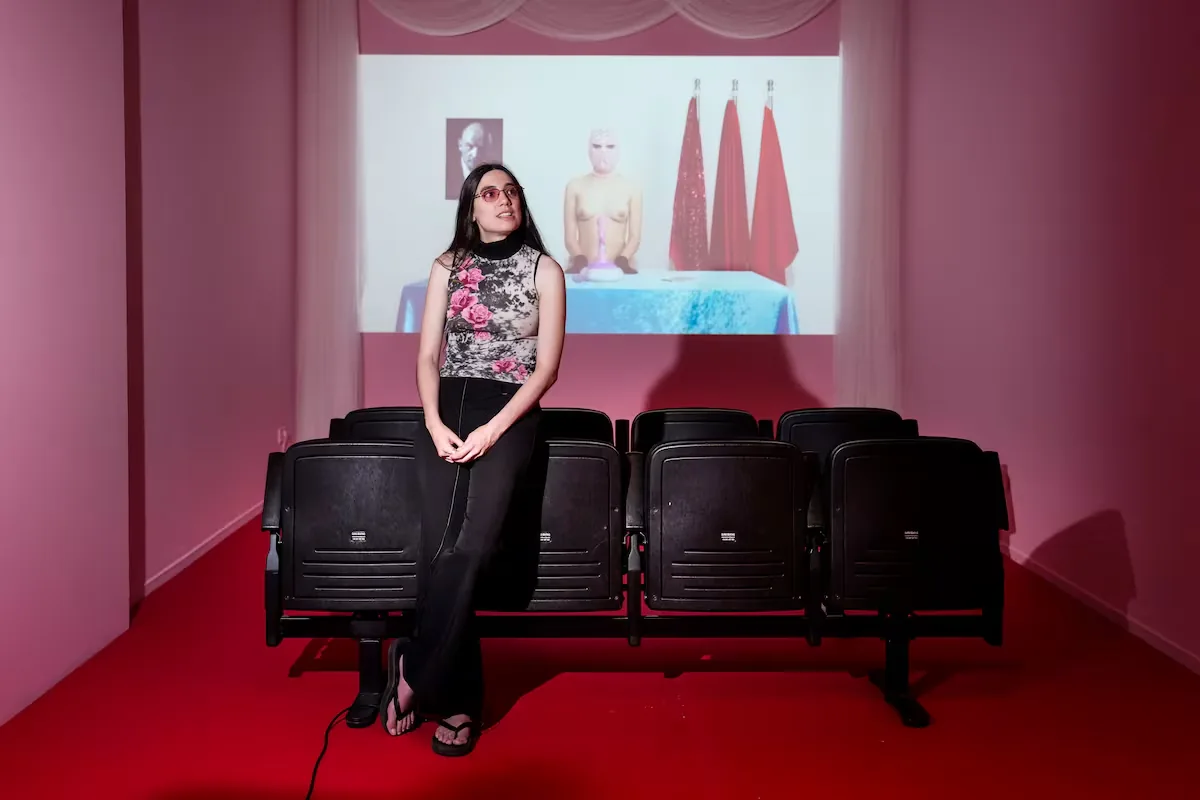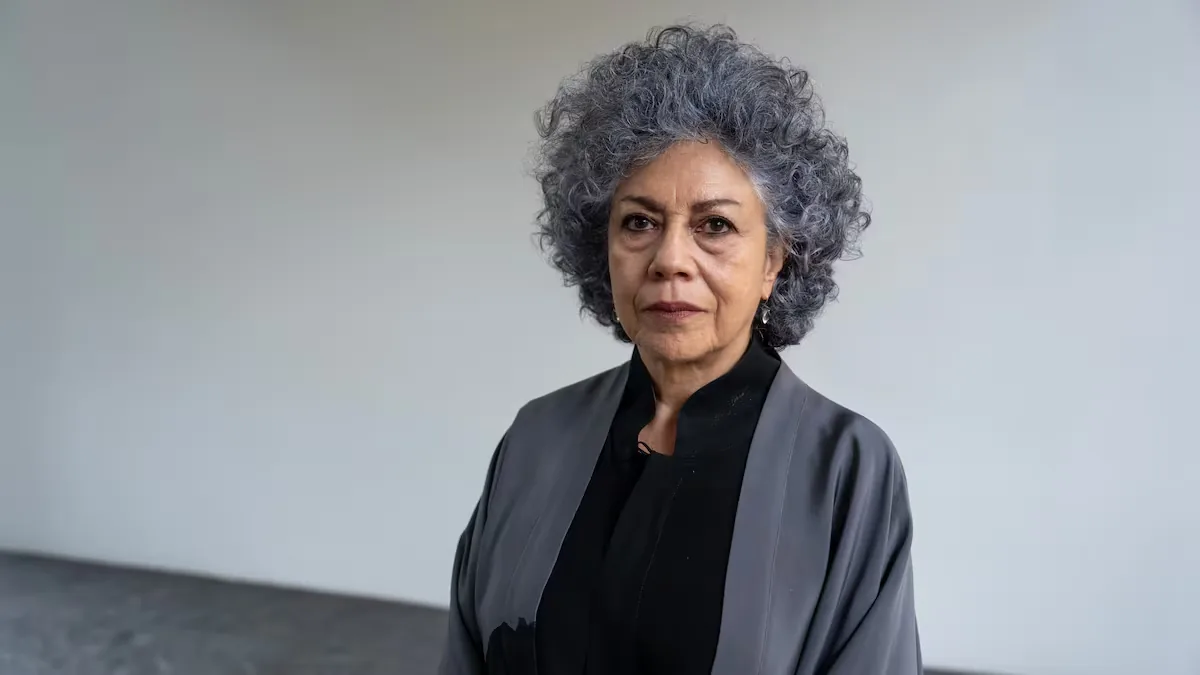
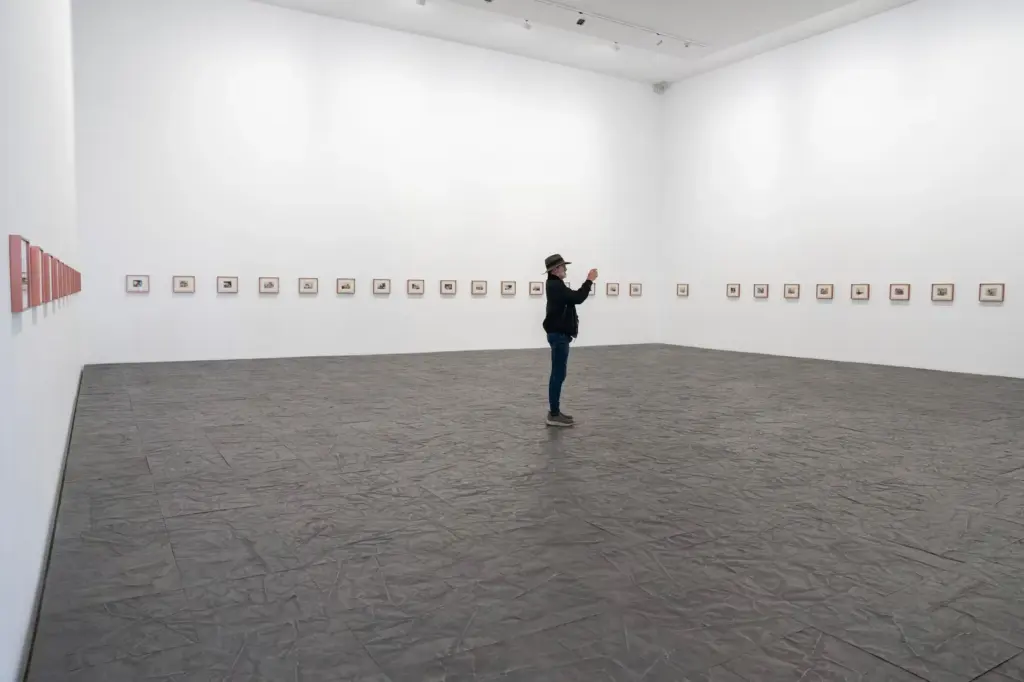
Colombia still suffers the horrors of its multiple violences. Almost ten years after the peace agreement with the FARC, and with the arrival of a new government that closes the door to any new attempt at dialogue, The Disasters of War, the series of engravings in which Francisco de Goya focuses on the victims, is exhibited from September 5 at Fragments, the counter-monument that stands in the historic center of Bogotá. This significant space of art and memory was built from the melted rifles of the extinct guerrilla, designed by Doris Salcedo, one of the most valued Latin American visual artists in the world.
Read more Let the people not decide
The Goya exhibition brings together the complete series of 80 engravings, made between 1810 and 1820, in which he illustrates the most devastating consequences of the Napoleonic invasion of Spain and the War of Independence. These engravings will be accompanied until January 17 of next year by seven poems by authors from different countries. In addition, three choral and memory actions will be carried out during the coming months.
“Goya gives us the great lesson about what war is. First, he removes the heroic character; second, he completely eliminates the nationalist character. He simply shows that war is pure brutality, that it is ignorance and that the only thing it brings is death,” explains Salcedo. “He shows us the rapes, forced displacement, extrajudicial executions, torture, impalement, famine,” details the renowned Colombian artist. “Also the return of ignorance, because the Inquisition returns; the violence that religion exerts over the people. All these elements we see absolutely reflected in Colombia today,” she adds about the relevance of The Disasters of War. Many of those scenes, she values, directly refer to the very horrors of the Colombian armed conflict, to massacres like that of El Salado, perpetrated by paramilitaries in 2000.
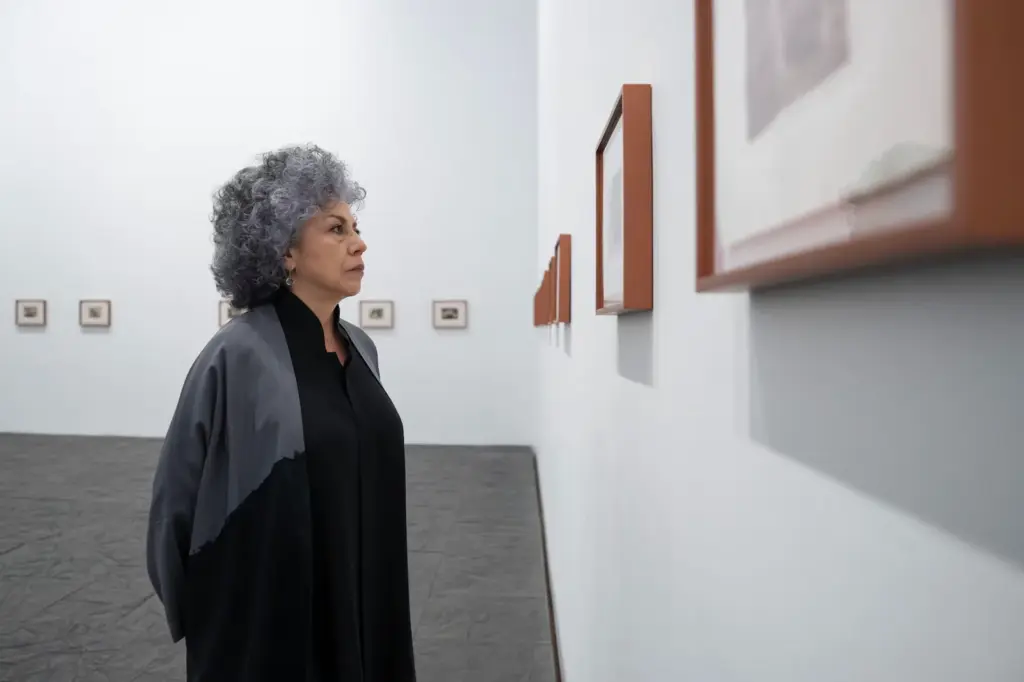
“Fragments represents for Colombians a possibility, the possibility of ending conflicts without killing each other, without bloodshed, without firing a bullet. It represents the possibility of agreement, of dialogues, of talking, of understanding each other as rational beings that we can be,” reflects Salcedo. “What we wanted to do by juxtaposing Fragments with this extraordinary work by Goya is to show Colombians the options we have. Either we continue down the path of war, ignorance, religion, class differences, everything that Goya is showing us, or we have the possibility of making a social agreement that leads us towards a peaceful and livable community life for all.”
The exhibition arrives at a delicate moment, when Abelardo de la Espriella has not yet completed his first month as president of Colombia but promises the return of a hard line on security, rules out any peace negotiation, and is very critical of the institutions born from the agreement with the FARC. He also announces raids against undocumented immigrants, even spoke of “gutting” the left – although he later softened his words – and persistently promotes a “cultural battle” that includes, among many other fronts, the Ministry of Culture itself.
Fragments, with its enormous symbolic weight, is the product of the peace agreement sealed at the end of 2016. The Goya exhibition confirms the vocation with which it was conceived as a space dedicated to the victims of the many violences that have crossed Colombia. It was built with the melted metal of 37 tons of weapons handed over by former FARC combatants, with a floor of 1,300 metal plates hammered by women who suffered sexual abuse in the armed conflict. It is located in an old mansion a few meters from the Casa de Nariño, the traditional seat of government, and is also intended as a museum to host, every year and for more than half a century, the time the war lasted, exhibitions by Colombian or foreign artists.
Read more The unbearable hypocrisy surrounding AI
Salcedo has been deeply committed to that peace agreement – and to the Truth Commission, which delivered its final report in 2022. On more than one occasion, she has turned to Bolívar Square, the political heart of the country, a few blocks from Fragments. There she installed Quebrantos, an intervention to denounce the weariness of Colombian society in the face of the assassination of social leaders. That was also the setting for Sumando ausencias, a huge white shroud with 11 kilometers of stitches sewn by 10,000 people that collected the voice of the victims amid the clamor to rescue the peace agreement, days after the plebiscite in which the original pact was narrowly rejected. With her work, she has insisted again and again that Colombians are not condemned to new cycles of violence.
With a long list of international awards, ranging from the Velázquez in Spain to the Nasher in the United States and the Nomura in Japan, Salcedo has achieved great success with the crack of the installation Shibboleth at the Tate Modern in London, has exhibited at the MoMA in New York, the Pompidou in Paris, and also at the Palacio de Cristal of the Buen Retiro in Madrid with Palimpsest, her tribute to migrants who died at sea.
In The Disasters of War the number of images about migrants and forced displacement also impresses, Salcedo highlights. Colombia is the main host country of the diaspora from neighboring Venezuela, and one of the poems accompanying the engravings is Casa (Home), by Warsan Shire. “You have to understand / that no one puts their children on a boat / unless the water is safer than the land,” reads one of its passages.
“Those cultural battles are obviously leading us to violence,” laments Salcedo. “I invite you to see the exhibition carefully and analyze each of these images, where Goya shows us how sad the return of the Inquisition was for him, which also investigated him, and how terrible it was for Spain. Let’s hope that artists in Colombia do not have the same fate. Let’s leave that in the past. Let’s trust that there will be an opening and that it is understood that culture has to do with knowledge and with an open view of what a society is.”