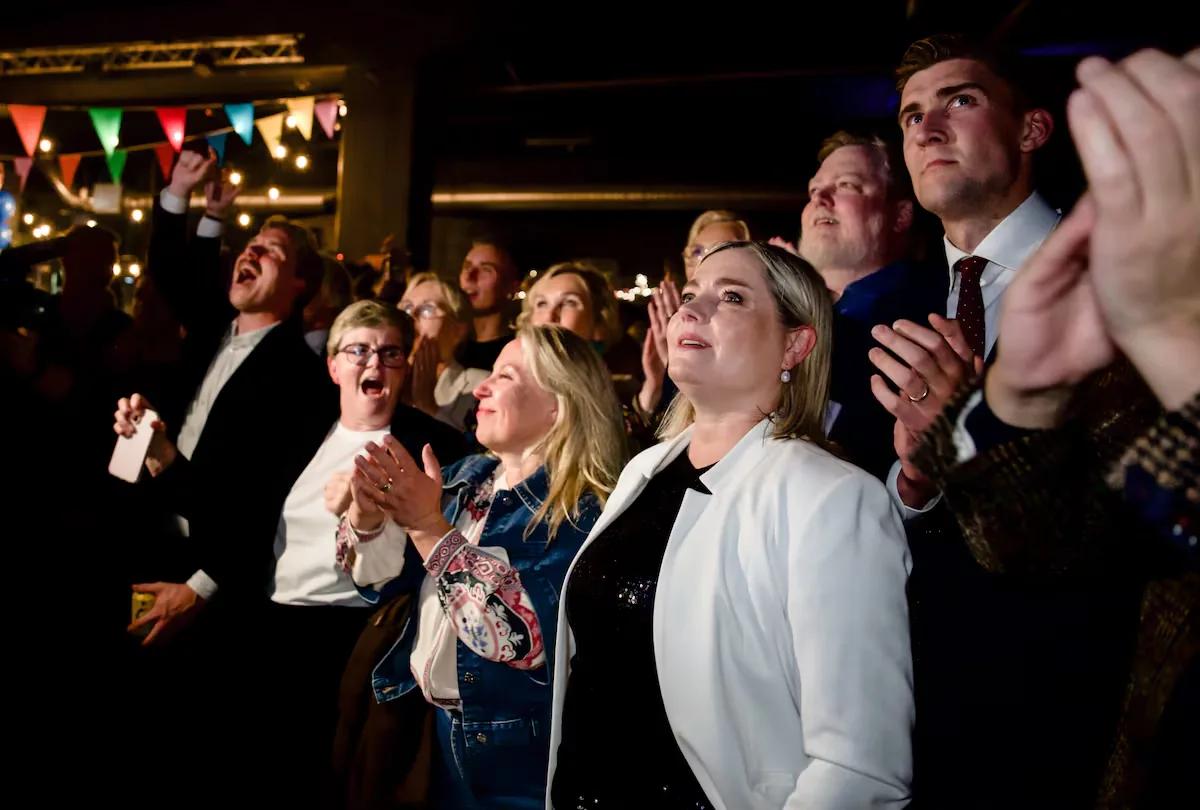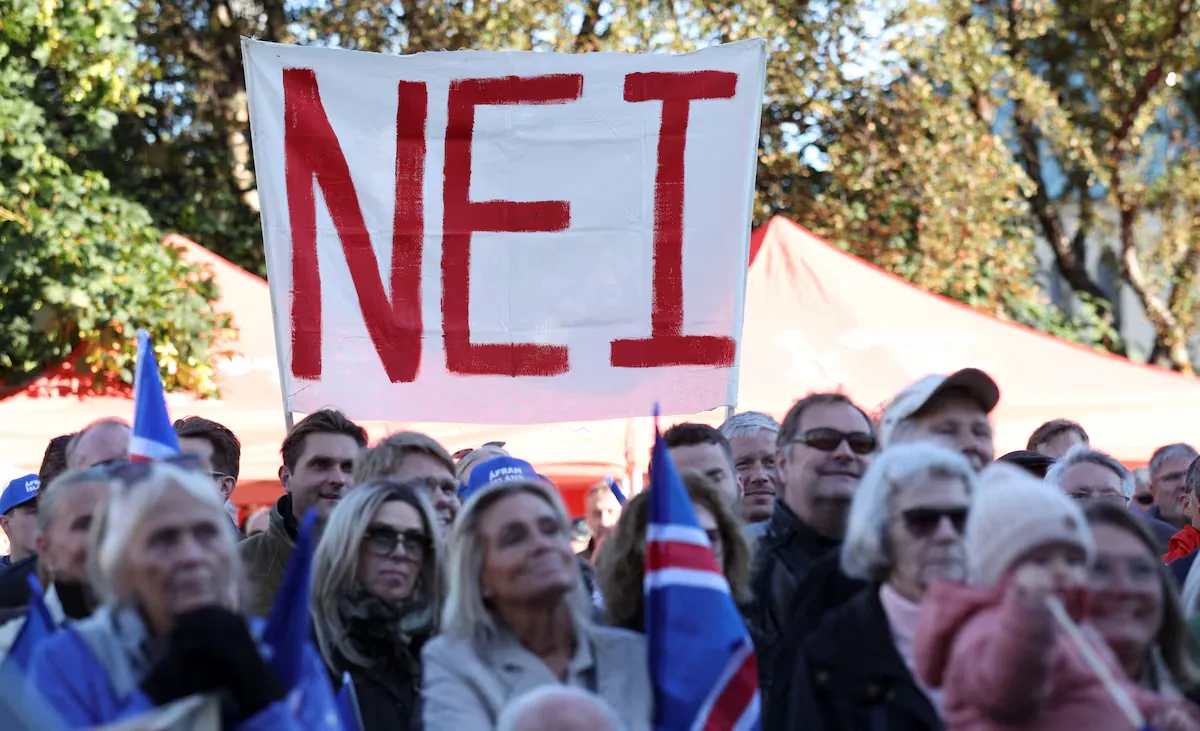
The population of Iceland decides this Saturday at the polls whether to reopen accession negotiations with the European Union, suspended for more than a decade, in a consultation that is expected to be very close. The cost of living, control of natural resources — especially fisheries — sovereignty and, to a lesser extent, security have been the predominant issues in the electoral campaign. A victory for the pro-European option would not imply entry into the community bloc, but the resumption of a negotiating process with Brussels to establish the terms of integration. Once set, Icelanders would vote again in a referendum.
Read more Trump announces a deal with Venezuela to take control of part of its oil reserves
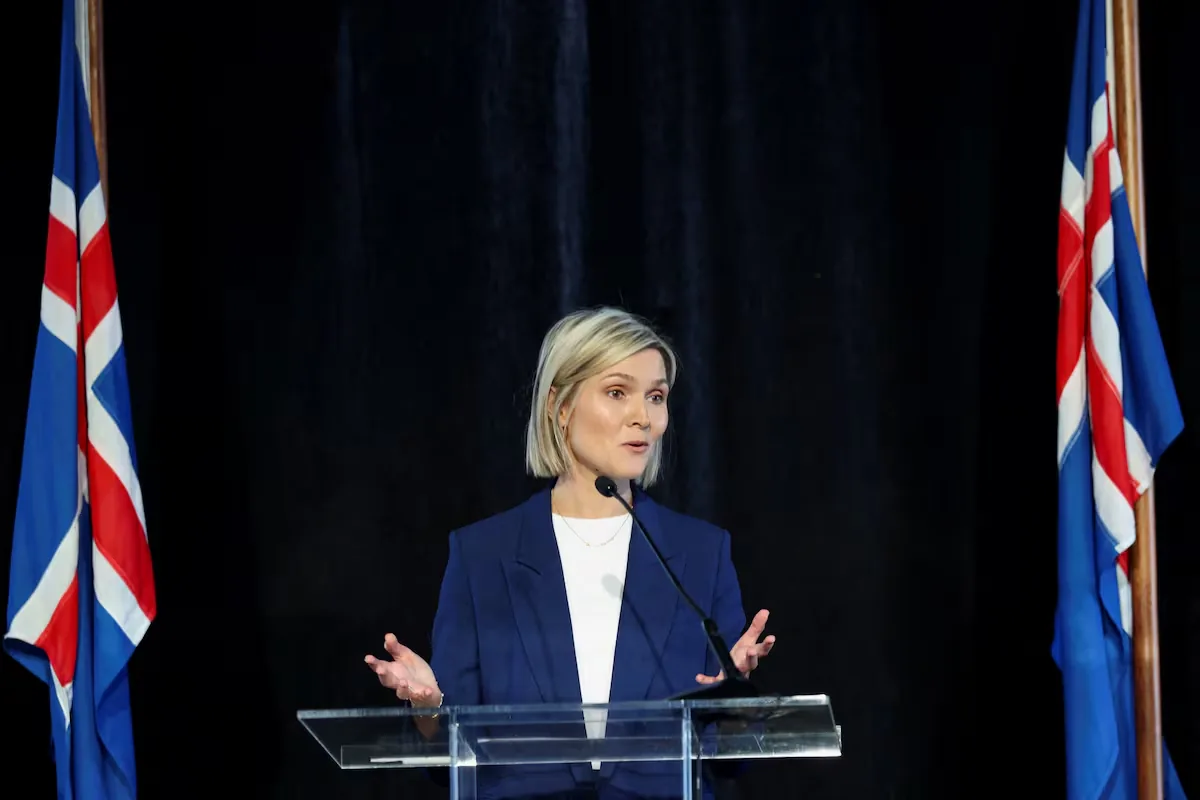
Iceland applied for EU membership in 2009, less than 12 months after the global financial crisis caused the collapse of its banking system. The negotiating process was suspended after four years of talks, when a Eurosceptic government took power. The return to the European path occurred at the end of 2024, with the formation of a center-left government led by social democrat Kristrún Frostadóttir.
The head of government announced her intention to hold a referendum in 2027 as soon as she took office. However, last March, after Donald Trump’s threats to forcibly annex neighboring Greenland to the United States, she decided to accelerate the process. “It is no secret that the situation has changed enormously over the last year and a half,” Frostadóttir said. “We are seeing how the US uses tariffs as instruments of commercial coercion and as a weapon,” she argued before emphasizing that the growing appetite for the Arctic by the world’s major powers places Iceland in a more vulnerable position than a decade ago.
In a country without its own army, although a founding member of NATO, geopolitical uncertainties have helped reactivate the European debate, but the campaign ended up marked by issues related to citizens’ wallets. “The Icelandic krona is the smallest independent currency on the planet and our economy suffers frequent episodes of inflation and very high interest rates,” explains Thórhildur Sunna Aevarsdóttir, spokesperson for Evrópuhreyfingin (European Movement). “Adopting the euro would probably lower the costs of mortgages and loans,” she argues.
Iceland is part of the European Economic Area, along with Norway and Liechtenstein, so it has access to the single market, but at the same time is obliged to adopt much of European legislation without any decision-making capacity. “The no campaign argues that joining the EU would mean a loss of sovereignty. We believe just the opposite,” says Aevarsdóttir. “We already incorporate numerous community rules without participating in legislative processes.”
The discussion around sovereignty takes on a particularly sensitive dimension when it comes to fishing, a sector that, despite having lost weight in recent decades, still represents more than a third of the country’s exports and around 7% of its GDP. The possibility that Brussels might have some decision-making power over national fishing grounds continues to arouse suspicion among a significant part of the electorate and explains the strength of the Eurosceptic camp.
Frostadóttir’s government has reiterated during the campaign that fishing would be a red line in hypothetical negotiations with Brussels. Likewise, it has insisted that an agreement can be reached that preserves the management of fishing grounds, the distribution of catches, and restrictions on foreign ownership in the sector. In the same vein, European Fisheries Commissioner Costas Kadis said in spring that “there is undoubtedly room for flexibility” regarding Icelandic fishery resources. Marta Kos, responsible for Enlargement, has also opened the door to “creative solutions.” If the Icelandic population supports reopening negotiations with Brussels, Frostadóttir’s government estimates that talks could begin by the end of this year and last between 18 and 24 months.
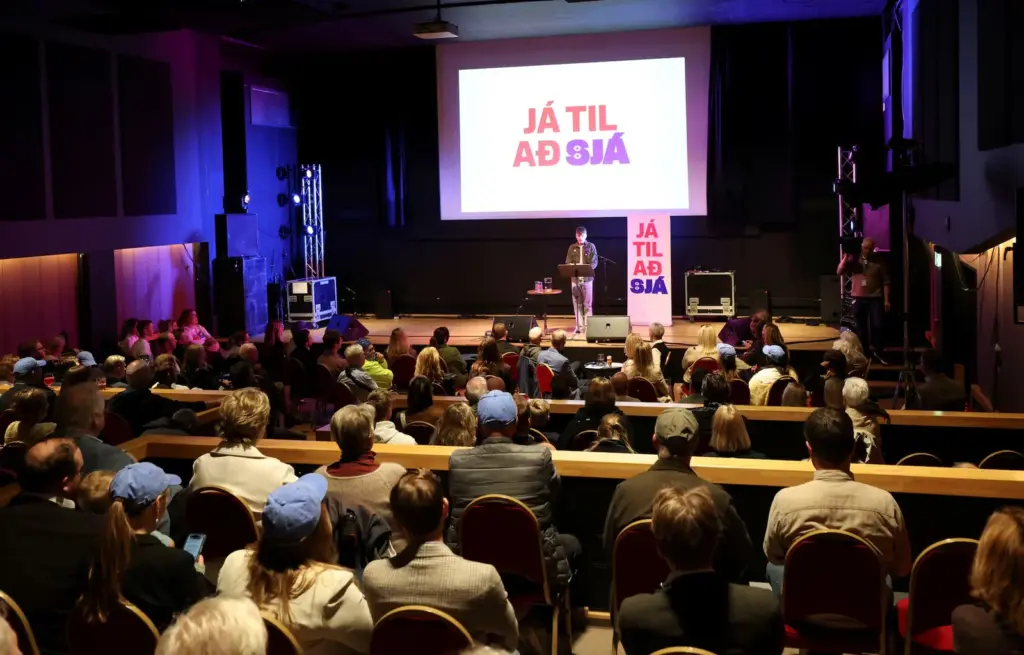
Opponents of accession consider it unrealistic to trust those promises. They recall that the negotiations suspended in 2013 did not even address fishing and agriculture in depth. Egill Gautason, professor at the Agricultural University of Iceland and a firm opponent of accession, maintains that Brussels already rejected granting significant exceptions then and sees no reason to think the position has changed. “I don’t think the EU is willing to offer special agreements now that it didn’t want to offer a few years ago,” he says.
The sensitivity aroused by control of natural resources is closely linked to the country’s recent history. Iceland gained its independence from Denmark in 1944 and many opponents of accession consider that the ability to decide on matters such as fishing is one of the pillars of that sovereignty. “In one hundred years we have gone from being one of the poorest countries in Europe to one of the richest in the world. I think that happened because we became independent and trusted our capabilities,” defended Gudrún Hafsteinsdóttir, leader of the Independence Party, the main political force against integration into the community bloc, on Thursday in a televised electoral debate.
Rejection in rural areas
The debate about the EU draws a clear divide between urban and rural areas. Support for reopening negotiations is higher in Reykjavik, the capital, while in the more isolated regions dependent on fishing and agriculture a deep rejection is expected. If Iceland were to become the 28th community state, it would become the member with the smallest population. However, it would be the eleventh largest by area.
After months of very close polls in which the pro-European option seemed to have a slight advantage, a Gallup survey published this Friday predicts a narrow victory for no (51.6%).
Polling stations will close in Reykjavik at 22:00 (midnight in mainland Spain) and a few hours earlier in the rest of the country. The result may not be clear until well into the early hours of Sunday.
Read more This summer 2026 is going to be the hottest since records began in mainland Spain