








A reward of 15 million dollars was offered for their uncle: until his death in February, he was considered one of Mexico’s most feared drug traffickers. They, on the other hand, have built lives in the opposite direction: they reside in California and work in government agencies. They represent the other side of the Oseguera family, the one that grew up on the sidelines of the trail of destruction left by their uncomfortable relative, Nemesio Oseguera Cervantes, El Mencho, who was the boss of the Jalisco New Generation Cartel (CJNG).
Read more Mexico redesigns energy investment rules: without social license, projects do not advance
El Mencho’s nieces first came into the public eye to offer support to the capo’s daughter, Jessica Johanna Oseguera González, when she was imprisoned in Washington D.C. for managing several businesses that, according to the U.S. Department of the Treasury, laundered money generated by drug sales.
This drug lord’s eldest daughter led a double life: she traveled to tourist destinations in the U.S., shared with her relatives, and posed as a legitimately successful businesswoman; but, in secret, she exploited the cartel’s resources, reviewed its dark accounting, and met with her mobster father. One of those encounters took place in some cabins in Jalisco where, according to the government’s version, the former CJNG boss was shot by security forces. He would lose his life while being transported to a high-security prison in central Mexico.

Despite what authorities revealed about Jessica Johanna, four of her cousins wrote letters to the judge handling her criminal case. In the letters, to which EL PAÍS had access, they described her as an exemplary woman, an emotional support who frequently visited them in California, a mother concerned about the good upbringing of her children. They advocated for La Negra, as she has been nicknamed since childhood, even at the cost of exposing the government agencies where they worked: the San Francisco school district, a public school in Hemet, and a Riverside county hospital.
Barbecues and visits to Disneyland
“We grew up together, always lived together and took care of each other. She has always been someone who strives to achieve more in life,” wrote Arlette Oseguera in her letter, who is an administrative assistant at the Hilltop school for teenage mothers, which is part of the San Francisco Unified School District (SFUSD). “I lived with her for some time in Mexico… She always made sure that I didn’t lose focus on my goal and kept striving.”
Arlette Oseguera has been on the SFUSD payroll since 2008, when she joined as a security guard. She climbed the ranks to become an administrative employee, earning a salary of over 80,000 dollars annually, according to public records. The main mission of the Hilltop institute, where she works, is for pregnant teenagers to complete high school, providing childcare and other services, while they focus on studying.
In a one-page text, Arlette stated that she remained in contact with La Negra, whose father —at that time— was one of the most wanted capos in the world. “When she comes to California, she always notifies us in advance so we can get together. We usually have family barbecues and a good time together, and we also make sure our children meet and have the same connection as us,” the letter reads.
Another of El Mencho’s nieces, Melissa Ruiz Oseguera, has worked since 2013 as a security guard at the Tenderloin public elementary school in San Francisco. Among the anecdotes about La Negra described in her letter are visits to Disneyland amusement park in Anaheim, childhood memories, frequent meetings, and a trip to Mexican lands.
“I’ve known her my whole life. She’s my older cousin and always looked after me. I remember as girls we were always at each other’s houses, playing and having sleepovers… I remember visiting her in Mexico in the summer and she always made sure we had a good time,” she recounted.
In the cartel’s accounting
But these descriptions of Jessica Johanna contrast with those made by the U.S. Department of Justice, which alleges that when El Mencho had already consolidated himself as a drug baron, he changed his eldest daughter’s lifestyle. Furthermore, it warned that she would have been involved in managing the cartel’s accounts.
From Guadalajara, her permanent home since 2001, La Negra crossed the border at least 33 times from 2005 to 2020. On one of those trips, she went skiing in Vail, Colorado, and declared to customs authorities that she was carrying around 10,000 dollars in cash, the Government revealed in court documents.
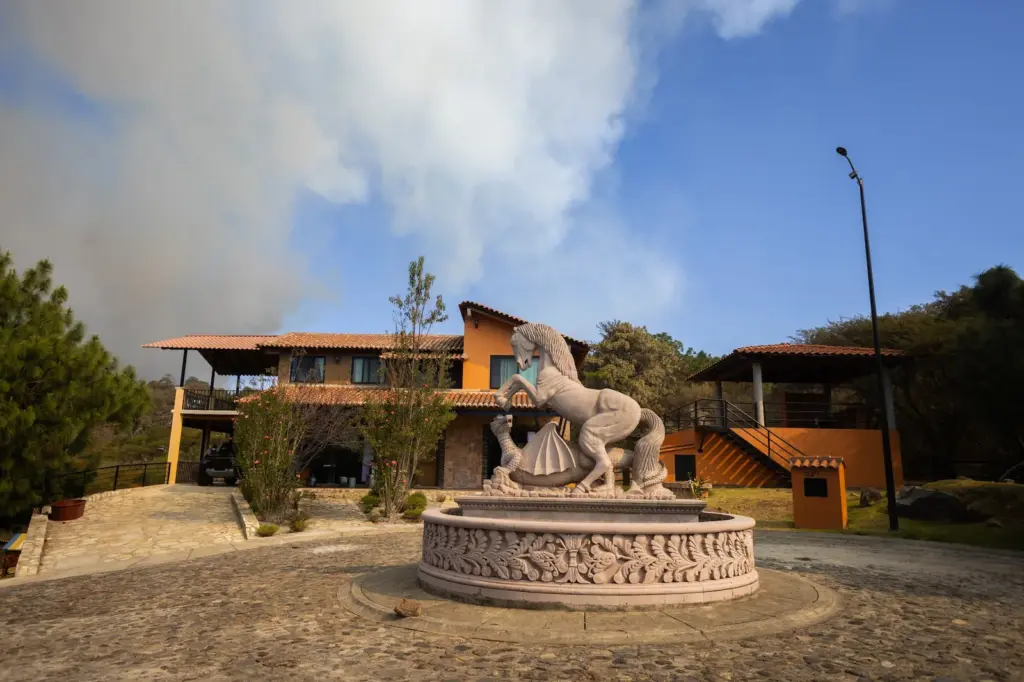
La Negra claimed that her income came from managing the Onze Black tequila brand, the Sushi Kendo and Mizu Sushi Lounge restaurants, the J & P Advertising company, and Cabañas Las Flores in Tapalpa, Jalisco. Authorities allege that a surgical operation to capture El Mencho was carried out in those cabins, after which he lost his life.
The U.S. Attorney’s Office stated that La Negra was somehow involved in managing her father’s finances. A government witness declared that they had seen Jessica Johanna and El Mencho meet several times in those cabins.
“This same witness would have declared that the defendant’s father entrusted her with the administration of the cabins” and that she performed CJNG accounting tasks, identifying discrepancies and debts, a sentencing memorandum states.
When her six businesses were flagged by the Office of Foreign Assets Control (OFAC) in September 2015, the mobster’s daughter thought that, to deceive the U.S. Government, it would be enough to change the complex’s name, from Cabañas Las Flores to Cabañas La Loma. She herself managed the business’s Facebook page, the Department of the Treasury discovered. “Still don’t know where to go on vacation? Cabañas La Loma in Tapalpa is an excellent option for family enjoyment,” read a post on the social network.
“My cousin inspired me”
Jessica Johanna was anything but a discreet woman. The day she was arrested in Washington D.C., she was wearing a Rolex watch, a Louis Vuitton coat, and a Hermès handbag, as well as “a considerable amount of cash,” the Government asserts. On one of her frequent trips to California, she participated in her children’s soccer tournament. On that occasion, she visited her paternal uncle, Marín Oseguera Cervantes, who lives in the city of San Jacinto, 100 kilometers east of Los Angeles. One of Marín’s daughters, Guadalupe Azucena Oseguera, was accustomed to sharing with her cousin. La Negra lived with them.
“My cousin inspired me to dedicate myself to teaching. She has told me to live in service to others and to help them grow; to contribute to the community and help society. As a working woman, she has been an incredible role model for me and for everyone,” wrote Guadalupe Azucena in a letter, who for a time worked as an assistant teacher in the Hemet School District, a neighboring town of San Jacinto. Since 2023, the young woman has worked as a public notary.
In that region known as the Inland Empire lives another niece of the former CJNG boss. This is Yadira Jacova Campos, who is a medical assistant for the Riverside County public hospital system. “All her cousins, nieces, and nephews love her very much. When Jessica comes to California to visit, her priority is to spend family time with all of us. If I am now dedicated to nursing, it is thanks to her great example,” Campos stated in her text.
None of El Mencho’s nieces mentioned in this report responded to messages sent by this outlet requesting an interview.
California laws do not require government job applicants to disclose that they are relatives of a high-profile criminal. In fact, the State has strict regulations, such as the so-called Fair Chance Act (Fair Chance Act), which requires employers to ask a candidate about their criminal record only after making a job offer. In contrast, the investigation process of law enforcement agencies is more intrusive and, from the outset, they look for links between applicants and individuals involved in organized crime.
Several relatives of El Mencho and his wife, Rosalinda González Valencia, sister of the leaders of the criminal group known as Los Cuinis, the financial arm of the CJNG, reside in Southern and Northern California. In the 1980s, El Mencho emigrated to San Francisco and engaged in drug dealing. The Osegueras settled in that and other cities in the Bay Area, several of them permanently. There, the capo’s three children were born: Jessica Johanna, Rubén, and Laisha Michelle. In 1989, the police arrested him for selling heroin. He spent a few years in federal prisons until he was deported to Mexico.
A string of La Negra’s school diplomas, which are in her criminal record, show constant moves since she was a child: from San Francisco to the Mexican border (Chula Vista and Playas de Tijuana) to study high school in private institutes. Later she went to Morelia, Michoacán, and then to Guadalajara, Jalisco, where she attended university. Years later, she stopped selling cheap clothes she bought in Los Angeles’ Fashion District and, out of nowhere, acquired several businesses, money, and high-end items.
Read more Labor informality in Latin America and the Caribbean