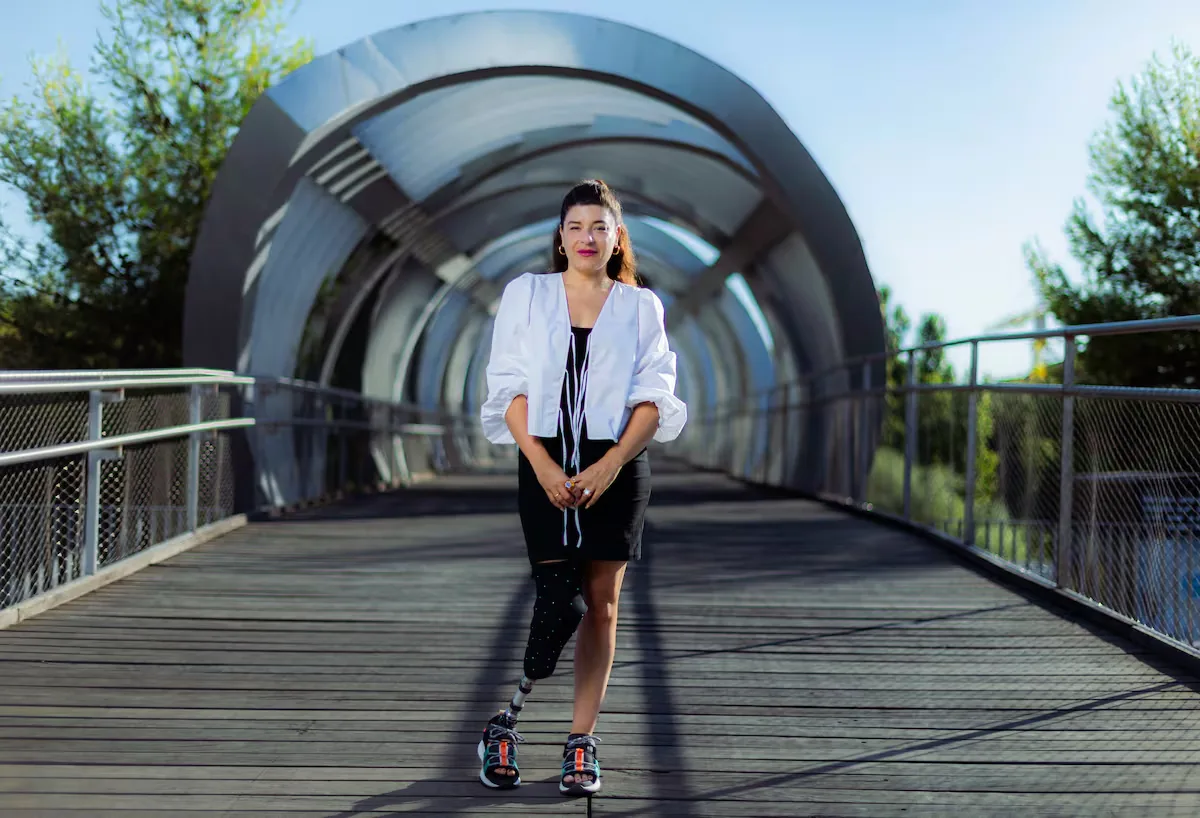
It was the summer of 2023, one of those peaceful days that rarely end up recorded in long-term memory, even less so in the printed pages of a book. The heat was intense in Madrid, as usual for the time of year, and Nerea Pérez de las Heras had arranged to meet her mother to spend the afternoon at a shopping center. Among the racks where discounted clothes hung, she set her eyes on a long dress, made of black chiffon with some flashy details, and on a swimsuit with wide colorful stripes. The beach holidays were approaching and, when the time came, the journalist folded that newly bought swimsuit and put it in her suitcase. She did not imagine that, as she would later write, Menorca was waiting for her “with its jaws wide open.”
Read more The summer Queen Sofía could marry Harald of Norway
What happened in that cove with turquoise waters is known by many people. Pérez de las Heras (Madrid, 1982) has a media profile: she co-hosts the Saldremos mejores and Lo Normal podcasts, collaborates on the television program El intermedio, and writes for various publications, including this newspaper. When the rumor was already circulating, she herself recounted it on her Instagram account. At the end of July, she suffered an accident with the propeller of a boat. Exactly the day she debuted the colorful swimsuit, which ended up torn by the hurried scissors of a nurse. She would not wear the dress until a few months later, when she went to visit her parents to tell them that her right leg had been amputated below the knee.

Even knowing the outcome, what the author narrates in Fantasma has something ineffable. It is late July again, three years later, and Pérez de las Heras talks about her essay, which is released on September 3, in a bar next to the southern bank of the Manzanares and the M-30. “There had to be a latency period,” she recalls about the origin of the book over a breakfast of coffee and fried dough sticks, not far from the house where she grew up as the youngest in a large family. “I was aware that what you write in these somewhat hallucinatory states after a life experience that is too intense clouds your judgment. I wanted to give myself some margin, and when I met Carme [Riera, her editor], I had already thought that I was going to write something a bit bigger than my community.”
Fantasma is an exemplary literary nonfiction, a precise mechanism where personal experience transcends its own barriers to encompass debates of political and philosophical depth. It presents itself as a positioned text: close to leftist activism, far from stories of overcoming. It contains guilt and rage; also beauty, humor, and elegance. Grace in the broad sense of the word, the same that its author exudes in person. She pronounces the requiem for a lost limb, a “deceased” that leaves this plane of existence too soon, too suddenly, leaving behind a body and mind that must recombine and continue with the inertia of life in its absence.
From that “unusual” experience, the author projects herself to the collective to bring to the table issues that affect her closely but concern everyone, topics such as the state of public healthcare, the housing crisis, or the social perception of disability. Through books, films, or historical episodes, she addresses notions like cyborg theory, while personal anecdotes lead her to reflections such as disability altering the experience of time. “I did not intend to make an exhaustive essay: I have not included what should be there but what my voice could contribute,” the author details. “For example, what has been most relevant to my process, my psychological treatment, is not included because it would be a narcissistic indulgence, but what I considered most relevant for the book, what had literary value.”
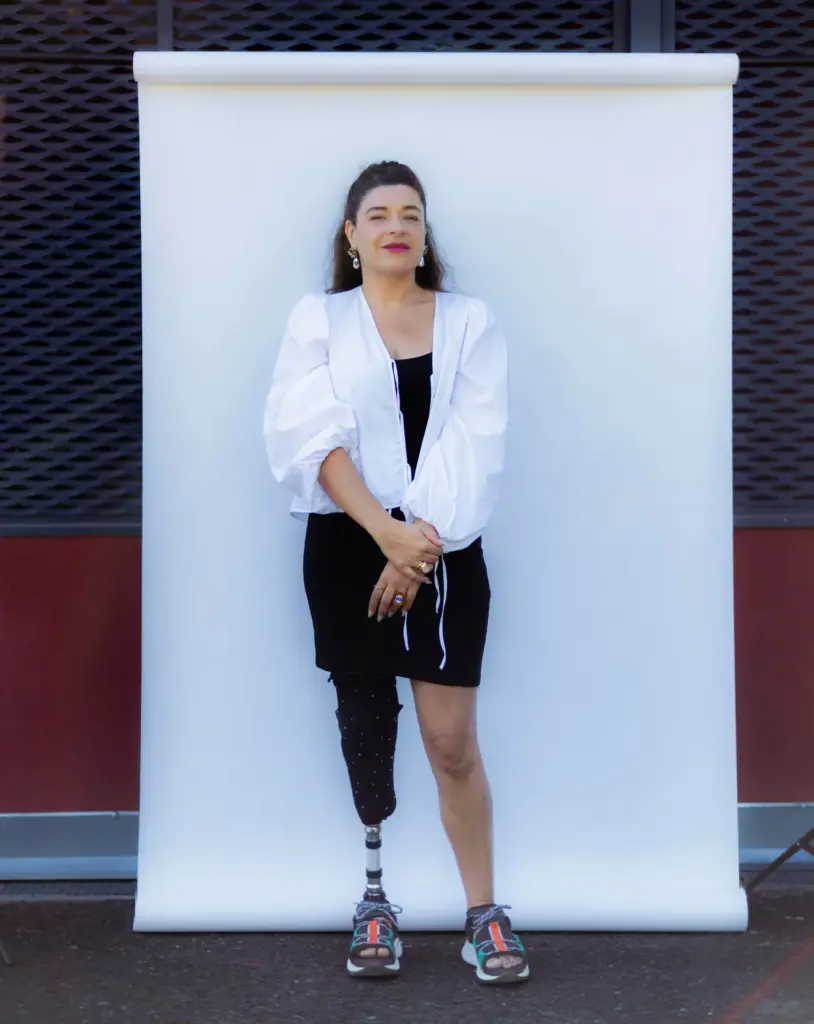
With a cover illustrated with a mutilated classical sculpture that evokes the persistent and often deceptive presence of memory, the book’s title plays with the expression of phantom limb syndrome. The writer recounts in a chapter that, when she asked ChatGPT, it described it with its polished verbiage as “a complex phenomenon that highlights the incredible capacity of adaptation and reorganization of the human brain.” She, biological intelligence, counters in her text that this impulse to feel something that is no longer there only “highlights the tortuous and romantic capacity for stagnation and nostalgia of the human brain.”
The acceptance of irreversibility, that there is no way to return to a previous state, composes one of the most painful passages of a process that the author narrates in chronological order and circular sense, beginning and ending in the Mediterranean Sea. “Since there are several surgeries and scarrings, I didn’t want to confuse with temporal jumps,” she explains. The clear prose and meticulous assembly of pieces that connect her intimate story with the essay also help. “I tried to dress the most personal experience with narrative resources and somewhat elevated, more universal cultural thoughts,” she summarizes.
At a time when the first-person narrative is received with suspicion of narrow-mindedness, Pérez de las Heras shows that it is possible to tell one’s own story expansively. Although this is her story, she is never alone in Fantasma. She was not during the long pilgrimage of surgeries, pain analgesic control, rehabilitation, and adaptation to a prosthesis that she combines with a wheelchair. Accompanying the author through the pages are her current wife, the also podcaster and writer Ana Garriga, her friends, and her family, an affective network that is not limited only to loved ones but includes healthcare personnel whom she advocates for without falling into the sticky trap of slogans. “From the pride that the public is the pinnacle of civilization and what is most worth protecting, I do not mythologize the people inside the structure,” she states. “I don’t turn them into little angels, vocational and selfless beings: they are workers.”
Read more The disease that causes most heart attacks silently builds up in the arteries from youth
An overwhelmed doctor who reproaches her without looking up from the computer for not having respected the protocols to manage the prosthesis prescription refers to the lack of individual empathy and resources in public healthcare. A neighbor who cheers her on calling her “champion” while watching her climb the five floors of her apartment without an elevator exemplifies a compassion that ignores its perversity. “I had already noticed [before writing the book] that physical integrity is an atavistic fear: we get creeped out seeing a visible amputation and mechanisms are generated that I was interested in exploring, such as blaming the other, because some people make up the story that somehow you were at fault,” she points out. “People are making up a narrative in their heads when they see me. How could I not make a story if my body covers me with a story all the time?”
In Fantasma, Pérez de las Heras leaves a phrase that keeps hammering in the head: “Deviant bodies, especially disabled ones, are — we are — a repository of social anxiety, a horror story with a moral.” In a society where body optimization has been elevated almost to the category of a moral imperative, her perspective is enlightening. “Now they are exposing us all the time to the dogma that we are fully responsible for what happens in our bodies, as if you could be invulnerable if you cover yourself with supplements and go to the gym a lot,” she elaborates. “But the message of all this is that your knees worked on with a quadriceps machine in the end will not support you. There is no public system to support you, there is no affective environment to support you. That is the underlying message.”
She says this as someone who has an enviable emotional cushion but understands that responsibility for success, health, well-being, or relationships does not depend on willpower. “When I started talking about my affective network and the luck I had and how I was being taken care of, there were anti-ableist activists with disabilities much greater than mine who told me: ‘Be careful with this, because the message that can come across is that if you haven’t built an affective network, or if you don’t have one because you don’t, there must be a reason and you have to be alone,’” the author illustrates. “But I also slip up, out of ignorance and because I am new.”
As a lesbian, Pérez de las Heras was already aware of what it means to be marginalized by a normativity that relegates those who don’t fit to invisibility or stereotype. In her “varied and ramshackle community spread across the globe and throughout human history,” as she describes it in the book, she found a place to belong. It took her six years to come out of the homosexuality closet. The amputation closet took two months, during which her parents placed her in a rural house with friends, on a work trip, and in several other activities they convinced them of by phone, until the day she put on that black dress she had bought on sale. “The hardest thing of all has been finding the tone of the book, because I had to constantly control the distance. If I got too close, it was cheesy and sentimental, but if I distanced myself, it wasn’t sincere,” she details. “It was chapter by chapter and moment by moment, and there are some in which I did allow myself to go to the bottom of the pit, as in everything related to my parents.”
Honesty, in any case, does not imply pouring everything out. Just as she does not mention her psychological treatment, there is no explanation of the circumstances of the accident. “There are many things that did happen and I don’t tell. Other things I have changed places, but everything I tell happened,” she clarifies. The result is a reading where layers of interpretation accumulate, from the political manifesto to the love story, and in which the realization emerges that, to see oneself, it is essential to look at others. “I constantly tried to put myself in the place of the people around me, to make it easier for them, because I saw that they were with a buzz almost worse than mine, who knows what happens with my body,” she explains about the reciprocal bonds generated with those who supported her. And she qualifies: “In the book is all that love and in the book is all that loving responsibility, but also administrative, because the Administration has the responsibility to take us in. There is a political demand.”
Created between reading marathons and workdays in the library of the Madrid Ateneo, Fantasma is presented to society as Nerea Pérez de las Heras’s “literary debut.” She, however, has been writing “since she was a child,” long before taking the EL PAÍS Journalism master’s degree in 2008 and before her name multiplied in the headlines of articles, interviews, and opinion pieces as a freelance, supplementing her salary and squeezing the day with parallel jobs. “Writing is in everything I do in audiovisual, in what I do on the radio. When I write a column it is also a literary column, because I always try to make it have a story, to hook, to be emotional…,” she emphasizes. “So it’s hard for me to think that this book is my first foray into anything.”
Not even her first book. In 2019 she published Feminismo para torpes (Martínez Roca), based on a monologue and a series of videos of the same name posted on the EL PAÍS website in which she exposed with sharp humor the sexist behaviors that still persist. Feminism remains a driving force of her ethical and political stance, now crossed by the circumstance of inhabiting a new body. “The feminism we are living is focused on doing, on power, on being independent, many things that are great, but that fall apart the moment disability enters: there is a pending conversation between feminism and anti-ableism,” she points out. It is not the only necessary debate in a world intoxicated by the mirage of self-sufficiency. “Disability as an image confronts you with many things you are not normally confronted with, and it is advisable to look at it,” the author stresses. “Don’t look away when you see someone having trouble with curbs or at the metro station, because sooner or later that city will be hostile to you.”
Read more At least 28 dead in a Russian bombing of Kiev in one of the worst attacks of the war
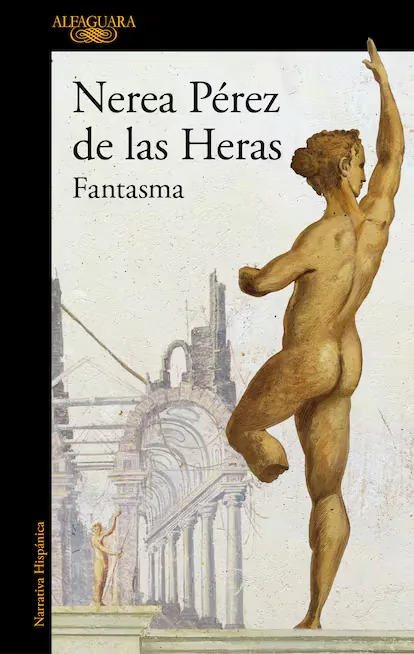
Fantasma
Alfaguara, 2026
248 pages. 19.90 euros