









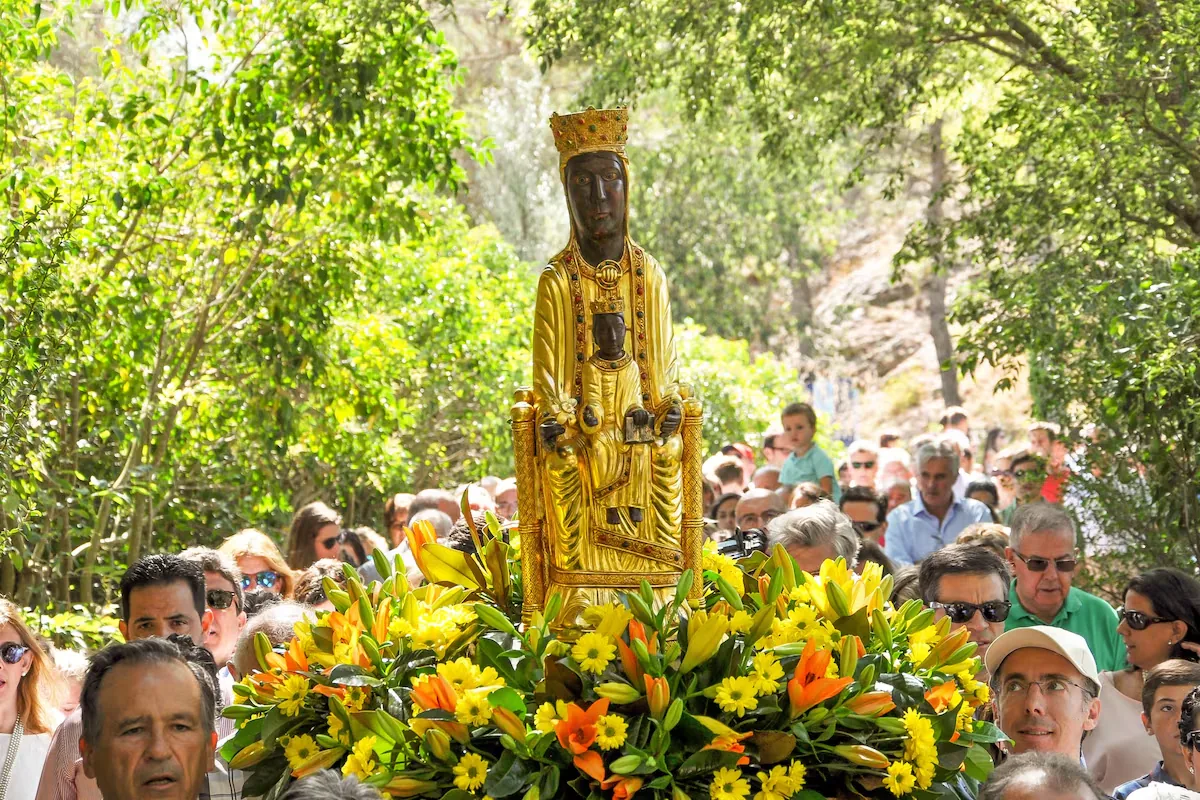
The war continues between Opus Dei and the small diocese of Barbastro-Mozón in Huesca. Its bishop, Ángel Pérez Pueyo, states that he will not sign the agreement with Opus Dei over the control of the Torreciudad sanctuary ― the spiritual heart for the members of the Work ― if it does not resolve that the 11th-century image of the Virgin of Los Ángeles, now in the possession of the Work, returns to the diocese. Pérez Pueyo has published a statement in which he also accuses the ultra-conservative institution of illegally retaining the religious statue. “Over the past few years, the diocese has gathered historical and legal documentation which, in our opinion, prevents considering the removal of the image from its hermitage as a voluntary renunciation by this community of its custody and original place,” the prelate points out in a note.
The bishop’s statement is another episode in the standoff between the two institutions that dates back to 2020 and took a turn two years ago, when Pope Francis intervened and appointed a pontifical commissioner with full powers to take over the management of the enclave, Archbishop Alejandro Arellano. This decision was a blow to Opus, which by then had already seen how the Latin American pontiff cut its privileges and forced it to reform its statutes.
The Argentine pontiff died with the conflict still unresolved and without the commissioner concluding a resolution to end the matter and resolve, among other issues, one of the main points of dispute: the possession of the Virgin of Los Ángeles, a medieval 11th-century statue owned by the diocese and which Opus Dei moved to its sanctuary 60 years ago after offering to restore the image, which resided in another episcopal hermitage. But when the case seemed to be on track, Francis passed away and the litigation tilted in favor of Opus Dei, according to ecclesiastical sources who informed this newspaper a year ago. The expected outcome, these same sources add, is that Opus Dei will regain control of the sanctuary and the statue of the Virgin.
But the bishop of Barbastro, Ángel Pérez Pueyo, does not back down and states in his note that he will not take a step back: “Before the current temple, before the controversies and before any of us, for more than a millennium, this image was united to this land and its hermitage.” Sources from the diocese do not rule out that the bishop will go to court if the issue is not resolved, as the diocese did years ago with the lawsuit against the diocese of Lleida, its Diocesan Museum, and the Generalitat over the 111 assets from 42 parishes of Barbastro that were in the possession of the Lleida episcopate.
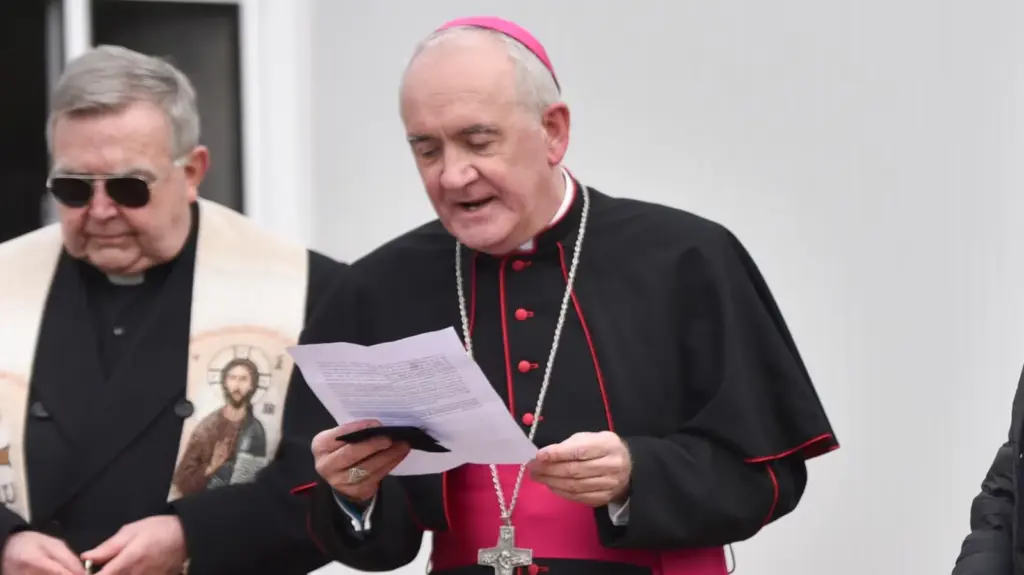
The note from the bishop of Huesca arrives a few days after Opus Dei announced on its website that it received a “request” from the bishop for the Romanesque image to preside over the celebrations of the Ribagorza Virgins’ Pilgrimage this coming weekend. In that note, the institution states that it was the pontifical commissioner who finally authorized the departure. Pérez Pueyo’s statement seems to contradict Opus, as it implies that his diocese is not “commissioned,” that it has full pastoral powers over Torreciudad, and that it was he who ordered (and did not request) the departure of the Virgin.
The possession of the statue holds symbolic importance for the Work, as it is part of the genesis of its founder, Josemaría Escrivá, a native of Barbastro. In 1904, when he was two years old, he became seriously ill and his mother entrusted herself to the Virgin of Los Ángeles. At that time, the statue was in a small hermitage atop a watchtower. Escrivá survived and decades later, in gratitude to the Virgin and already established as the leader of Opus, he decided to build a sanctuary adjacent to the old hermitage.
Negotiations with the bishopric began in the early sixties, through a civil entity created by the Work, Inmobiliaria General Castellana, which today is called Desarrollo Social. At that time, the hermitage was semi-abandoned, cared for by a hermit, and practically isolated. Finally, the agreement between both parties (which the diocese now questions the legality of) established in 1962 that the diocese ceded to Opus Dei in perpetuity “the beneficial ownership” of the sanctuary and the image of the Virgin for pastoral purposes. Pérez Pueyo points out in his note that this “authorized departure” and the documentation with the pact, “in accordance with the law, are not found in the archives of either the Chapter or the diocese.”
Opus Dei, faced with the Torreciudad conflict, has been referring to whatever the Vatican commissioner decides. “Over these months we have placed ourselves at his total disposal for everything he has required and we are awaiting his resolution,” it published in a statement two years ago.
Read more The COP17 ends: The United States has been the main obstacle of the summit
The current bishop also points out that this issue was known by Pope Francis. “During the December 2021 ad Limina visit, he welcomed our concern for popular piety and the ecclesial rooting of Torreciudad. Later, in a manuscript dated July 13, 2023, he wrote to me in his own hand: ‘Do not give in.’ And on September 18, 2024, when I met him in St. Peter’s Square, he asked me directly again: ‘Ángel, have they already brought down the Virgin?’” Pérez Pueyo details in the statement.
This is not the first time Pérez Pueyo has issued such a challenge. During a homily a year ago, he revealed that Francis warned him in October 2024 about “mafia intrigues” being plotted around Torreciudad. In that same sermon, he threatened to offer his resignation to the Pope if he is forced to accept the agreement that the pontifical commissioner will present. The prelate has reiterated this in his writing, addressing his faithful: “Be sure that your shepherd would never sign that unlikely plundering of your dignity. In such a case, I would offer my position out of loyalty to our people.”
The public denunciation by the Aragonese bishop is anchored in the change of position of the commissioner. “I have witnessed over these months how the plenipotentiary commission over Torreciudad has turned into a kind of mediation between them and the diocese, as if this community that awaited justice had to accept renunciations instead of defending its rights,” Pérez Pueyo states.
Request to the Vatican to take control
The battle between the diocese and Opus Dei has been accompanied by the loss of power and independence within the Church of the ultra-conservative organization. Francis downgraded its status to a simple association of priests and placed it under the authority of the Dicastery for the Clergy and, locally, under each bishop, like any religious group. In that storm, Pérez Pueyo dismissed the sanctuary’s rector in 2023 and a crossfire of accusations in the press began, which lasted until after Francis appointed the pontifical commissioner.
With the arrival of Leo XIV, the order regained ground in the dispute and leaks began again. Last June, in fact, it was reported in several media outlets that the agreement was closed and contemplated that Opus Dei would continue managing the sanctuary and the bishop would simply choose the rector from a shortlist presented by the Work. It leaked during a meeting between the commissioner and the bishop, in which Pérez Pueyo was supposed to sign the agreement. But he did not, and days later, he published a statement in which he renounced the management of the sanctuary and the appointment of the rector, but requested the return of the statue of the Virgin and the baptismal font of the cathedral, which supposedly had also been moved by Opus Dei to its headquarters in Rome.
But the bishop proposed to the Vatican that the sanctuary be designated as international and controlled by the Holy See, so that “it is the one that audits and approves its accounts, as well as those of the companies and foundations around the complex.” Pérez Pueyo has recalled this concession in his writing: “So that no one can confuse this request with interests of another nature, the diocese has renounced everything else. We have renounced any financial compensation.” Moreover, he has praised the Work’s work in the diocese. “I wish that Opus Dei can develop its charism and mission there. I wish that Torreciudad be a great universal focus of Marian evangelization,” he has specified.
Leo XIV’s position with Opus Dei follows the line of Francis, who cut its privileges during his pontificate. On one hand, Robert Prevost has not yet approved the update of its new statutes and, on the other, he showed his support for writer Gareth Gore ― who accused the organization in a book of manipulation and mistreatment of its members ― by meeting him in a private audience this March, although the Vatican published photos of the meeting. The author assured the media that the pontiff congratulated him for his “rigorous work.” The question now is to see what position the American pontiff will take in the Torreciudad conflict.
Read more Djokovic collapses in a torturous night against Navone: vomiting, crying, and helplessness