The connection of watchmaking with the infinite universe and everything that moves within it carries centuries of history. The stars, planets, and their satellites were, and are, traffic signals that trace highways which, since ancient times, have helped humans orient themselves, synchronize their circadian rhythms, discover distant territories, and boost trade. In this cosmos of watchmaker-astronomical love during the modern era, Omega played a leading role. A trio of its models landed on the Moon back in 1969 when man first set foot on the satellite. A few years earlier, in 1965, NASA had crowned the Speedmaster model with the label suitable for all its manned missions (after passing a handful of demanding controls and tests). It was not an exaggeration: on one occasion, those Omega chronographs prevented tragedy.
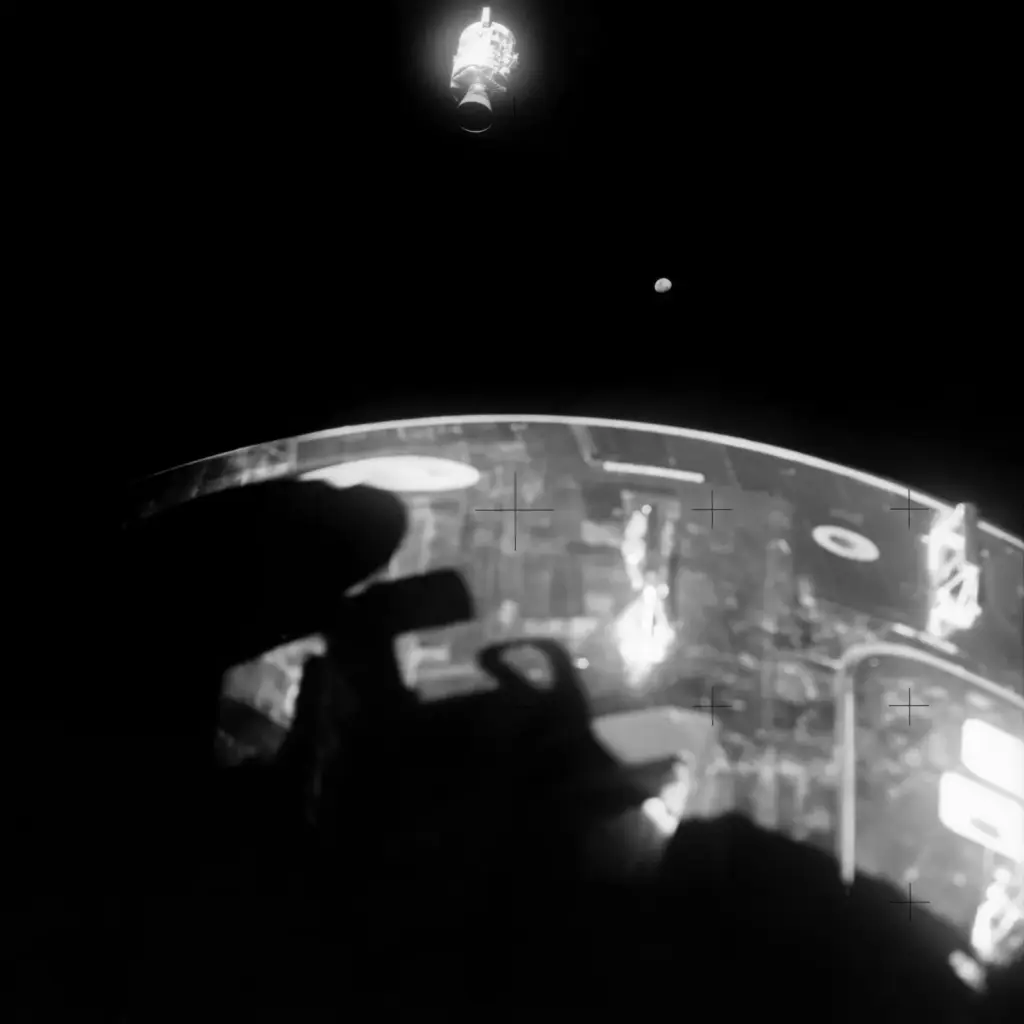
In 1970, Apollo 13 was cruising along, quite calmly, through space. An oxygen tank exploded in the spacecraft just two days after leaving Earth. “I still remember the sudden explosion on board and the feeling of having successfully landed in the ocean,” recalls James Lovell, mission captain. Between those two moments, hearing boom! and splashing down in the water, many fleeting seconds passed… They had to cram into the lunar module, which had not been designed to accommodate so many people for so long: more mouths, less oxygen.
Temporary solution? “When the spacecraft’s clocks stopped, that’s when we needed the Speedmaster. Without our usual navigation equipment, we had to observe the Earth and use it as a guide. Then it was necessary to ignite the engine for 14 seconds and turn it off, so we used the watch Jack Swigert was wearing,” Lovell recalls.
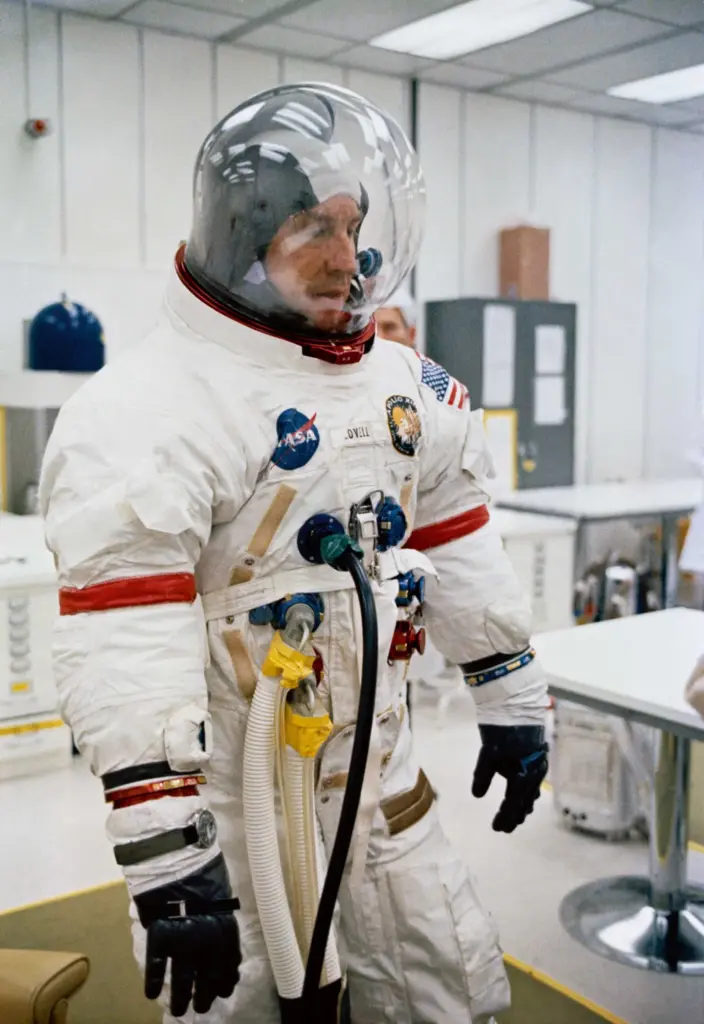
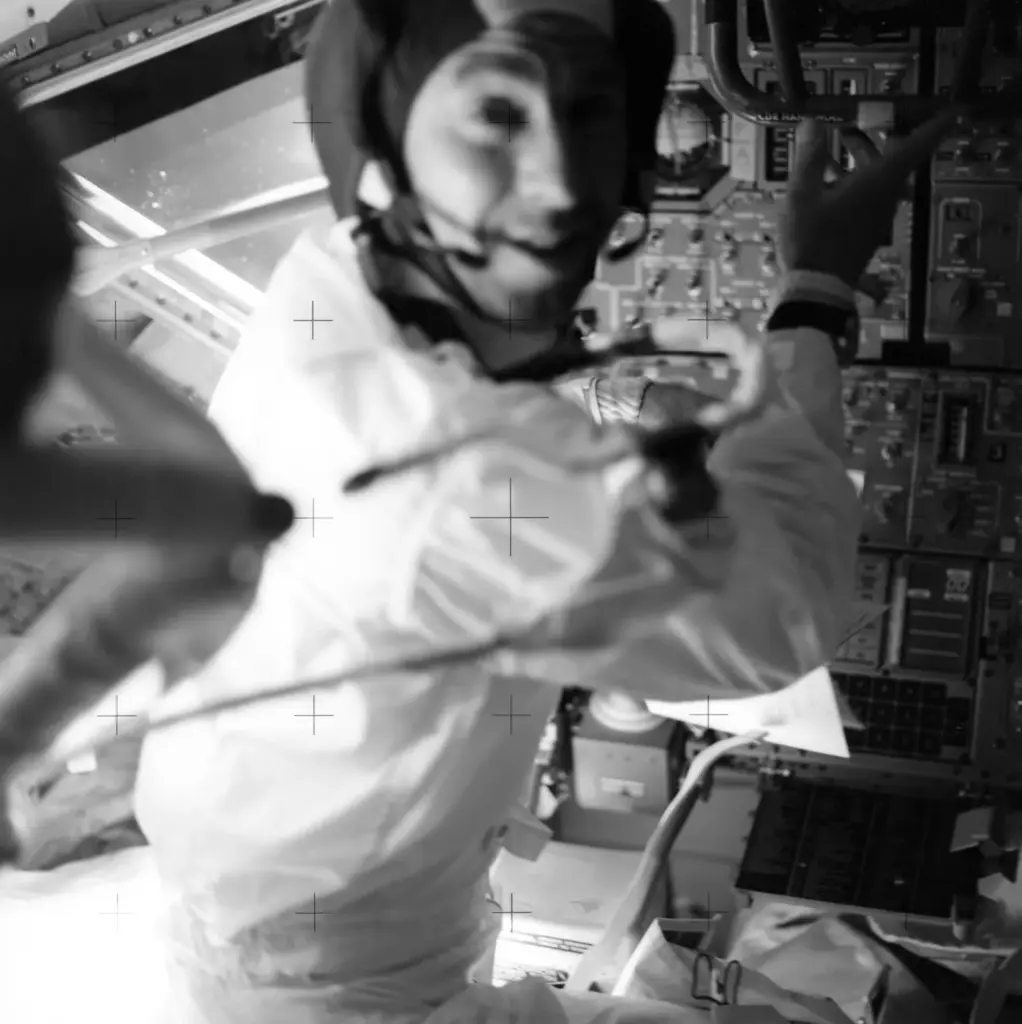
The deflagration caused, among other consequences, Apollo 13 to deviate from the established trajectory: if it entered the Earth’s atmosphere at an undesired angle, it would bounce like a ping pong ball and the spacecraft would wander aimlessly through outer space. To solve this setback, the trajectory had to be manually readjusted. But there were only 14 seconds to ignite the engine and straighten the course. If the computers and other digital devices were off and unplugged, who would precisely calculate those crucial seconds of salvation? The Speedmaster worked. And very well. On April 17, 1970, James Lovell and his men kissed the ocean water.
An unexpected guest: Snoopy
On October 5, 1970, astronaut Thomas P. Stafford, Commander of Apollo 10, presented the Omega watchmaker with the Silver Snoopy Award. It consisted of a 925 sterling silver pin plus a Manned Flight Awareness certificate signed by the Apollo 13 crew (James Lovell, Jack Swigert, and Fred Haise). The Biel firm earned the honor for its contribution, help, and collaboration in NASA’s adventures, especially for those providential 14 seconds. “I remember presenting the Snoopy award to Dr. Widmer [then technical director] of Omega in a small ceremony in my office. I thanked him and the watches from his manufacture for the wonderful service they had provided us throughout the space program, but particularly in Apollo 13, because the Speedmaster was essential in helping us return safely to Earth,” Stafford himself recalls.
Read more Time change in Chile 2026: when and how clocks are adjusted for daylight saving time
It is worth clarifying how Snoopy became the main character of this badge. Charles M. Schulz, the creator of this friendly beagle, loved to doodle him on the Moon. The 60s were in full space race. The dog became a symbol of those concerns. In 1968 NASA longed for a face, a logo, a figure that would reflect its safety program. They chose Snoopy. They pushed so much that the astronauts devised an award, designed by Schulz: the Silver Snoopy Award. With his spacesuit and his emblematic Flying Ace scarf. Since then, this award, chosen by the astronauts themselves, is given to corporations, companies, and people who have contributed their grain of sand to the success of manned space missions. It is awarded sparingly. In 1970, fortune fell on Omega.
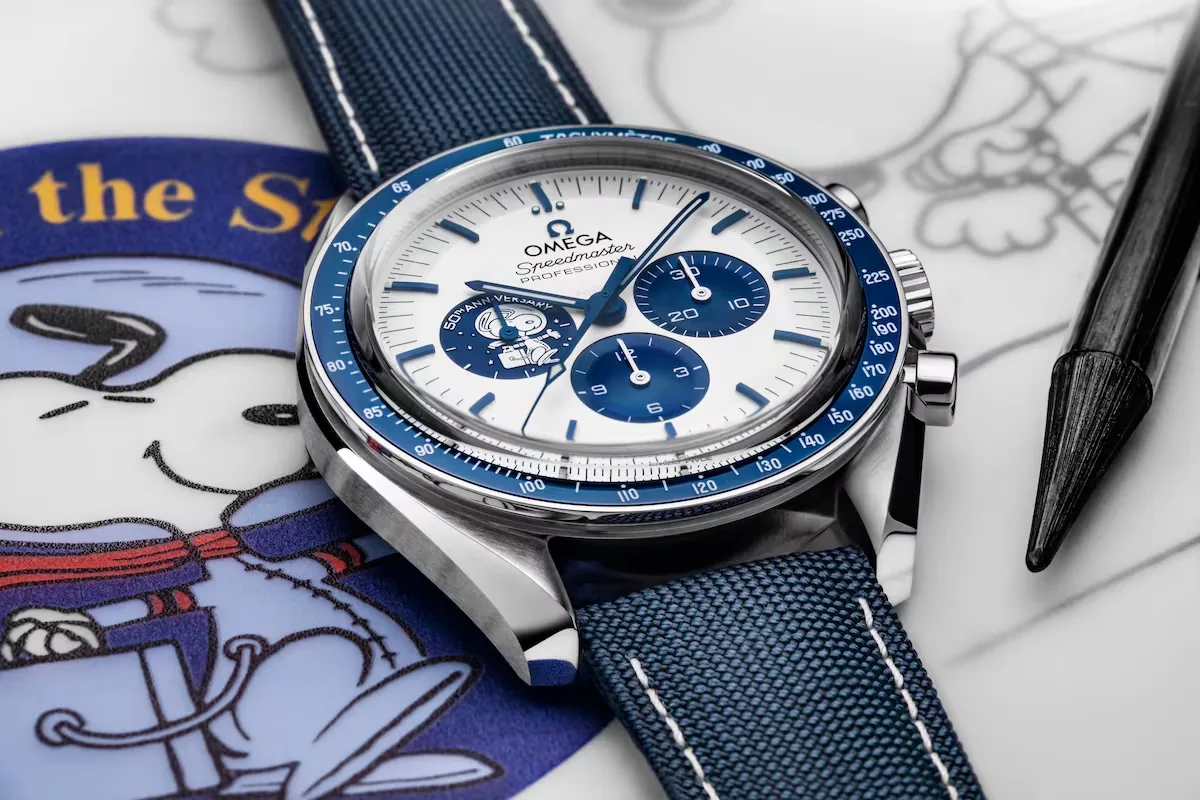
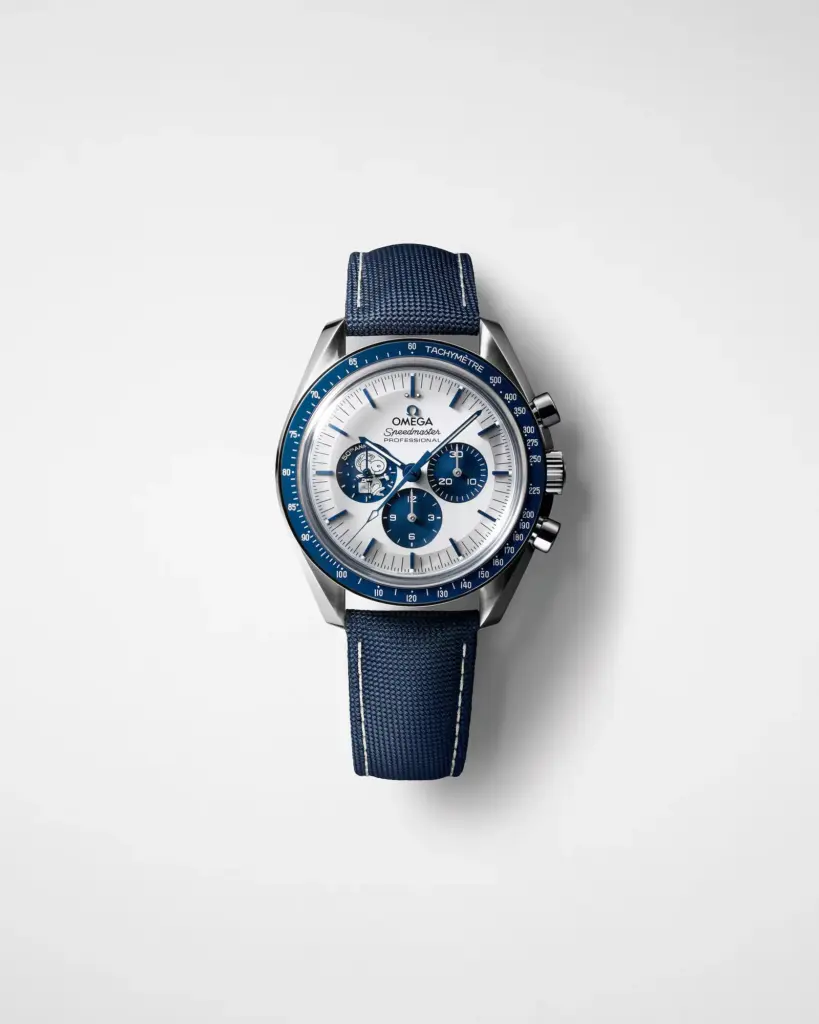
Half a century after Dr. Widmer received the award, Omega has decided to create a commemorative Speedmaster. The result is the ‘Silver Snoopy Award’ 50th Anniversary, in which the famous, unflappable, and phlegmatic canine character shines like a silver medallion in relief on a subdial located at 9 o’clock. On the laser-engraved Ag925 silver dial, Schulz’s dog is accompanied by a couple of blue subdials (the classic canvas of a chronograph), angular design hour markers and hands (blue tone prevails).
A design full of nods
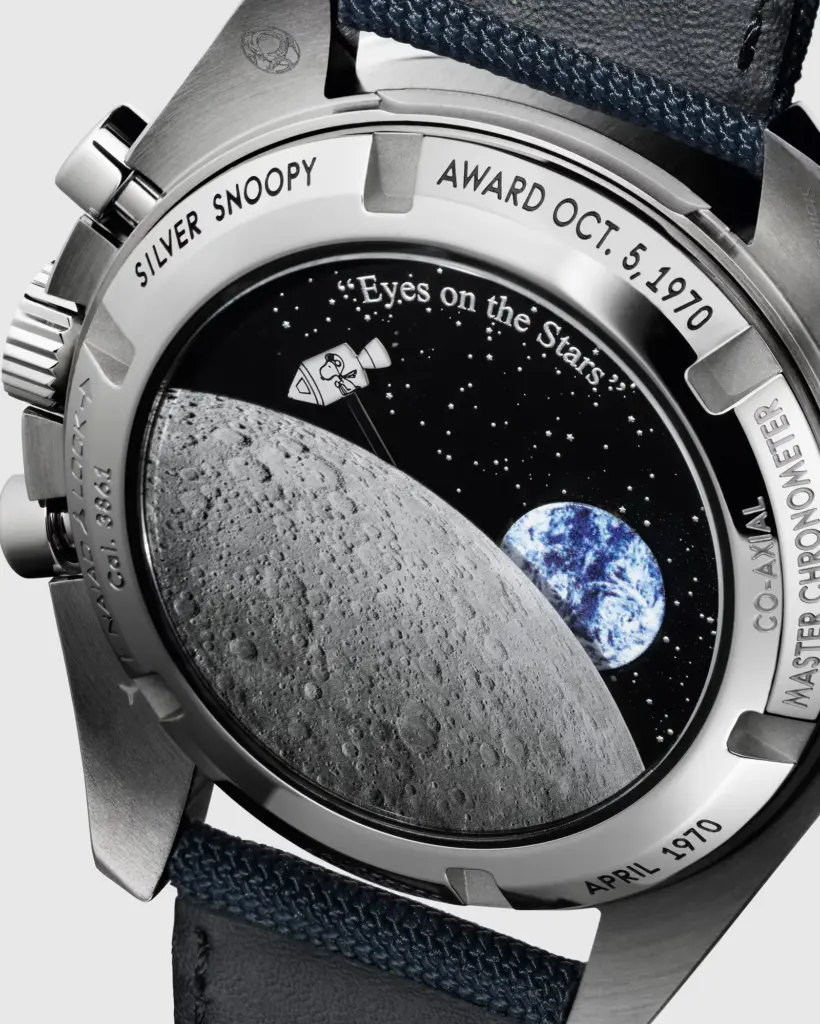
The 42 mm steel case, inspired by the fourth-generation Speedmaster that walked on the Moon in ’69, hides on the back a story that evokes automaton mechanisms: in the image, Snoopy flies in a black and white animated space module on a hand that is not visible (the fascination of magic, trickery, automatons). The chronograph seconds hand is pressed and the Beagle wanders around a metallic sapphire crystal that represents (with overwhelming realism) the formerly mysterious far side of the Moon. On the canvas, the Earth can be glimpsed, a disc that rotates once per minute in sync with the Speedmaster’s seconds subdial. The characters of the scene move among a black backdrop, dotted with points, under a phrase occupying the upper part of the curtain: “Eyes on the Stars.”
The dominant tone is blue. That is the color of the nylon strap, threaded with the trajectory of the Apollo 13 mission on the lining. The ceramic bezel is also blue. The organ that powers the chronograph is the Omega Co-Axial Master Chronometer caliber 3861, an evolution of the Moonwatch movement, with its anti-magnetic and Master Chronometer certificates from the Swiss Federal Institute of Metrology (METAS). It was intended as a limited edition, but no. Snoopy is universal, like the universe.
Read more The secret