









EL PAÍS offers the América Futura section openly for its daily and global informative contribution on sustainable development. If you want to support our journalism, subscribe here.
Read more The OAS Foreign Ministers and Nicaragua’s Self-Determination
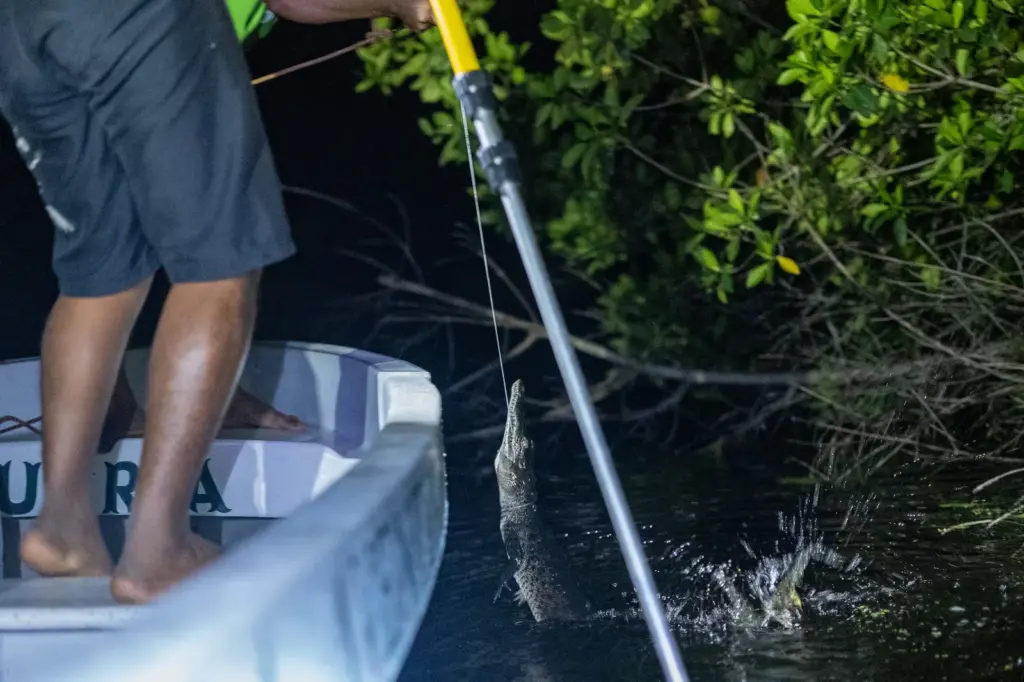
By the shine of their pupils. That is how crocodiles are counted at night. “The reflective membrane behind their retina acts like a mirror, throwing flashes that make it easier to locate them with light,” Gabriel Cruz explains to the group as the boat moves forward in total darkness. With a small flashlight, the biologist illuminates the huge roots that sprout from the brackish waters which during the day appear stained with an intense red. This coloration is due to tannins, the organic substances released by the red mangrove of the La Ventanilla lagoon, estuary of the Tonameca river. An hour from Puerto Escondido and a few kilometers from the magical town of Mazunte, this enclave is part of the 85 lagoon systems that spread along the coast of Oaxaca, the Mexican state with the greatest biodiversity.
To the croaking of frogs and with the roar of the sea waves in the background, the herpetologist gives instructions in whispers so as not to disturb the balance of nature, always pointing the lights towards the water to avoid waking the more than 70 bird species that inhabit this enclave bordering the Pacific Ocean. Cruz, a biologist from the University of Campeche, is responsible for the conservation project of La Ventanilla, where among other scientific activities, he leads night outings to monitor the population of the animal to which he has dedicated his entire life: the crocodiles.
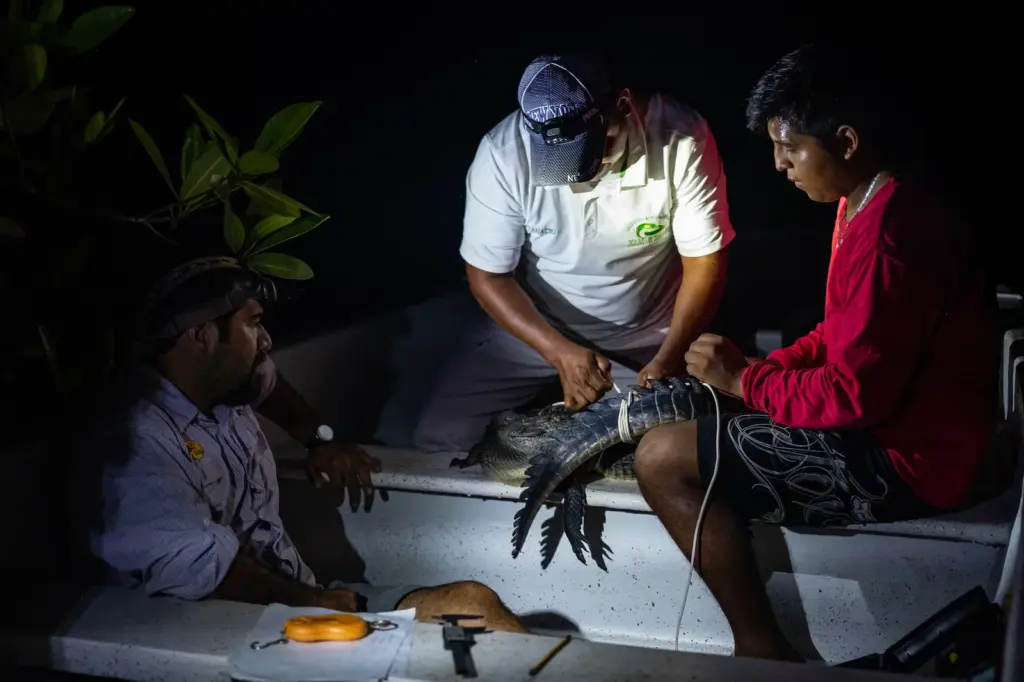
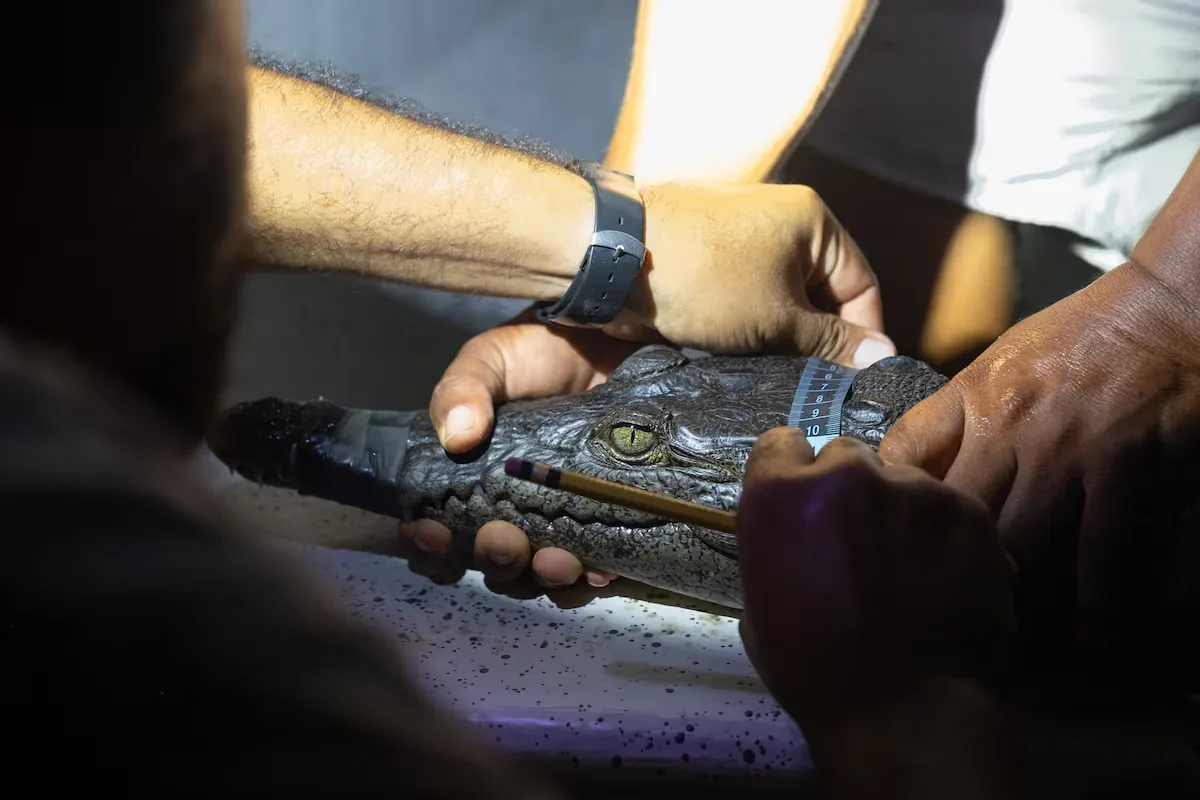
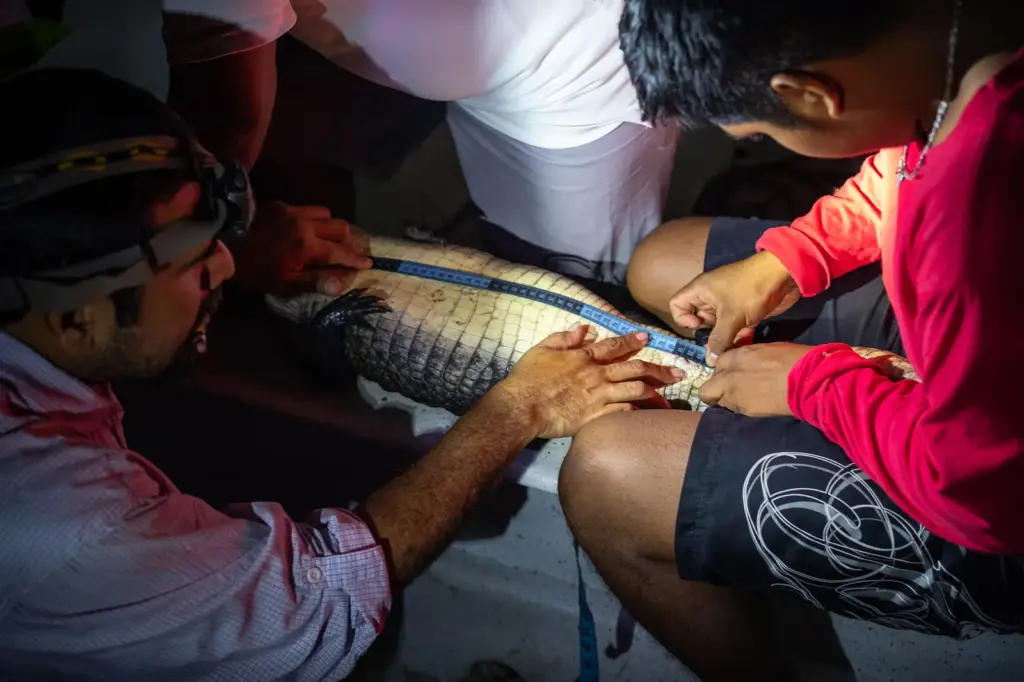
The species that reigns in the place is the American: Crocodylus acutus. Widely distributed, it extends from southern Florida to 16 countries on the continent. And, although it is in great danger in other regions, in La Ventanilla it is the owner of the ecosystem. “We estimate there may be about 300 specimens. Last year we counted 30 nests and up to 600 hatchlings. Ten years ago there were barely 8!” he reveals while measuring a specimen and noting some data on the board as part of the monitoring: capture date, weight, skull to tail length. “Here they are chubby, well-fed, they live in a paradise because they are very protected,” he assures.
It was not always like this. Long before becoming the main tourist attraction of the place and the livelihood of many families, they were, in fact, the main enemy of the community living around the lagoon.
From hunters to conservationists
For decades the villagers killed them without mercy. “The water would rise and the crocodile would eat your pig, a dog, the chickens, it would come to take animals and put our lives at risk, that’s why we hunted them,” recalls Agustín Cruz, 47, president of the Coastal Wetlands Network of Oaxaca and one of the founders of the cooperative that today is dedicated to conserving them. The locals survived by selling the skins of the reptiles they hunted, a highly valued product in the global market. The same happened with the leather of sea turtles, exported to other countries to feed the fur industry. Today, those species of turtles, golfina, prieta, and leatherback – critically endangered – are the great protected species of the Oaxaca coast.
In the seventies there was a turning point that would change the fate of the crocodiles and this Zapotec community: the federal government established a permanent ban. “They realized they were worth more alive and went from hunters to conservationists,” reveals Cruz, who is part of the group of Crocodilian Specialists of Mexico, a network of experts who collaborate in the conservation, management, and sustainable use of crocodile and alligator species throughout the country. “The awareness changed. We understood that it was better for us to take care of all the flora and fauna of the ecosystem we have here,” highlights Eulalio Cortés, son of one of the cooperative’s founders and its current president.
Read more The 40 best-selling Amazon products in August: some cost less than 20 euros
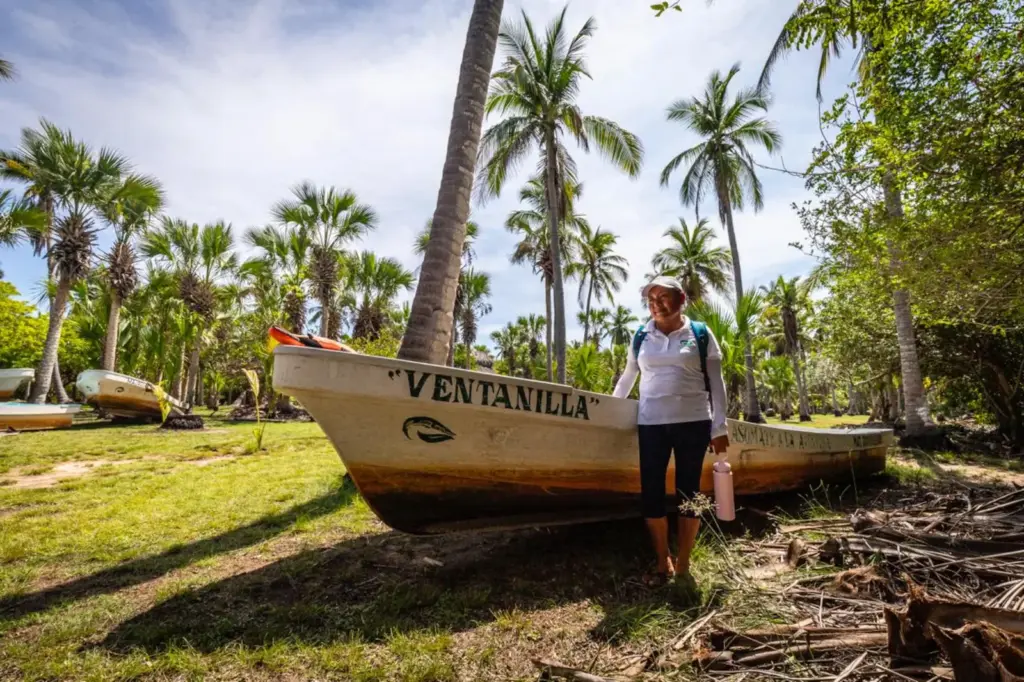
A few years after the enactment of that law, the community members organized to form the La Ventanilla Ecotourism Services Cooperative, made up of 30 families dedicated to preserving the biodiversity of their lands and showing it to the 25,000 visitors they receive annually. “From those contributions we obtain the resources to finance the project,” explains the leader of the organization where each member has a specific role. Some manage the turtle camp on the beach, others have been certified as guides for the mangrove tour and transport visitors through the lagoon in a motorless boat, like the one Flor Mendoza drives every day. At 51 years old, she is one of the four women in the cooperative: a master at deciphering for tourists the secrets of the nature of the landscape where she grew up.
A few minutes after starting the journey, the first herons appear on a mangrove root. “We have many different species of them: the great egret, the gray, the green,” Mendoza lists and begins to name other birds being spotted, the diving ducks, the osprey, while hundreds of very green iguanas camouflage among the trees of a salty forest made up of royal palm, jamaica, coconut palm, and the peanut tree, with roots resistant to salt. Then, the first crocodile appears. It is Lomo Verde. Half one-eyed and 4.5 meters long, he is the largest specimen in La Ventanilla and the oldest. He is estimated to be over 60 years old. According to the guide, he lost an eye in a fight with another specimen.
“When something is named it is because there is a construction of value behind it. This speaks a lot about this project, about the connection it has with the fauna,” highlights Cruz, who got involved in this conservation initiative more than a decade ago. “The first time I arrived I was very impressed by the community’s management of the animals, their territory management through very respectful tourism, which is the engine of conservation,” he celebrates.
An indigenous paradise under threat
La Ventanilla is one of the most successful cases of mangrove restoration in the country. A few decades ago, trees over 40 meters tall populated these lands, but the fiercest nature changed the landscape. In October 1997, Hurricane Paulina arrived to devastate the community and much of the mangrove. The cyclone destroyed almost 70% of the red mangrove. “A month later Rick came and hit us even harder; they came frequently to destroy everything. And then, in 2021, Carlota really hit us hard,” recalls the cooperative president who has since worked to recover the patches in the vegetation cover left by each season of heavy rains.
However, the climatic phenomena that frequently hit this coast are not the worst threat hanging over its ecosystem. In recent years, the increase in real estate and tourism projects on the Oaxacan coast and the opening of roads and highways in the region are having an ecological impact. “The big challenge here is that development does not mean the loss of identity and biodiversity,” highlights Cruz. As he explains, part of the success in crocodile conservation is due to the fact that there has been no change in land use. But, although in La Ventanilla the territory is managed under a community agreement among the Zapotec families, the stain of predation from the tourism boom and construction companies is advancing and does not let go of the region.
Cruz trusts that the form of organization of this cooperative, through communal goods, will be what saves it from the environmental degradation suffered by so many other places in the country. “The biological wealth of this place is protected by the local people. It is a community that remains strong, organized, responsible, that knows well the value of the ecosystem that surrounds them, of their natural resources, of the crocodiles.” Of these animals that appeared more than 200 million years ago on Earth and survived the great mass extinction; those that, in this enclave of the Oaxacan coast, have names and many stories to tell.
Read more Amazon celebrates 15 years in Spain with thousands of deals: these are the ones most worth it