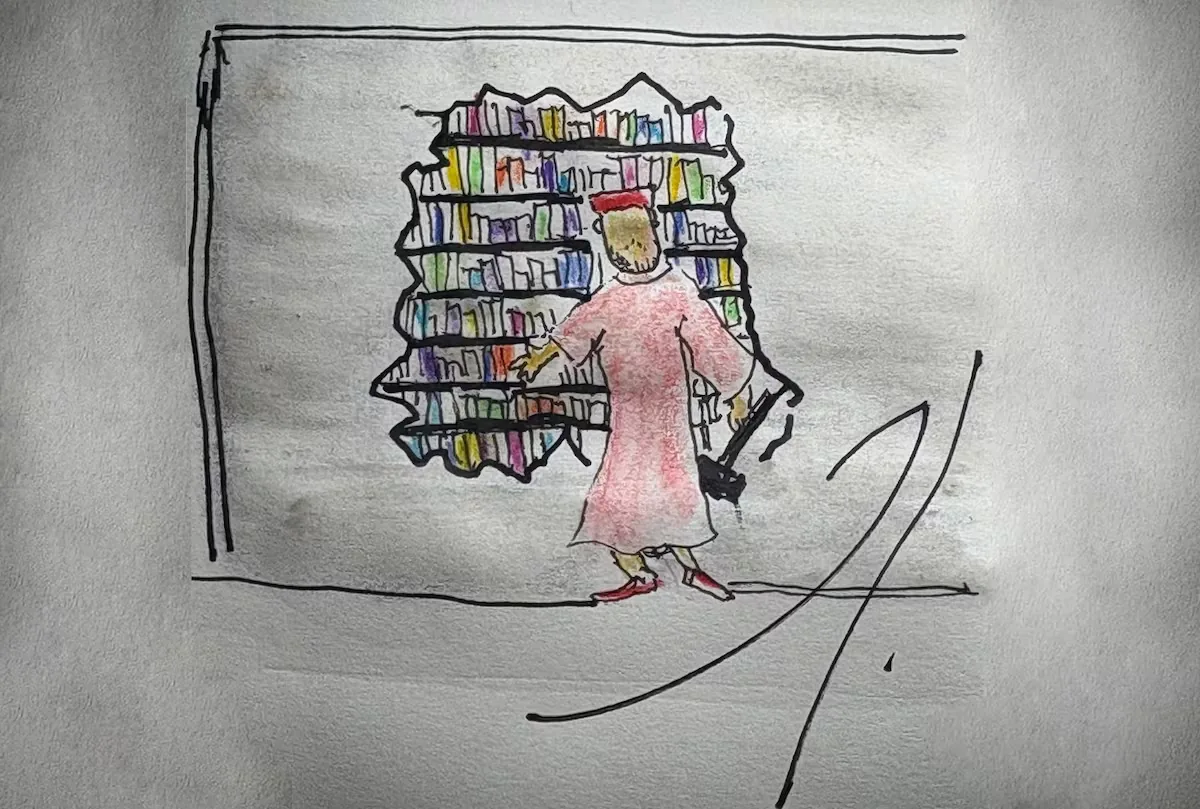
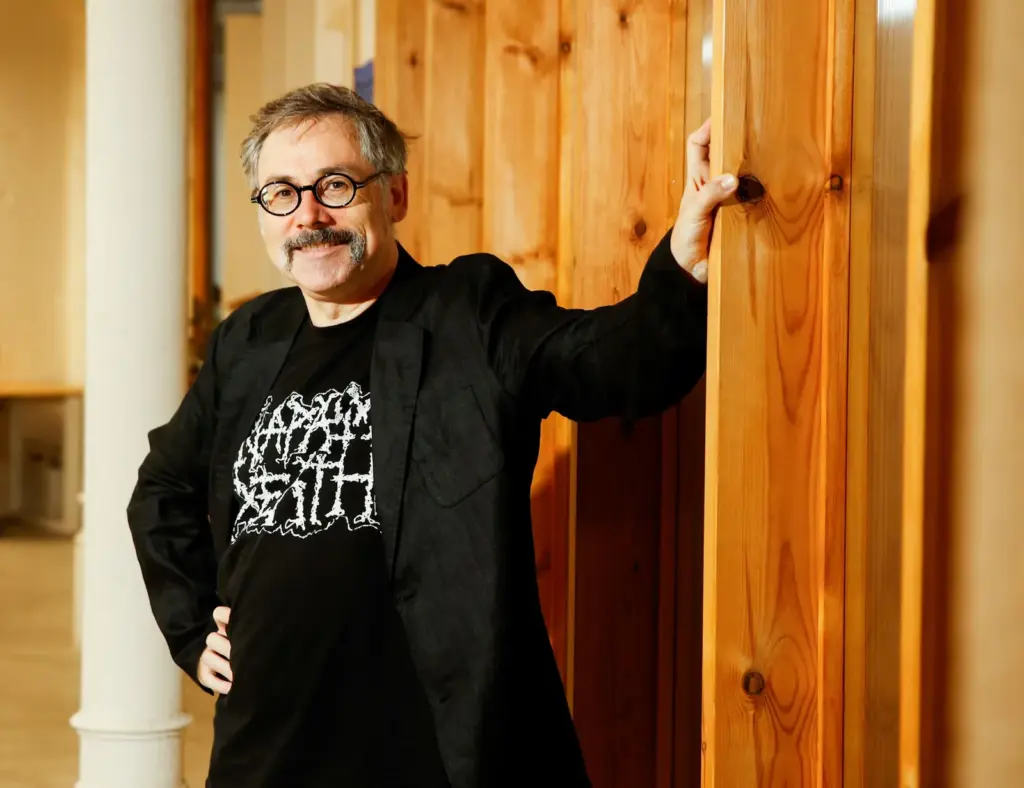
Jaron Rowan (London, 48 years old) began to notice it while teaching. With 20 years of experience in the university field, he observes that students are increasingly prone to expressing denialist positions about climate change, statements inspired by far-right influencers or “weird theories” if not directly conspiratorial. His perception coincides with a widely discussed contemporary phenomenon: a growing number of young people are being attracted to far-right positions.
Read more Matching toasters and kettles that make breakfast a pleasure
“Reactionary ideas are proliferating. Common sense, the values we collectively took for granted, are eroding,” says Rowan, writer and research director at the University Center for Design and Arts (BAU) in Barcelona, who assures that, in the tradition of cultural studies, he does not want to disdain these young people but understand the origin of their discomfort. From some sectors, for example, even women’s right to vote is being questioned. Another phenomenon Rowan observes is the difficulty in establishing healthy debate in classrooms, because questioning the other’s positions is experienced as an attack on the person’s integrity: disagreement understood as aggression. The most basic consensuses are flying out the window.
Inspired by these personal experiences, in his recent essay A Monster Called I. Reactionary Counterculture and the Politics of Virtue (Traficantes de Sueños), the author tries to understand these contemporary drifts by reviewing how neoliberalism has made us individuals withdrawn into ourselves (that “monstrous I”), how the left has fallen into moralism, the surveillance of ideological purity, and despair — instead of organizing collective transformations — and how the far right has successfully adopted the forms of a traditionally leftist counterculture. That is, rebellion, transgression, the antiestablishment.
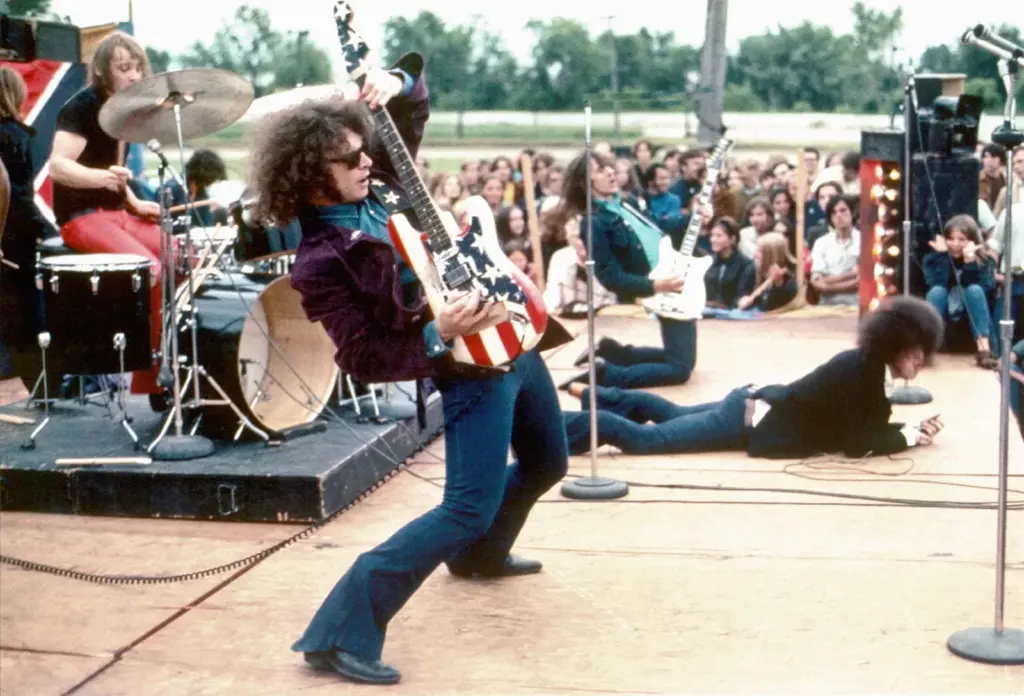
Counterculture: in the 60s youth let their hair down, started smoking marijuana and listening to rock, raised their fists and became revolutionary. The Black Panthers, May ’68, the MC5. It was a sharp turn in lifestyles, but also in political ambitions. “Although libertarian or union movements converged at the beginning, over time counterculture lost class elements and leaned towards alternative lifestyles, meditation, communes… The collective horizon was lost and New Age arrived,” says Rowan. From there emerged a path to individualism. But, on another path, the consequences of counterculture, the transformations it caused, and the culture wars that then began still linger today. And the far right seems to appropriate some of its codes and dynamics.
On one hand, and curiously, counterculture changed the ‘spirit of capitalism’ (in the words of sociologists Boltanski and Chiapello) by promoting elements now fully assimilated such as creativity, authenticity, or individualistic self-realization. Many countercultural slogans now fit in car or financial product ads. On the other, counterculture relaxed customs and morals, and introduced into the left social movements (feminism, anti-racism, LGTBIQ+, ecology) that shifted the focus from traditional laborism and maintain primary importance. The neoliberal “counterrevolution” in the 80s arose partly, explains Rowan, to curb countercultural advances, although it absorbed some of its key elements. Everything centers on the individual, extreme individualism appears, structural narcissism, that “monstrous I” around which everything revolves. “We stop talking about social revolution and start talking about personal revolution,” explains the author.
The relationship of the current reactionary wave with counterculture is ambivalent: contemporary new rights reject its content and at the same time feed on its ways. Their wet dream is to return to the peaceful 50s, before the outbreak, when social and gender hierarchies were clear and traditional; but they also appropriate its forms, adopting antiestablishment rebellious attitudes and creating a resistance network against the woke dictatorship, political correctness, or gender ideology (always on their terms), which is notably successful among youth, especially males, capitalizing on a youthful rebellion traditionally capitalized by the left.
Their breeding ground is, of course, social networks (especially Elon Musk’s X), that fachosphere where radical antifeminism, migrant hatred, or transphobia spread, but also some organizations dedicated to the cultural battle: Fundación Neos, Manos Limpias, HazteOír, Hogar Social Madrid, or Abogados Cristianos, with the capacity to spread the message and often set the agenda. Sometimes ideas circulate trivially, through influencers who are not explicitly political — see El Xocas or Amadeo Lladós — but who lightly spread the doctrine, generating a new common sense. The spokespeople of these currents boast of being the only ones who dare to say what no one else dares to say, things as they are, without complexes, shouting that the emperor is naked.
“The right is pointing out what we previously considered countercultural as if it were mainstream, consensus, political correctness. Thus, what seemed alternative is now presented as the center of the model, the establishment. The paradox is that this antiestablishment is supported by presidents of countries and big companies,” says Rowan. “It is rather a rhetorical turn.” If leftist counterculture was diverse, uniting hippies, anti-racist militants, rockers, feminists, LGTBQI+ people, unionists, students, etc., this supposed right-wing counterculture also brings together very different factions: from traditionalists to neo-Nazis, from ultraliberals to protectionists, from cryptobros to tradwifes, from cayetanos to workers, etc. “I don’t think we should talk about a single far right, but different currents that establish strategic and temporary alliances organized by groups, media, institutions, or churches,” says the essayist.

The left has its responsibility. According to Rowan, much of progressivism has fallen into a state of self-absorption, more concerned with moral purity and “politics of virtue,” engrossed in denouncing anyone who slightly deviates from the line, than with real social change. “Although I believe these positions are also experiencing exhaustion, because pointing fingers at others and ‘I buy better than you’ are not producing real transformation,” the author opines. “We have become more aware of problems, see contradictions, but do not solve them.”
Rebellion, drive, cheek, transgression. Almost philosophical questions arise: Is authentic counterculture distinctly progressive or simply opposed to the consensus of each era? Is reactionary counterculture authentic counterculture or just a simulacrum? “I don’t think something whose purpose is to preserve the status quo is counterculture, but it is adopting a communicative style very similar to countercultural. Deep down they are defending a system that benefits them. There was a moment when that world seemed to falter, but now they are fighting to restore it,” concludes Rowan.
Read more El Roto: an invasion