Paola Verónica Ortiz was 29 years old and had three children when she gave birth to her fourth baby alone, in a makeshift room in a rural area of Córdoba, Villa Nueva, 550 kilometers northwest of Buenos Aires. She had not undergone any medical check-ups during the pregnancy, had no knowledge to manage an emergency situation, nor money to pay for a taxi. She recalls fainting and, when she regained consciousness, the newborn’s body was cold beside her.
Read more La Primitiva: check draw for Thursday, September 3
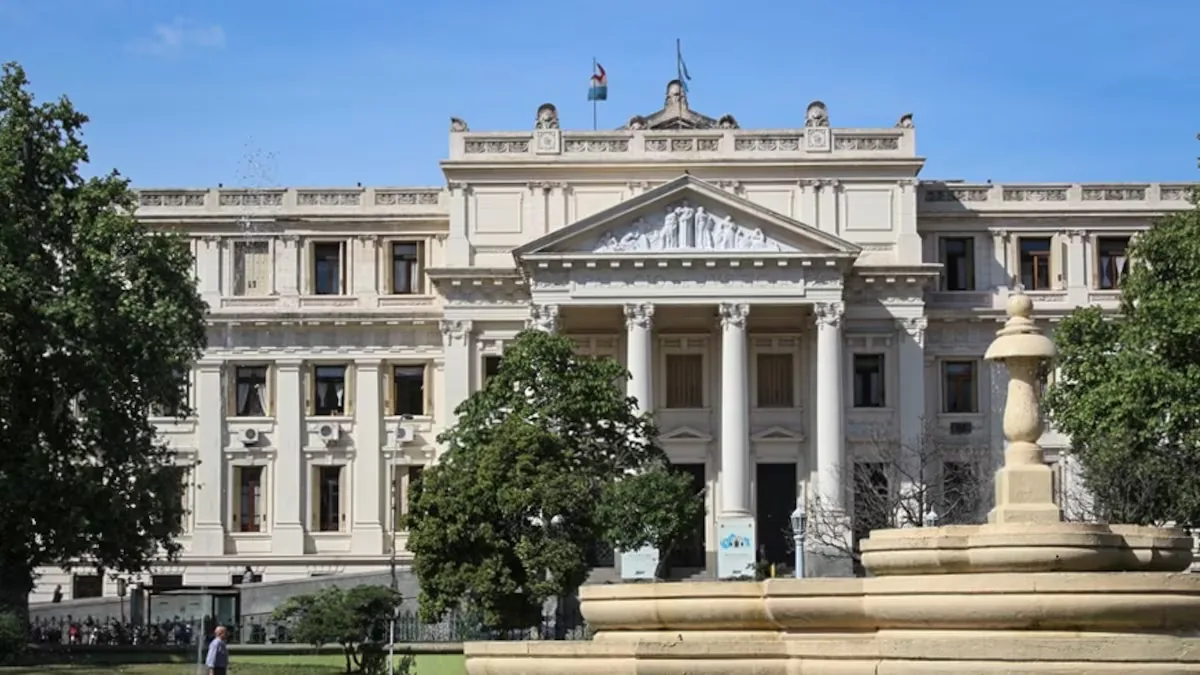
The episode occurred in November 2012 and, from the moment it was reported to the police, Ortiz was held in preventive detention. The court sentenced her in 2015 to life imprisonment, accused of qualified homicide by kinship, and she spent 13 years, 9 months, and 26 days in the Bouwer Penitentiary Complex, on the outskirts of the Córdoba capital. This Tuesday, after reviewing the results of the expert reports and considering the context of deep vulnerability surrounding the events, the Córdoba Superior Court of Justice annulled the sentence and ordered her immediate release.
Ortiz, 42 years old, represents one of the many poor women who enter Argentine prisons without having received a fair process and with a gender perspective. As also happens in the case told by Belén, the film directed by Dolores Fonzi and awarded a Goya, there is an element of chance in someone discovering such a situation and getting involved in the difficult process of reversing it.
The lawyers from the organization Catholics for the Right to Decide learned about Ortiz’s circumstances indirectly, while working on a collective case to improve the conditions under which prisoners gave birth at the Bouwer prison: tied up, without accompaniment, and under male supervision. “Talking with different people, we came to her, who told us her story. We saw all the violations she had experienced,” recalls Rocío García Garro, one of the lawyers who requested the review of her sentence, along with Julia Luna.
To convict her with the maximum penalty, the court concluded that her baby was born alive and she had not performed basic health maneuvers, such as cutting and tying the umbilical cord, to save her life. The original court used as decisive evidence an alleged spontaneous statement by the woman to a police officer, in which she said the baby had cried, along with a lung flotation test (an autopsy procedure that seeks to determine if a newborn breathed before dying) that may have yielded an imprecise result. The reviewed medical evidence allows considering a fetal death prior to birth.
Read more Bonoloto: check draw for Thursday, September 3
The court initially did not consider that Ortiz was going through extreme poverty and lived in her father-in-law’s home, who exerted economic and sexual pressure on her, taking advantage of her housing dependence and precarious situation. According to the lawyer, Ortiz even had to sleep nights on the street with her children to escape violent situations. Additionally, various expert reports indicate that the woman, who did not complete early education, is an “immature, insecure, and dependent person, with few personal resources for conflict resolution and limited capacity for introspection.”
“The latest achievements of the feminist movement occurred after the events; they happened with her already deprived of liberty. It was a very different context from the current one in which she is imprisoned and judged, in a trial without guarantees in which she was not heard and in which even her defense blamed her,” García Garro points out. In 2012, talking about abortion, for example, was a taboo in Argentina, especially in localities far from large urban centers. The discussion about its legalization began in 2018 and finally voluntary termination of pregnancy was approved at the end of 2020.
When she entered prison, Ortiz’s youngest child was five years old. The first thing she did this Tuesday, upon being released, was to reunite with them and her nuclear family, with whom she rebuilt bonds during her long stay in prison.
Her lawyer says she is “shocked and happy,” facing the challenges of adapting to living in freedom: crossing a street again, using a card on public transport, or understanding that money is now managed through virtual wallets. “Support during this reintegration stage is key,” García Garro notes, “and, at a time when the Argentine State turns its back on vulnerable people, it requires a double effort from civil society movements.”