









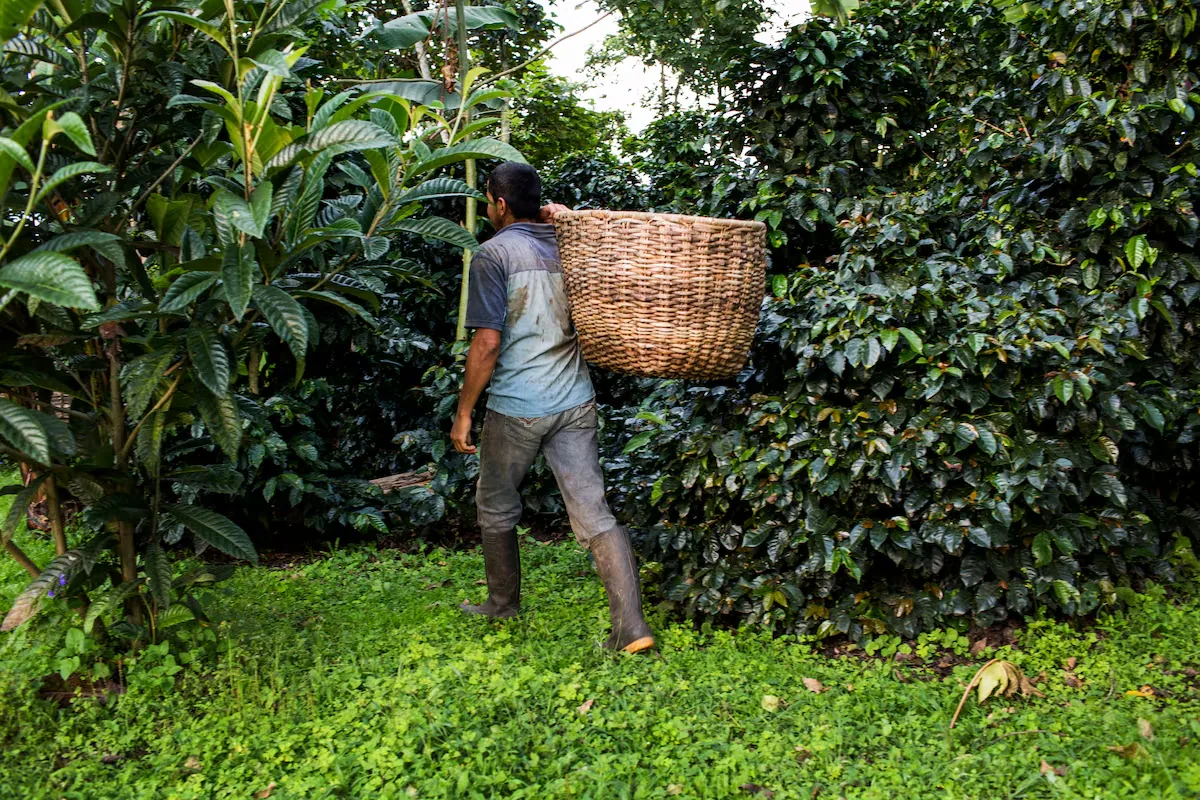
The Government of Abelardo de la Espriella has begun dismantling one of the main initiatives of his predecessor for the Colombian countryside: the Food Production Protection Areas, known as APPA. This is an unprecedented figure in Colombia, created by the Government of Gustavo Petro, which sought to protect the best soils dedicated to agriculture. The left-wing Executive managed to cover almost one million hectares in 59 municipalities with them in an effort to limit mining and accelerated urbanization.
Read more Much wear and little accuracy between Real and Celta
The Ministry of Agriculture has published for comments — a preliminary step before its approval — the first resolution for the change, one that repeals the five areas that had been declared in municipalities of the Bogotá Savannah and that covered 15,800 hectares of Sopó, Nemocón, Cogua, Tenjo, and Tabio. Before taking office, the president met with the mayors of that region and, after that meeting, announced the end of the protection. “That figure will not last more than a week in the new Government; we will carry out the entire process quickly to end that farce, that mess of the APPA that has caused so many problems for Colombia but especially for the department of Cundinamarca,” he said then. In the end, they have lasted longer, but only a little.
It is no coincidence that the first APPA repealed are those of the Bogotá Savannah. One of the fiercest oppositions that arose against that figure was precisely in that region, where they became an immediate obstacle to the real estate development expectation that has been urbanizing one of the most fertile areas of the country in recent decades. It has been common for municipal councils to change land use to urbanize areas with agricultural vocation, something this regulation prevented, as it was above what local governments could decide.
The opposition was so significant that the organization ProBogotá, a think tank promoted by the business sector, pushed a bill to repeal the APPA. Some of the construction companies with the most urban projects in the savannah, such as Amarilo and Prodesa, are part of the organization. The president of ProBogotá is María Carolina Castillo, Bogotá’s Secretary of Housing under former mayor Enrique Peñalosa, as a quota of the right-wing party Cambio Radical.
The main argument against the APPA is that they violate the autonomy of local administrations to define land use, something the Constitutional Court is studying. With that premise, dozens of mayors from the areas where these areas would be declared joined the rejection in cascade, and found support in the construction and mining guilds. The same argument has been put forward by three congress members close to the new Government to ask the Minister of Agriculture, Indalecio Dangond, to repeal the APPA. They are Senator Sara Castellanos and Bogotá Chamber Representative Carol Borda, both from the Salvación Nacional party — which supported De la Espriella during the campaign — and Bogotá Representative Daniel Briceño, from the Centro Democrático, but closer to the current president than to the presidential candidate of his party, Paloma Valencia. The latter filed a bill before Congress to repeal them, which is advancing in parallel with the resolutions issued by the Ministry.
The Food Production Protection Areas cover more than 998,000 hectares in six departments, concentrated in 667,000 in the department of Córdoba. In fact, they cover more than half of the territory of Montería, the capital. Their declaration had immediate practical effects. A clear case is that of southern La Guajira, where the declared APPA clashed with the expectation of the mining company Best Coal Company — a subsidiary of the Turkish Yildrim Group — which intends to start an open-pit mine to extract 7.5 million tons of coal. The mining company requested the environmental license to begin exploitation, but in January of this year the regional environmental authority, Corpoguajira, denied it because the area was part of the existing APPA.
The declaration of an APPA also implied prioritizing those soils to implement the programs of the Agricultural Inputs Access Fund (FAIA) and in theory should concentrate the intervention of state agricultural agencies. The Petro Government also defended that such declaration legally shielded peasant communities so that the use of the soils they cultivated would not change. De la Espriella’s government, on the other hand, states that it is an excessive regulation of land use and a restriction imposed from the national Government that overrides the autonomy of municipalities. With this first resolution made public by his Government, that restriction is lifted over 15,800 hectares.
Read more La Primitiva: check draw for Thursday, September 3